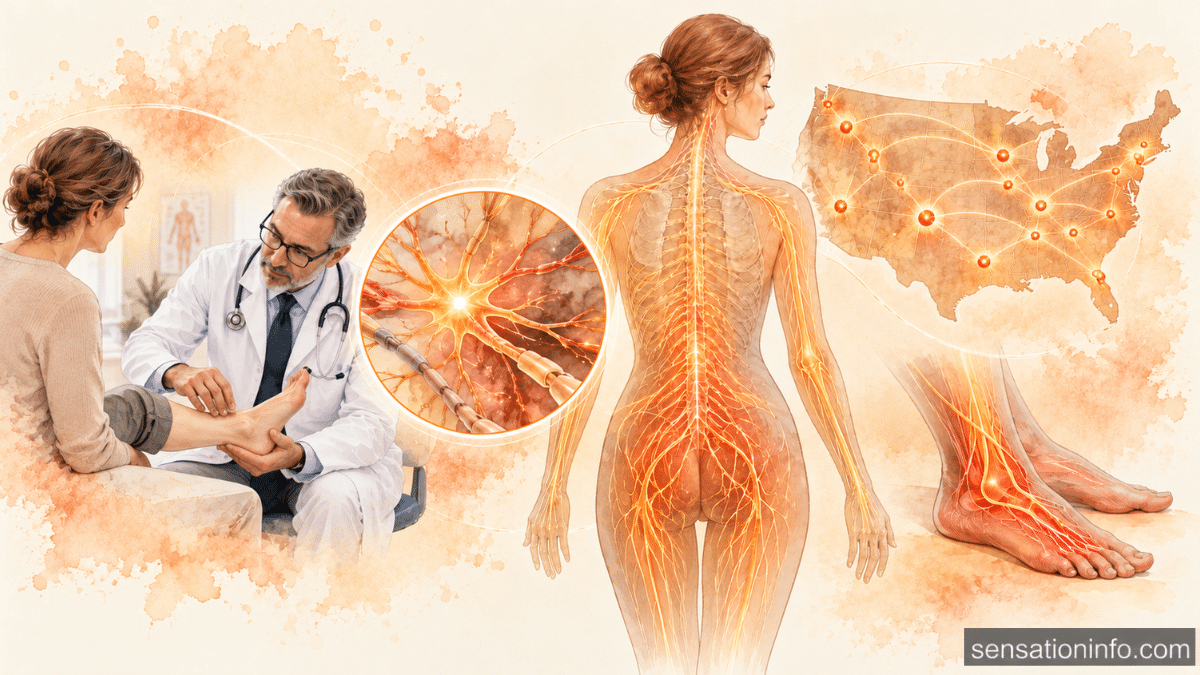

The best doctors for diabetic neuropathy in the USA include neuromuscular neurologists at Beth Israel Deaconess and Joslin, Johns Hopkins, VCU Health, Vanderbilt, University of Utah, UT Southwestern, University of Rochester, and Michigan Medicine, along with two diabetic foot specialists at Keck Medicine of USC and UT Health San Antonio. Each was chosen for a documented focus on nerve damage caused by diabetes, from numbness in the feet and small fiber pain to autonomic neuropathy and diabetic foot complications. Every profile link, address, and phone number was confirmed from an official source. Specialists are listed for reference and are not ranked by preference.
How This List Was Compiled
Each of the best doctors for diabetic neuropathy in the USA on this list was confirmed through an official hospital or university profile page and has a documented clinical or research focus on diabetic neuropathy or one of its direct complications. Diabetic nerve damage is treated by more than one specialty, so the list includes neuromuscular neurologists for diagnosis and pain management, autonomic specialists for nerve damage affecting the heart, blood pressure, and digestion, and diabetic foot specialists for ulcers and limb protection. Selection weighed board certification, published diabetic neuropathy research, leadership of national trials and specialty programs, and Castle Connolly Top Doctor status where it could be verified. No doctor paid to be included.
Verified Diabetic Nerve Specialists by Region

1. Dr. Christopher H. Gibbons, MD
Hospital/Clinic: Beth Israel Deaconess Medical Center and Joslin Diabetes Center, Boston, Massachusetts
Specialty Focus: Diabetic neuropathy, autonomic neuropathy, peripheral neuropathy
Why Listed: Lists diabetic neuropathy and autonomic neuropathy as named clinical interests on his official Beth Israel Deaconess profile. Sees patients at both Beth Israel Deaconess Medical Center and Joslin Diabetes Center. Board certified by the American Board of Psychiatry and Neurology, with additional certification from the United Council for Neurologic Subspecialties.
Address: Beth Israel Deaconess Medical Center, 330 Brookline Avenue, Boston, MA 02215
Contact: 617-632-8917 (Beth Israel Deaconess) or 617-309-2440 (Joslin Diabetes Center)
Profile: Beth Israel Deaconess Official Profile
What Sets Them Apart: Dr. Gibbons sees patients inside Joslin Diabetes Center as well as at Beth Israel Deaconess, which makes coordinated nerve and blood sugar care simpler for people with diabetes.
2. Dr. Michael J. Polydefkis, MD
Hospital/Clinic: Johns Hopkins Bayview Medical Center, Baltimore, Maryland
Specialty Focus: Diabetic peripheral neuropathy, HIV-associated neuropathy, skin biopsy for small fiber nerve damage, nerve conduction studies and electromyography
Why Listed: Professor of Neurology at Johns Hopkins and Director of the Cutaneous Nerve Lab. States a special interest in diabetic peripheral neuropathy on his official profile. Recipient of the Peripheral Nerve Society Junior Investigator Award in Diabetic Neuropathy and the Johns Hopkins Clinician Scientist Award. Accepting new patients.
Address: Johns Hopkins Bayview Medical Center, 4940 Eastern Avenue, Baltimore, MD 21224
Contact: 410-550-0592 (Johns Hopkins Bayview Neurology)
Profile: Johns Hopkins Medicine Official Profile
What Sets Them Apart: Dr. Polydefkis directs a lab that measures nerve fibers in tiny skin samples, a test that can confirm diabetic small fiber damage even when standard nerve conduction studies come back normal.
3. Dr. A. Gordon Smith, MD, FAAN
Hospital/Clinic: VCU Health, Richmond, Virginia
Specialty Focus: Diabetic and prediabetic neuropathy, peripheral neuropathy linked to obesity, cryptogenic sensory peripheral neuropathy, neuromuscular medicine
Why Listed: Professor and Chairman of Neurology at Virginia Commonwealth University and holder of the Kenneth and Dianne Wright Distinguished Chair in Clinical and Translational Research in Neurology. Principal investigator of the Activity for Diabetic Neuropathy (ADAPT) Trial. Leads an NIH funded research team focused on peripheral neuropathy in diabetes and obesity. Member of the NeuroNEXT Executive Committee and the Board of Directors of the American Academy of Neurology.
Address: 417 North 11th Street, Richmond, VA 23219
Contact: Appointments through the VCU Health website (linked in profile)
Profile: VCU Health Official Profile
What Sets Them Apart: Dr. Smith leads the ADAPT Trial, which studies physical activity as a treatment for diabetic neuropathy, so patients see a doctor who looks at care beyond medication alone.
4. Dr. J. Robinson Singleton, MD
Hospital/Clinic: University of Utah Health, Salt Lake City, Utah
Specialty Focus: Neuromuscular disease, early sensory neuropathy linked to high blood sugar and metabolic risk, skin biopsy for intraepidermal nerve fiber density, nerve conduction studies and electromyography
Why Listed: Castle Connolly Top Doctor since 2015. Professor and Vice Chairman of Neurology at the University of Utah. Research on the relationship between early hyperglycemia, dyslipidemia, obesity, and length dependent nerve injury. Site principal investigator for the NINDS NeuroNEXT clinical trials network. Board certified by the American Board of Psychiatry and Neurology in neurology and clinical neurophysiology.
Address: Clinical Neurosciences Center, 175 North Medical Drive East, Salt Lake City, UT 84132
Contact: 801-585-7575
Profile: University of Utah Health Official Profile
What Sets Them Apart: Dr. Singleton studies the earliest stage of nerve injury from high blood sugar, which is valuable for patients with prediabetes or new diabetes who want damage caught before it progresses.
5. Dr. Amanda C. Peltier, MD, MS
Hospital/Clinic: Vanderbilt University Medical Center, Nashville, Tennessee
Specialty Focus: Diabetic neuropathy, peripheral neuropathy, amyloid neuropathy, autonomic disorders
Why Listed: Professor of Neurology and Medicine and Chief of the Neuromuscular Division at Vanderbilt. Research with the Vanderbilt Autonomic Dysfunction Center covers diabetic neuropathy and secondary endpoints for neuropathy clinical trials. Board certified by the American Board of Psychiatry and Neurology in neurology and neuromuscular medicine, by the American Board of Electrodiagnostic Medicine, and by the United Council for Neurologic Subspecialties in autonomic disorders.
Address: Vanderbilt University Medical Center, 1211 Medical Center Drive, Nashville, TN 37232
Contact: 615-322-5000 (Vanderbilt University Medical Center main line)
Profile: Vanderbilt Neurology Official Profile
What Sets Them Apart: Dr. Peltier holds certification in both neuromuscular medicine and autonomic disorders, a combination that fits patients whose diabetic nerve damage affects both the feet and internal organs.
6. Dr. Steven Vernino, MD, PhD
Hospital/Clinic: UT Southwestern Medical Center, Dallas, Texas
Specialty Focus: Autonomic neuropathy, dysautonomia, neuromuscular disorders, autoimmune neurological disorders
Why Listed: Castle Connolly Top Doctor since 2018. Director of the Autonomic Disorders Clinic at UT Southwestern and holder of the Dr. Bob and Jean Smith Foundation Distinguished Chair in Neuromuscular Disease Research. Board certified in neurology, neuromuscular medicine, electrodiagnostic medicine, and autonomic disorders. Named a D Magazine Best Doctor, including every year from 2020 through 2025. Co-author of published research on painful diabetic peripheral neuropathy and diabetic autonomic neuropathy.
Address: James W. Aston Ambulatory Care Center, 5303 Harry Hines Boulevard, 8th Floor, Dallas, TX 75235
Contact: 214-645-8800
Profile: UT Southwestern Medical Center Official Profile
What Sets Them Apart: Dr. Vernino runs a dedicated autonomic disorders clinic, which suits patients whose diabetes causes dizziness on standing, abnormal heart rate, or digestive problems rather than only foot symptoms.
7. Dr. David N. Herrmann, MBBCh
Hospital/Clinic: University of Rochester Medical Center, Rochester, New York
Specialty Focus: Peripheral neuropathy, small fiber neuropathy, inherited neuropathies including Charcot-Marie-Tooth disease, cutaneous innervation testing
Why Listed: Chief of the Neuromuscular Division and E. Philip and Carole Saunders Professor in Neuromuscular Research at the University of Rochester. Established one of the earliest cutaneous innervation laboratories in the United States for diagnosing small fiber neuropathy. Board certified by the American Board of Psychiatry and Neurology in neurology, neuromuscular medicine, and clinical neurophysiology. Recipient of the Association of University Professors of Neurology Faculty Leadership award (2025). Accepting new patients.
Address: Ambulatory Care Center at Strong Memorial Hospital, 601 Elmwood Avenue, 1st Floor, Rochester, NY 14642
Contact: 585-275-2559
Profile: University of Rochester Medical Center Official Profile
What Sets Them Apart: Dr. Herrmann established one of the earliest skin biopsy labs in the country for small fiber neuropathy, the type of nerve damage behind the burning foot pain many people with diabetes feel first.
8. Dr. Melissa A. Elafros, MD, PhD
Hospital/Clinic: University of Michigan Health (Michigan Medicine), Ann Arbor, Michigan
Specialty Focus: Peripheral neuropathy, neuromuscular disease, prevention of diabetic peripheral neuropathy, access to neuropathy care in underserved communities
Why Listed: Neurologist in Michigan Medicine’s Peripheral Neuropathy Program and member of the Caswell Diabetes Institute. Board certified in neurology and electrodiagnostic medicine. Recipient of the American Brain Foundation Mridha Spirit of Neurology Award (2025). Co-author of a 2022 publication on the prevention of diabetic peripheral neuropathy and part of the Flint Neuropathy Study team.
Address: Neurology Clinic, Taubman Center, 1500 East Medical Center Drive, Floor 1, Reception C, Ann Arbor, MI 48109
Contact: 734-936-9010
Profile: University of Michigan Health Official Profile
What Sets Them Apart: Dr. Elafros researches neuropathy in under-resourced communities and how to improve access to neurologic care, which shapes a practical, prevention focused approach to diabetic nerve care.
9. Dr. David G. Armstrong, DPM, PhD
Hospital/Clinic: Keck Medicine of USC, Los Angeles, California
Specialty Focus: Diabetic foot care, diabetic foot ulcers, wound care, limb salvage, podiatric surgery
Why Listed: Distinguished Professor of Surgery and Neurological Surgery at USC. Founder and co-Director of the Southwestern Academic Limb Salvage Alliance (SALSA) and Founding President of the American Limb Preservation Society. Founding co-Editor of the American Diabetes Association’s Clinical Care of the Diabetic Foot. Recipient of the American Diabetes Association Roger Pecoraro Award (2010) and the 2023 Karel Bakker Lifetime Achievement Award. Author of more than 720 peer-reviewed research papers. Accepting new patients.
Address: Los Angeles Vascular Surgery Clinic, 1450 San Pablo Street, HC4, Suite 6200, Los Angeles, CA 90033
Contact: 323-442-5849 or 800-872-2273 (800-USC-CARE)
Profile: Keck Medicine of USC Official Profile
What Sets Them Apart: Dr. Armstrong focuses on protecting the feet of people who have lost sensation from diabetic neuropathy, where a small unnoticed wound can quickly become serious.
10. Dr. Lawrence A. Lavery, DPM, MPH
Hospital/Clinic: UT Health San Antonio and Texas Diabetes Institute, San Antonio, Texas
Specialty Focus: Diabetic foot complications, complex wounds, osteomyelitis, Charcot foot, diabetic foot surgery
Why Listed: Tenured Professor and Vice Chair of Research in the Department of Orthopedic Surgery at UT Health San Antonio. Founding member of the International Working Group on the Diabetic Foot and Chair-Elect of the American Diabetes Association Foot Care Council. Board certified by the American Board of Podiatric Surgery. Ranked by Expertscape as the 8th leading expert on diabetic neuropathies and 4th on the diabetic foot, as cited on his official profile. Accepting new patients.
Address: Texas Diabetes Institute, 701 South Zarzamora Street, San Antonio, TX 78207
Contact: 210-358-7760
Profile: UT Health San Antonio Official Profile
What Sets Them Apart: Dr. Lavery sees patients inside the Texas Diabetes Institute and was a founding member of the International Working Group on the Diabetic Foot, giving Texas patients access to foot protection care shaped by international standards.
Specialist Comparison
| Specialist | Location | Specialty Focus | Key Recognition |
|---|---|---|---|
| Dr. Christopher H. Gibbons, MD | BIDMC and Joslin, Boston, MA | Diabetic and autonomic neuropathy | Sees patients at Joslin Diabetes Center |
| Dr. Michael J. Polydefkis, MD | Johns Hopkins Bayview, Baltimore, MD | Diabetic neuropathy, skin biopsy | PNS Junior Investigator Award in Diabetic Neuropathy |
| Dr. A. Gordon Smith, MD, FAAN | VCU Health, Richmond, VA | Diabetic and prediabetic neuropathy | Principal investigator, ADAPT Trial |
| Dr. J. Robinson Singleton, MD | University of Utah Health, Salt Lake City, UT | Early neuropathy from high blood sugar | Castle Connolly Top Doctor since 2015 |
| Dr. Amanda C. Peltier, MD, MS | Vanderbilt, Nashville, TN | Diabetic neuropathy, autonomic disorders | Chief of Neuromuscular Division |
| Dr. Steven Vernino, MD, PhD | UT Southwestern, Dallas, TX | Autonomic neuropathy | Castle Connolly Top Doctor since 2018 |
| Dr. David N. Herrmann, MBBCh | University of Rochester, Rochester, NY | Small fiber neuropathy | Early cutaneous innervation lab founder |
| Dr. Melissa A. Elafros, MD, PhD | Michigan Medicine, Ann Arbor, MI | Diabetic neuropathy prevention | Mridha Spirit of Neurology Award 2025 |
| Dr. David G. Armstrong, DPM, PhD | Keck Medicine of USC, Los Angeles, CA | Diabetic foot, limb salvage | ADA Roger Pecoraro Award 2010 |
| Dr. Lawrence A. Lavery, DPM, MPH | UT Health San Antonio, TX | Diabetic foot complications | Founding member, International Working Group on the Diabetic Foot |
How to Choose the Right Doctor for Diabetic Neuropathy

The right doctor for diabetic neuropathy depends on which nerves are affected: a neuromuscular neurologist for numbness, tingling, and nerve pain, an autonomic specialist for blood pressure, heart rate, or digestive symptoms, and a podiatrist for foot ulcers or loss of foot sensation. Most patients do best with a neurologist leading diagnosis while their endocrinologist or primary care doctor manages blood sugar. Even among the best doctors for diabetic neuropathy in the USA, the right fit is the one whose focus matches your symptoms.
Start by matching the doctor to your main symptom. Burning, numbness, or pins and needles in the feet points to peripheral neuropathy, and a neurologist with neuromuscular training is the right first stop. If you also notice burning in the lower legs and feet that worsens at night, ask whether small fiber testing such as a skin biopsy is appropriate. Dizziness when standing, a racing heart at rest, or bloating and early fullness suggest autonomic neuropathy, which calls for a doctor with autonomic testing available.
Check credentials. Look for board certification by the American Board of Psychiatry and Neurology in neurology, with added certification in neuromuscular medicine, clinical neurophysiology, or autonomic disorders. For foot care, look for a podiatrist board certified in foot surgery who works with a wound care or limb preservation team.
Decide whether research depth or access matters more. Doctors who lead national diabetic neuropathy trials can offer access to new treatments, while a closer neuromuscular clinic may be easier for regular follow up. For a broader directory that covers all types of nerve damage, see our list of neuropathy specialists in the USA.
Seek a second opinion if your neuropathy is getting worse despite good blood sugar control, if symptoms started suddenly or affect one side more than the other, or if no cause other than diabetes has been checked. Vitamin B12 deficiency, thyroid disease, and some medications can cause similar nerve damage.
Insurance tips before booking:
- Confirm the doctor is in network for both the office visit and nerve testing such as EMG or skin biopsy.
- Ask whether your plan needs a referral from your primary care doctor or endocrinologist.
- Check whether Medicare covers therapeutic shoes or inserts if you have diabetic foot problems, since coverage often requires documentation from your treating doctor.
- Ask the office which tests are done on site and which are sent to an outside lab.
Questions to Ask at Your First Appointment
The most useful questions confirm what type of diabetic neuropathy you have and what can slow it down. Bring these to your first visit, whether you see one of the best doctors for diabetic neuropathy in the USA or a neurologist closer to home:
- What type of diabetic neuropathy do I have: peripheral, autonomic, focal, or a combination?
- Which tests will confirm the diagnosis, and do I need a skin biopsy or autonomic testing?
- Have other causes such as vitamin B12 deficiency or thyroid disease been ruled out?
- How much can better blood sugar control slow or improve my nerve damage?
- Which nerve pain medications fit my other health conditions and current prescriptions?
- How often should my feet be examined, and do I need a podiatrist?
- Are there clinical trials I might qualify for?
What to Expect During Your First Visit
A first visit for diabetic neuropathy usually includes a detailed history of your diabetes and symptoms, a full neurological exam, and a plan for nerve testing. Plan for a longer visit than a routine checkup, since the history and nerve exam take time.
The doctor will ask when symptoms began, whether they started in the toes and moved upward, and whether you have pain, numbness, or balance problems. The exam checks reflexes, muscle strength, balance, and how well you feel touch, vibration, and temperature in your feet. According to Mayo Clinic, a monofilament test uses a soft nylon fiber brushed over the skin to check touch sensitivity, and nerve conduction testing measures how quickly nerves in the arms and legs carry electrical signals.
Additional testing may follow. Electromyography checks how muscles respond to nerve signals. A skin biopsy measures small nerve fibers when standard tests look normal. Autonomic testing tracks how blood pressure and heart rate change with position. Blood tests often check A1C, vitamin B12, and thyroid function to rule out other causes.
What to bring:
- Your most recent A1C result and a recent blood sugar log or continuous glucose monitor report
- A complete list of medications, including diabetes and pain medications
- Any previous nerve conduction study, EMG, or skin biopsy results
- Shoes you wear most days, since foot pressure and fit matter
- Your insurance card and any required referral
Frequently Asked Questions
A neurologist, especially one trained in neuromuscular medicine, is the main specialist for diagnosing and treating diabetic neuropathy. An endocrinologist manages blood sugar, which is the foundation of slowing nerve damage. A podiatrist protects the feet when sensation is lost, and a cardiologist or gastroenterologist may help when diabetic neuropathy affects the heart or digestive system.
About one third to one half of people with diabetes have peripheral neuropathy, according to the National Institute of Diabetes and Digestive and Kidney Diseases. Peripheral neuropathy is the most common type and usually starts in the toes and feet. Diabetic neuropathy can also affect internal organs, single nerves, or the hip and thigh.
Diabetic nerve damage usually cannot be fully reversed, but its progression can often be slowed. Steady blood sugar control, healthy blood pressure and cholesterol, regular physical activity, and avoiding smoking all protect nerves. Nerve pain medications can reduce burning and tingling, and early diagnosis gives the best chance of preserving remaining nerve function.
Diabetic neuropathy is confirmed with a physical exam plus nerve tests. A monofilament test checks touch sensation in the feet, nerve conduction studies measure electrical signal speed, and electromyography checks muscle response. A skin biopsy can detect small fiber nerve damage when other tests are normal, and autonomic testing checks blood pressure and heart rate responses.
A neurologist and a podiatrist play different roles in diabetic neuropathy care. A neurologist confirms the diagnosis, rules out other causes, and treats nerve pain. A podiatrist examines the feet, treats calluses and ulcers, and recommends protective footwear. Many people with diabetic neuropathy benefit from seeing both.
See a specialist if numbness, tingling, or burning in the feet or hands interferes with sleep or daily life, if symptoms are getting worse, or if you notice a foot wound that is slow to heal. Dizziness on standing, digestive changes, or bladder problems in someone with diabetes also warrant evaluation for autonomic neuropathy.
Key Takeaways
- About one third to one half of people with diabetes develop peripheral neuropathy, according to the National Institute of Diabetes and Digestive and Kidney Diseases.
- A neuromuscular neurologist is the main specialist for diagnosing diabetic neuropathy, while an endocrinologist manages the blood sugar that drives it.
- A skin biopsy can detect small fiber nerve damage even when nerve conduction studies are normal.
- Diabetic neuropathy can affect the heart, blood pressure, and digestion, not just the feet.
- People who have lost feeling in their feet should see a podiatrist to prevent ulcers and infections.
- The best doctors for diabetic neuropathy in the USA on this list practice in 10 different states, from Massachusetts to California.
Doctor’s Recommendation
If you live with diabetes and notice tingling or pins and needles in your feet, small daily habits can make a real difference while you wait for a specialist visit. Our guide on how to relieve tingling in feet from diabetes explains practical steps and the warning signs that mean you should be seen sooner. Reading it before your appointment can help you describe your symptoms clearly.
References
- Diabetic Neuropathy, National Institute of Diabetes and Digestive and Kidney Diseases (NIDDK)
- Diabetic Neuropathy: Diagnosis and Treatment, Mayo Clinic
- American Board of Psychiatry and Neurology (ABPN): Verify Certification
- The Foundation for Peripheral Neuropathy
- Castle Connolly Top Doctors Directory