
Have you ever pulled your hands out from under a warm blanket and felt like they belonged to someone who’d just gone glacier hiking? I have, and I’ll be honest, the first time I noticed my feet staying ice-cold even in summer, I genuinely wondered if my circulation had filed for early retirement.
A cold sensation in hands and feet is far more common than people think, and it almost always has a real explanation behind it. In this article, I’ll walk you through what causes it, when it’s normal, and when it’s worth investigating. Everything I’m sharing is based on credible medical sources like the Mayo Clinic, Cleveland Clinic, and the NHS.
What a Cold Sensation in the Limbs Really Means
A cold sensation in the hands or feet usually means your circulation, nerves, or temperature regulation is off in some way. Your fingers and toes are the farthest points from your heart, which makes them the first to feel the impact of poor blood flow or nerve issues.
Sometimes it’s harmless, like sitting too still in an air-conditioned room. Other times, it’s a quiet signal that something deeper needs attention. Knowing the difference matters more than people realise.
Why Hands and Feet Feel Cold More Than the Rest of the Body
Your hands and feet have less muscle mass, less fat, and the smallest blood vessels in the body. When the body needs to conserve heat, it pulls blood inward to protect the core organs. Naturally, the limbs lose warmth first.
This is normal up to a point. The problem starts when the cold sensation becomes constant, painful, or paired with colour changes.
Common Causes of Cold Sensation in Hands and Feet
Let me walk you through the most common reasons behind cold limbs, both from real-world experience and credible medical sources.
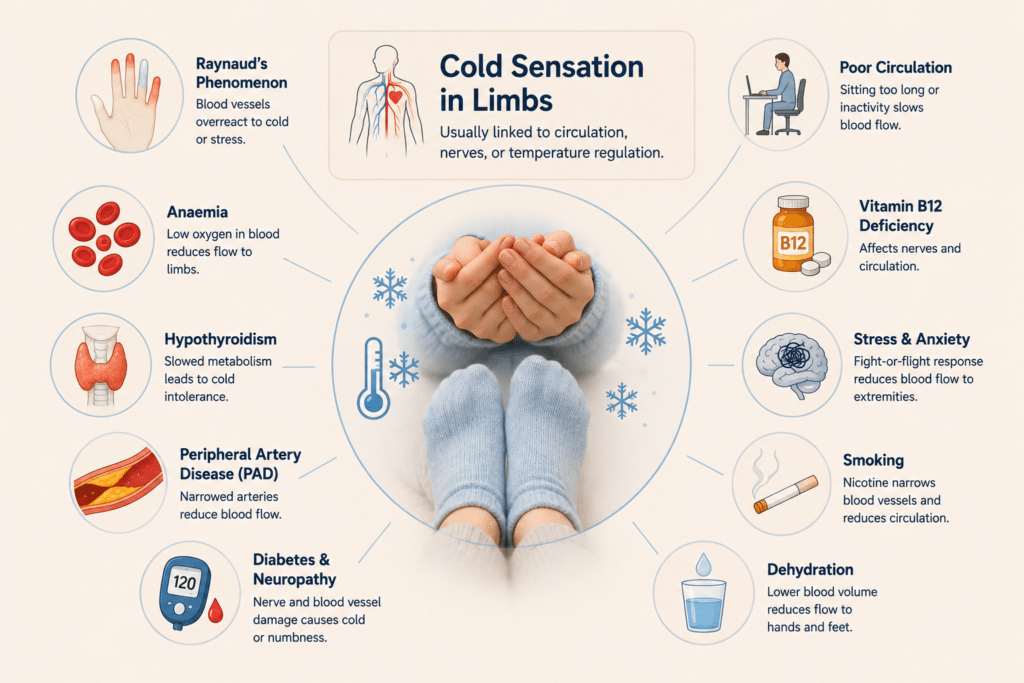
Raynaud’s Phenomenon
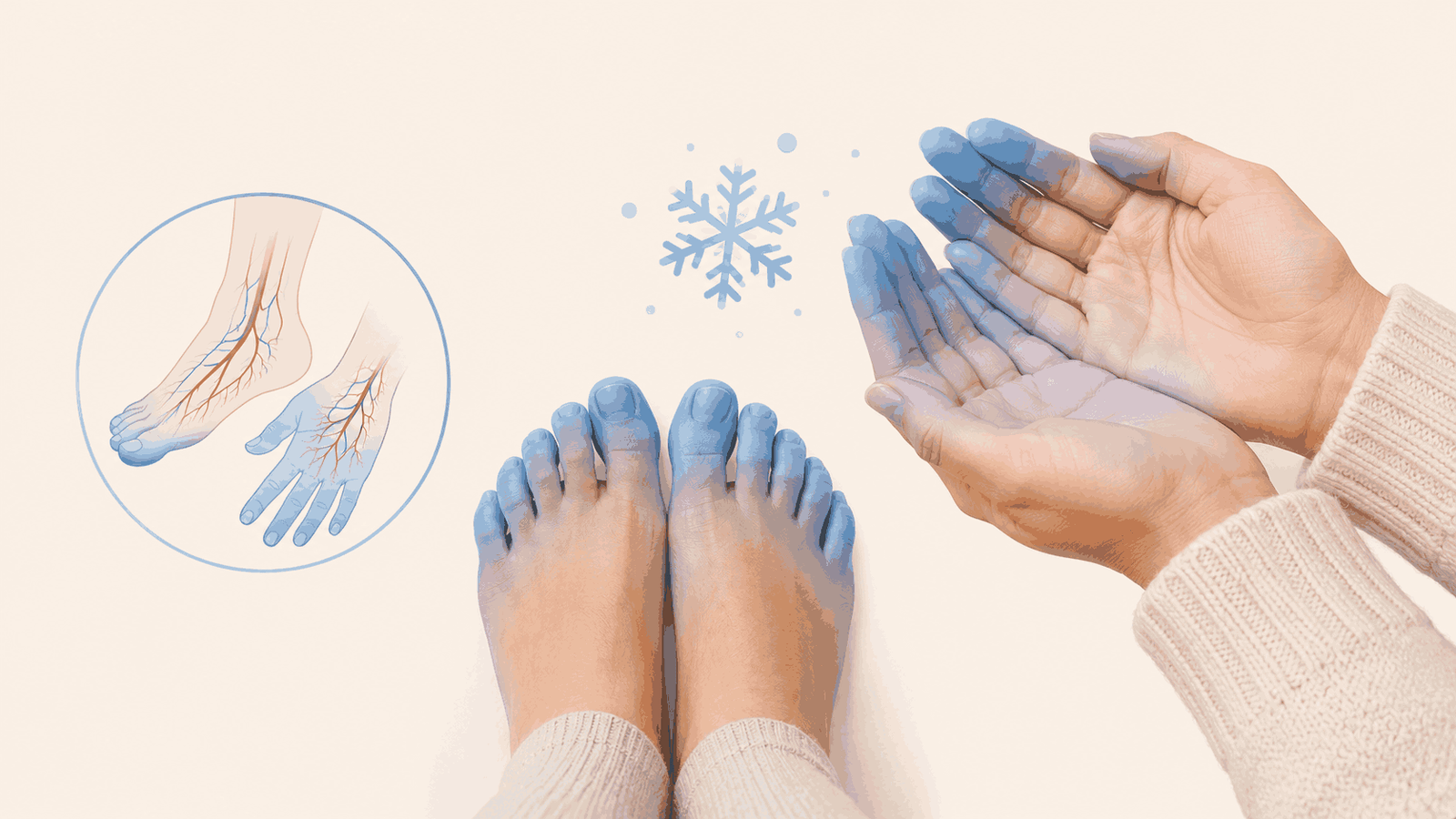
This is one of the most well-known causes. Raynaud’s is a condition where small blood vessels in the fingers and toes overreact to cold or stress, narrowing temporarily and reducing blood flow.
According to the Cleveland Clinic, Raynaud’s often causes the fingers to turn white or blue, then red as blood returns. It’s usually mild but can be uncomfortable and worth managing.
Anaemia
Iron-deficiency anaemia is a quietly common reason behind cold hands and feet. When your blood doesn’t carry enough oxygen, the body prioritises the core organs and reduces blood flow to the limbs.
Symptoms often include fatigue, pale skin, and shortness of breath. A simple blood test confirms it, and treatment usually involves iron supplementation and dietary changes.
Hypothyroidism
An underactive thyroid slows down metabolism, which directly affects body temperature. People with hypothyroidism often feel cold even in warm rooms, especially in the hands and feet.
According to the British Thyroid Foundation, cold intolerance is one of the most consistent symptoms. It’s also paired with weight gain, fatigue, and dry skin in most cases.
Peripheral Artery Disease (PAD)
Peripheral artery disease happens when arteries in the legs or arms narrow due to plaque buildup. This reduces blood flow, leading to coldness, numbness, and sometimes pain while walking.
PAD is more common in smokers, people with high cholesterol, or those with diabetes. It’s a serious condition that needs proper diagnosis, especially if your feet stay cold and discoloured.
Diabetes and Peripheral Neuropathy
Long-term high blood sugar damages nerves and small blood vessels, especially in the feet. This often leads to a cold or numb sensation, even when the skin feels warm to the touch.
The CDC notes that nearly half of people with diabetes develop nerve damage at some point. Cold limbs in diabetics shouldn’t be ignored. Early action genuinely slows the damage.
Poor Circulation
Sitting too long, being inactive, or having weak cardiovascular health all reduce blood flow to the extremities. I’ve seen this in friends who work desk jobs and barely move during the day.
A few small habits, like stretching, walking breaks, and staying hydrated, often make a noticeable difference.
Vitamin B12 Deficiency
Low B12 affects nerve health and circulation. It can cause cold sensations, tingling, and weakness in the hands and feet.
It’s especially common in vegetarians, older adults, and people on long-term acid reflux medications like omeprazole. A blood test confirms the deficiency, and supplementation often clears the symptoms quickly.
Stress and Anxiety
When stress hits, the body activates the fight-or-flight response, pulling blood toward the muscles and core. This can leave the hands and feet cold, sometimes pale, and occasionally tingly.
I’ve noticed my own hands feeling cooler during high-stress weeks. Once stress drops, the limbs warm up almost as if nothing happened.
Smoking
Nicotine narrows blood vessels and reduces circulation. Smokers often have cold hands and feet, even in warm environments.
This is also one of the leading risk factors for PAD, which is why smoking-related cold limbs are worth taking seriously.
Dehydration
Mild dehydration affects blood volume, which reduces flow to the extremities. It often comes with mild fatigue and dry mouth.
A glass of water and a balanced meal usually resolves the issue if dehydration is the cause.
How Temperature Sensitivity Affects the Body
This part doesn’t get talked about enough. People with cold hands and feet often have heightened temperature sensitivity overall, meaning they react more strongly to even small changes in the environment.
This can affect sleep, mood, productivity, and even comfort during normal daily activities. I’ve personally noticed I sleep much better with warm feet, which is honestly a tip backed by sleep research from sources like the Sleep Foundation.
When Cold Limbs Become a Red Flag
Most cases of cold hands and feet are harmless and easy to fix. But there are situations where they signal something more serious.
If your fingers or toes turn blue, white, or purple regularly, or if you feel pain along with the coldness, please get it checked. Persistent cold limbs paired with sores, slow wound healing, or numbness needs medical evaluation.
Sudden cold, painful, and pale limbs can be a sign of a blocked artery, which is a true emergency. Trust your instincts. If something feels off, don’t wait.
How Doctors Diagnose Cold Hands and Feet
When I finally got mine evaluated, I was surprised at how methodical the process was. Diagnosing cold limbs isn’t a guessing game.
A proper workup usually includes a physical exam, blood pressure check, and blood tests for thyroid function, iron levels, B12, and blood sugar. Doctors may also use a Doppler ultrasound to check blood flow if PAD is suspected.
If Raynaud’s is suspected, a cold stimulation test or capillaroscopy may be done. The right diagnosis prevents months of guesswork.
Warming Techniques That Actually Work
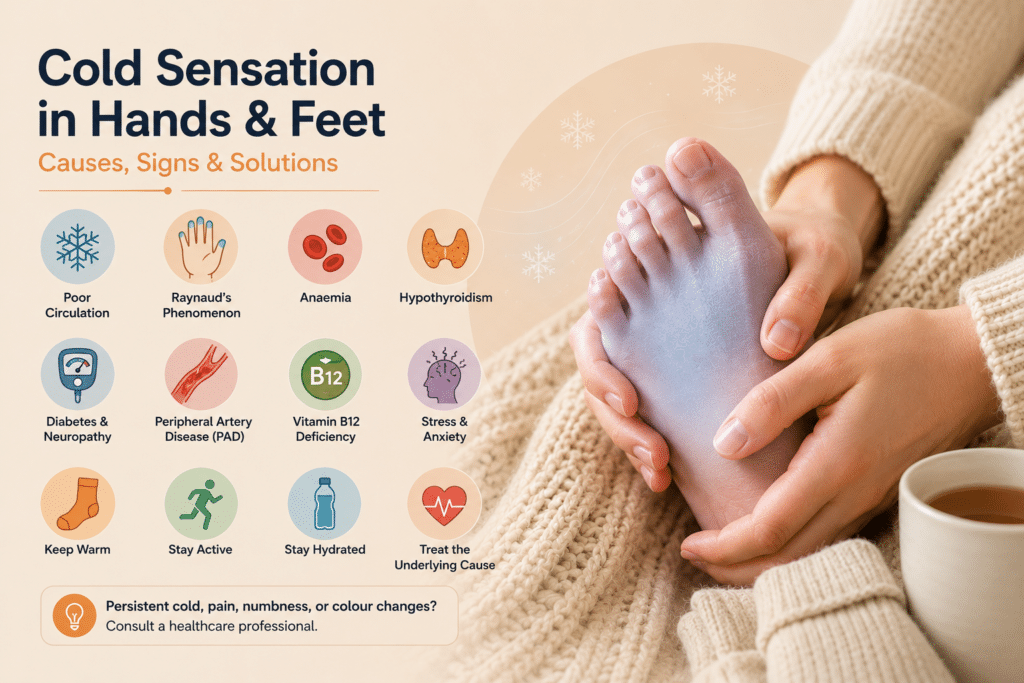
Sometimes the simplest tricks help the most. A few things I’ve seen work consistently include warm socks, gloves, layered clothing, and warm foot baths. Even running warm water over your hands helps quickly.
For circulation support, light exercises like walking, ankle rotations, finger stretches, and gentle yoga keep blood flowing. Heated insoles and reusable hand warmers from brands like HotHands or Hothiya are also surprisingly effective in colder months.
Avoid tight clothing, especially around the wrists, ankles, or waist, as it restricts blood flow.
Treatment Options That Truly Help
Treatment depends entirely on the cause, but here’s what generally works in real life.
Lifestyle Adjustments
For mild cases, simple changes often do a lot. Staying active, drinking enough water, dressing warmly, and reducing caffeine intake can make a real difference. I personally felt a noticeable improvement after just walking for 20 minutes daily.
Address the Underlying Condition
If anaemia is the issue, iron supplements help. If hypothyroidism is the cause, thyroid medication is the standard treatment. For diabetes-related cold limbs, blood sugar control is the most important step.
Treating the root cause usually solves the cold sensation for good.
Medications
For Raynaud’s, doctors may prescribe calcium channel blockers like nifedipine, which help blood vessels relax. PAD patients may need medications to improve blood flow or reduce cholesterol.
Always use these medications under proper medical supervision.
Physical Therapy and Movement
A skilled physiotherapist can help with circulation-improving exercises, especially if your job involves long sitting hours. Even simple toe stretches and ankle rotations make a real difference.
Stress Reduction
If stress and anxiety are part of the picture, slow breathing, mindfulness, and reducing caffeine help calm the nervous system. Just 10 minutes of deep breathing before bed can reduce nighttime symptoms.
Frequently Asked Questions
It’s usually due to circulation issues, anaemia, thyroid problems, or Raynaud’s. Persistent cold limbs in normal weather usually have a treatable cause.
Yes. The fight-or-flight response pulls blood toward the core, which can leave the limbs feeling cooler.
Not usually. Brief coldness in cool environments is normal. Worry only when it’s constant, painful, or paired with colour changes.
Yes. Mild dehydration reduces blood volume, so staying hydrated supports better circulation.
Final Thoughts
A cold sensation in the hands and feet is uncomfortable, but it’s almost always understandable once you look at the right cause. From Raynaud’s and anaemia to thyroid issues and circulation problems, the causes are varied, and so are the fixes.
If your hands and feet keep feeling like they belong in a refrigerator, don’t ignore it and don’t panic either. Track the pattern, note the triggers, and talk to a qualified doctor. Your body is gently asking for attention. The kindest thing you can do is give it.