
That burning, tingling, or numb patch on the outer part of your thigh is most likely meralgia paresthetica, a condition caused by compression of the lateral femoral cutaneous nerve. It is not dangerous, it does not cause leg weakness, and roughly 85% of people recover fully with simple lifestyle changes according to the National Institutes of Health. Understanding what triggers it and how to treat it can help you find relief faster and avoid unnecessary worry.
What Is Meralgia Paresthetica?
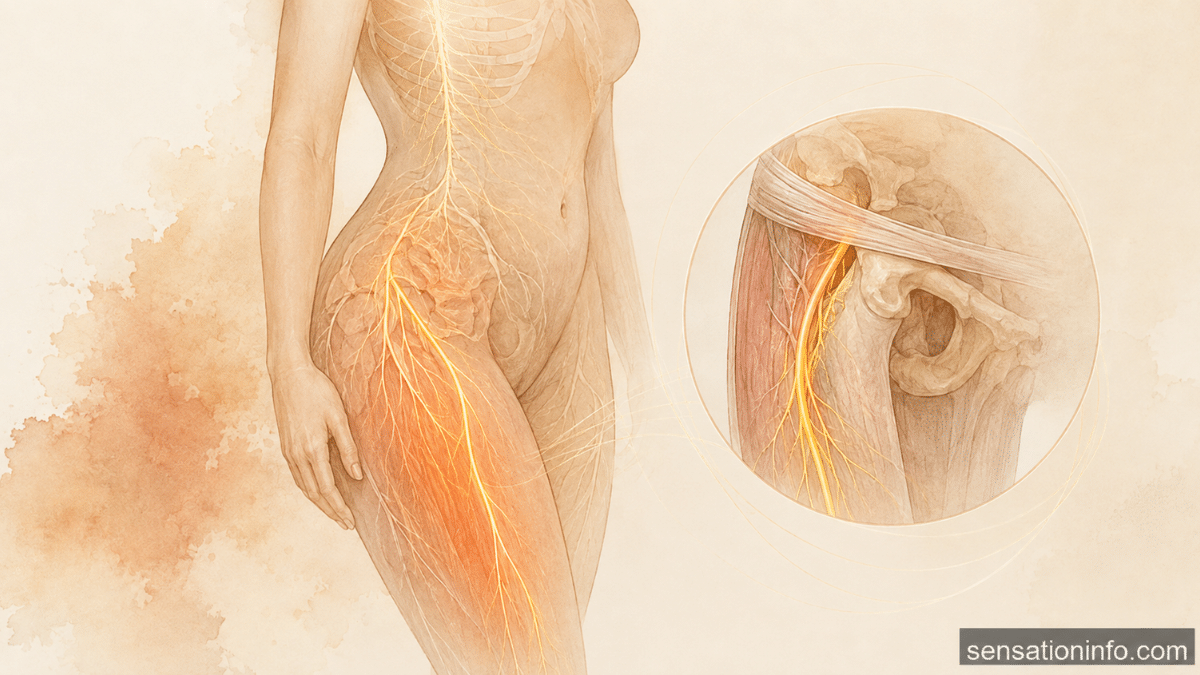
Meralgia paresthetica (also called Bernhardt Roth syndrome) is a nerve entrapment condition. A single sensory nerve called the lateral femoral cutaneous nerve (LFCN) runs from your lower spine through your pelvis, passes near or under the inguinal ligament in your groin, and fans out across the front and outer surface of your thigh. It carries only sensation. It has nothing to do with muscle strength or movement.
When something squeezes or irritates this nerve along its path, the signals it sends get scrambled. The result is pain, burning, numbness, or tingling in a hand sized patch on your outer thigh. The condition affects approximately 4.3 people per 10,000 each year according to a review published in the International Journal of General Medicine. It is most common between ages 30 and 60 and occurs in both men and women.
What Does Meralgia Paresthetica Feel Like?
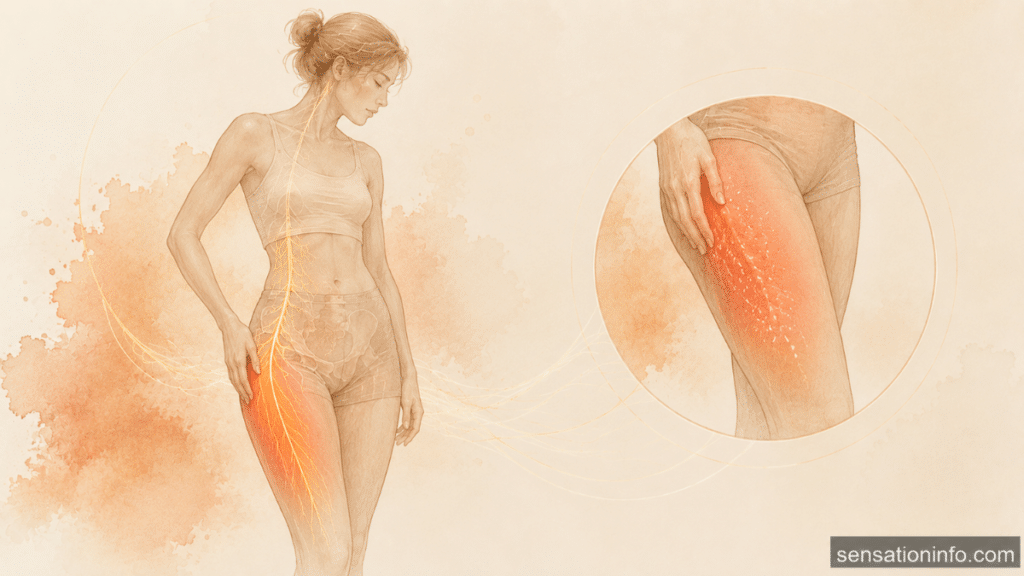
The symptoms are distinctive once you know what to look for. They show up on one side only in most cases and stay limited to the outer or front portion of the upper thigh.
You may notice a burning sensation that feels like someone pressed a warm iron against your skin. Some people describe it as a deep ache mixed with surface tingling, similar to the pins and needles you feel when a limb “falls asleep.” Others experience outright numbness, as if a patch of skin has gone dead. One of the most telling signs is that light touch feels more painful than deep pressure on the affected area, a phenomenon called allodynia.
Symptoms tend to worsen with activities that extend the hip, such as standing for long periods or walking. They often improve when you sit down, because hip flexion takes tension off the nerve. Some people notice the discomfort gets worse after a long day on their feet or after wearing a heavy belt or tight waistband. A few people also notice hair loss in the affected skin area from repeated rubbing due to the abnormal sensations.
What Causes Meralgia Paresthetica?
The underlying problem is always the same: something compresses or irritates the lateral femoral cutaneous nerve. But the specific triggers fall into several categories.
External Pressure on the Nerve
This is the most common group. Tight clothing, heavy belts, tool belts, corsets, and restrictive waistbands can press directly on the nerve where it passes near the hip bone. Seat belts during a car accident can also injure the nerve at this point. Police officers, construction workers, and others who wear heavy utility belts are particularly prone to this cause.
Body Changes That Increase Pressure
Anything that raises pressure inside the abdomen or pelvis can push on the nerve from the inside. Obesity is one of the strongest risk factors because excess abdominal weight bears down on the inguinal ligament area. Pregnancy produces a similar effect as the growing uterus increases intra abdominal pressure. Abdominal fluid buildup (ascites) from liver disease can also trigger the condition.
Medical Conditions
Diabetes is a significant risk factor. People with diabetes develop meralgia paresthetica at roughly 247 cases per 100,000 patient years, dramatically higher than the general population rate, according to data reviewed in the International Journal of General Medicine. Diabetes damages nerves through metabolic pathways that cause swelling and impair normal nerve function. Hypothyroidism, lead poisoning, and alcohol use disorder also increase risk by affecting nerve health directly.
Surgery and Medical Procedures
Meralgia paresthetica can develop after surgical procedures near the hip and pelvis. Hip replacement surgery using the anterior approach carries a notable risk, with one study finding nerve injury in up to 81% of cases, though most of these resolve. Spine surgery, laparoscopic procedures, pelvic surgery, and iliac crest bone graft harvesting are other known surgical triggers.
Structural Factors
Having legs of different lengths, scoliosis, or degenerative changes in the pubic symphysis can alter how the nerve sits against surrounding structures and lead to compression over time.
Who Is Most at Risk?
Several factors raise your chances of developing this condition. You are at higher risk if you carry excess weight around your midsection, have diabetes or thyroid problems, are between 30 and 60 years old, are pregnant, wear restrictive clothing or heavy equipment belts regularly, or have recently had hip or abdominal surgery. People who do repetitive leg motions in their work or exercise routine may also be more susceptible.
When Should You See a Doctor?
Meralgia paresthetica is not a medical emergency, but you should see a healthcare provider if the burning, numbness, or tingling in your thigh lasts more than a few days and does not improve with basic measures like loosening your clothing. See a doctor promptly if the pain becomes severe enough to interfere with walking or sleep, if you notice any muscle weakness in your leg (which would suggest a different diagnosis), or if symptoms appear in both legs simultaneously.
Seek immediate medical attention if thigh symptoms accompany sudden back pain, loss of bladder or bowel control, or weakness in both legs, as these could signal a spinal emergency rather than simple nerve compression.
How Is Meralgia Paresthetica Diagnosed?
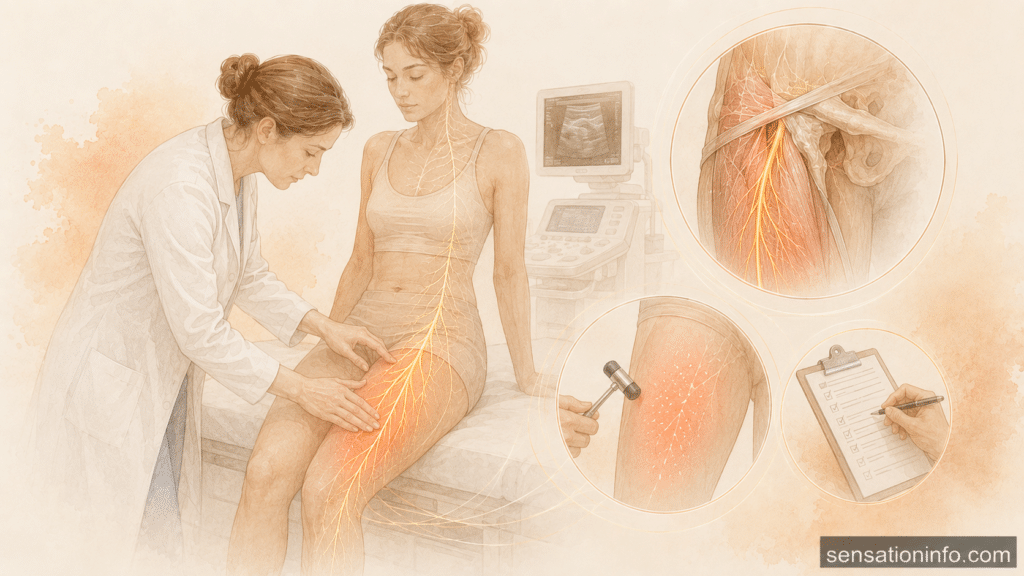
Diagnosis usually starts with a physical examination and a detailed conversation about your symptoms, clothing habits, recent weight changes, and surgical history.
Physical Examination
Your doctor will test sensation on the outer thigh using light touch and pinprick. In meralgia paresthetica, there is typically an oval shaped area about 10 inches by 6 inches on the anterolateral thigh where sensation is altered. Reflexes and muscle strength remain completely normal because the LFCN is purely sensory. A negative straight leg raise test helps distinguish this condition from sciatica and lumbar nerve root problems.
The Pelvic Compression Test
This is one of the most reliable bedside tests. You lie on your unaffected side while the examiner presses down on your pelvis for about 45 seconds. If symptoms decrease during the compression, the test is positive. Research published by the NIH reports this test has a sensitivity of 95% and a specificity of 93%, making it highly accurate.
Blood Tests
If your doctor suspects a metabolic cause, blood work may include glucose and hemoglobin A1c for diabetes screening, thyroid function tests, vitamin B levels, and lead levels.
Imaging
Plain X rays do not show meralgia paresthetica itself but can rule out hip arthritis, pelvic tumors, or bone abnormalities. CT scans or MRI may be ordered if a tumor, mass, or other structural cause is suspected.
Nerve Studies
Electromyography (EMG) and nerve conduction studies are not always necessary but can help when the diagnosis is uncertain. These tests measure electrical activity in the nerve and muscles. They are most useful for ruling out lumbar radiculopathy or a more widespread neuropathy.
Diagnostic Nerve Block
In difficult cases, injecting a local anesthetic near the lateral femoral cutaneous nerve at the inguinal ligament can confirm the diagnosis. If the injection temporarily eliminates your symptoms, the nerve is confirmed as the source.
How Do You Tell Meralgia Paresthetica Apart from Other Conditions?
Several conditions can mimic the symptoms. Lumbar radiculopathy (a pinched nerve in the lower back) can cause thigh pain but usually also involves back pain, muscle weakness, and reflex changes. Hip osteoarthritis produces groin and thigh pain but typically worsens with hip rotation and causes stiffness. Sciatica shoots pain down the back of the leg, not the outer thigh. Femoral neuropathy affects the front of the thigh but also causes quadriceps weakness. Your doctor uses the pattern of symptoms, the physical exam findings, and sometimes testing to tell these apart.
What Are the Treatment Options?
The good news is that most cases of meralgia paresthetica improve without aggressive treatment. The approach depends on how long you have had symptoms and how severe they are.
Lifestyle and Home Treatments
For most people, these changes alone resolve the problem within a few weeks to months.
Wear loose fitting clothing. Switch away from tight jeans, belts cinched at the waist, or restrictive undergarments. If you wear a tool belt or utility belt for work, consider a suspender style system that distributes weight to the shoulders instead.
Lose weight if you are overweight. Reducing abdominal pressure is one of the most effective long term solutions. Even a moderate reduction can make a noticeable difference.
Apply ice to the affected area for 15 to 20 minutes at a time. Cold reduces local nerve irritation and can provide temporary pain relief.
Avoid prolonged standing or walking when symptoms flare. Sitting with your hip flexed takes tension off the nerve and often provides immediate relief.
Over the Counter Pain Relief
Nonsteroidal anti inflammatory drugs such as ibuprofen (Advil) or naproxen (Aleve) can help manage pain during acute flares. Acetaminophen (Tylenol) is another option if you cannot take NSAIDs.
Topical Treatments
Capsaicin cream applied to the affected area can reduce nerve pain over time by depleting a pain signaling chemical called substance P. Topical lidocaine patches or cream provide temporary numbing relief. Some studies have also explored topical tacrolimus for this condition.
Prescription Medications
If symptoms persist beyond one to two months, your doctor may prescribe medications that target nerve pain specifically. Gabapentin (Neurontin) and pregabalin (Lyrica) are anticonvulsant medications that calm overactive nerve signals. Tricyclic antidepressants can also reduce nerve pain, though they may cause drowsiness. Phenytoin (Dilantin) and carbamazepine (Tegretol) are older anticonvulsants sometimes used as well. Duloxetine (Cymbalta) is another option that works on both pain and nerve signal pathways.
Corticosteroid Injections
An injection of corticosteroid medication near the compressed nerve can reduce inflammation and swelling, providing weeks to months of relief. This is often combined with a local anesthetic for immediate symptom reduction. According to a study reviewed in the International Journal of General Medicine, 80% of patients who received nerve block therapy experienced progressively decreased symptoms within one week.
Physical Therapy
Exercises that strengthen the hip, core, and buttock muscles can help by improving pelvic alignment and reducing mechanical stress on the nerve. Stretching the hip flexors and quadriceps may also provide relief. While research specifically supporting physical therapy for meralgia paresthetica is limited, it is considered a safe and reasonable option.
Advanced and Interventional Treatments
Pulsed radiofrequency ablation uses controlled energy to disrupt pain signals from the nerve without destroying it. This is a minimally invasive option for people who do not respond to medications and injections. Kinesiology taping and electroacupuncture have shown benefit in some case reports, though large scale evidence is still limited.
Surgery
Surgery is reserved for severe, chronic cases that have not responded to months of conservative treatment. Two surgical options exist.
Nerve decompression (also called nerve release) involves freeing the nerve from the structures compressing it and sometimes repositioning it about 2 centimeters away from the anterior superior iliac spine. This approach preserves sensation.
Neurectomy involves cutting the nerve entirely. It eliminates pain but causes permanent numbness in the area the nerve once supplied. A retrospective series of 167 surgical patients reported by the NIH found that approximately 80% experienced significant symptom improvement after surgery.
What to Expect During Recovery
The timeline depends on the cause and your treatment approach.
For cases triggered by tight clothing, a heavy belt, or prolonged pressure, symptoms often begin improving within days to weeks of removing the source.
For pregnancy related cases, symptoms typically resolve after delivery.
For cases following surgery (hip replacement, spine surgery), the nerve usually recovers within about three months according to the Cleveland Clinic.
For cases managed with conservative treatment including lifestyle changes and medication, the NIH reports that about 85% of patients experience full recovery, though some cases take several months.
For chronic cases requiring surgery, recovery from the procedure itself takes a few weeks, but full nerve healing may take several months. The final outcome depends on whether decompression or neurectomy was performed.
Can You Prevent Meralgia Paresthetica?
There is no guaranteed way to prevent it, but you can significantly reduce your risk.
- Maintain a healthy weight to keep pressure off the inguinal ligament area
- Wear clothing that fits comfortably at the waist without digging in
- Avoid heavy belts or switch to suspender style weight distribution systems
- If you have diabetes, keep your blood sugar well controlled to protect your nerve health
- Take breaks from prolonged standing, especially if you notice early tingling in your outer thigh
- If you are pregnant, wearing a supportive maternity belt that distributes pressure evenly may help
Key Takeaways
- Meralgia paresthetica is caused by compression of the lateral femoral cutaneous nerve and produces burning, tingling, or numbness on the outer thigh.
- The condition is purely sensory and does not cause leg weakness or affect your ability to walk normally.
- Tight clothing, obesity, pregnancy, diabetes, and hip surgery are the most common triggers.
- About 85% of people recover fully with conservative measures like wearing looser clothing, losing weight, and managing underlying conditions.
- The pelvic compression test is a simple and highly accurate way for doctors to diagnose the condition at the bedside.
- Medications such as gabapentin, topical capsaicin, and corticosteroid injections are effective for persistent cases.
- Surgery is rarely needed but can provide relief when all other treatments have failed.
Frequently Asked Questions
Meralgia paresthetica is not a serious or life threatening condition. It is caused by compression of a sensory nerve in the thigh and does not affect muscle strength or your ability to walk. About 85% of people recover fully with conservative treatment such as wearing looser clothing and losing weight. However, you should see a doctor if symptoms are severe, worsening, or accompanied by leg weakness, as these could indicate a different condition.
The duration varies depending on the cause. Cases triggered by tight clothing or belts often improve within days to weeks once the pressure source is removed. Pregnancy related cases typically resolve after delivery. Post surgical cases usually improve within about three months. Some cases managed with lifestyle changes and medication take several months to fully resolve. Chronic cases requiring surgery may take additional months for nerve healing.
Yes, many cases of meralgia paresthetica resolve on their own, especially when the underlying cause is temporary, such as wearing tight clothing or pregnancy. Removing the source of nerve compression is often all that is needed. The National Institutes of Health reports that approximately 85% of patients recover with conservative management alone, without needing medication or surgery.
No, meralgia paresthetica and sciatica are different conditions involving different nerves. Meralgia paresthetica involves the lateral femoral cutaneous nerve and causes symptoms on the outer thigh only, with no muscle weakness. Sciatica involves the sciatic nerve and typically causes pain that shoots down the back of the leg, often with muscle weakness and reflex changes. Both can cause leg pain, but the location, pattern, and nerve involved are distinct.
Doctor’s Recommendation
If you have been experiencing burning or unusual sensations in your leg and want to understand the full range of possible causes, our detailed guide on what causes a burning sensation in your leg covers the clinical questions behind this common symptom. It can help you determine whether your discomfort points to nerve compression, circulation issues, or another underlying condition worth discussing with your healthcare provider.
References
- National Institutes of Health. Meralgia Paresthetica. StatPearls. 2024.
- Mayo Clinic. Meralgia Paresthetica: Symptoms and Causes. 2024.
- Cleveland Clinic. Meralgia Paresthetica: Causes, Symptoms and Treatment. 2024.
- Khalil N, Nicotra A, Rakowicz W. Meralgia Paresthetica: A Review of the Literature. International Journal of General Medicine. 2012.