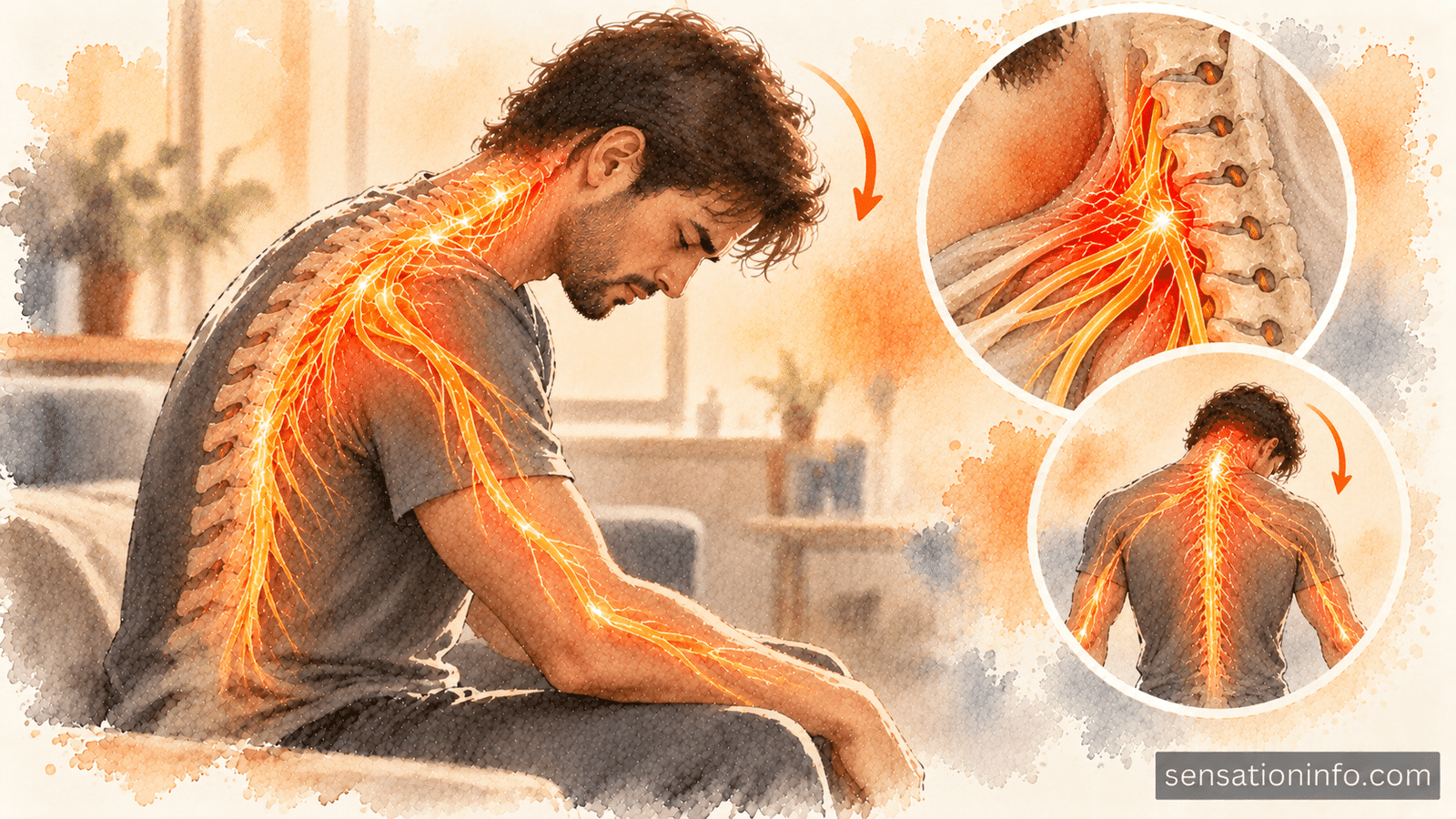

Lhermitte’s sign is a sudden, intense electric shock sensation that shoots down your spine and into your arms or legs when you bend your neck forward. It is not a disease itself, but rather a sharp neurological symptom indicating that the nerves in your cervical spinal cord are irritated or losing their protective coating. While it is strongly associated with Multiple Sclerosis (MS), it can also be triggered by severe vitamin B12 deficiency, spinal cord compression, or radiation therapy.
If you experience this frightening electric shock sensation in your body every time you look down, you should schedule a prompt evaluation with a neurologist to identify the underlying cause and prevent further nerve damage.
What Does Lhermitte’s Sign Feel Like?
Lhermitte’s sign is characterized by a brief, buzzing, or vibrating electrical shock that starts in the back of the neck and travels rapidly down the spine. For many patients, the sensation branches outward into the arms, fingers, legs, and even the toes. The feeling is completely involuntary and directly tied to the physical movement of the neck.
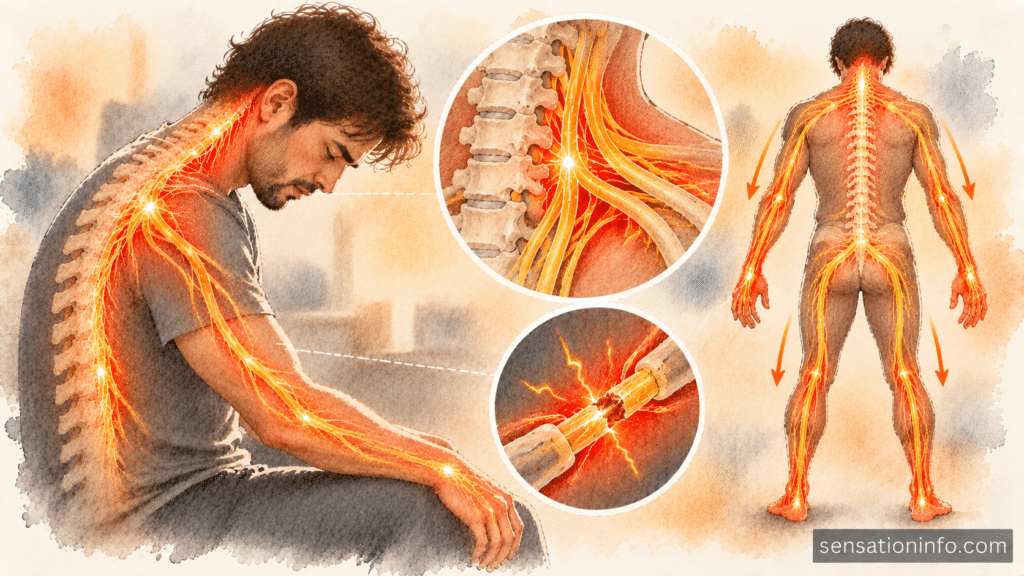
The shock typically lasts only for a fraction of a second. As soon as you return your head to a neutral, upright position, the electrical buzzing immediately stops. However, the feeling can be repeated instantly if you bend your neck forward again. This immediate physical trigger makes Lhermitte’s sign highly predictable but deeply unsettling.
Patients commonly describe the sensation using the following terms:
- A live electrical wire touching the bare spine.
- A severe internal buzzing or vibration.
- A sudden zap of electricity shooting downward.
- A wave of sharp vibrations that forces them to suddenly flinch or jerk their head backward.
Common Causes of Lhermitte’s Sign
Lhermitte’s sign happens when the main nerve pathways in the cervical spine become overly sensitive to physical stretching. When you look down, your spinal cord stretches slightly. Healthy nerves handle this stretch easily, but damaged nerves send chaotic electrical signals that your brain interprets as a sudden shock.
Multiple Sclerosis (MS) and Nerve Demyelination
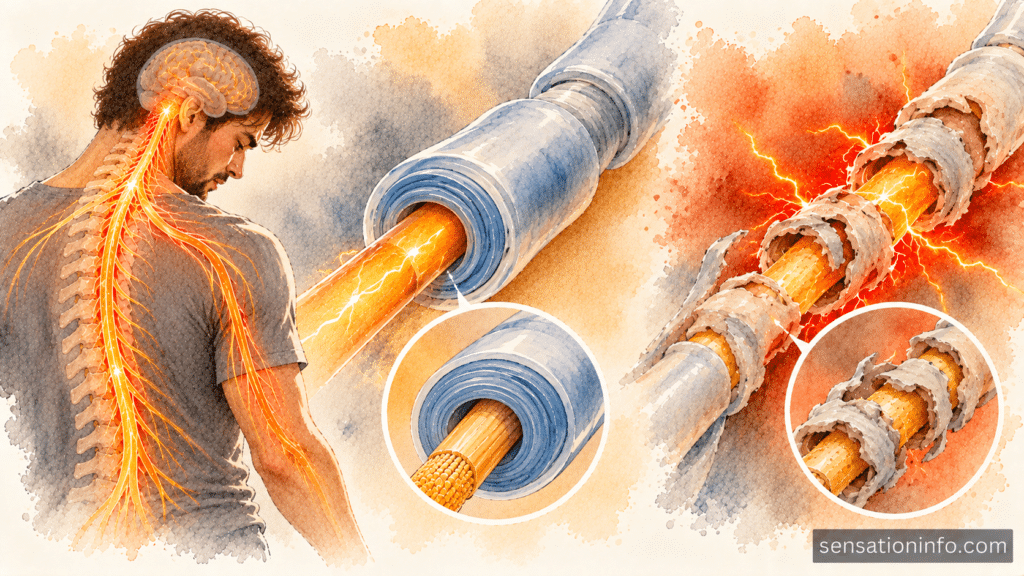
Multiple Sclerosis is the most famous and frequent cause of Lhermitte’s sign. In fact, it is often one of the very first early signs of multiple sclerosis that leads a patient to seek medical care.
MS causes your immune system to mistakenly attack myelin, which is the protective insulating sheath wrapping around your nerves. When this myelin is damaged in the cervical spinal cord, the exposed nerve fibers become highly unstable. As you bend your neck and stretch the spinal cord, these uninsulated nerves misfire and trigger the sudden electrical shock.
Cervical Spondylosis and Spinal Cord Compression
You do not need an autoimmune disease to experience Lhermitte’s sign. Physical pressure on the spinal cord can also cause the exact same electrical shocks. Cervical spondylosis, which is severe wear and tear arthritis in the neck joints, can cause bone spurs to grow inward toward the spinal canal.
When bone spurs or bulging discs press physically against the cervical spinal cord, the nerves become inflamed and hypersensitive. Bending the neck forward pulls the spinal cord directly against these bony obstacles, resulting in a sudden zap down the back. This is often seen in older adults who have significant neck degeneration.
Severe Vitamin B12 Deficiency
A lack of proper nutrition can physically damage your spinal cord. A severe Vitamin B12 deficiency can lead to a condition called subacute combined degeneration of the spinal cord.
Vitamin B12 is absolutely essential for the ongoing production and maintenance of myelin. When B12 levels drop critically low for a prolonged period, the myelin sheath begins to break down, mimicking the exact same nerve demyelination seen in MS. Patients with severe B12 deficiency often experience Lhermitte’s sign along with chronic numbness in their hands and feet.
Triggers: What Brings on the Sensation?
The single most consistent trigger for Lhermitte’s sign is neck flexion. This simply means bringing your chin down toward your chest. The degree of bending required to trigger the shock varies from person to person. Some individuals feel the shock with a slight downward glance, while others only feel it when fully tucking their chin.
Common daily activities that trigger the shock include:
- Looking down at a smartphone or tablet keyboard.
- Tying shoes or picking up objects from the floor.
- Washing hair in the shower while looking at the drain.
- Getting into a car and ducking the head under the door frame.
- Sleeping with a pillow that pushes the head too far forward.
Physical exhaustion, stress, and extreme heat can make Lhermitte’s sign much worse. In patients with MS, an increase in core body temperature can temporarily disrupt nerve signaling even further. A hot shower, intense exercise, or a high fever can cause the electric shocks to feel more intense or trigger more easily.
When to See a Doctor Immediately
Lhermitte’s sign is always a reason to seek professional medical evaluation. Because it directly involves the central nervous system and the spinal cord, it is not a symptom you can safely ignore or treat with basic home remedies.
You should schedule an urgent appointment with a doctor or neurologist if you experience:
- Electrical shocks down the spine that happen every time you bend your neck.
- Sudden weakness or clumsiness in your hands, arms, or legs.
- Loss of bowel or bladder control accompanying the spinal shocks.
- Numbness that spreads rapidly upward from your feet into your torso.
- Severe neck pain following a recent fall or physical trauma.
If you lose bowel or bladder control, or numbness spreads quickly up from your feet, go to the emergency room instead of waiting for an appointment.
A neurologist will typically order an MRI of the brain and cervical spine to look for demyelinating lesions, tumors, or physical cord compression. They may also order specialized blood tests to check your vitamin B12 levels and screen for other metabolic disorders.
Diagnosis and Treatment Options for Relief
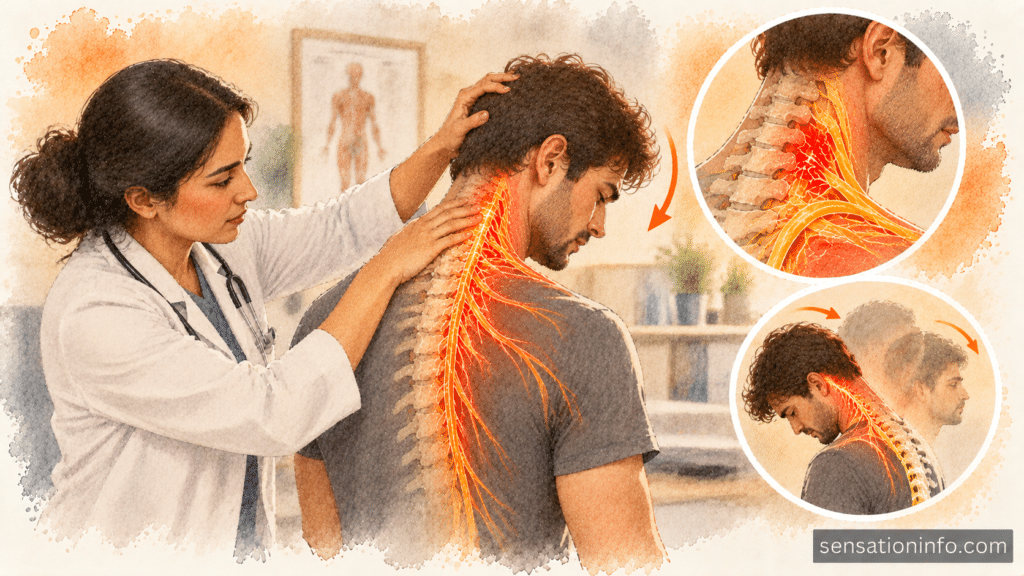
Treatment for Lhermitte’s sign completely depends on finding and treating the root cause. There is no single cure for the symptom itself, but managing the underlying condition usually stops or significantly reduces the shocks.
Medication for Nerve Pain
If the underlying cause is Multiple Sclerosis, your neurologist will likely focus on disease modifying therapies to slow the progression of the illness. To manage the actual nerve pain and help stop the electric shock sensation in your daily life, doctors frequently prescribe specific nerve stabilizing medications.
Common medications used to quiet the misfiring nerves include anticonvulsants like gabapentin (Neurontin), pregabalin (Lyrica), or carbamazepine (Tegretol). In some cases, tricyclic antidepressants like amitriptyline are used because they effectively alter how the central nervous system processes pain signals.
Nutritional and Physical Therapies
If a severe vitamin B12 deficiency is responsible, treatment requires immediate and high dose B12 injections. Oral supplements are often not absorbed well enough to reverse spinal cord damage. With prompt injection therapy, the myelin can sometimes repair itself, and Lhermitte’s sign may fade away over several months.
If cervical spine compression is causing the issue, treatments may range from physical therapy and posture correction to steroid injections. In severe cases where the spinal cord is dangerously compressed, decompression surgery may be required to permanently relieve the pressure and resolve the electric shocks.
Key Takeaways
- Lhermitte’s sign is a sudden electrical shock that shoots down the spine and into the limbs when you bend your neck forward toward your chest.
- It is a symptom, not a disease. It indicates that the nerves in your cervical spine are hypersensitive, compressed, or damaged.
- Multiple Sclerosis is a primary cause, as the disease strips the protective myelin coating away from the spinal nerves.
- Other serious causes include severe vitamin B12 deficiency, spinal tumors, neck arthritis, and previous radiation therapy.
- Always seek a neurological evaluation. You cannot treat Lhermitte’s sign with home remedies, and early diagnosis of the root cause is critical to prevent permanent nerve damage.
Frequently Asked Questions
The electrical shock sensation is very brief. It typically lasts only for a fraction of a second while the neck is actively bent forward, and stops immediately when you straighten your neck.
No. While it is strongly associated with Multiple Sclerosis, it can also be caused by severe vitamin B12 deficiency, cervical arthritis, spinal cord tumors, physical trauma, or a history of radiation therapy to the neck.
The shock is almost always triggered by neck flexion, which means bringing your chin down toward your chest. This happens during simple daily activities like looking down at a phone, tying your shoes, or washing your hair.
Doctor’s Recommendation
If you feel a shock down your spine when you bend your neck, book a visit with a neurologist rather than waiting to see if it goes away. Our guide to early signs of multiple sclerosis explains the other sensations that often appear alongside Lhermitte’s sign, so you can describe your symptoms clearly.