
A couple of years ago, my aunt started complaining about a strange tingling in her feet. She thought it was just bad shoes. Then came the numbness in her fingers, the random fatigue, and the unsettling feeling that her balance was slightly off. After weeks of dismissing it, a basic blood test revealed something most people don’t take seriously enough: a severe vitamin B12 deficiency.
That moment genuinely changed how I view this vitamin. B12 isn’t just another nutrient on a multivitamin label. It plays a direct role in how your nerves communicate, and when it drops, your body sends out very specific warning signals. Let me walk you through what I’ve learnt about vitamin B12 deficiency, tingling, numbness, and how to actually recover from it.
Why Vitamin B12 Matters So Much for Your Nerves
Vitamin B12, also called cobalamin, is one of the few nutrients your body absolutely cannot make on its own. You have to get it through food or supplements, and your nervous system depends on it more than most people realise.
B12 helps produce myelin, the protective sheath that wraps around your nerves. Think of myelin as the insulation on an electrical wire. Without it, nerve signals get scrambled, slow down, or short-circuit completely. According to the National Institutes of Health (NIH), prolonged B12 deficiency can cause permanent nerve damage if ignored long enough.
That’s why tingling, numbness, and odd sensations are some of the earliest red flags. Your nerves are essentially saying, ‘We’re losing our insulation. Please do something.”

How Deficiency Symptoms Actually Show Up
This is where things get interesting because B12 deficiency rarely announces itself loudly at first. It creeps in slowly, which is exactly why it goes undiagnosed for months in many people.
Tingling and Numbness
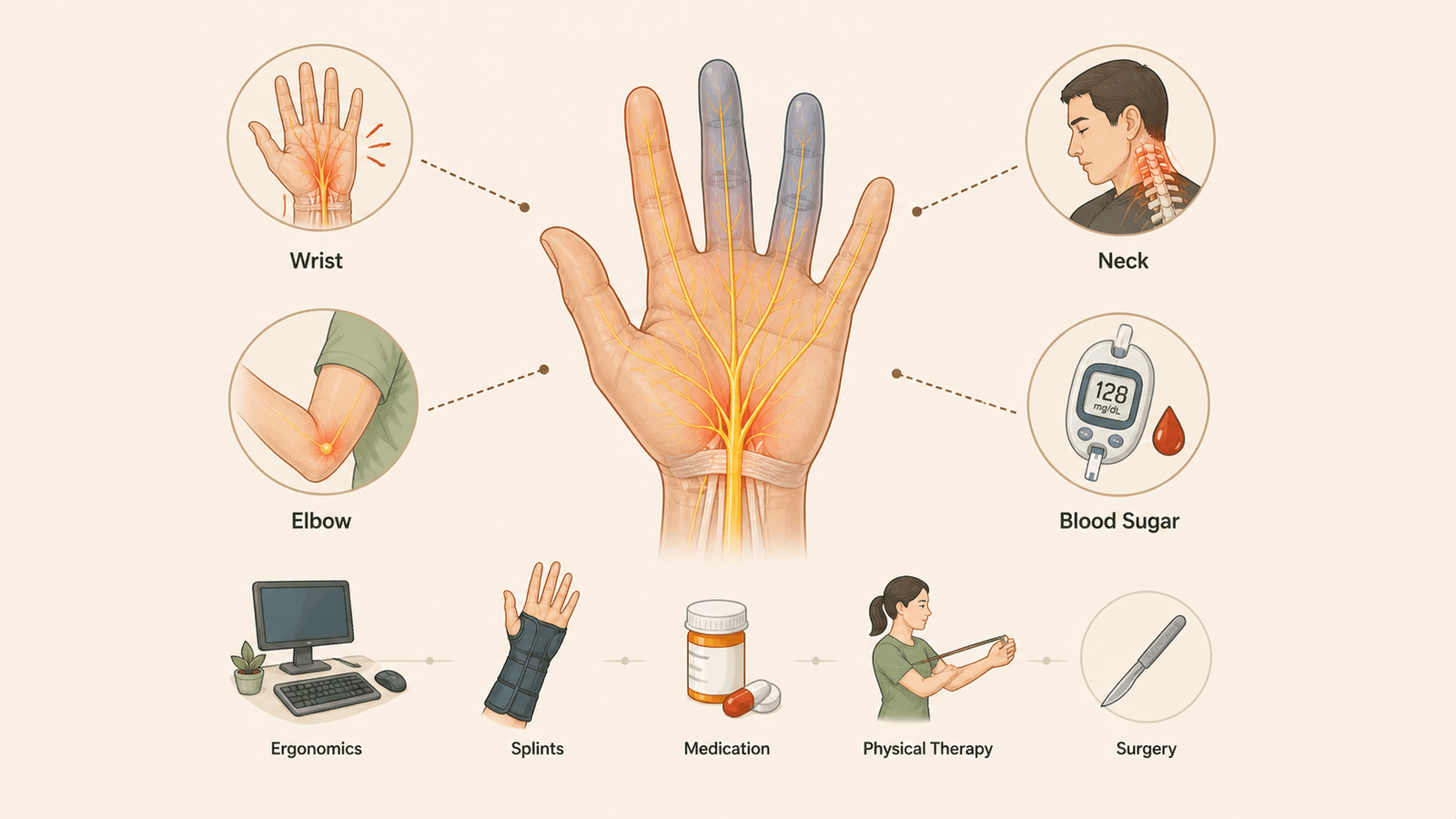
The classic symptom is tingling in the hands and feet, often described as pins and needles. Some people feel it on one side, others on both. It usually starts in the toes or fingertips and gradually moves upward.
This happens because of demyelination, where the myelin sheath around peripheral nerves begins to break down. When nerve signals can’t travel properly, your brain interprets the disrupted signals as tingling or numbness.
Balance and Coordination Issues
A lot of people don’t connect this with B12, but it’s a real and well-documented symptom. The Mayo Clinic notes that a B12 deficiency can cause unsteady walking and difficulty with balance. My aunt mentioned feeling like she had to “concentrate harder” just to walk straight, and that was a big clue.
Fatigue and Weakness
B12 also plays a key role in producing red blood cells. When levels drop, you can develop megaloblastic anaemia, which leads to constant tiredness, weakness, and breathlessness even from light tasks.
Memory and Mood Changes
This one surprises people the most. A long-standing deficiency can cause brain fog, poor concentration, irritability, and even depression. In older adults, it’s sometimes misdiagnosed as early dementia, which is genuinely heartbreaking when the real cause is a simple vitamin deficiency.
Other Lesser-Known Signs
A sore or swollen tongue (glossitis), pale or yellowish skin, mouth ulcers, and changes in vision can also point to B12 issues. None of these on their own confirm a deficiency, but combined with tingling or numbness, the pattern becomes very telling.

Who Is Most at Risk
B12 deficiency doesn’t affect everyone equally. Certain groups are far more vulnerable, and recognising whether you fall into one helps explain a lot.
Vegetarians and Vegans
B12 is found almost exclusively in animal-based foods like meat, fish, eggs, and dairy. People following plant-based diets without proper supplementation are at very high risk. This is well-documented by Harvard T.H. Chan School of Public Health and other nutrition authorities.
Older Adults
As we age, our stomach produces less acid, which is needed to absorb B12 from food. This is why deficiency becomes increasingly common after the age of 50, even in people who eat well.
People with Digestive Conditions
Conditions like Crohn’s disease, coeliac disease, and pernicious anaemia interfere with B12 absorption. People who’ve had gastric bypass or other stomach surgeries also lose the ability to absorb B12 efficiently.
Long-Term Medication Users
Certain medications quietly deplete B12 over time. Metformin (used for type 2 diabetes) and proton pump inhibitors like omeprazole are two of the most documented examples. If you’ve been on either for years, please get your B12 tested.
Pregnant and Breastfeeding Women
B12 needs to increase during pregnancy. Low levels can affect both the mother’s and the baby’s neurological development, which is why prenatal vitamins almost always include it.

How B12 Deficiency Is Diagnosed
This is the part where I genuinely wish more people knew their options, because diagnosis is simple and inexpensive.
A standard blood test measures serum B12 levels. However, this test isn’t always accurate on its own. Many doctors now order additional tests like methylmalonic acid (MMA) and homocysteine levels, which reveal whether your body is actually using B12 properly.
If your serum B12 looks “normal” but symptoms persist, ask your doctor about these advanced markers. I’ve seen cases where the basic test missed a clear deficiency that the MMA test confirmed immediately.
Some clinics also test for intrinsic factor antibodies if pernicious anaemia is suspected. This condition prevents your stomach from making the protein needed for B12 absorption, and it requires specific lifelong treatment.
Treatment and Supplementation
Now for the good news. B12 deficiency is highly treatable, often with significant improvement within weeks. The approach depends on the cause and severity.
Dietary Adjustments
For mild deficiency caused by diet, simply adding more B12-rich foods can help. Eggs, fish (especially salmon and tuna), dairy products, fortified cereals, and nutritional yeast are all reliable sources.
For vegetarians and vegans, fortified plant milks and cereals can help, but most experts recommend supplementation as the safer, more consistent option.
Oral Supplements
Daily oral B12 supplements work well for most mild to moderate cases. Doses typically range from 500 mcg to 1000 mcg, and methylcobalamin is often preferred over cyanocobalamin because it’s the active form your body uses directly.
Reputable brands like Nature Made, NOW Foods, Solgar, and HealthKart’s WOW Life Science offer reliable B12 supplements. Always check for third-party testing or USP certification when buying.
B12 Injections
For severe deficiency, neurological symptoms, or absorption issues, doctors usually prescribe B12 injections. These bypass the digestive system entirely and deliver B12 directly into the bloodstream.
Typical protocols start with daily or weekly injections for a few weeks, followed by monthly maintenance doses. Many patients report noticeable improvement within the first month of injections.
Sublingual and Nasal Forms
Sublingual tablets (dissolved under the tongue) and nasal sprays are useful alternatives for people who can’t absorb B12 through the digestive tract. They’re convenient, painless, and work well in mild-to-moderate cases.
Recovery Timeline: What to Realistically Expect
This part matters because so many people give up too soon. B12 recovery is slow but steady. Here’s what’s been consistently observed in medical literature and patient experience.
In the first two to four weeks, you’ll likely feel a major improvement in energy levels, mood, and mental clarity. Anaemia-related fatigue usually fades first.
Tingling and numbness take longer to resolve because nerves heal much more slowly than blood cells. Most people see meaningful improvement within three to six months, but in severe cases, full nerve recovery can take up to a year.
If treatment starts too late, some nerve damage may become permanent. That’s why early diagnosis is absolutely critical. The moment you notice persistent tingling or numbness, please don’t wait it out for months.
Real-Life Tips That Make Recovery Easier
A few small habits go a long way in supporting your recovery.
Pair your supplements with food to improve absorption. B12 absorbs best alongside meals that contain healthy fats and proteins.
Avoid excessive alcohol, which interferes with B12 absorption and worsens nerve damage. Cutting back, especially during recovery, makes a noticeable difference.
Track your symptoms in a simple journal. Recovery can feel slow, and writing down your progress helps you see improvements you might otherwise miss.
If you’re on metformin or PPIs, talk to your doctor about regular B12 testing every six to twelve months. Prevention is much easier than reversing damage later.
Frequently Asked Questions
Yes, in most cases. Early treatment usually resolves nerve symptoms within a few months. Severe or long-standing cases may have lingering effects.
You may feel improvements in energy within two to four weeks. Nerve-related symptoms take longer, often three to six months.
Methylcobalamin is the active form and doesn’t require conversion in the body. Many doctors prefer it for people with neurological symptoms
It’s possible but difficult. Most vegetarians benefit from fortified foods or supplements to maintain healthy levels.
Yes. Long-term deficiency can cause permanent nerve damage, severe anaemia, and cognitive decline. Early diagnosis is essential.
Final Thoughts
Vitamin B12 deficiency is one of the most underrated health issues I’ve come across. It looks small from the outside but affects nearly every system in your body, especially your nerves. Tingling, numbness, and fatigue aren’t symptoms to brush off, no matter how busy life gets.
The encouraging part is that recovery is genuinely possible. With the right diagnosis, supplementation, and a bit of patience, most people return to feeling normal again. I’ve seen it happen in my own family, and it’s the reason I take this topic so seriously.
If you’re noticing persistent tingling, numbness, or unexplained tiredness, please get your B12 levels tested. A simple blood test can save you months of discomfort and prevent long-term damage. Your nerves work hard for you every day. Giving them the right fuel is the least we can do in return.