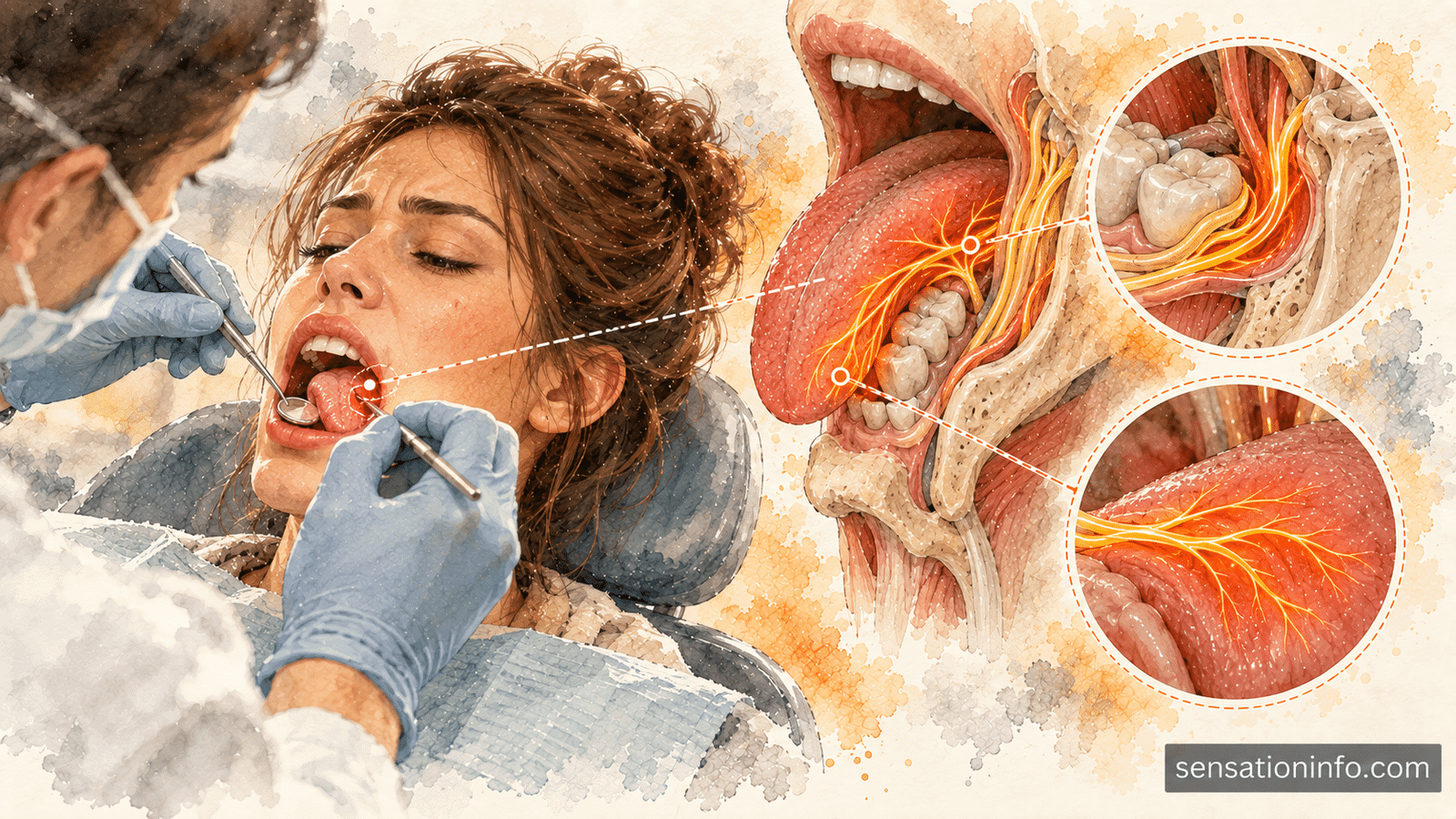

Waking up with numbness on the side of the tongue after a dental procedure is usually caused by temporary irritation or minor bruising of the lingual nerve. This delicate sensory nerve runs very close to your lower jawbone and the roots of your lower back teeth, making it highly vulnerable during local anesthesia injections or routine dental work. While dealing with unexpected tingling and numbness in your lips and tongue can feel alarming, you should know that most cases resolve completely within a few days or weeks as the nerve tissue naturally heals.
Why Dental Work Can Affect Your Tongue
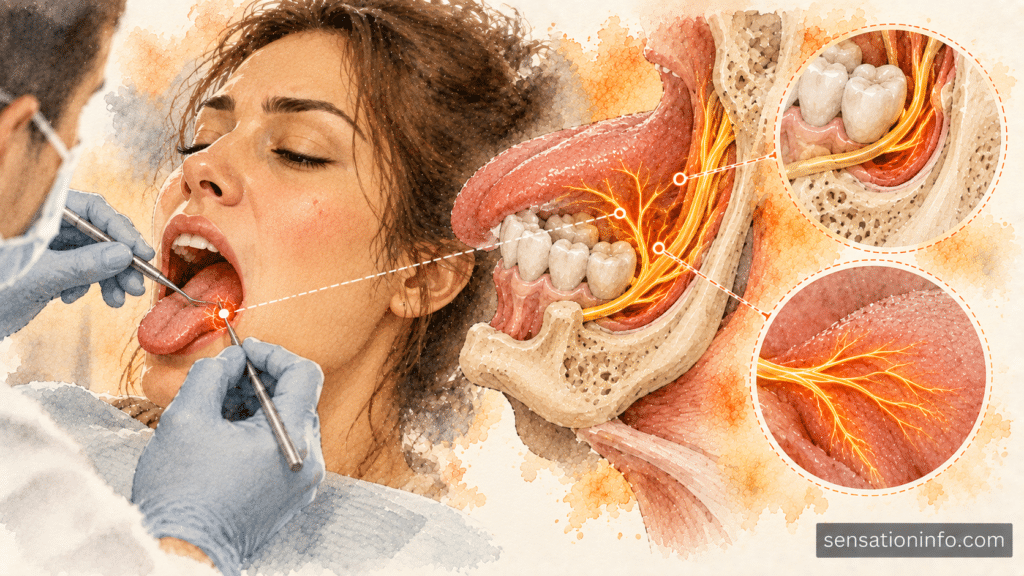
The tongue receives its feeling and taste through specific cranial nerves. The nerve responsible for sensation along the sides and front of the tongue is called the lingual nerve.
During dental treatments such as wisdom tooth extraction, root canal therapy, or even routine fillings in lower molars, instruments or local anesthetic needles pass very close to this pathway. When the nerve is stretched, compressed, or slightly nicked, it temporarily stops transmitting signals correctly. If that altered feeling spreads outward, patients often worry about tingling face and jaw sensations resulting from adjacent nerve irritation. This disruption leads to altered sensations, ranging from complete numbness to tingling, prickling, or a dull, heavy feeling.
Understanding Lingual Nerve Irritation Versus Nerve Injury
It helps to understand how nerves react to dental trauma by looking at the difference between temporary neuropraxia and more permanent injury.
- Neuropraxia: This is the most common and mildest form of nerve disruption. The nerve structure remains intact, but pressure or minor trauma stops its ability to conduct signals temporarily. Full recovery is expected within days to a few weeks.
- Axonotmesis or Neurotmesis: These are rare, more significant forms of nerve trauma where the internal fibers or the outer nerve sheath sustain damage. Recovery takes much longer, requiring specialized follow up and sometimes surgical repair.
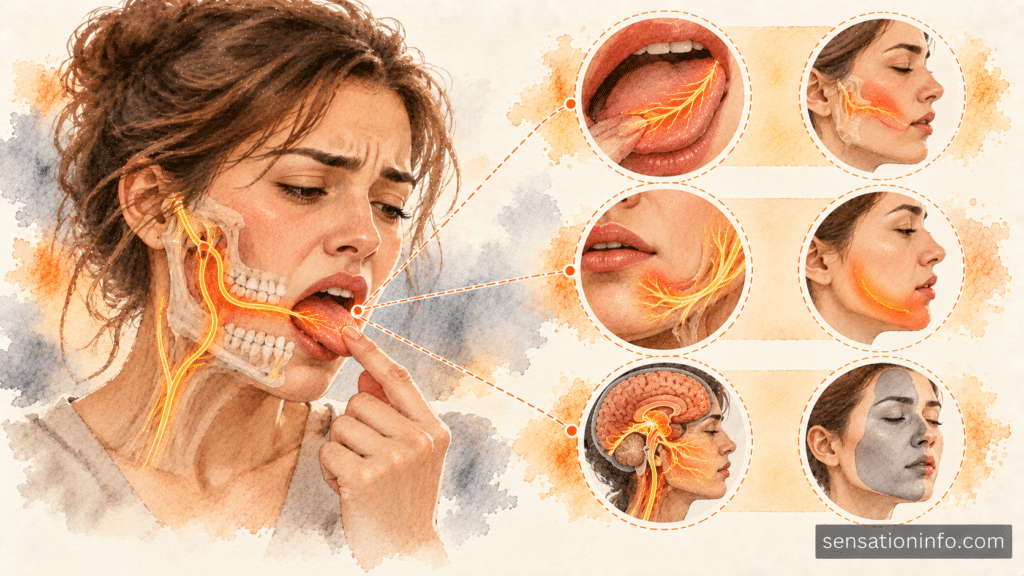
When you experience numbness confined strictly to one side of the tongue following a dental procedure, it typically represents a mild, temporary reaction of the nerve to the local anesthetic injection or the physical positioning of dental tools. When physical stress from dental alignment or biting mechanics contributes to discomfort, people frequently experience pins and needles around the jaw and TMJ alongside their oral symptoms.
Other Potential Causes of Tongue Numbness
While dental procedures are a frequent trigger, side tongue numbness can also arise from other sources.
Localized Oral Conditions
Inflammation within the mouth can irritate mucosal nerve endings. Canker sores, burning mouth syndrome, or localized trauma from biting the tongue can cause temporary localized sensory changes. Persistent abnormal sensations in the mouth often lead individuals to research tingling in lips and tongue causes and what to do for effective management steps.
Systemic and Neurological Factors
Sometimes localized numbness points toward broader conditions. Vitamin deficiencies, particularly low levels of vitamin B12, can affect peripheral nerves. Conditions like multiple sclerosis or transient ischemic attacks can also alter sensory perception, though these usually present with additional neurological signs.
Recognizing Associated Symptoms
Knowing what accompanies your tongue numbness helps you and your dental provider understand its origin.
| Symptom Pattern | Potential Meaning | What It Suggests |
| Numbness plus altered taste | Lingual nerve involvement | Taste buds on the affected side may temporarily lose signal transmission. |
| Numbness spreading to the lip or chin | Inferior alveolar nerve involvement | The needle or procedure may have affected the main nerve trunk supplying the lower jaw. |
| Numbness with facial weakness | Central or systemic issue | Requires prompt medical evaluation to rule out acute neurological events. |
Red Flag Symptoms: When to Seek Immediate Medical Care
Most post-dental tongue numbness improves steadily over time. However, certain signs require urgent professional attention. Seek immediate medical evaluation if you experience:
- Sudden difficulty breathing or swallowing
- Swelling of the tongue, throat, or lips that makes speaking hard
- Sudden weakness or drooping on one side of your face
- Confusion, dizziness, or slurred speech
Recovery Timeline and What to Expect
For the vast majority of patients who experience numbness after dental procedures, normal sensation returns progressively. You might notice a tingling or prickling sensation as the nerve fibers regenerate and wake up.
If numbness persists beyond two weeks without any sign of improvement, contact the dentist who performed the procedure. They can perform a simple clinical sensory test and, if necessary, refer you to an oral and maxillofacial surgeon for specialized evaluation. When sensory changes extend beyond the oral cavity, understanding general numbness in face causes symptoms and when to seek help can help clarify your overall clinical picture.
Key Takeaways
- Side tongue numbness after dental work usually stems from temporary lingual nerve irritation or bruising caused by local anesthesia injections or dental instruments.
- Most cases of post-dental nerve disruption represent mild neuropraxia that resolves completely within days to a few weeks without permanent damage.
- Recognizing accompanying patterns, such as altered taste or spreading numbness, helps differentiate local nerve involvement from broader neurological issues.
- Persistent numbness lasting longer than two weeks warrants professional evaluation by your dentist or an oral and maxillofacial surgeon.
- Red flag symptoms like sudden facial weakness, breathing difficulty, or slurred speech require immediate emergency medical attention.
Frequently Asked Questions
Permanent nerve damage from a routine dental local anesthetic injection is extremely rare. Most cases of injection related numbness resolve completely within days or a few weeks as the nerve heals.
Signs of nerve healing often include a gradual return of normal sensation, accompanied by mild tingling, itching, or pins and needles as nerve pathways reconnect and regain function.
You should consult your dentist or request a referral to an oral and maxillofacial surgeon if numbness shows no sign of improvement after two weeks or if pain and burning accompany the lack of feeling.
Doctor’s Recommendation
If tongue numbness following dental work persists beyond a few weeks or causes significant distress with eating and speaking, schedule a follow-up evaluation with your dentist or an oral surgeon to assess nerve recovery. For a broader clinical perspective on evaluating persistent sensory changes across facial regions, review the guidance on numbness in face causes symptoms and when to seek help.
References
- National Institute of Dental and Craniofacial Research. Nerve Damage and Dental Treatment. National Institutes of Health. 2023.
- American Association of Endodontists. Managing Procedural Complications. Journal of Endodontics. 2022.
- Mayo Clinic. Lingual Nerve Injury: Symptoms and Causes. Mayo Foundation for Medical Education and Research. 2024.
- Cleveland Clinic. Cranial Nerves and Oral Sensation. Cleveland Clinic Health Library. 2023.