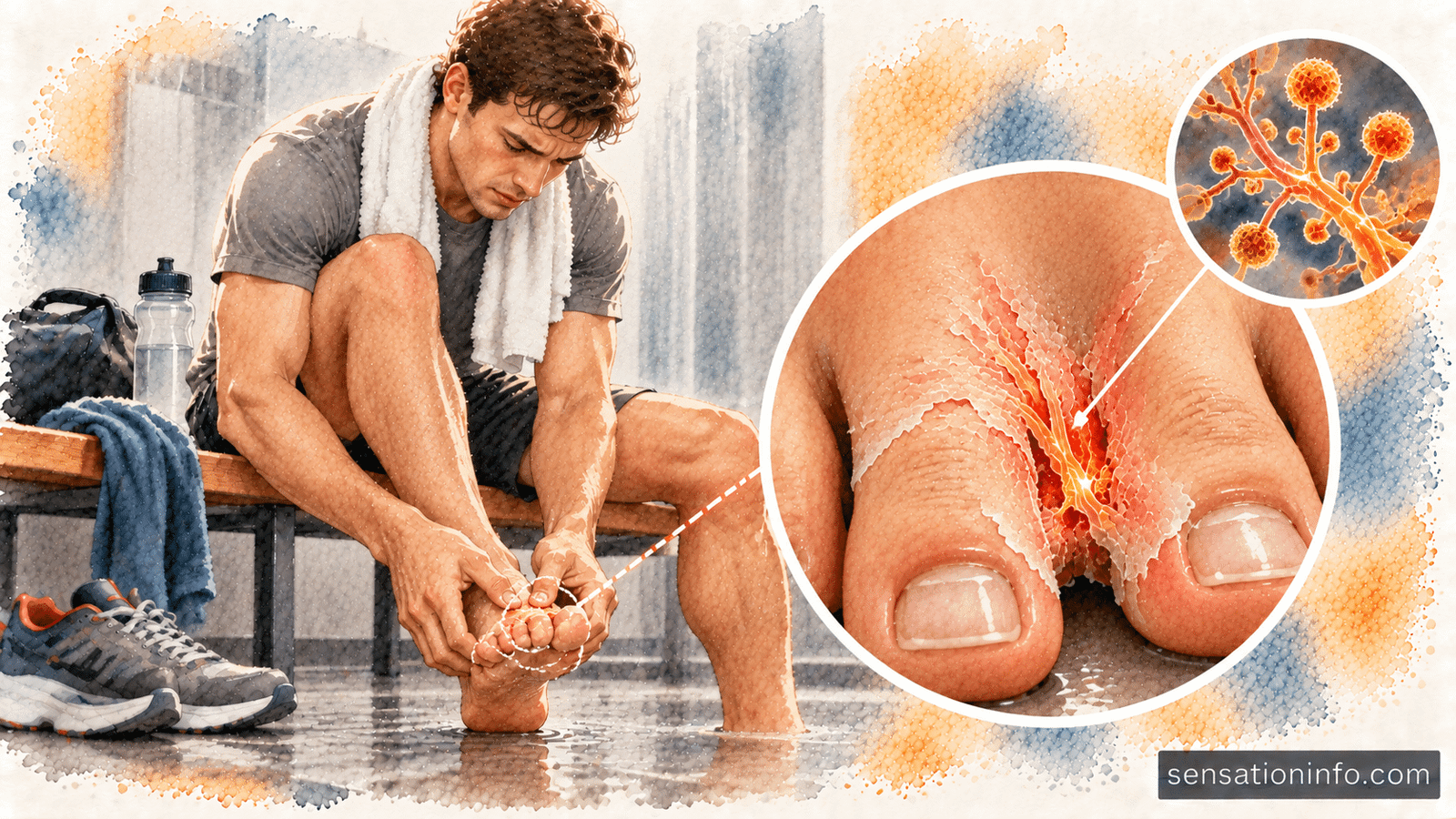

Burning between the toes is most commonly the very first warning sign of a superficial fungal infection known as athlete’s foot. This intense irritation thrives in warm and damp environments like locker room showers or sweaty gym shoes where fungus easily multiplies.
If you are experiencing discomfort that extends beyond your toes, you might need to explore the specific causes for widespread burning pain across the soles of your feet. Fortunately, catching a fungal infection early in the localized toe area makes it incredibly easy to treat at home with basic foot hygiene and topical treatments.
What Causes That Burning Between Your Toes?
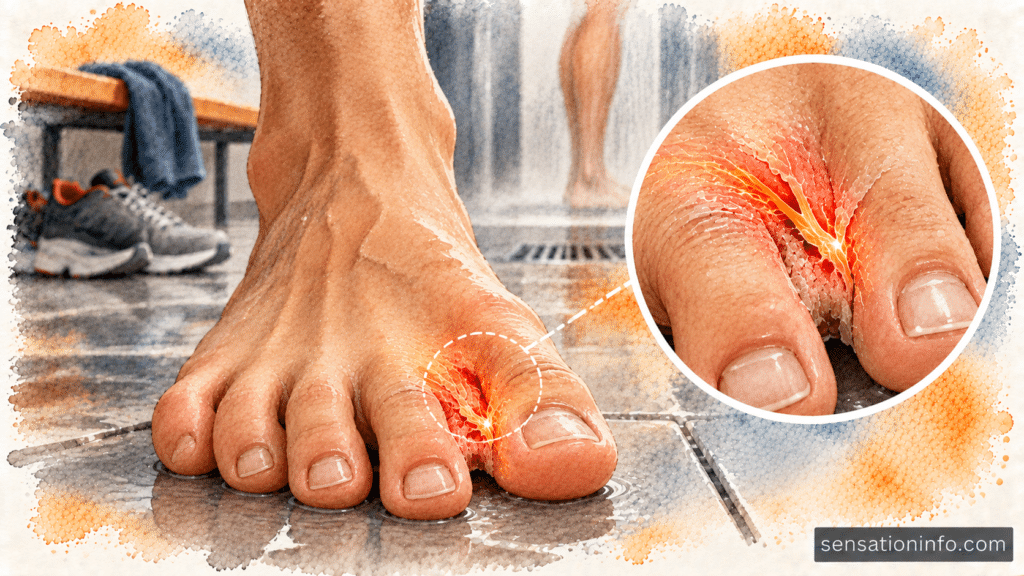
A microscopic fungus called a dermatophyte is almost always responsible for the sharp burning sensation between your toes. Dermatophytes are fungi that require keratin for growth. Keratin is the primary structural protein found in your skin, hair, and nails.
When these fungi invade the top layer of your skin, the resulting infection is medically known as tinea pedis. The interdigital space, which is the small gap between your toes, is highly vulnerable to tinea pedis. This tight space creates a phenomenon called moisture entrapment. When water or sweat gets trapped between tightly packed toes, it creates a miniature greenhouse effect. The skin becomes macerated, meaning it gets soggy and weak, allowing the dermatophyte fungus to easily penetrate the outer skin barrier and trigger the intense burning sensation.
The Locker Room and Gym Shoe Connection
Gym floors, public pools, and locker room showers are heavily contaminated with the specific fungi that cause athlete’s foot. According to the Centers for Disease Control and Prevention, dermatophytes easily survive on warm and damp surfaces for long periods. Walking barefoot in a public shower allows the fungal spores to attach directly to the skin of your feet.
Once the spores are on your skin, your athletic gear provides the perfect environment for them to rapidly multiply. Heavy gym shoes and thick athletic socks trap body heat and sweat during a workout. If you leave your feet confined in sweaty socks for hours after leaving the gym, the fungus rapidly colonizes the weakened skin between your toes.
Early Signs You Have a Fungal Infection
Burning is often the very first symptom of a developing fungal infection but it is rarely the only one. Identifying the accompanying signs can help you confirm the presence of early athlete’s foot before it spreads to your toenails or the soles of your feet.
- Intense itchy toes: The burning is usually accompanied by a deep persistent itch that gets significantly worse the moment you take off your shoes and socks.
- Peeling skin: You will likely notice small scales or peeling skin specifically in the webbing between your fourth and fifth toes. This area is the most common starting point for the infection.
- Cracked skin: As the fungus damages the tissue, the skin may develop painful fissures or cracks that look white and visibly soggy.
- Redness and inflammation: The affected interdigital space will appear bright red and irritated compared to the rest of your foot.
Normal Skin Friction vs Fungal Infection

Not every burning sensation is caused by a fungus. Sometimes the skin between your toes becomes irritated simply from physical rubbing or harsh chemicals.
| Symptom Feature | Athlete’s Foot (Tinea Pedis) | Interdigital Friction | Contact Dermatitis |
| Primary Sensation | Burning and intense itching | Soreness and raw pain | Stinging and burning |
| Skin Appearance | Peeling, white, soggy, cracked | Red, blistered, rubbed raw | Red, swollen, small rash bumps |
| Main Trigger | Dampness and barefoot walking | Tight shoes rubbing toes together | New socks, dyes, or laundry soap |
| Location | Usually starts between 4th and 5th toes | Any toe joint that rubs | Wherever the material touched |
Other Reasons Your Toes Might Burn
While fungus is the most common culprit for locker room foot discomfort, a few other medical conditions can irritate the nerves or the skin between your toes.
Contact dermatitis occurs when your skin reacts poorly to a specific substance. If you recently switched to a new brand of laundry detergent or started wearing socks made from synthetic dyes, your skin might be experiencing an allergic reaction. This typically resolves once you remove the offending material.
Nerve irritation can also mimic skin burning. If the burning feels deeper inside the tissue and is accompanied by annoying numbness spreading into your toes, it could indicate a compressed nerve in the foot or ankle.
Similarly, poor blood circulation can deprive the nerves in your extremities of oxygen. This can lead to a variety of uncomfortable sensations. If you frequently experience prickly pins and needles sensations in your feet alongside the burning, you should have your circulation and nerve health evaluated by a medical professional.
How to Treat Early Athlete’s Foot at Home
Over the counter antifungal cream and rigorous foot hygiene will successfully clear up most early fungal infections within two to four weeks.
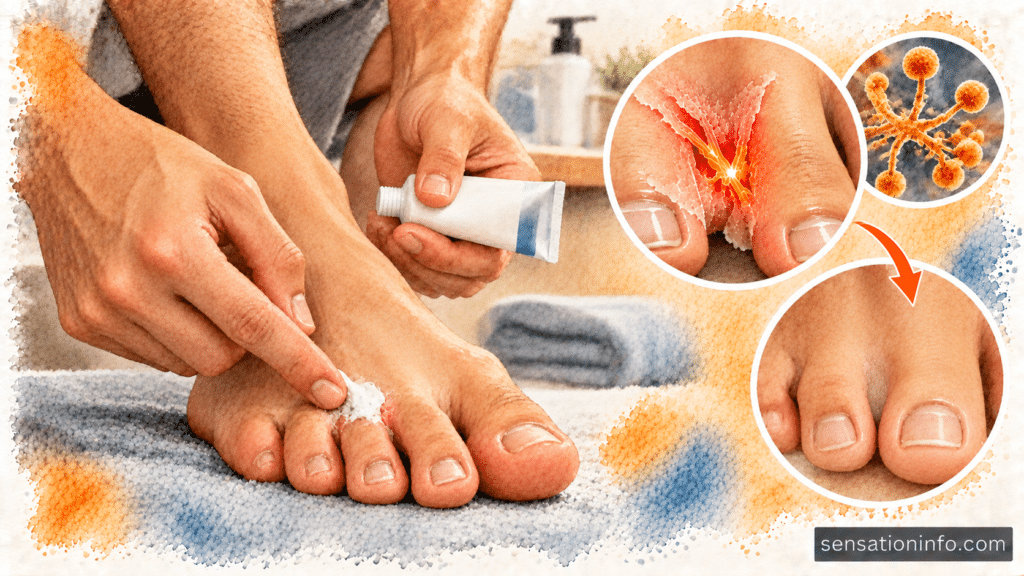
- Apply a targeted antifungal treatment. Visit your local pharmacy and purchase a cream containing active ingredients like terbinafine or clotrimazole. Wash and completely dry your feet, then apply the cream exactly as directed on the packaging. You must continue using the cream for at least one week after the burning between the toes completely stops to prevent a rapid recurrence.
- Keep your feet completely dry. Dermatophytes cannot survive without a steady supply of moisture. Make it a daily habit to dry completely between your toes after every single shower using a clean towel.
- Change your sweaty socks immediately. Never sit around in damp workout socks after finishing your exercise routine. Switch to clean and dry socks immediately. Choose moisture wicking materials like merino wool or specialized synthetic blends instead of pure cotton.
- Rotate your gym shoes. Never wear the same pair of athletic shoes two days in a row. Give your shoes at least twenty four hours to air out and dry completely before wearing them again.
- Protect your feet in public spaces. Always wear protective shower shoes or flip flops when walking in gym locker rooms, public showers, or hotel pool areas.
When to See a Doctor
Most cases of burning between the toes are completely self manageable. However, fungal infections can occasionally create openings in the skin that allow dangerous bacteria to enter your bloodstream.
You should seek professional medical care if you notice any of the following severe warning signs:
- The redness and swelling spread rapidly up your foot or lower leg.
- The cracked skin between your toes begins leaking pus or yellow fluid.
- You develop a fever alongside the foot pain.
- The burning sensation does not improve after two weeks of consistent antifungal treatment.
- You have diabetes or a compromised immune system, as foot infections in these populations can quickly become medical emergencies.
Key Takeaways
- Burning between the toes is usually the earliest sign of tinea pedis, widely known as athlete’s foot.
- The infection is caused by dermatophytes that thrive in the warm moist environments of gym locker rooms and sweaty athletic shoes.
- Moisture entrapment between the toes creates soggy skin that allows the fungus to easily invade and cause intense itching, peeling, and cracking.
- You can treat early infections effectively at home using over the counter antifungal creams containing terbinafine or clotrimazole.
- Preventing future infections requires rigorous foot hygiene, including changing sweaty socks immediately and wearing protective shoes in public showers.
- Seek immediate medical attention if the skin begins to ooze pus or if the redness spreads rapidly across the foot.
Frequently Asked Questions
Yes. The fungus thrives in any warm and damp environment. You can catch it by walking barefoot in hotel bathrooms, walking around public swimming pools, or even sharing a bath mat with a family member who has the infection
No. Popping blisters damages the protective skin barrier and significantly increases your risk of developing a severe secondary bacterial infection. Leave the blisters intact and apply an antifungal cream over the top of them.
Fungal spores can survive inside dark and damp athletic shoes for many months. It is highly recommended to wash your shoes or treat the insoles with an antifungal powder to prevent reinfecting yourself every time you work out.
Doctor’s Recommendation
Early athlete’s foot and minor fungal skin infections are highly manageable at home with over the counter topical treatments and improved foot hygiene. If you suspect a severe bacterial skin infection, or if you have diabetes and develop any foot wounds, consult your primary care physician or a podiatrist immediately for clinical care.
References
- Centers for Disease Control and Prevention. Hygiene-related Diseases: Athlete’s Foot (tinea pedis). CDC Health Information. 2022.
- Mayo Clinic. Athlete’s foot: Symptoms and causes. Mayo Clinic Patient Care and Health Information. 2023.
- Cleveland Clinic. Athlete’s Foot (Tinea Pedis). Cleveland Clinic Health Library. 2022.
- National Institutes of Health. Fungal Skin Infections. NIH News in Health. 2021.