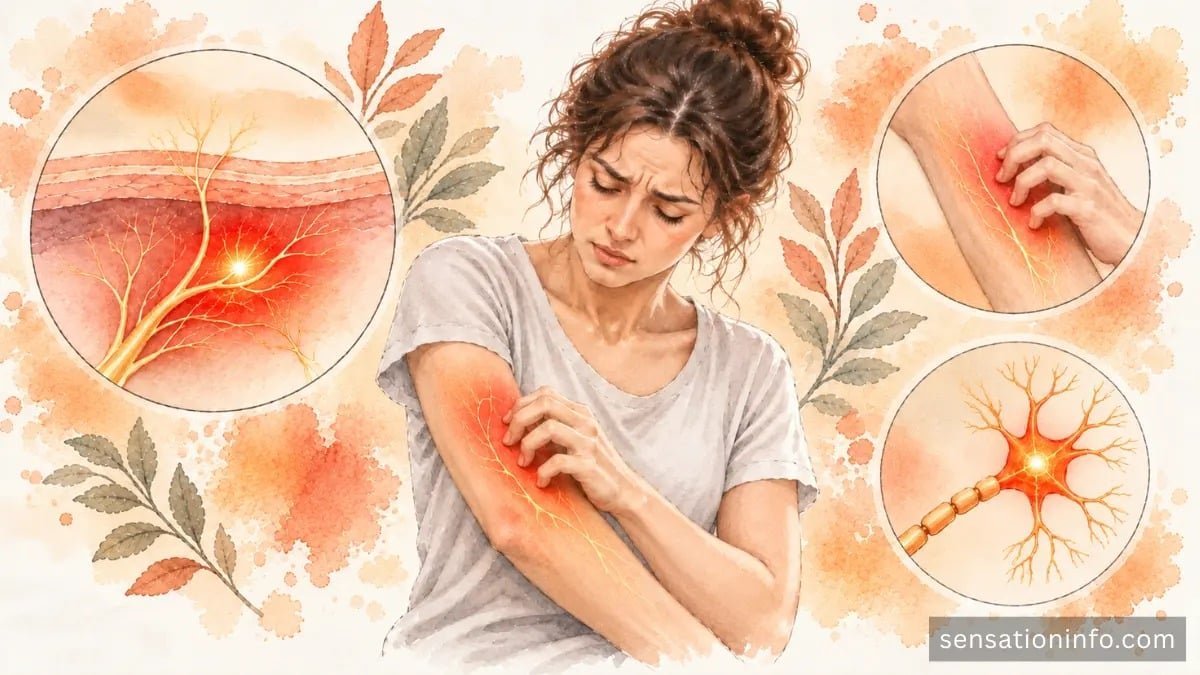

Neuropathic itch is an itching sensation caused by abnormal signaling along the nerves rather than a typical skin irritation. Unlike an ordinary itch caused by a rash, bite, allergy, or other skin problem, neuropathic itch may occur even when the skin appears normal. Scratching may provide little relief and can sometimes make the sensation more intense or damage the skin.
Understanding the possible cause is important because treatment depends on what is affecting the nerves.
What Does Neuropathic Itch Feel Like?
Neuropathic itch can feel different from the itching caused by a rash or insect bite. People may describe it as a deep crawling, prickling, burning, or tingling sensation beneath the skin.
The sensation may come and go or occur in sudden waves. Some people experience intense itching together with burning, pins and needles, or altered skin sensitivity.
One useful clue is that scratching does not provide the expected relief. In some cases, repeated scratching can further irritate the area and cause skin damage.
Why Doesn’t Scratching Always Relieve Neuropathic Itch?
Many common types of itching begin in the skin. For example, an allergic reaction can trigger inflammatory chemicals such as histamine, which activate itch-sensitive nerve endings.
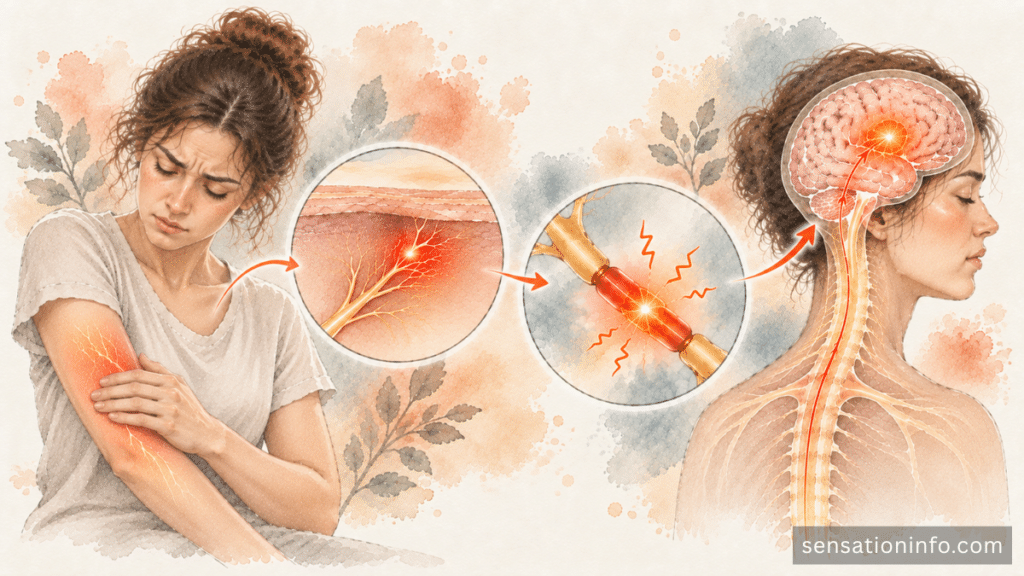
Neuropathic itch is different. The problem involves abnormal signaling within the nervous system. A damaged or irritated nerve may send inappropriate sensory signals that the brain interprets as itching.
Because the underlying problem is not necessarily on the surface of the skin, applying a conventional anti-itch product may not address the cause.
That does not mean that every itch that fails to respond to an itch cream is neuropathic. Persistent itching can have many causes, so a medical evaluation may be needed when symptoms continue or are accompanied by other neurological signs.
Common Causes of Neuropathic Itch
Nerve-related itching can develop when sensory nerves are damaged, irritated, or affected somewhere along the pathway between the skin and the nervous system.
Shingles and Postherpetic Itch
Shingles is caused by reactivation of the varicella-zoster virus and can affect sensory nerves. After the rash has healed, some people continue to experience abnormal sensations in the same area, including itching, burning, or pain.
This is sometimes referred to as postherpetic itch. P1ersistent symptoms may require treatment directed at nerve-related symptoms rather than the original skin eruption.
Notalgia Paresthetica
Notalgia paresthetica is a nerve-related condition that commonly causes itching, burning, or altered sensation in an area of the upper back, often near the shoulder blade.
Repeated rubbing or scratching can cause changes in skin color over time. The exact mechanism is not always clear, but irritation of sensory nerves supplying the affected area is thought to play a role.
Brachioradial Pruritus
Brachioradial pruritus causes itching, burning, or abnormal sensations most often on the outer forearms. The condition has been associated with both cervical nerve irritation and ultraviolet exposure.
Some people find that cooling the affected area temporarily reduces the sensation.
Peripheral Neuropathy
Peripheral neuropathy occurs when nerves outside the brain and spinal cord become damaged or dysfunctional. Diabetes is one common cause, but there are many others.
Depending on the nerves involved, symptoms can include burning, tingling, pain, altered sensation, or itching, particularly in the feet and hands.
Small fiber neuropathy can affect the small sensory nerve fibers responsible for pain and temperature sensations. If these fibers are involved, abnormal sensations may occur even when routine nerve tests are normal.
Warning Signs and When to See a Doctor
Persistent itching deserves medical attention when it is severe, unexplained, or accompanied by other symptoms.
Repeated scratching can break the skin barrier and increase the risk of infection.
Seek medical care if:
- You have scratched the area enough to break the skin
- The affected skin becomes increasingly red, warm, swollen, or starts draining fluid
- The itching repeatedly interrupts your sleep
- You develop weakness near the affected area
- The abnormal sensation spreads or is accompanied by significant numbness or other neurological symptoms
Sudden weakness, rapidly developing neurological symptoms, or other severe changes should be assessed promptly.
How Is Neuropathic Itch Diagnosed?
Diagnosis begins with a medical history and physical examination.
Your doctor may ask when the itching began, where it occurs, whether there is a visible rash, and whether you experience other symptoms such as burning, tingling, numbness, or weakness.
The evaluation may also consider conditions that can affect nerves, including diabetes, previous shingles, spinal problems, medication effects, nutritional deficiencies, and other neurological disorders.
Additional testing depends on the suspected cause. Nerve conduction studies and electromyography may be useful when larger peripheral nerves are suspected to be affected. When small fiber neuropathy is being considered, specialized testing, including a skin biopsy in selected cases, may be recommended.
Not everyone with neuropathic itch needs nerve testing. The appropriate investigation depends on the symptoms and clinical findings.
How Is Neuropathic Itch Treated?
Treatment depends on the underlying cause.
If an underlying condition is identified, treating that condition may help reduce the abnormal nerve signals. For example, managing an underlying metabolic or neurological disorder may be part of the treatment plan.
Doctors may also use medications that target nerve-related pain or sensory signaling. Depending on the individual situation, medications such as gabapentin or pregabalin may be considered. Some antidepressant medications can also affect how the nervous system processes pain and other sensory signals.
Topical treatments may be useful for certain localized nerve-related itching. Capsaicin, for example, can reduce abnormal sensory signaling with repeated use in some conditions.
Because these treatments can have side effects and may not be appropriate for everyone, medication should be selected with guidance from a healthcare professional.
What Can You Do at Home?
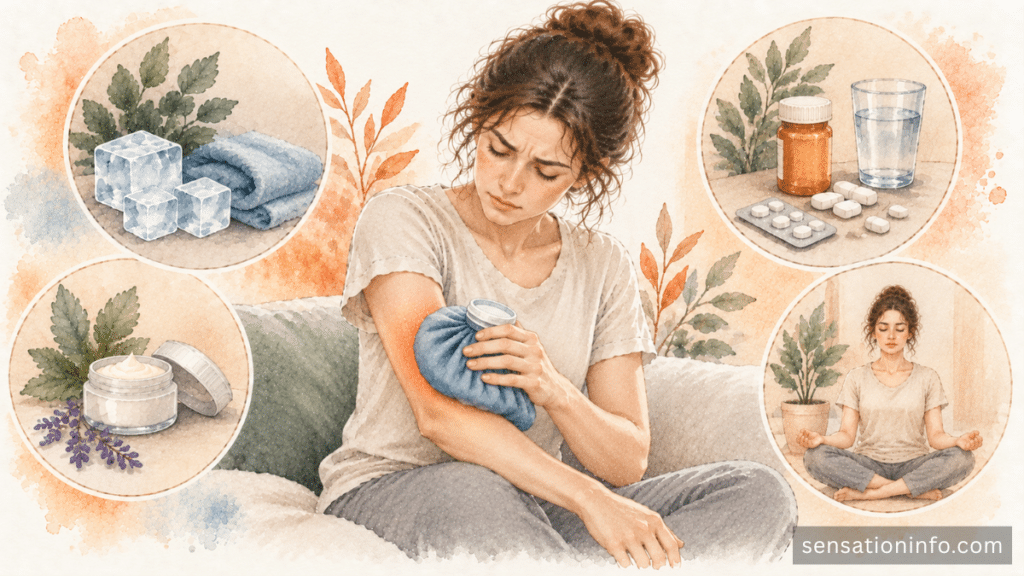
While the underlying cause is being evaluated or treated, protecting the skin from repeated scratching can help prevent additional injury.
You can try:
- Applying a cool compress to the affected area
- Keeping your fingernails short and smooth
- Wearing soft gloves at night if you scratch while sleeping
- Gently rubbing or applying pressure through clothing instead of using your fingernails
- Avoiding very hot showers if heat makes the sensation worse
- Using a fragrance-free moisturizer if the skin is dry
Cold or cooling may temporarily reduce itching for some people, although the response varies depending on the underlying cause.
If an area has already been scratched open, focus on protecting the damaged skin and seek medical advice if there are signs of infection.
Key Takeaways
- Neuropathic itch is associated with abnormal nerve signaling rather than a straightforward skin irritation.
- It may cause itching together with burning, tingling, crawling, or altered sensation.
- Scratching may provide little relief and can damage the skin.
- Shingles, notalgia paresthetica, brachioradial pruritus, and peripheral neuropathy are among the conditions associated with nerve-related itching.
- Treatment depends on the underlying cause and may include therapies that target abnormal nerve signaling.
- Persistent, severe, unexplained itching or itching accompanied by neurological symptoms should be evaluated by a healthcare professional.
Frequently Asked Questions
Neuropathic itch involves abnormal nerve signaling, so scratching may not provide the same relief as it does with a typical skin itch. Repeated scratching can also irritate the skin and stimulate already sensitive nerves.
Stress and anxiety can influence how the nervous system processes sensory signals and may make existing itching feel more intense. However, persistent neuropathic itch should not automatically be attributed to anxiety because there can be an underlying neurological or medical cause.
It depends on the underlying cause. Some nerve-related itching may improve when the triggering condition resolves, while symptoms associated with persistent nerve damage may continue and require treatment.
Cooling can temporarily alter sensory signaling and may reduce the perception of itching in some people. However, the effect varies between individuals and conditions.
Doctor’s Recommendation
If you are struggling with intense itching that does not respond to standard treatments, it may be time to consult a nerve specialist. Exploring options with the Neuropathy Specialists USA guide can help you find a qualified professional in your area to accurately diagnose and manage chronic nerve pain and neuropathic itch conditions.
Conclusion
Living with a neuropathic itch requires patience and a completely different approach than treating a normal bug bite. Because the intense sensation originates in your nervous system rather than your skin, standard anti-itch creams will fail to provide relief. By working closely with a doctor to calm your hyperactive nerves and using targeted cold therapy at home, you can successfully manage the discomfort and protect your skin from severe scratching damage.