
Numbness and weakness together can result from a compressed nerve, diabetes related nerve damage, a vitamin or metabolic problem, an injury, or another neurologic condition. When the symptoms begin suddenly, affect one side, or occur with facial drooping, speech trouble, confusion, severe dizziness, or a sudden headache, treat them as an emergency. Call 112 in India or 911 internationally.
Is it true weakness or does the limb simply feel heavy?
Numbness is reduced or absent sensation. Weakness means reduced ability to produce movement or force. A painful joint, severe fatigue, or a heavy sensation can make movement difficult without affecting the nerve signals that control strength.
A person with true weakness may be unable to lift the front of the foot, raise an arm, grip a cup, stand from a chair, smile evenly, or hold an object. Compare what you can do now with what was normal before, but do not delay emergency care to perform repeated self tests.
Weakness can be subtle. Dropping objects, tripping, dragging one foot, difficulty climbing stairs, or needing both hands for a task may be important changes.
Which patterns require immediate action?
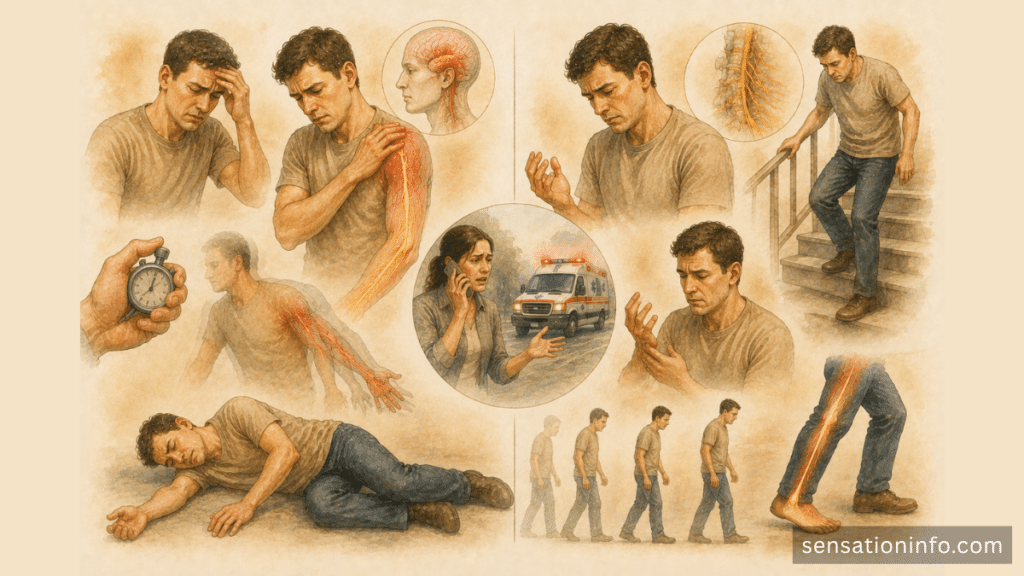
Call 112 in India or 911 internationally, or go to the nearest emergency department, if numbness and weakness:
•Begin suddenly or worsen over minutes or hours.
•Affect the face, arm, or leg on one side of the body.
•Occur with facial drooping, trouble speaking, confusion, or a new vision change.
•Occur with a sudden severe headache, severe dizziness, or difficulty walking.
•Follow a head, neck, or back injury.
•Occur with loss of bladder or bowel control or new groin numbness.
•Affect breathing, swallowing, consciousness, or the ability to stay awake.
•Progress quickly from the feet or hands upward with increasing weakness.
A stroke is one important cause of sudden numbness and weakness, but spinal cord compression, serious nerve inflammation, injury, infection, and other conditions can produce similar symptoms. Note the time the symptoms began and seek emergency care even if they partly improve.
What does the onset tell you?
The speed of onset changes the level of concern.
| Onset | Possible categories | Recommended response |
| Sudden over seconds or minutes | Stroke, transient ischemic attack, seizure, circulation problem, or acute injury | Call 112 in India or 911 internationally |
| Rapid after head, neck, or back injury | Nerve or spinal cord injury | Emergency assessment |
| Progressing over hours or days | Infection, inflammation, metabolic problem, medicine effect, or nerve disorder | Seek prompt medical care |
| Gradual over weeks or months | Peripheral neuropathy, compression, vitamin or systemic disease | Arrange a clinical evaluation |
| Brief after pressure with full recovery | Temporary nerve compression | Monitor, but seek care if recurrent or associated with weakness |
The time pattern is a guide, not a diagnosis. Sudden weakness should never be managed only at home.
Which body areas are affected?
- One Side of the Face, Arm, and Leg: Points toward the cerebral cortex or brainstem. If your symptoms involve sudden neurological deficits, in which tingling and dizziness occurring together , recognize early stroke warning signs.
- Both Legs with Back Pain or Sphincter Changes: Suggests thoracic or lumbar spinal cord or cauda equina compression.
- Symmetrical Hands and Feet (Distal Distribution): Suggests systemic peripheral nerve dysfunction. Understanding of numbness and tingling in the hands and feet helps identify progressive stocking-glove patterns.
- A Single Isolated Limb or Nerve Pathway: Usually indicates localized nerve entrapment or root irritation (such as cervical radiculopathy, ulnar nerve palsy, or peroneal nerve compression).
What causes numbness and weakness together?
- Stroke or transient ischemic attack
A stroke can cause sudden numbness and weakness, commonly on one side. Facial drooping, speech difficulty, confusion, vision changes, severe dizziness, or loss of balance may also occur.
A transient ischemic attack can cause temporary symptoms that improve. It is still a warning event that requires urgent assessment. Call 112 in India or 911 internationally for sudden symptoms.
2. Nerve Root and Peripheral Nerve Compression
When a nerve is compressed at the spinal root, shoulder, elbow, wrist, or knee, both sensory and motor axons can suffer mechanical disruption:
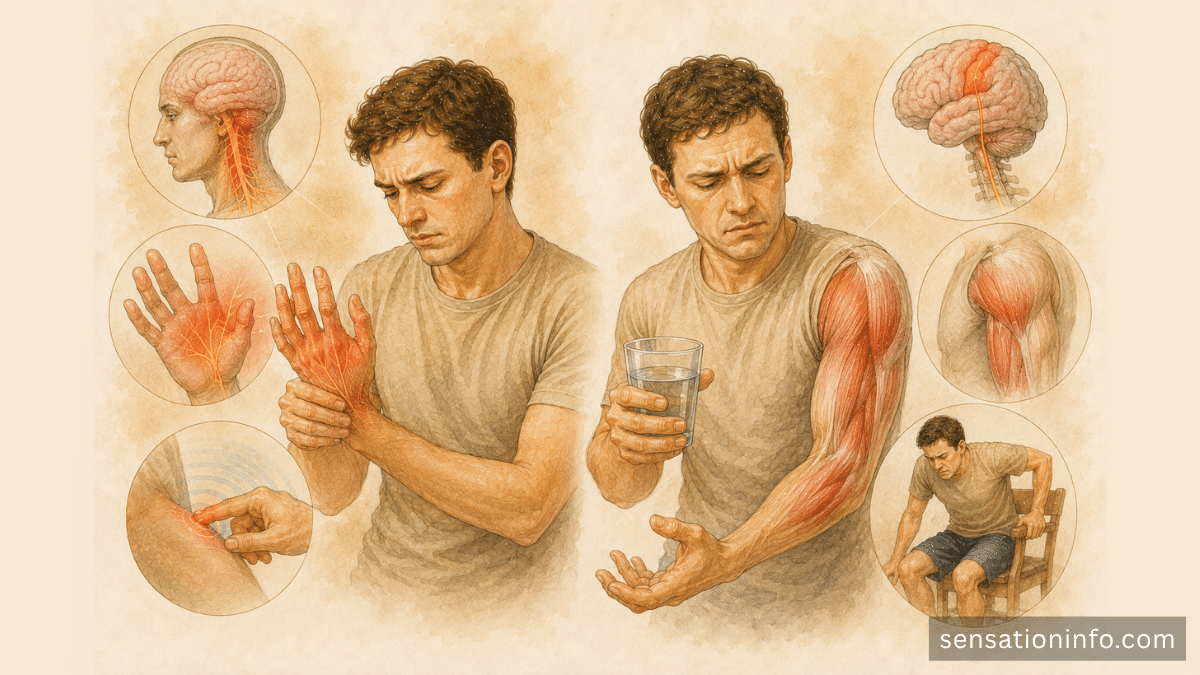
- Cervical Radiculopathy: A herniated disc or bone spur in the neck can cause radiating pain, sensory changes, and weakness down the arm. If you are experiencing upper-limb symptoms, understand unilateral arm numbness and nerve irritation for clinical signs.
- Carpal Tunnel Syndrome: Severe, long-standing median nerve compression at the wrist leads to thenar muscle wasting, loss of grip strength, and numbness across the thumb, index, and middle fingers; overall numbness in the hands.
3. Spinal cord or cauda equina compression
Pressure on the spinal cord can cause weakness, altered sensation, coordination problems, and walking difficulty. Compression of the lower spinal nerves can cause groin or saddle numbness, leg weakness, urinary retention, incontinence, bowel changes, or sexual dysfunction.
New saddle sensation changes with bladder, bowel, sexual, or leg symptoms are an emergency. Do not wait for back pain to become severe.
4. Peripheral Neuropathy
Axonal degeneration or demyelination impairs sensory perception and motor signal transmission. Diabetes mellitus, chronic alcohol exposure, chemotherapy, and autoimmune conditions are primary contributors. Exploring more on neuropathy symptoms, types, and long-term management can help with systemic nerve damage.
5. Vitamin B12 and other metabolic problems
Vitamin B12 deficiency can affect the nerves and spinal cord and may cause numbness, tingling, weakness, balance problems, fatigue, or changes in thinking. Abnormal glucose, calcium, potassium, sodium, thyroid function, kidney function, or other metabolic processes can also affect movement and sensation.
Testing should guide treatment. Do not take high dose supplements or electrolyte products based only on symptoms.
6. Multiple Sclerosis and Neuroinflammatory Disorders
Multiple Sclerosis (MS), acute transverse myelitis, and Guillain-Barré syndrome cause immune-mediated damage to the myelin sheaths. MS presentations can include unilateral weakness, sensory loss, optic neuritis, and Lhermitte’s sign (electric sensations running down the spine).
7. Acute Vascular Insufficiency (Critical Limb Ischemia)
An acute arterial embolism or thrombus blocking blood flow to an extremity causes the “6 Ps”: Pain, Pallor, Pulselessness, Paresthesia, Paralysis, and Poikilothermia (coldness). A limb that becomes suddenly pale, cold, numb, and weak requires emergency vascular intervention within hours to prevent permanent tissue loss.
How can you distinguish weakness from numbness?
| Experience | What it usually means | Example |
| Reduced feeling | Sensory change | The hand feels asleep or cannot sense temperature normally |
| Tingling or pins and needles | Altered sensory signal | Prickling or buzzing in the fingers |
| Weakness | Reduced force or movement | The hand cannot open a jar or the foot catches while walking |
| Heaviness from pain | Movement is limited by discomfort | A sore shoulder makes lifting painful but strength is normal when pain is controlled |
| Clumsiness | May involve strength, sensation, coordination, or all three | Dropping objects or difficulty fastening buttons |
These experiences can occur together. A clinician can test strength and sensation more accurately than a home comparison.
What should you do while waiting for medical help?
If symptoms are sudden or severe, call 112 in India or 911 internationally. Note the exact time the person was last known to be normal. Do not drive yourself or give food, drink, or medicine if swallowing is impaired.
Keep the person safe from falls, loosen restrictive clothing, and follow emergency instructions. Do not delay care to check blood pressure repeatedly, search for a diagnosis, or wait for the symptoms to disappear.
For gradual symptoms without red flags, avoid heat on numb areas, reduce fall hazards, and arrange a medical visit.
How is numbness with weakness diagnosed?
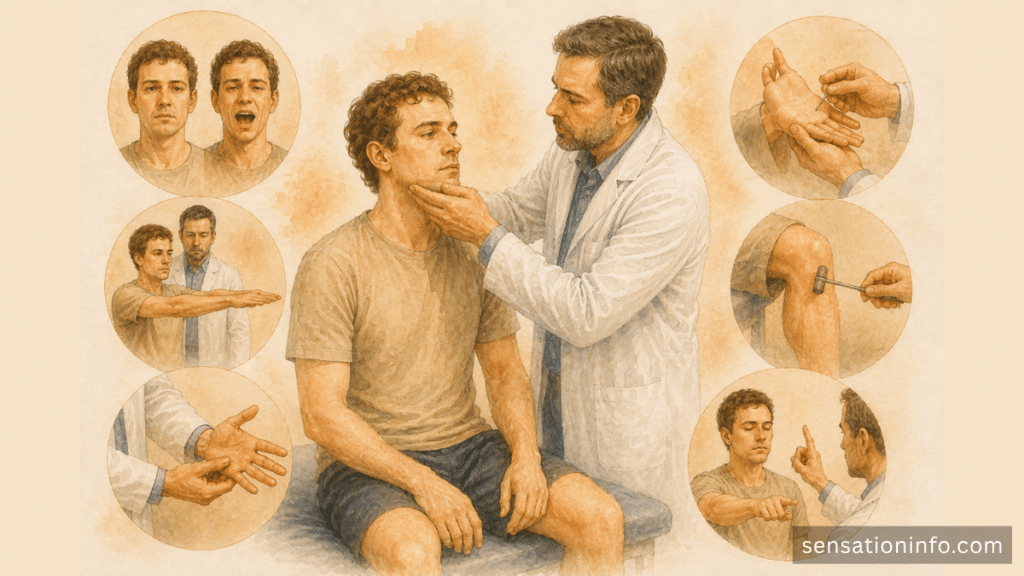
A clinician will ask about onset, distribution, associated symptoms, injury, medicines, illness, diabetes, diet, alcohol, toxins, and family history. The examination may check facial movement, speech, strength, reflexes, sensation, coordination, walking, eye movements, and pulses.
Emergency evaluation may include brain imaging, an electrocardiogram, blood tests, and other urgent studies. For gradual symptoms, testing may include glucose, vitamin B12, thyroid function, electrolytes, kidney function, blood counts, inflammation tests, nerve conduction studies, electromyography, or spine imaging.
The appropriate tests depend on the pattern and the speed of onset.
How is the cause treated?
Treatment depends on the diagnosis. Stroke and circulation emergencies require immediate hospital treatment. Spinal cord compression, severe infection, rapidly progressive weakness, and major injuries also need urgent care.
Nerve compression may be treated with activity changes, physical therapy, a brace, injections, or surgery depending on the site and severity. Peripheral neuropathy treatment focuses on the underlying cause and safe management of pain, weakness, and balance.
Vitamin deficiency, diabetes, thyroid disease, infection, immune disease, or medicine effects need cause specific care. Rehabilitation may help restore strength and function after injury or neurologic illness.
When should you arrange a medical appointment?
Arrange care for numbness and weakness that persist, recur, spread, affect walking or hand function, follow an illness or medicine change, or have no clear explanation. Seek prompt care for falls, progressive weakness, new balance problems, or symptoms affecting the bladder or bowel.
Call 112 in India or 911 internationally for sudden weakness, facial drooping, speech trouble, confusion, severe dizziness, a sudden severe headache, breathing difficulty, a seizure, loss of consciousness, or major trauma.
Key Takeaways
1.Numbness and weakness together can involve the brain, spinal cord, nerve roots, peripheral nerves, muscles, circulation, medicines, or metabolic conditions.
2.Sudden symptoms, especially on one side, may indicate a stroke or another emergency.
3.New groin or saddle numbness with bladder, bowel, sexual, or leg symptoms requires immediate emergency assessment.
4.Call 112 in India or 911 internationally for sudden or severe neurologic symptoms.
5.Persistent, recurrent, spreading, or unexplained numbness and weakness needs evaluation by a qualified clinician.
Frequently Asked Questions
Possible causes include stroke, transient ischemic attack, nerve compression, spinal cord or nerve injury, peripheral neuropathy, diabetes, vitamin deficiency, electrolyte or thyroid problems, infection, inflammation, medicines, toxins, and reduced blood flow. The onset and distribution determine how urgently the symptoms need assessment.
It can be, especially when symptoms affect one side of the face, arm, or leg and occur with facial drooping, trouble speaking, confusion, vision changes, severe dizziness, or a sudden headache. Call 112 in India or 911 internationally immediately.
Groin or saddle numbness with leg weakness, urinary retention, loss of bladder or bowel control, sexual dysfunction, or severe back pain can indicate cauda equina syndrome. Go to an emergency department immediately.
Doctor’s Recommendation
The combination of numbness and weakness should be evaluated according to onset and function, not just the body location. A sudden change needs emergency triage, while gradual symptoms may require testing for nerve compression, diabetes, vitamin deficiency, or another systemic condition. What Is Neuropathy? A Complete Guide to Types, Causes, Symptoms, and Treatment is a useful related resource for persistent nerve symptoms but is not a substitute for care.
Conclusion
Numbness and weakness together can be caused by a local nerve problem, a metabolic condition, an injury, or a disorder affecting the brain or spinal cord. The most important clues are how quickly the symptoms began, whether one side is affected, and whether speech, vision, walking, breathing, bladder, or bowel function has changed. Call 112 in India or 911 internationally for emergency warning signs and arrange medical care for persistent or unexplained symptoms.
References
- Mayo Clinic. Numbness: Causes and Definition.
- Cleveland Clinic. Numbness and Tingling: Causes and Treatment.
- National Library of Medicine. Numbness and Tingling. MedlinePlus Medical Encyclopedia.
- Centers for Disease Control and Prevention. Signs and Symptoms of Stroke. CDC.
- National Institute of Neurological Disorders and Stroke. Peripheral Neuropathy. NINDS.