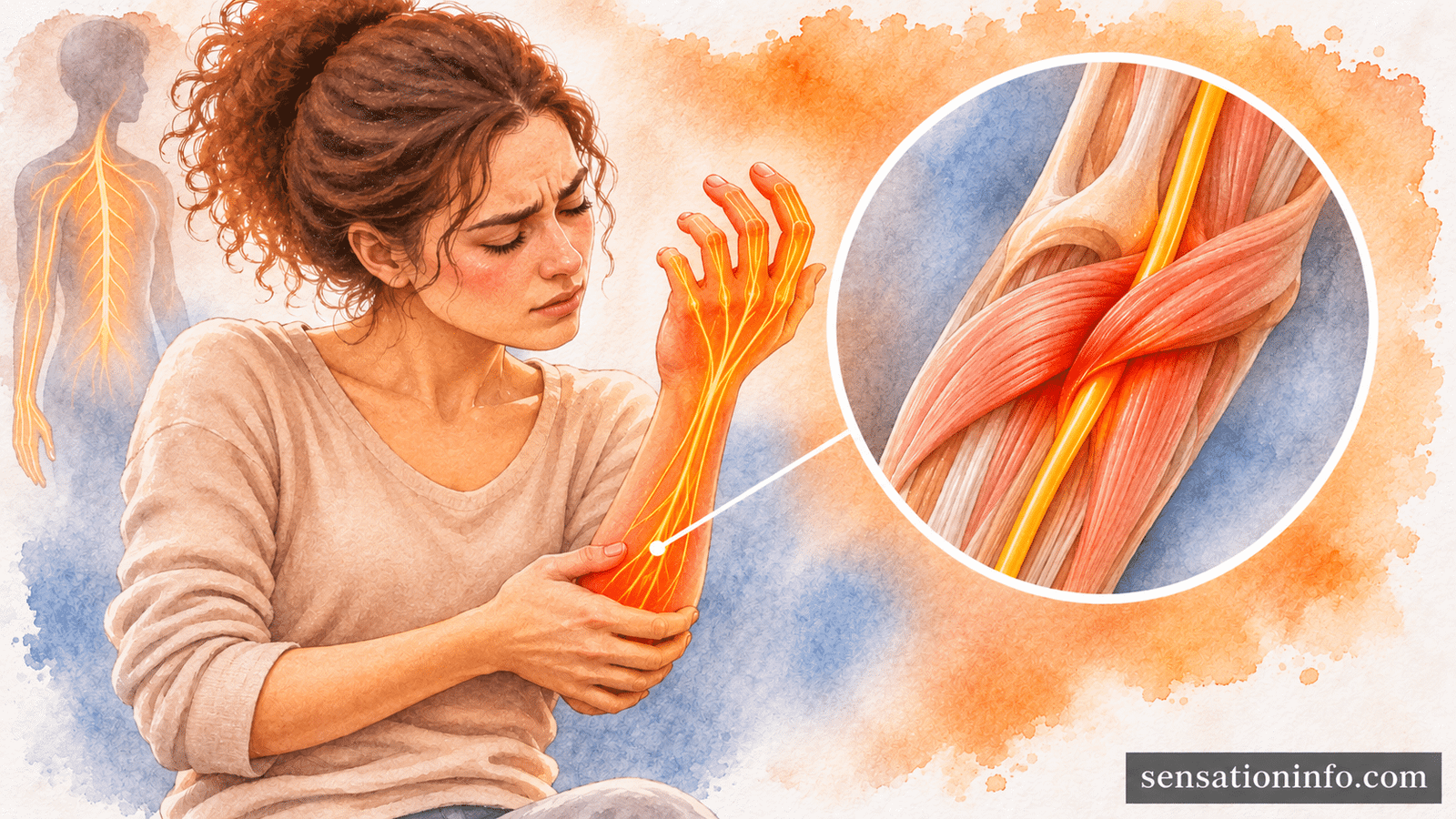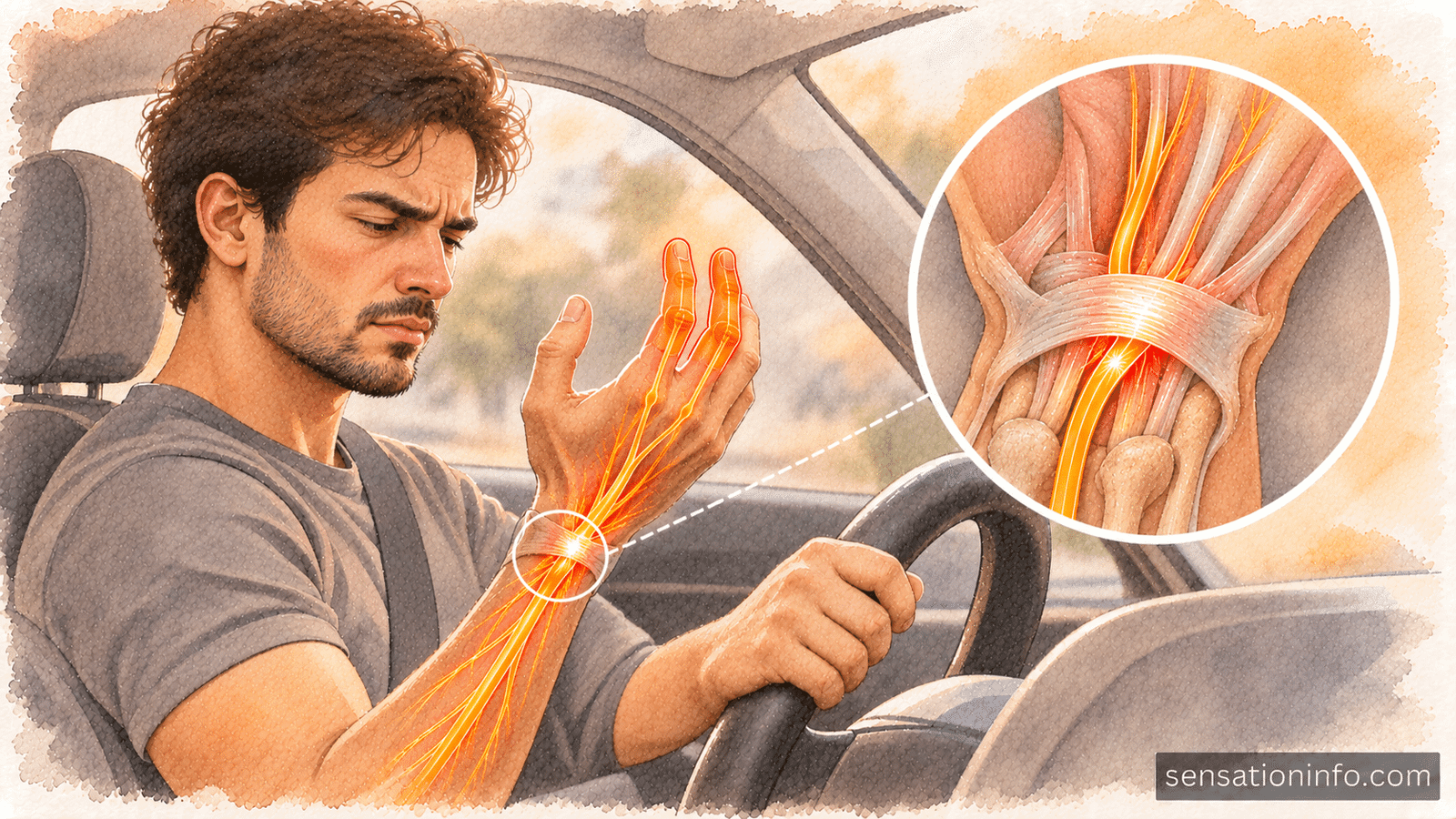

Experiencing your hands numb while driving is usually the direct result of gripping the steering wheel too tightly or bending your wrists at sharp angles. If this sudden numbness is accompanied by chest pain, shortness of breath, or facial drooping, pull over safely and call emergency services immediately as these indicate a severe cardiac event or stroke. Otherwise, this frustrating loss of sensation is typically a mechanical flare up of carpal tunnel syndrome triggered by poor driving posture and repetitive road vibrations.
Why Your Hands Go Numb While Driving
When your hands numb while driving because gripping the steering wheel with bent wrists physically compresses the median and ulnar nerves over time. And when you sustain this awkward posture during a long commute, it cuts off the vital blood supply required for normal nerve function.
The Anatomy of a Steering Wheel Grip
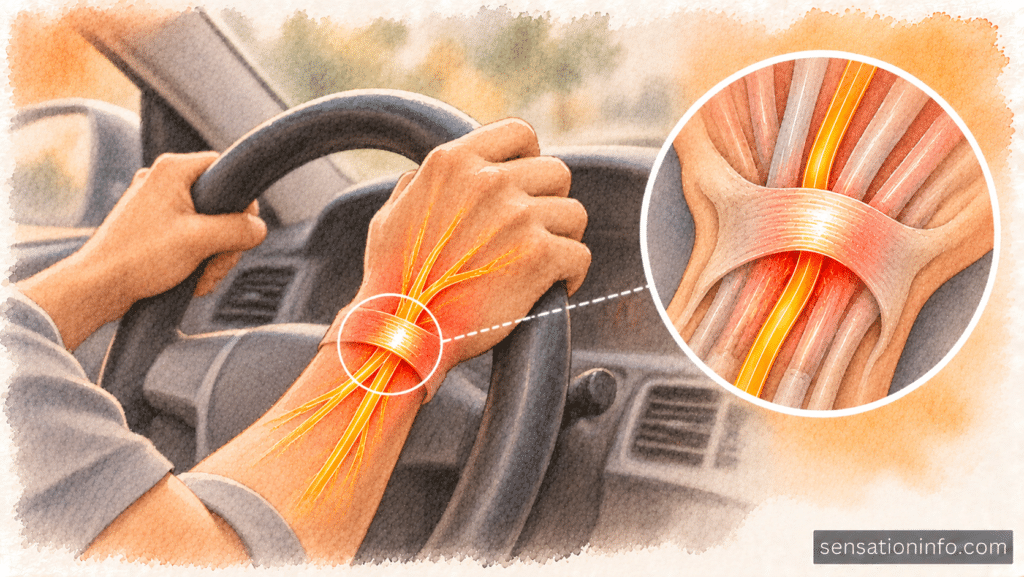
Look closely at how you hold the wheel during your morning commute. The median nerve runs through a narrow passage in your wrist called the carpal tunnel. When you bend your wrists backward to grip the top of the steering wheel, you squeeze this nerve directly against the surrounding ligaments. That’s why the tingling usually starts within the first twenty minutes of your drive. Plus, holding a tight grip forces your forearm muscles into constant tension, which further limits circulation down to your fingertips.
Carpal Tunnel vs. Cubital Tunnel on the Road
Actually, identifying exactly which fingers tingle tells you exactly which nerve is pinched. Numbness in hands varies significantly depending on whether the primary irritation happens at the wrist or up at the elbow.
| Nerve Affected | Medical Condition | Fingers Tingling | Driving Posture Cause |
| Median Nerve | Carpal Tunnel Syndrome | Thumb, index, middle | Wrists bent backward on top of the steering wheel |
| Ulnar Nerve | Cubital Tunnel Syndrome | Pinky and ring finger | Elbow resting heavily on the hard center console or window |
So, simply paying attention to the specific location of your tingling provides the exact diagnostic clues you need to correct your seated posture.
How to Stop Hand Numbness Behind the Wheel
You can stop hand numb while driving by adjusting your seating position so your wrists remain perfectly straight while driving. The thing is, most drivers sit too far back, forcing them to overextend their arms and bend their wrists sharply just to reach the steering wheel.
Proper Ergonomic Hand Placement
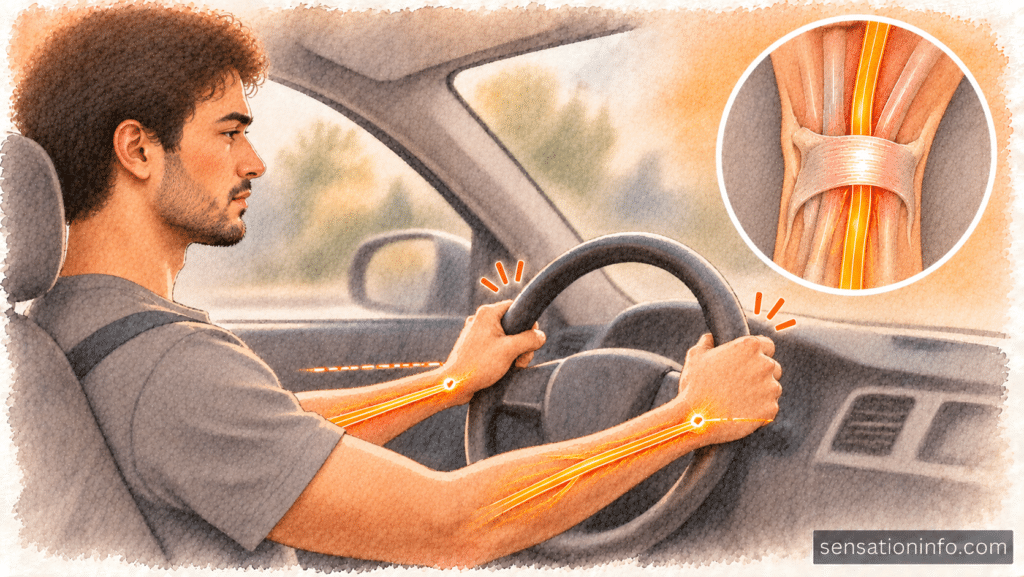
Proper ergonomic placement requires you to drop your hands to the sides of the wheel rather than resting them on top. Taking a few minutes to adjust your seat geometry can actively prevent carpal tunnel flare ups on your daily commute.
Make these specific structural adjustments before putting your car in drive:
- Adjust your seat forward until your elbows maintain a slight, relaxed bend.
- Lower the steering wheel tilt so your hands rest naturally at the 9 and 3 o’clock positions.
- Keep your wrists entirely straight and aligned with your forearms rather than flexed backward.
- Avoid resting your elbow on the hard plastic of the window ledge or the center console.
Reducing Vehicle Vibration
Road vibration travels directly up the steering column into your hands, causing micro trauma to your sensitive nerve endings. Chronic exposure to this mechanical shaking causes the nerves to become hypersensitive and prone to tingling. But you can minimize this physical stress easily using a few structural upgrades.
- Wear padded cycling or weightlifting gloves to absorb steering wheel vibrations.
- Install a thick, memory foam steering wheel cover to dampen harsh road shock.
- Loosen your grip slightly instead of white knuckling the wheel through traffic.
- Have your mechanic check your tire alignment and suspension if your vehicle shakes excessively at highway speeds.
When Driving Numbness Signals a Medical Emergency
Sudden numbness in your arms or hands can signal a stroke or heart attack if it occurs alongside systemic cardiovascular warning signs. While most driving numbness is simply structural nerve compression from poor posture, you must never ignore sudden full body symptoms.
Recognizing the Signs of a Stroke or Heart Attack
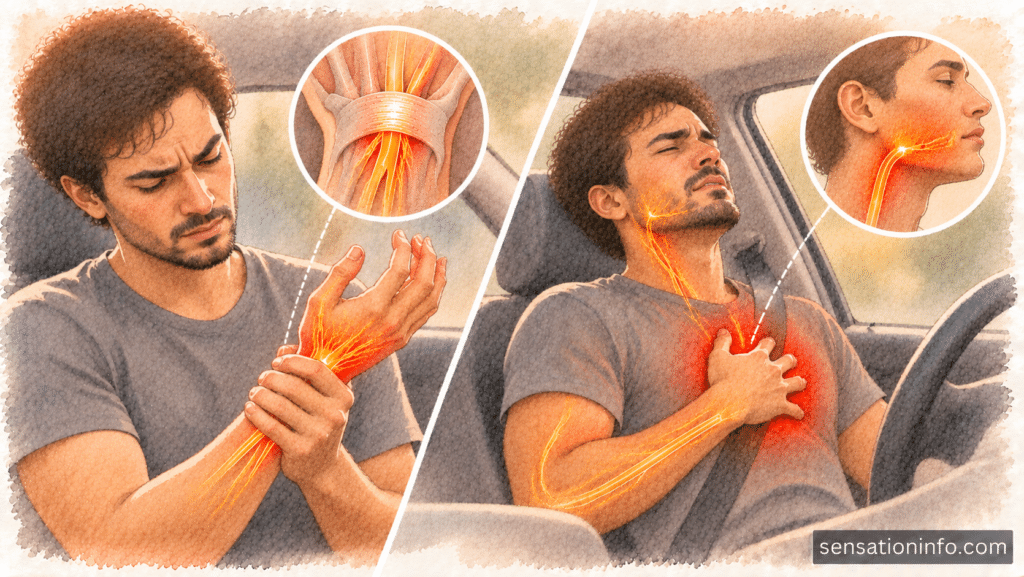
If you experience a pinched nerve, the numbness typically stays localized in the hand and resolves quickly when you shake it out. But a vascular emergency requires immediate 911 intervention.
Pull over immediately if your hand numbness is accompanied by any of these systemic signs:
- Sudden chest pain, pressure, or a tight squeezing sensation.
- Radiating pain traveling up your jaw, neck, or into your left shoulder.
- Shortness of breath, cold sweats, or sudden extreme dizziness.
- Facial drooping, severe confusion, or difficulty speaking clearly.
If your symptoms are purely mechanical but persist long after you turn off the engine, you should consult the best carpal tunnel specialists for a comprehensive nerve evaluation.
Key Takeaways
- Hands going numb while driving is most commonly caused by carpal tunnel syndrome, triggered by gripping the steering wheel with bent wrists.
- Tingling in your thumb and index finger points to median nerve compression at the wrist, while pinky tingling points to elbow compression.
- You can stop the numbness by adjusting your seat forward, keeping your wrists straight, and holding the wheel at the 9 and 3 o’clock positions.
- Using a padded steering wheel cover or driving gloves absorbs road vibration and reduces mechanical nerve irritation.
- If hand numbness occurs alongside chest pain, shortness of breath, or facial drooping, pull over immediately and call emergency services.
Frequently Asked Questions
Numbness strictly in your thumb, index, and middle fingers is the hallmark sign of median nerve compression at the wrist, known as carpal tunnel syndrome. This happens when you grip the top of the wheel with bent wrists.
Yes, driving a manual transmission requires constant gripping, shifting, and repetitive wrist motions. This added mechanical strain can irritate the median nerve much faster than driving an automatic vehicle.
No, it is not safe to drive with completely numb hands. Severe numbness impairs your motor control, reaction time, and ability to securely grip the steering wheel during an emergency maneuver.
Doctor’s Recommendation
If your hand numbness continues to bother you long after your drive is over, you need to monitor the progression closely. I highly recommend reading our detailed clinical guide on numbness and tingling in hands and feet to help you distinguish between a simple ergonomic issue and a chronic nerve condition requiring medical treatment.
References
- National Institute of Neurological Disorders and Stroke (2020): Carpal Tunnel Syndrome Fact Sheet
- Mayo Clinic (2022): Carpal Tunnel Syndrome Symptoms and Causes
- Cleveland Clinic (2021): Carpal Tunnel Syndrome Details and Treatments
- American Academy of Orthopaedic Surgeons (2023): Carpal Tunnel Syndrome – Diseases & Conditions