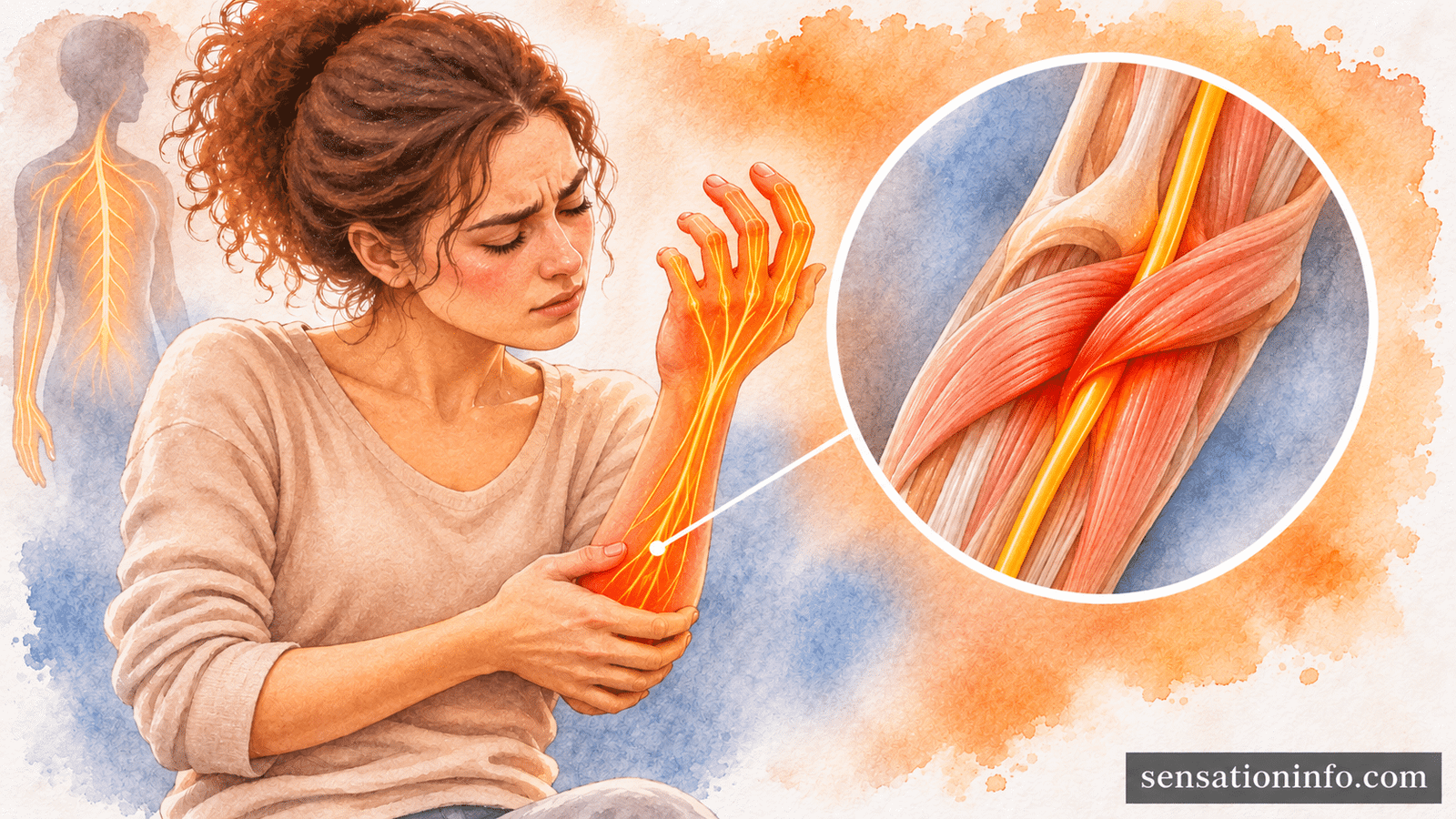
If you are experiencing a strange buzzing or tingling in the gums after brushing, it is highly likely that aggressive brushing has worn down your gum tissue and exposed the underlying tooth roots. The roots of your teeth are not protected by hard enamel. Instead, they contain microscopic tubules leading directly to the central dental nerves. When exposed, these nerves react to friction, cold, or pressure with a sharp, vibrating, or buzzing sensation. While this sudden sensory shift can feel alarming, often triggering the same anxiety as unexpected numbness on the side of the tongue, it is a classic symptom of gum recession.
For most people, understanding the mechanical cause of this buzzing is the first step toward choosing the right desensitizing toothpaste and protecting the exposed roots from further damage.
Why Do Your Gums Tingle After Brushing?
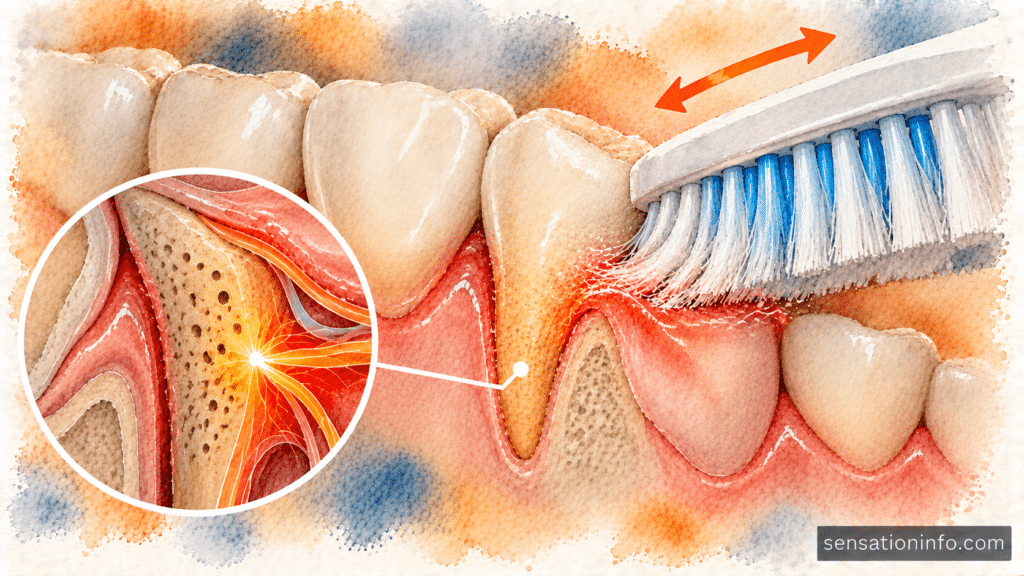
The tingling or buzzing sensation you feel is known clinically as dentin hypersensitivity. This occurs when the protective layers of your teeth and gums are compromised. Healthy teeth have a crown covered in enamel and a root covered in cementum, with gum tissue tightly sealing the base. When that seal is broken, the delicate inner structures become vulnerable to everyday stimuli.
How Aggressive Brushing Leads to Gum Recession
Brushing your teeth too hard, or using a toothbrush with firm bristles, physically traumatizes the gingival tissue. Over time, this mechanical abrasion forces the gum line to pull away from the tooth. This process is called gingival recession.
Your gums act as a protective blanket for the roots of your teeth. Once aggressive brushing scrubs this blanket away, the softer cementum layer of the root is exposed to the oral environment. Cementum wears away much faster than enamel when exposed to the friction of a toothbrush. Once the cementum is gone, the underlying dentin is fully exposed.
Key Takeaways on Brushing Abrasion:
- Mechanical wear: Firm bristles act like sandpaper on delicate gum margins.
- Horizontal scrubbing: Sawing back and forth across the teeth accelerates tissue loss.
- Cumulative damage: The recession happens gradually, but the nerve tingling often starts suddenly once a specific threshold of dentin is exposed.
The Anatomy of Exposed Roots and Dental Nerve Buzzing
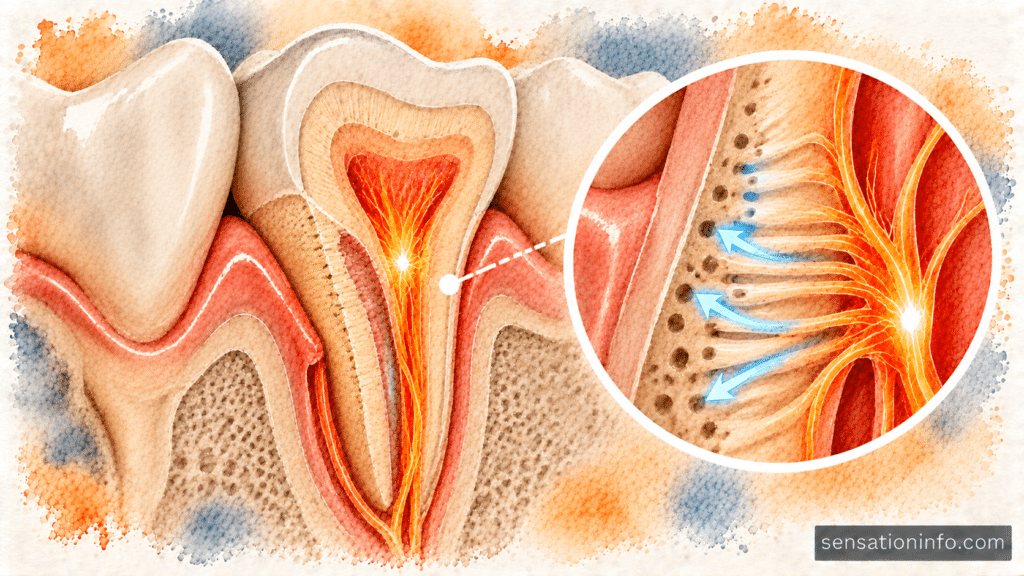
To understand the buzzing, you must understand the anatomy of dentin. Dentin is a porous layer located right under the enamel and cementum. It is filled with thousands of microscopic channels called dentinal tubules. These tubules connect the outside surface of the tooth directly to the dental pulp inside, which houses the blood vessels and the main dental nerve.
These microscopic tubules are filled with fluid. When you brush aggressively, the physical pressure and the movement of the bristles displace this fluid. The fluid shifts inside the tubules, pulling or pushing on the nerve endings inside the dental pulp. This fluid movement translates into electrical signals that your brain interprets as a sharp tingling, buzzing, or vibrating pain.
Urgent Warning Signs: When is Gum Tingling an Emergency?
While gum tingling from exposed roots is a structural issue, you must rule out acute neurological or systemic emergencies. Sensations in the mouth can sometimes indicate nerve damage or broader health events.
You should seek emergency medical care immediately if your gum tingling is accompanied by any of the following symptoms. These could indicate an acute neurological event or a severe spreading infection.
- Sudden weakness or drooping on one side of your face.
- Slurred speech or difficulty forming words.
- Trouble swallowing or breathing.
- Tingling that rapidly spreads to your lips, chin, or neck, mimicking tingling face and jaw sensations that require immediate neurological evaluation.
- A high fever accompanied by swelling in the jaw or neck.
If your buzzing is strictly limited to the gum line and only occurs during or immediately after brushing, it is highly likely localized dentin hypersensitivity rather than a medical emergency.
Which Toothpaste Actually Stops the Buzzing Sensation?
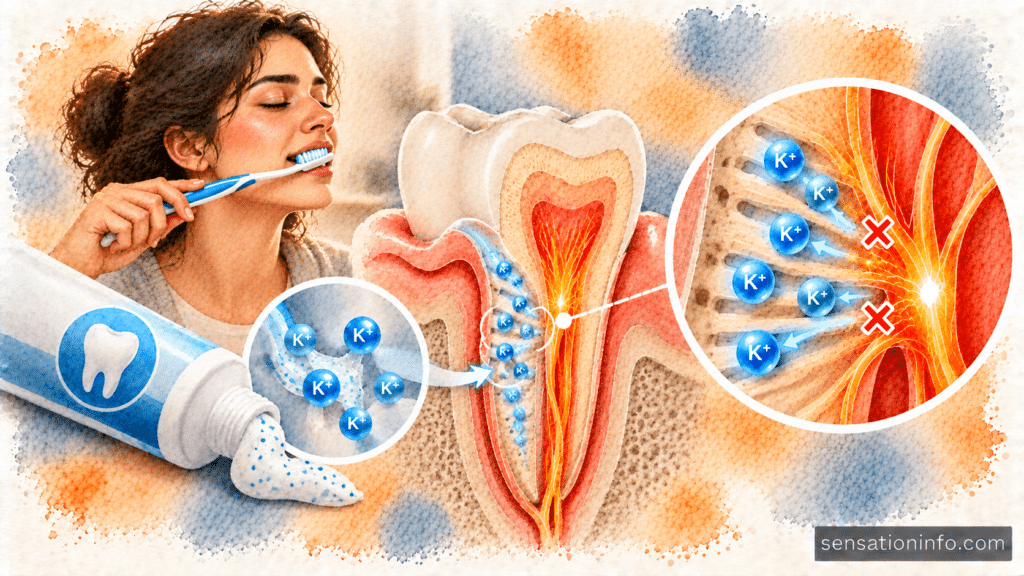
When dealing with exposed roots, standard whitening or tartar control toothpastes will make the buzzing worse. These formulas are highly abrasive and contain chemicals that irritate the exposed dentinal tubules. To stop the nerve buzzing, you need a toothpaste specifically formulated to block the pain signals or seal the open tubules.
Potassium Nitrate vs. Stannous Fluoride
There are two primary active ingredients clinically proven to stop dental nerve buzzing. They work through completely different mechanisms.
Potassium Nitrate Potassium nitrate is a nerve-desensitizing agent found in products like potassium nitrate (Sensodyne). When you brush with this ingredient, the potassium ions travel down the open dentinal tubules and surround the dental nerve inside the pulp.
These ions prevent the nerve from repolarizing. In simple terms, potassium nitrate temporarily numbs the nerve, stopping it from transmitting the buzzing or tingling pain signals to your brain. It requires continuous, twice-daily use for at least two weeks to build up a sufficient concentration around the nerve.
Stannous Fluoride Stannous fluoride takes a structural approach. Instead of numbing the nerve, stannous fluoride physically blocks the open dentinal tubules. It creates a micro-shield or mineral layer over the exposed root surface. By sealing the tubules, it prevents the fluid inside from moving, which stops the nerve from being triggered in the first place. Stannous fluoride also provides superior antibacterial protection against plaque, which is critical for inflamed, receding gums.
For immediate relief of aggressive brushing symptoms, many dentists recommend alternating between the two ingredients, or finding a clinical formulation that combines tubule occlusion with nerve desensitization.
Immediate Steps to Soothe Agitated Dental Nerves
Changing your toothpaste is only half the solution. You must stop the mechanical trauma that caused the gum recession in the first place. If you continue to brush aggressively, no toothpaste will be able to outpace the ongoing damage.
Switching to an Ultra-Soft Brushing Technique
Your first immediate step is to discard any medium or firm-bristled toothbrushes. You must switch to an ultra-soft toothbrush. The goal of brushing is to sweep away soft bacterial plaque, which has the consistency of yogurt. You do not need firm pressure to remove plaque.
Proper Brushing Protocol for Receding Gums:
- Hold the toothbrush at a 45-degree angle toward the gum line.
- Use gentle, tiny circular motions rather than long horizontal scrubbing strokes.
- Apply only enough pressure to slightly blanch the tips of the bristles.
- Consider an electric toothbrush with a pressure sensor that stops pulsating if you push too hard.
Avoiding Temperature and Acid Triggers
Exposed dental nerves are highly reactive to temperature changes and dietary acids. Acidic foods erode the smear layer covering the dentin, leaving the tubules wide open and the nerves hyper-reactive.
You should temporarily eliminate highly acidic foods and drinks from your diet. This includes citrus fruits, tomatoes, soda, and sports drinks. Furthermore, extreme cold acts as a massive shock to exposed roots. Consuming ice water or frozen foods can trigger intense, radiating nerve pain, similar to the sharp nerve irritation in the palate known as brain freeze, but localized strictly to your gum line.
If you must consume acidic or cold beverages, use a straw to bypass the exposed teeth entirely. Never brush your teeth immediately after consuming acids, as the enamel and cementum are temporarily softened and will wear away rapidly.
When to See a Dentist for Receding Gums
While desensitizing toothpastes and gentle brushing can manage the tingling, they cannot grow your gum tissue back. Gum recession is irreversible without surgical intervention.
You need to schedule an evaluation with a periodontist or general dentist if the buzzing sensation persists for more than three weeks despite using a desensitizing toothpaste. A dentist will measure the exact amount of millimeter recession around each tooth.
If the recession is severe, leaving a large portion of the root exposed, you may require a clinical intervention. Dentists can apply professional-grade fluoride varnishes or bonding resins to physically seal the exposed roots. In advanced cases, a gingival graft may be necessary. This involves taking tissue from the roof of your mouth and stitching it over the exposed roots to restore the protective gum barrier and permanently silence the irritated dental nerves.
Frequently Asked Questions
No, gum tissue cannot grow back on its own once it has receded. The physical loss of gingival tissue is permanent without surgical intervention, such as a gum graft performed by a periodontist.
If the vibration persists long after you finish brushing, it is not normal. It usually indicates that the sonic pressure of the brush is overstimulating exposed dental nerves through open dentinal tubules.
Yes. If a cavity wears through the enamel and reaches the dentin, it exposes the same microscopic tubules as gum recession. This can trigger a similar buzzing, tingling, or sweet-sensitivity reaction.
Doctor’s Recommendation
Switch to an ultra-soft toothbrush right away, and before bed apply a pea-sized amount of potassium nitrate toothpaste directly to the tingling gum line and leave it on overnight. For a deeper understanding of localized oral nerve reactions, review our clinical guide on unexpected numbness on the side of the tongue.