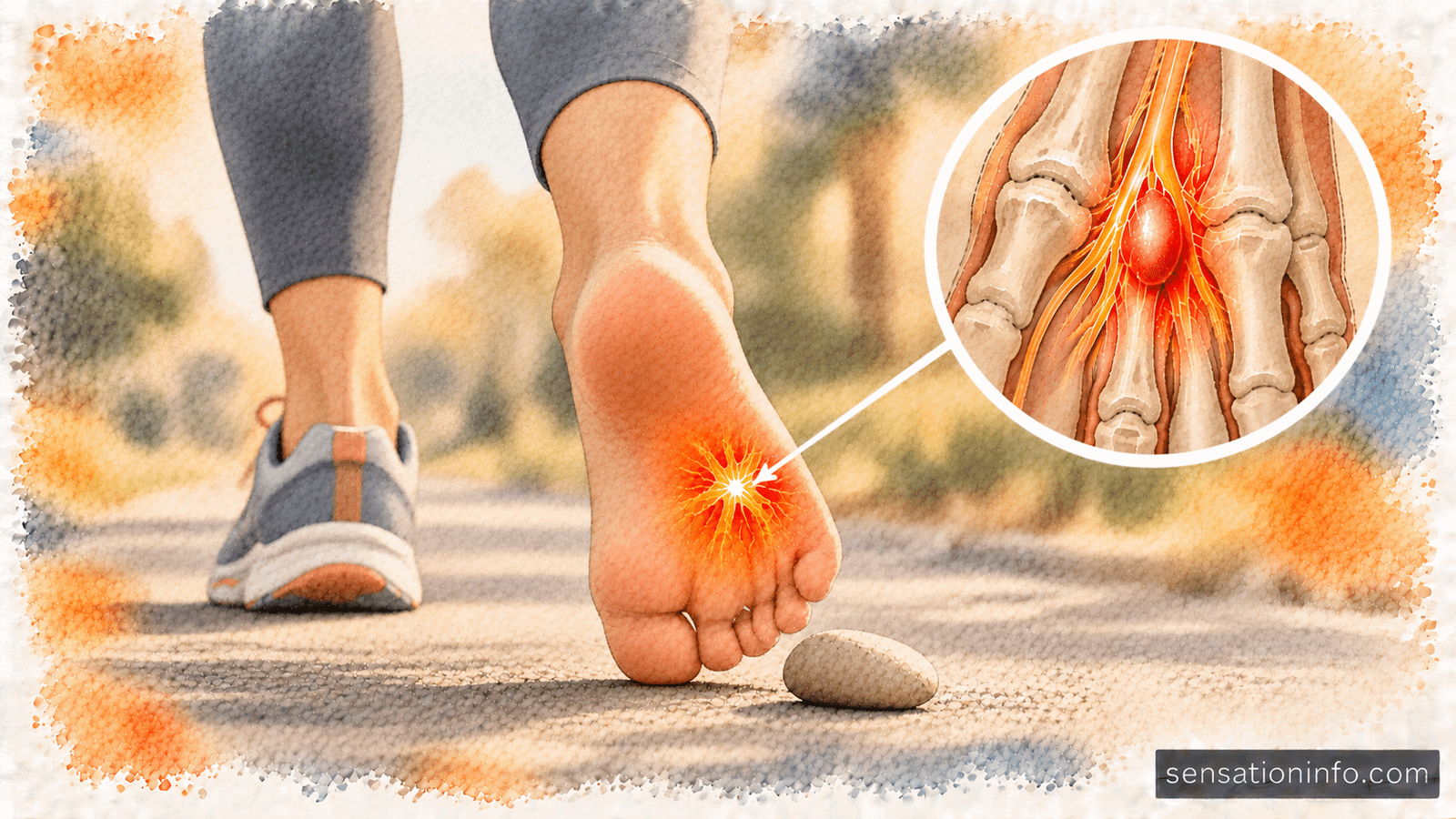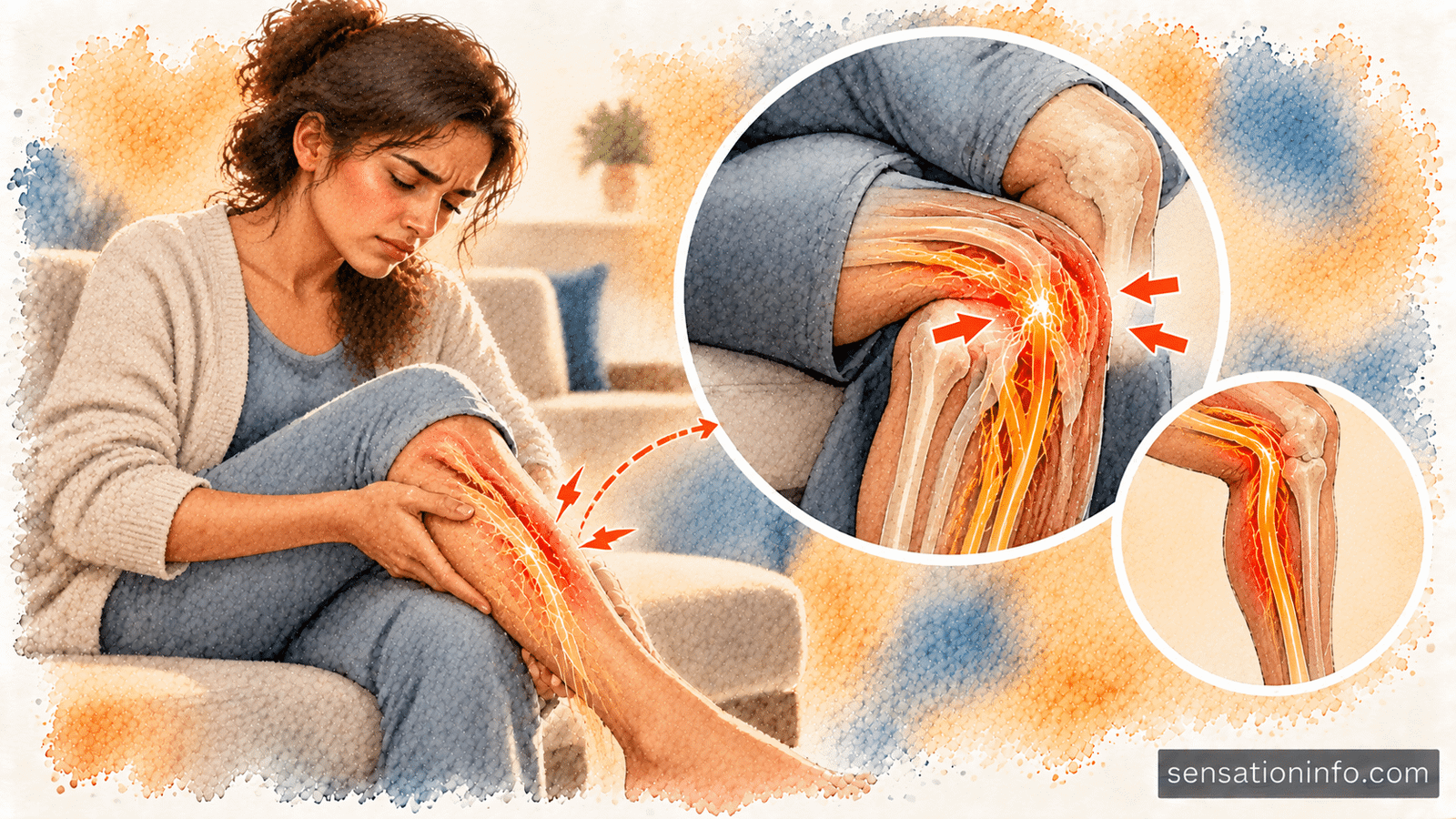

When you feels a sudden rush of pins and needles when crossing your legs is a completely normal physical reaction to nerve pressure. This tingling happens because resting one knee over the other physically squashes the common peroneal nerve against the hard bone on the outside of your knee. If you are dealing with frustrating dead numbness after sitting for a long time understanding exactly how this nerve works can help you prevent the tingling and protect your leg from permanent damage.
The Anatomy of Your Leg Nerves
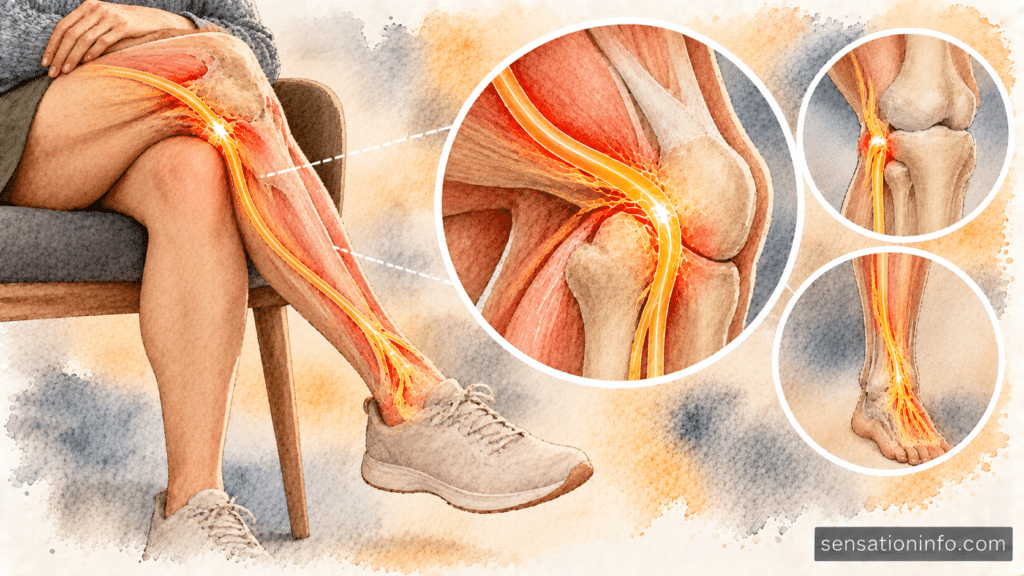
To understand why your leg falls asleep you need to know how the nerves travel down your lower body. Your leg relies on a complex network of nerves to feel the ground and move your muscles.
The Common Peroneal Nerve
The main nerve responsible for the tingling when you cross your legs is called the common peroneal nerve. This thick nerve branches off from the larger sciatic nerve in your thigh. As it travels down your leg it wraps very tightly around the outside of your knee.
The Danger of the Fibular Head
Right below your knee joint on the outside of your leg is a knobby bone called the fibular head. The common peroneal nerve wraps directly over this hard bone. Because the nerve sits right under the skin with very little fat or muscle to protect it it is incredibly vulnerable to outside pressure. When you cross your legs you press this unprotected nerve directly between your opposite knee and the hard fibular head.
The Loss of Communication
When this nerve gets squeezed it temporarily stops sending normal touch and movement signals to your brain. Medical professionals call this uncomfortable crawling or static nerve sensation paresthesia. You might not even realize the nerve is trapped until you try to stand up and realize you cannot feel your own foot touching the floor.
What Does Leg Tingling Feel Like?
Temporary nerve numbness feels very different from a pulled muscle, a cramp, or poor blood circulation. People describe this specific peripheral nerve problem using very clear, distinct physical signs.
Common Physical Sensations
If your common peroneal nerve is actively compressed you will likely notice these specific feelings:
- A completely dead or heavy feeling in your lower leg and foot.
- Your toes feel like they are wrapped in thick cotton or completely missing.
- A crawling feeling like carbonated bubbles popping under your skin.
- Sudden electrical zaps that shoot from your outer knee down into your toes.
- A severe stinging or burning feeling when the blood and nerve signals suddenly rush back into the leg.
The Rebound Effect
The most intense pins and needles usually happen right after you uncross your legs. While the nerve is crushed it goes silent. When you remove the pressure the nerve suddenly wakes up and fires all its signals at once. This causes a confusing rush of burning tingling and numbness that usually fades away after a few minutes of walking around.
What Leads to Pins and Needles When Crossing your Legs
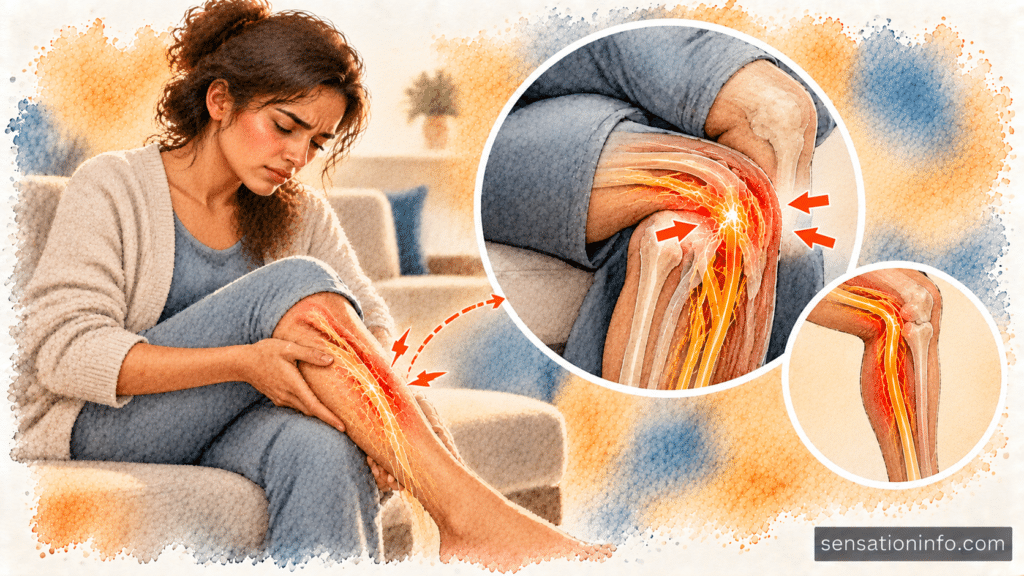
Many people mistakenly believe that their leg falls asleep because they cut off the blood circulation. While severe pressure can reduce blood flow the true cause of the tingling is direct mechanical pressure on the nerve itself.
When you sit with one leg crossed over the other you apply the entire weight of your top leg directly onto the common peroneal nerve. The nerve is trapped between two hard bones. This intense pressure physically squashes the delicate nerve fibers and stops the electrical signals from flowing properly.
Sitting in tight spaces on an airplane or sitting cross legged on the floor for yoga can create the exact same nerve compression. Even wearing very tight tall boots that strap tightly below the knee can squeeze the nerve and cause a dead feeling along the outside edge of your foot.
Temporary Tingling Versus Serious Nerve Damage
Most pins and needles when crossing your legs will vanish a few minutes after you stand up. However if you ignore the tingling and keep your legs crossed for many hours you can cause severe damage.
Peroneal Neuropathy
If the nerve is crushed for too long the protective coating around the nerve cells begins to die. This condition is called peroneal neuropathy. Instead of fading away the numbness becomes permanent. You might experience a constant burning ache on the outside of your calf that never goes away.
The Risk of Foot Drop
The most severe complication of a crushed peroneal nerve is a condition called foot drop. The common peroneal nerve controls the muscles that lift your toes and ankle up toward your shin. If the nerve is severely damaged by prolonged pressure those muscles become completely paralyzed.
People with foot drop cannot lift the front of their foot when they walk. Their toes drag on the ground forcing them to lift their knee extremely high with every step just to clear the floor. Foot drop is a serious medical issue that requires immediate attention and physical therapy to correct.
Sciatica and Lower Back Problems
Sometimes the tingling in your leg is not coming from your knee at all. Sciatica happens when a bulging disc in your lower back crushes the main nerve roots. This causes sharp shooting pain down the back of your leg that travels all the way to your foot. If your leg tingles even when you are not crossing your legs the problem is likely starting in your spine rather than your knee.
Quick Symptom Comparison Guide
Knowing exactly where your symptoms start can help you tell the difference between a simple sleeping leg and a serious nerve problem.
| Symptom Feature | Normal Crossed Leg Tingling | Severe Peroneal Nerve Damage | Lower Back Sciatica |
| Type of Feeling | Bubbly pins and needles temporary dead feeling. | Total numbness severe weakness burning. | Sharp shooting electrical pain deep ache. |
| Duration | Fades completely within five minutes of standing. | Lasts for days weeks or becomes permanent. | Comes and goes based on how you bend your back. |
| Muscle Strength | Leg feels normal once the tingling stops. | Cannot lift toes upward toes drag when walking. | Leg may feel weak but toes usually still lift. |
| Main Trigger | Sitting with legs crossed for too long. | Falling asleep in a chair with legs crossed. | Bending lifting or sitting on soft couches. |
Red Flags: When to Seek Immediate Medical Help
Most leg tingling from sitting is a harmless warning sign that you need to change your posture. However because prolonged nerve pressure can cause permanent paralysis you must pay close attention to your symptoms.
Seek emergency medical evaluation right away if your leg numbness happens alongside any of these serious warning signs:
- You suddenly cannot lift your toes off the floor or you start tripping over your own foot.
- The dead numbness does not go away after an hour of walking around.
- You feel severe numbness that spreads up your thigh and into your groin area.
- You suddenly lose the ability to control your bladder or bowel movements.
- The tingling starts immediately after a severe fall or a car accident.
A sudden loss of bladder control or groin numbness is a massive medical emergency. It means the nerves at the very bottom of your spinal cord are being crushed and require emergency surgery to prevent permanent paralysis.
How Doctors Diagnose Leg Numbness
Finding out exactly where the nerve is trapped takes a careful physical exam at the doctor clinic. Your doctor will ask exactly when the tingling starts and which toes feel numb.
The doctor will test your muscle strength by asking you to pull your toes up toward your nose while they push down. If your foot is weak they will know the common peroneal nerve is damaged. They will also tap your knees and ankles with a small rubber hammer to check your deep reflexes.
If the doctor thinks a bulging disc in your back is causing the numb leg they will order a magnetic resonance imaging scan. This scan gives a clear picture of your spinal cord and the lower back nerves. They might also perform an electromyography test. This specialized test uses tiny needles to measure exactly how fast electrical signals are traveling down your leg. This tells the doctor exactly where the nerve is crushed and how badly it is damaged.
Simple Home Care and Prevention
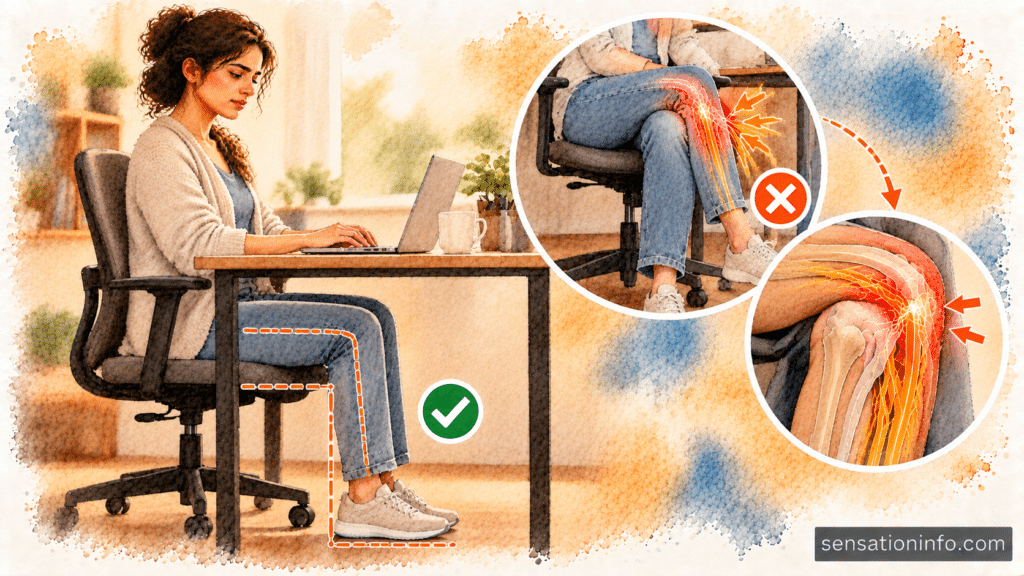
The absolute best way to treat leg tingling is to stop it from happening in the first place. You can easily protect your nerves by changing your daily sitting habits.
Change Your Posture
The simplest solution is to stop crossing your legs at the knee. If you must cross your legs cross them at the ankles instead. This position takes all the pressure off the common peroneal nerve.
Take Frequent Breaks
If you work at a desk all day you must get up and move. Set a timer to stand up and walk around for two minutes every single hour. This restores normal blood flow and takes the physical pressure off your nerves and your lower back.
Check Your Footwear
Avoid wearing tall stiff boots that strap tightly directly below the knee. If you have to wear a knee brace or a compression bandage make sure it is not cutting tightly into the outside of your knee over the fibular head.
Key Takeaways
- Crossing your legs squeezes the common peroneal nerve against the hard bone on the outside of your knee.
- The tingling and pins and needles happen because the nerve signals are temporarily blocked by the physical pressure.
- The bubbly burning feeling usually spikes right after you uncross your legs as the nerve suddenly wakes up.
- Keeping your legs crossed for many hours can cause severe nerve damage leading to a paralyzed foot known as foot drop.
- You must seek emergency medical care if you cannot lift your toes or if you experience a sudden loss of bladder control.
- The best prevention is to cross your legs at the ankles instead of the knees and stand up frequently during the day.
Frequently Asked Questions
When the nerve is crushed it stops sending signals. When you uncross your legs the physical pressure is removed and the nerve suddenly fires all of its signals to your brain at once. This massive rush of signals feels like intense burning and bubbly tingling.
A blood clot in the leg usually causes deep heavy throbbing pain severe swelling and red warm skin. Blood clots do not typically cause electrical pins and needles or bubbly tingling. Nerve tingling goes away when you walk but blood clot pain gets worse.
You do not have to stop entirely but you should change your habits. If you like crossing your legs try crossing them lower down at the ankles instead of the knees. This keeps your posture relaxed but removes all the pressure from the sensitive nerve behind your knee.
Doctor’s Recommendation
If the tingling in your leg turns into severe weakness burning pain or makes you stumble when you walk it is time to see a specialist. A board certified orthopedic or spine doctor can locate exactly where the nerve is trapped and offer targeted treatments to prevent permanent foot drop. We strongly suggest reading our guide on finding a top rated sciatica and spine specialist to evaluate your nerve compression to help you locate a qualified doctor who can safely treat pinched leg nerves.
References
National Institute of Neurological Disorders and Stroke. Paresthesia Information Page. 2023.
American Academy of Orthopaedic Surgeons. Common Peroneal Nerve Dysfunction. 2022.
Mayo Clinic. Peripheral Neuropathy: Symptoms and Causes. 2022.
Cleveland Clinic. Peroneal Nerve Injury and Foot Drop. 2021.