
Tingling and muscle twitching together may happen after stress, poor sleep, intense exercise, dehydration, or too much caffeine. They can also occur with electrolyte changes, medicine effects, nerve irritation, vitamin problems, or a neurologic condition. Sudden weakness, trouble breathing, a seizure, confusion, or a rapidly worsening episode needs emergency care. Call 112 in India or 911 internationally.
What does the combination feel like?
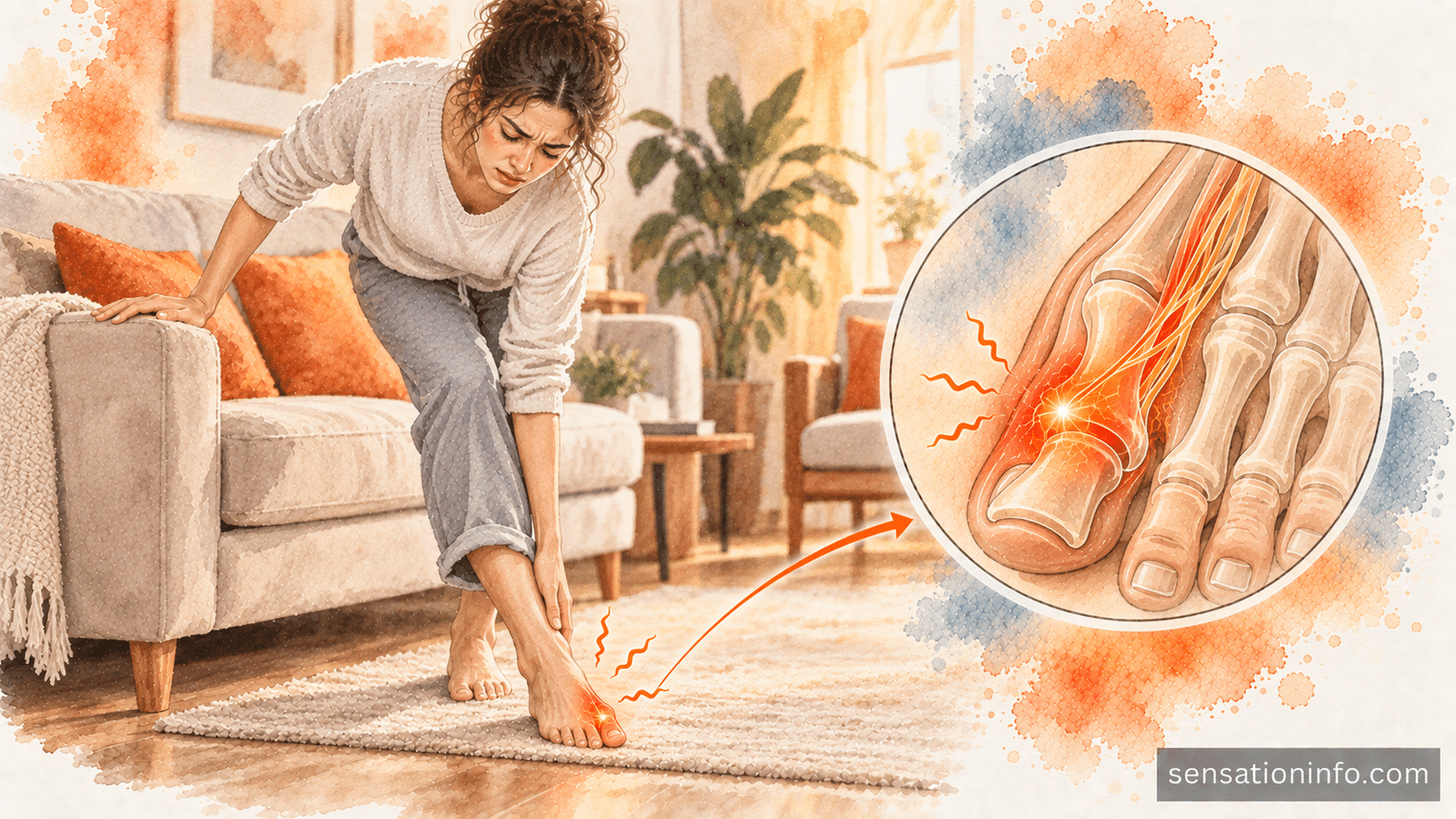
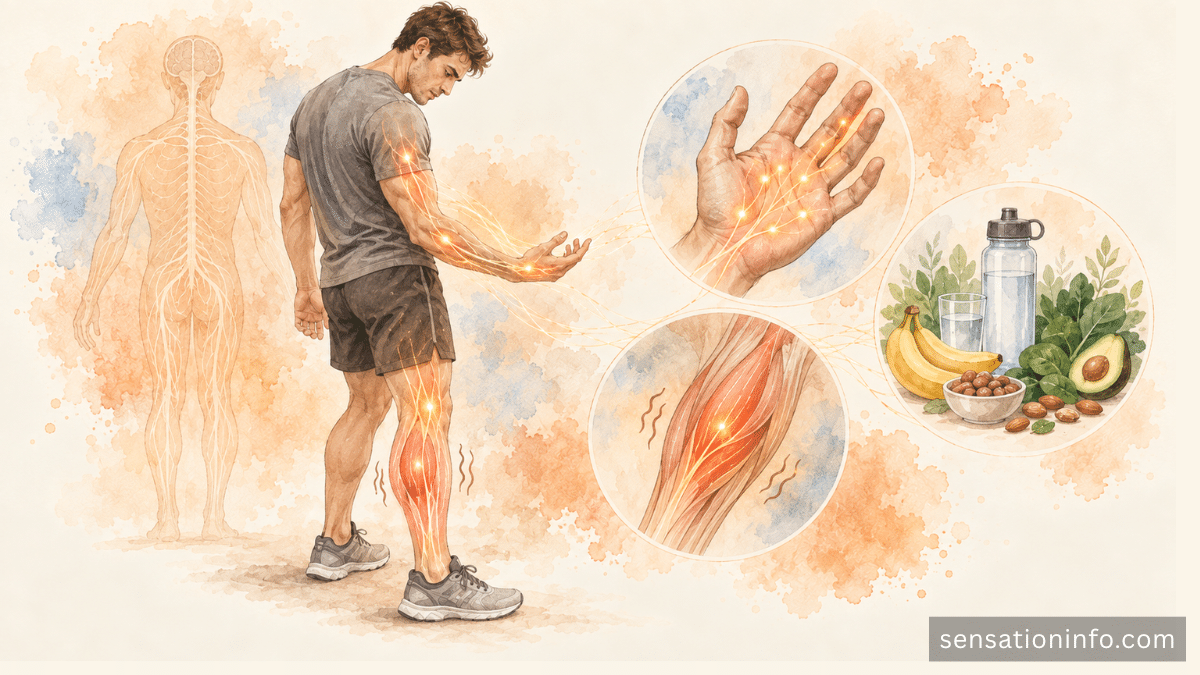
Tingling may feel like pins and needles, prickling, buzzing, burning, crawling, or tiny electric shocks. Muscle twitching is a brief involuntary movement under the skin. It may affect one muscle, move between areas, or occur with cramps and stiffness.
The combination can be temporary or persistent. A twitch in an eyelid after poor sleep is different from widespread twitching with tingling in the hands and feet. Note whether the sensation is on one side or both, whether it comes in waves, and whether weakness or loss of coordination is present.
Twitching does not automatically mean a serious neurologic disease. The pattern and associated symptoms determine how urgently it should be assessed.
When should you seek emergency help?
Call 112 in India or 911 internationally, or go to the nearest emergency department, if tingling and twitching occur with:
- Sudden weakness, paralysis, facial drooping, or inability to move a limb.
- New trouble speaking, confusion, severe dizziness, vision changes, or difficulty walking.
- Trouble breathing, throat tightening, or severe generalized muscle spasms.
- A seizure, loss of consciousness, or a new severe headache.
- Chest pressure, fainting, a sustained irregular heartbeat, or severe shortness of breath.
- Rapidly worsening symptoms after vomiting, diarrhea, heavy sweating, heat exposure, or a new medicine.
- Severe weakness after intense exercise with very dark urine or extreme muscle pain.
- Symptoms after a head, neck, or back injury.
Severe electrolyte disturbance can affect muscles, breathing, and heart rhythm. Sudden neurologic symptoms may indicate a stroke or another emergency. Do not wait to see whether the twitching stops if warning signs are present.
Is the twitching in one muscle or all over?
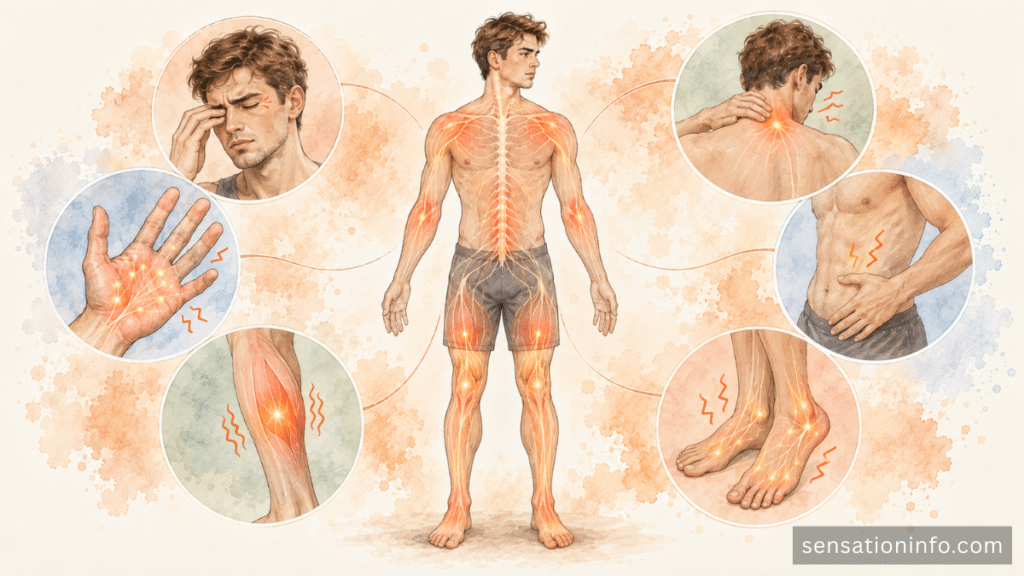
A single twitch in one muscle may follow fatigue, stress, caffeine, exercise, or local nerve irritation. Twitching in several areas with tingling may suggest a body wide trigger such as an electrolyte change, medicine effect, hyperventilation, or a condition affecting several nerves.
| Pattern | Possible direction for evaluation | Urgency |
| One brief twitch after exercise or poor sleep | Muscle fatigue or temporary nerve excitability | Usually monitor if it resolves |
| Repeated twitching in one area with tingling in a nearby region | Local nerve irritation or compression | Arrange care if persistent |
| Tingling around the mouth with hand spasms or cramps | Electrolyte disturbance or abnormal breathing | Prompt assessment, emergency care if severe |
| Widespread twitching with weakness or loss of function | Neurologic, metabolic, or medicine related problem | Seek urgent medical care |
| Sudden one sided tingling with weakness or speech trouble | Possible stroke | Call 112 in India or 911 internationally |
| Twitching with breathing difficulty or an irregular heartbeat | Severe electrolyte or other medical emergency | Call 112 in India or 911 internationally |
This table can help you describe the pattern, but it cannot identify the cause without an examination.
Could dehydration or an electrolyte change cause both symptoms?
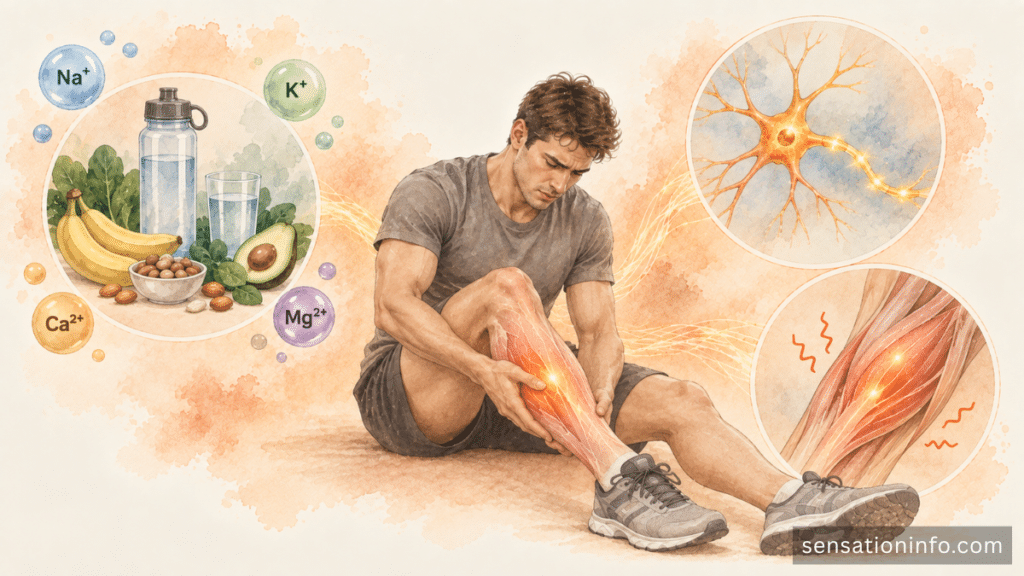
Yes. Electrolytes such as calcium, potassium, sodium, and magnesium help nerves and muscles communicate. Abnormal levels can cause tingling, cramps, spasms, weakness, abnormal heart rhythm, or other symptoms.
Vomiting, diarrhea, heavy sweating, heat exposure, kidney disease, certain medicines, and severe fluid imbalance can affect electrolyte levels. Low calcium can cause tingling around the mouth and muscle spasms. Severe disturbances can affect breathing or heart function.
Do not take electrolyte powders, calcium, potassium, or magnesium in large amounts without medical advice. The treatment depends on the actual blood level and the reason it changed.
Can stress or fast breathing cause tingling and twitching?
Stress can increase muscle tension and make normal muscle twitches easier to notice. Fast or deep breathing can change carbon dioxide levels in the blood and cause tingling around the mouth, in the hands, or in the feet. Muscle tightness, lightheadedness, and a racing heartbeat may occur.
How anxiety and body sensations contribute can vary, but stress should not be used to explain new weakness, severe symptoms, persistent one sided changes, chest pressure, fainting, or a seizure. A clinician should assess unexplained or recurrent episodes.
Slow, comfortable breathing and sitting in a safe place may help if rapid breathing is clearly part of the episode. Do not breathe into a paper bag.
What other causes can produce this combination?
Muscle fatigue and overuse
Intense exercise, repetitive work, or a new workout can make muscles twitch and feel tired or tight, often leading to tingling after exercise. Temporary tingling may occur when a nerve is compressed by a position or when muscles swell after exertion.
Symptoms should improve with rest and recovery. Severe muscle pain, marked weakness, swelling, collapse, or dark urine after strenuous activity needs urgent evaluation.
Nerve compression or irritation
A nerve can be irritated in the neck, back, shoulder, elbow, wrist, or leg. Tingling may follow the nerve pathway, while nearby muscles twitch or feel weak.
Neck pain with tingling down one arm may involve a cervical nerve root. Tingling in the ring and little fingers with elbow pressure may involve the ulnar nerve. Persistent symptoms, weakness, clumsiness, or loss of grip need assessment.
Peripheral neuropathy
Peripheral neuropathy affects nerves outside the brain and spinal cord. It may cause tingling, burning, numbness, cramps, weakness, or twitching. Diabetes, vitamin deficiency, alcohol, medicines, toxins, kidney or thyroid disease, infection, autoimmune disease, and inherited conditions can contribute.
Symptoms that start in the feet or hands and gradually spread may need testing for an underlying condition. The broader guide to neuropathy and persistent nerve symptoms provides useful background, but it does not replace an assessment.
Vitamin deficiency or excess
Low vitamin B12 and nerve sensations are closely linked, as nutritional problems can deeply affect nerve function. Too much vitamin B6 can also cause nerve symptoms. Poor nutrition, restricted diets, digestive disease, and alcohol use may affect vitamin levels.
Do not assume that a supplement will correct tingling or twitching. Blood tests and professional guidance are safer than taking high doses.
Medicine or stimulant effects
Some medicines can affect nerve or muscle activity. Caffeine, nicotine, decongestants, stimulants, and certain prescription medicines may make twitching more noticeable. A new medicine or dose change is important information for a clinician.
Do not stop a prescribed medicine without speaking with the prescriber. Bring a list of all prescriptions, over the counter products, supplements, energy drinks, and recreational substances.
Tetany
Tetany is a state of excessive nerve and muscle activity, often related to an electrolyte imbalance. It can cause tingling or burning in the hands and feet, numbness around the mouth, muscle spasms, and cramps.
Severe tetany may cause breathing difficulty, generalized cramps, vomiting, seizures, or an irregular heart rhythm. Call 112 in India or 911 internationally for severe symptoms.
Migraine or other neurologic conditions
Some migraine episodes can cause tingling or other sensory changes. Multiple sclerosis, seizures, spinal cord disease, and other neurologic disorders can also affect sensation and movement.
Sudden symptoms require emergency evaluation because stroke can resemble other conditions. Recurrent or unexplained episodes need a clinical assessment rather than self diagnosis.
Does location change the likely cause?
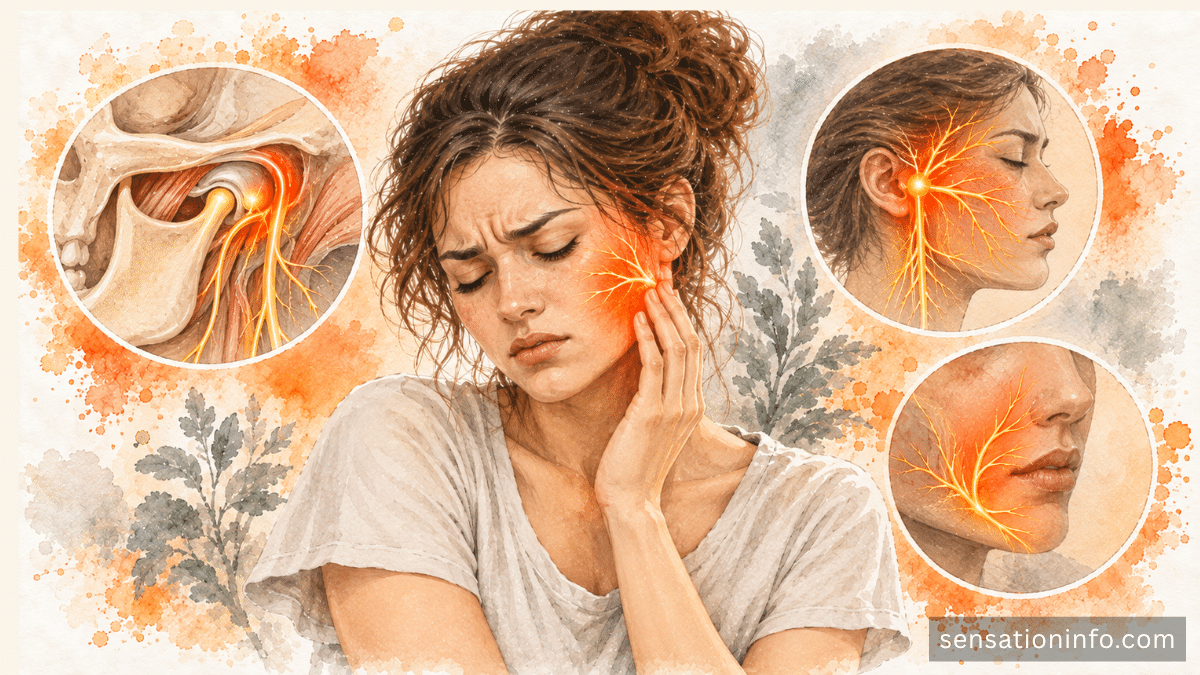
Location provides clues. Experiencing tingling around the mouth, lips, and tongue with hand cramps may point toward an electrolyte or breathing related problem. Tingling that travels from the neck into one arm may follow a nerve root. Tingling in both feet with repeated muscle cramps may fit a peripheral nerve or metabolic pattern.
Tingling on one side of the face or body with weakness, speech trouble, or vision changes is urgent. A body map and symptom diary can help your clinician understand the distribution, especially when symptoms resemble widespread pins and needles sensations.
How are tingling and twitching evaluated?
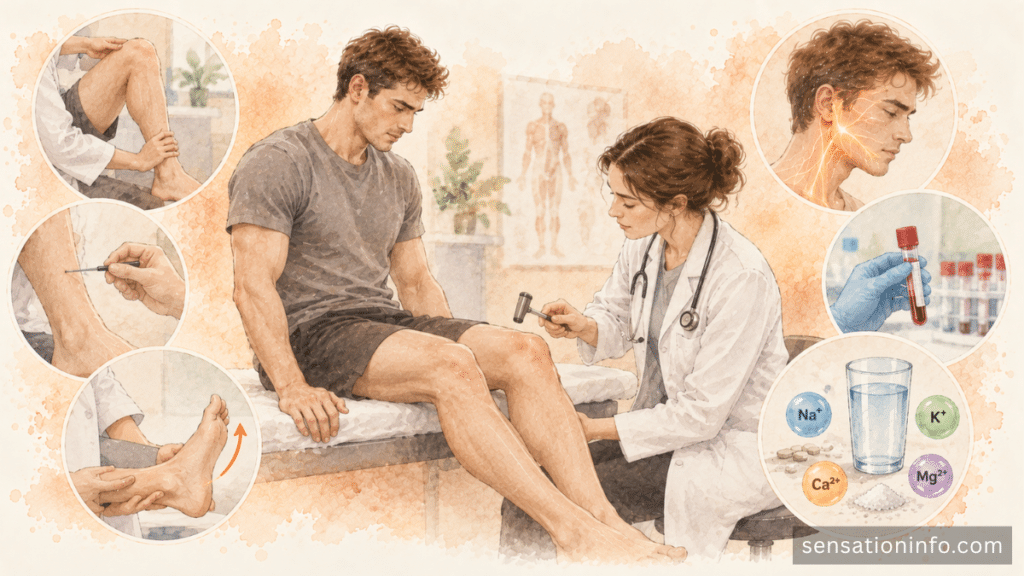
A clinician will ask when the symptoms began, how often they occur, how long they last, and whether they follow exercise, stress, meals, illness, dehydration, a medicine, or an injury. The examination may check strength, sensation, reflexes, coordination, walking, muscle tone, and heart rhythm.
Testing may include blood glucose, calcium, potassium, sodium, magnesium, kidney function, thyroid function, vitamin levels, blood counts, and other tests selected by the history. Nerve conduction studies, electromyography, brain or spine imaging, or other testing may be appropriate.
Emergency symptoms require immediate assessment rather than waiting for routine test results.
What can you do safely before an appointment?
Rest from unusually intense exercise and drink fluids according to your medical needs. Eat regular meals and avoid excess caffeine, nicotine, energy drinks, or other stimulants if they clearly trigger twitching.
Protect areas that feel numb from burns and injuries. Change positions if pressure on a limb triggers tingling. Keep a record of symptoms, triggers, duration, affected areas, weakness, cramps, medicines, supplements, and recent illness.
Do not take large doses of electrolytes or vitamins, and do not stop a prescription medicine without medical guidance. Seek emergency help when breathing, heart, movement, consciousness, or speech is affected.
How are the symptoms treated?
Treatment depends on the cause. A confirmed electrolyte problem may require supervised replacement and treatment of the reason for the imbalance. Nerve compression may improve with activity changes, physical therapy, or other clinician guided treatment.
A vitamin deficiency, diabetes, thyroid condition, infection, immune disease, medicine effect, or toxin exposure needs cause specific care. Muscle fatigue may improve with recovery and gradual training. Persistent neuropathic symptoms may need a tailored pain and rehabilitation plan.
When should you make a medical appointment?
Arrange an appointment if tingling or twitching lasts more than a brief episode, returns often, spreads, interrupts sleep, follows a new medicine, or occurs with cramps, numbness, weakness, balance changes, or weight loss.
Seek prompt care for symptoms after vomiting, diarrhea, heat exposure, intense exercise, or an injury. Call 112 in India or 911 internationally for sudden weakness, speech trouble, severe breathing difficulty, a seizure, fainting with concerning symptoms, chest pressure, or rapidly worsening symptoms.
Key Takeaways
- Tingling and muscle twitching can follow stress, poor sleep, exercise, dehydration, caffeine, nerve irritation, electrolyte changes, medicines, or a neurologic condition.
- Tingling around the mouth with spasms or cramps may occur with an electrolyte disturbance or abnormal breathing.
- Sudden weakness, speech trouble, facial drooping, severe dizziness, breathing difficulty, a seizure, or an irregular heartbeat requires emergency help.
- Call 112 in India or 911 internationally when serious warning signs occur.
- Persistent, recurrent, spreading, or unexplained symptoms need evaluation by a qualified clinician.
Frequently Asked Questions
Abnormal calcium, potassium, sodium, or magnesium levels can affect nerves and muscles. Low calcium may cause tingling around the mouth, spasms, and cramps. Testing is needed because symptoms cannot identify which electrolyte is abnormal.
Exercise can cause temporary muscle fatigue, dehydration, faster breathing, or pressure on a nerve. Severe pain, weakness, swelling, collapse, or dark urine after intense exercise needs urgent medical care.
A clinician may check strength, sensation, reflexes, coordination, and heart rhythm. Blood tests may assess glucose, calcium, potassium, sodium, magnesium, kidney function, thyroid function, and vitamins. Nerve studies or imaging may be used when appropriate.
Arrange medical care when episodes recur, persist, spread, affect sleep, follow a new medicine, or occur with cramps, numbness, weakness, balance problems, or weight loss. Seek emergency care for sudden or severe neurologic, breathing, heart, or consciousness changes.
Doctor’s Recommendation
When tingling and twitching occur repeatedly, the evaluation should consider electrolytes, glucose, thyroid function, vitamin levels, medicines, nerve compression, and peripheral neuropathy rather than assuming stress is the cause. What Is Neuropathy? A Complete Guide to Types, Causes, Symptoms, and Treatment may help explain persistent nerve symptoms, but it cannot replace a clinical assessment.
Conclusion
Tingling and muscle twitching together are often temporary, but they can also signal an electrolyte disturbance, nerve problem, medicine effect, or neurologic condition. Pay attention to the onset, distribution, triggers, and any weakness or loss of function. Call 112 in India or 911 internationally for emergency warning signs and arrange medical care for persistent or unexplained episodes.
References
Cleveland Clinic. Tetany: What It Is, Causes, Symptoms and Treatment.
National Library of Medicine. Numbness and Tingling. MedlinePlus Medical Encyclopedia.
Mayo Clinic. Peripheral Nerve Injuries: Symptoms and Causes.
National Institute of Neurological Disorders and Stroke. Peripheral Neuropathy. NINDS.