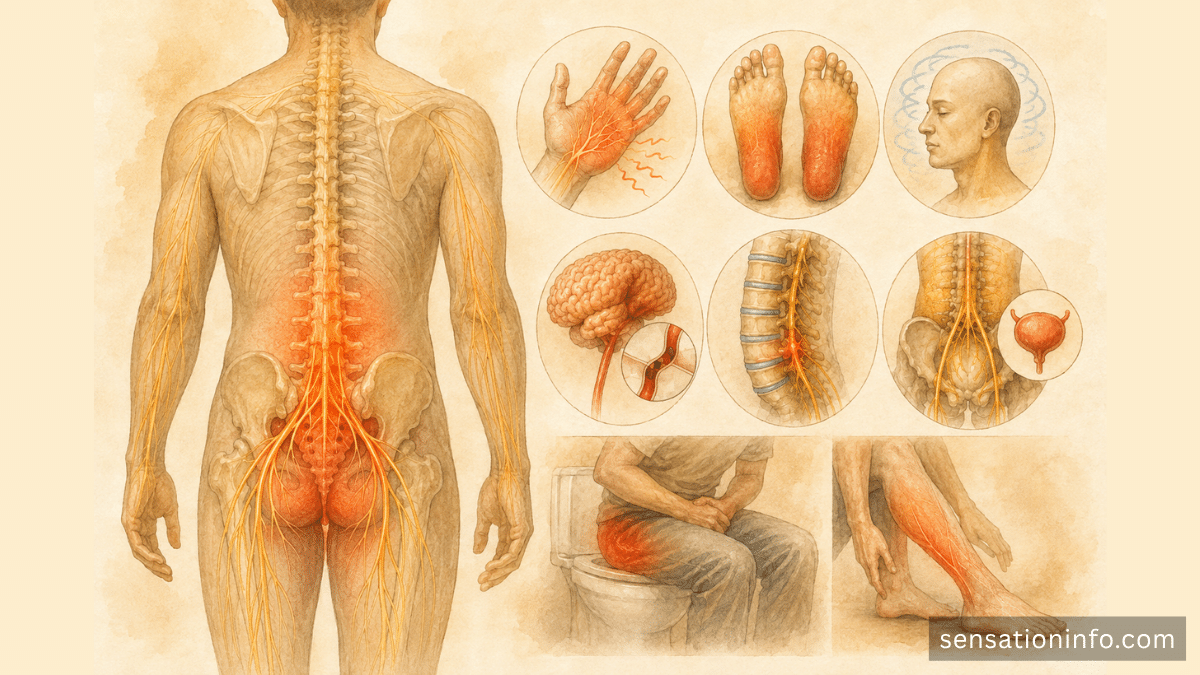

Pins and needles in the groin can come from pressure on a pelvic nerve, tight clothing, skin irritation, a muscle or hip problem, an infection, or a back condition. A new change in the saddle area with trouble urinating, loss of bowel control, or leg weakness is an emergency. The exact location and any changes in bladder, bowel, sexual, or leg function matter.
What area counts as the groin?
The groin is the fold between the lower abdomen and upper thigh. People may also use the term to describe the inner thigh, pubic area, genitals, perineum, buttocks, or the area around the anus.
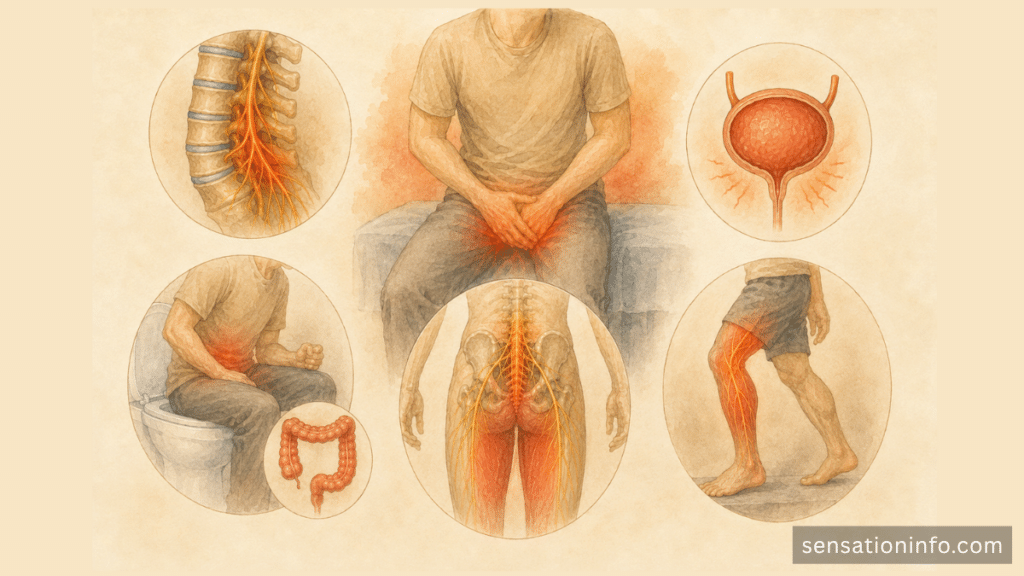
Tell a clinician exactly where the sensation is located. Pins and needles limited to the skin crease can have a different cause from altered feeling across the genitals, anus, inner thighs, and buttocks. The broader area is sometimes called the saddle region because it matches the part of the body that touches a saddle.
A clear description helps distinguish skin irritation, a local nerve problem, a hip or back condition, and a time sensitive spinal emergency.
What should you do if groin sensation changes suddenly?
Go to an emergency department immediately if pins and needles in the groin occur with:
•New numbness or altered sensation around the genitals, anus, buttocks, or inner thighs.
•Trouble starting urination, inability to urinate, or loss of bladder control.
•Loss of bowel control or a major change in bowel function.
•New sexual dysfunction together with back pain or leg symptoms.
•Weakness in one or both legs, difficulty walking, or rapidly worsening numbness.
•Severe low back pain, especially after an injury.
•Fever, confusion, severe illness, or recent spinal procedure.
These symptoms can occur with cauda equina syndrome, a rare emergency caused by compression of nerves at the bottom of the spinal canal. Rapid assessment can reduce the chance of permanent bladder, bowel, sexual, or leg problems.
Do not wait for all warning signs to appear. If the altered sensation is new and spreading, seek emergency care rather than arranging a routine appointment.
Is it prickling, numbness, burning, or pain?
Pins and needles usually means a prickling, buzzing, crawling, or electric sensation. Numbness means reduced feeling. Burning suggests irritation of a nerve or skin tissue, while raw friction or localized inflammation often triggers an intense burning sensation in groin area causes that makes walking or wearing fitted clothing deeply uncomfortable.
These descriptions can overlap. A clinician may ask whether clothing, sitting, walking, coughing, urinating, bowel movements, sexual activity, or hip movement changes the sensation.
If the sensation is only on the skin and changes after clothing or pressure is removed, a surface cause may be involved. If it affects the perineum or saddle region and comes with bladder or bowel changes, treat it as urgent.
Could sitting or cycling cause groin pins and needles?
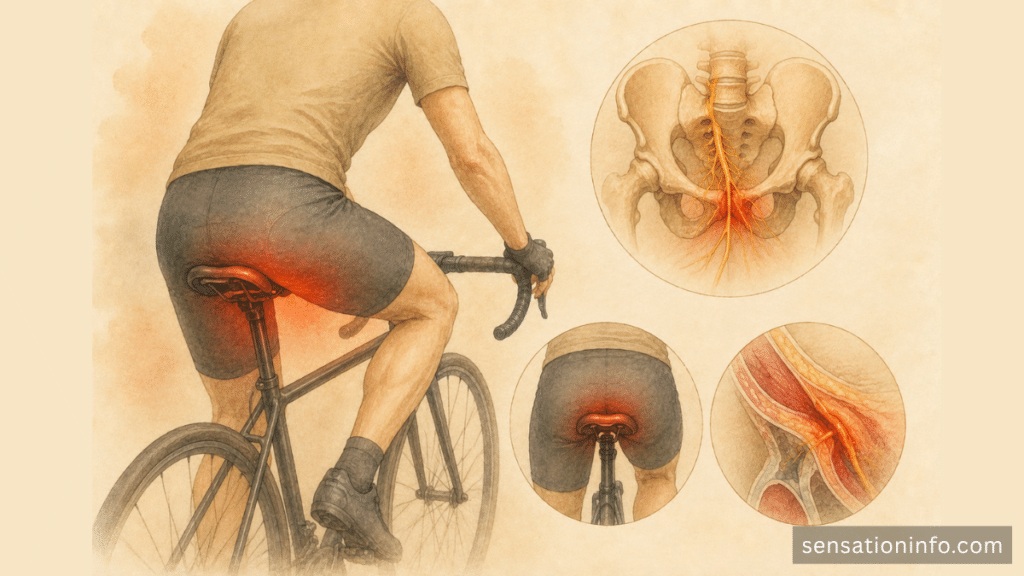
Yes. Prolonged sitting, cycling, horseback riding, squatting, or pressure from a narrow seat can irritate nerves in the pelvis. The pudendal nerve is one nerve that carries sensation from parts of the perineum and genital area.
Symptoms related to pressure may become worse while sitting and improve after standing or changing position. Repeated or severe symptoms still deserve medical evaluation because pelvic pain and altered sensation have several possible causes.
Avoid the activity that triggers the sensation until you know more. Do not use a symptom pattern to rule out a spine or circulation problem.
What are the possible causes of pins and needles in the groin?
Pudendal nerve irritation
Pudendal neuralgia is pain or altered sensation caused by irritation of the pudendal nerve. It can cause burning, shooting, aching, stabbing, tingling, prickling, or numbness in the perineum, genitals, anus, or rectum.
Symptoms may worsen with sitting and improve while standing or lying down. Cycling, prolonged sitting, pelvic floor tension, constipation, pelvic injury, surgery, childbirth trauma, and some infections can contribute, while sharp, burning outer thigh discomfort is often tied directly to meralgia paresthetica causes, symptoms, and treatment when lateral femoral cutaneous nerve compression is present.
Lumbar spine or sacral nerve irritation
Nerves from the lower spine carry signals to the groin, pelvis, legs, and feet. A disc problem, spinal narrowing, arthritis, inflammation, or injury can irritate one of these nerves.
Back pain, buttock pain, leg tingling, weakness, or symptoms that change with coughing or bending may point toward a spine related cause, especially if you are actively dealing with spreading pins and needles in legs causes that travel downward from the lower back. New saddle numbness, bladder or bowel changes, or leg weakness requires emergency assessment.
Cauda equina syndrome
Cauda equina syndrome occurs when a group of nerves at the bottom of the spinal canal becomes severely compressed. It may cause severe back pain, leg weakness, numbness in the saddle region, urinary retention, incontinence, bowel changes, or sexual dysfunction.
This condition is uncommon but time sensitive. Go to an emergency department immediately when new groin or saddle sensation changes occur with bladder, bowel, sexual, or leg symptoms.
Hip or muscle problems
A hip joint problem, groin strain, tendon irritation, or pelvic muscle spasm can cause pain or unusual sensation near the groin. Symptoms may worsen when walking, climbing stairs, lifting the leg, or moving the hip.
Muscle and joint problems do not usually cause widespread numbness or loss of bladder control. Persistent symptoms, severe pain, swelling, or difficulty bearing weight need medical evaluation.
Skin irritation or tight clothing
Sweat, friction, shaving, tight underwear, athletic gear, soaps, and skin conditions can irritate the groin. Burning, itching, redness, peeling, or small bumps may be present.
Keep the area dry, avoid the suspected irritant, and wear loose breathable clothing. Seek care for severe pain, spreading redness, fever, drainage, blisters, or a rash that does not improve.
Shingles or another infection
Shingles may begin with pain, itching, burning, or tingling on one side before a rash appears. The rash usually forms grouped blisters in a band supplied by one nerve.
Other infections can cause groin symptoms with fever, swelling, sores, discharge, burning urination, pelvic pain, or swollen lymph nodes. Contact a clinician promptly for these symptoms.
Hernia
A groin hernia occurs when tissue pushes through a weak area in the abdominal wall. It may cause a bulge, pressure, aching, or discomfort that worsens with lifting, coughing, or standing.
A painful bulge that cannot be pushed back, vomiting, severe abdominal pain, or a change in skin color over the bulge requires urgent care. A hernia does not explain every case of groin tingling, so persistent sensation changes need evaluation.
Diabetes or peripheral neuropathy
Diabetes and other systemic conditions that affect peripheral nerves can cause persistent tingling, burning, or numbness in several body areas, reflecting broader underlying patterns when multiple nerve pathways malfunction. Symptoms often begin in the feet but may involve the pelvis or other regions.
Ask a clinician about glucose testing if symptoms recur or occur with increased thirst, frequent urination, fatigue, or a history of diabetes. Do not assume a new groin symptom is routine neuropathy.
Recent surgery, injection, or childbirth
Pelvic, abdominal, hip, spinal, or urologic procedures can temporarily irritate or compress nerves. Childbirth can also affect pelvic tissues and nerves.
Tell the treating clinician when the procedure or delivery occurred and whether the sensation is improving. New weakness, loss of bladder or bowel control, severe pain, or rapidly spreading numbness requires urgent care.
Reduced blood flow
Problems affecting blood flow can cause pain, numbness, tingling, color changes, or coolness in the leg or groin. A sudden cold, pale, blue, severely painful, or weak leg is an emergency.
Seek urgent care for a new swollen leg with pain or breathlessness because a blood clot may be involved. Do not massage a swollen or suddenly painful leg while waiting for help.
Which patterns are more concerning?
| Pattern | What it may suggest | Recommended action |
| Brief prickling after tight clothing or prolonged pressure that fades after changing position | Surface irritation or temporary nerve pressure | Remove the pressure and monitor; seek care if recurrent |
| Tingling that worsens with sitting and improves when standing | Pelvic nerve irritation or pelvic floor pressure | Arrange a clinical evaluation if persistent |
| Groin sensation changes with back pain and leg symptoms | Lower spine or nerve root problem | Seek prompt care |
| New saddle numbness with urinary retention, incontinence, bowel changes, or leg weakness | Possible cauda equina syndrome | Go to an emergency department immediately |
| One sided burning followed by a blistering rash | Possible shingles | Contact a clinician promptly |
| Groin pain with a bulge, vomiting, or severe abdominal pain | Possible complicated hernia | Seek urgent care |
| Groin symptoms with a cold, pale, blue, swollen, or weak leg | Possible circulation emergency | Call 112 in India or 911 internationally |
How do clinicians evaluate groin pins and needles?
A clinician will ask which areas are affected, whether the symptoms are on one side or both, when they began, and whether sitting, walking, exercise, urination, bowel movements, sex, or hip movement changes them.
The examination may include the abdomen, groin, skin, hip, lower back, leg strength, reflexes, sensation, walking, and pulses. Questions about bladder, bowel, sexual function, fever, recent surgery, childbirth, injury, and new medicines are important.
Testing depends on the findings. It may include blood tests, urine tests, ultrasound, magnetic resonance imaging, computed tomography, nerve testing, or other studies. Suspected cauda equina syndrome requires emergency evaluation and spinal imaging.
What can you do until you are assessed?
Change position and remove tight clothing if pressure seems to trigger brief symptoms. Avoid prolonged sitting, cycling, horseback riding, squatting, or any activity that clearly worsens the sensation.
Keep the skin clean and dry, and avoid new soaps, fragrances, shaving products, and creams until the cause is clearer. Do not apply strong heat to a numb area because reduced sensation can hide a burn.
Do not forcefully stretch the lower back or pelvis after an injury. Do not take someone else’s medicine or begin high dose supplements. Seek emergency care instead of using home treatment when bladder, bowel, leg, or saddle warning signs appear.
How is groin tingling treated?
Treatment depends on the cause. Pressure related nerve irritation may improve with activity changes, pelvic floor physical therapy, posture changes, or clinician guided treatment. A spine condition may need physical therapy, medicine, injections, or surgery depending on severity.
Skin irritation needs removal of the trigger and appropriate skin care. Shingles may require prescription antiviral treatment. A hernia, severe circulation problem, infection, or cauda equina syndrome needs condition specific medical care.
Do not delay assessment of progressive numbness, weakness, bladder problems, bowel changes, or loss of sexual function.
When should you make a medical appointment?
Arrange a medical visit if pins and needles last beyond a brief episode, keep returning, spread, affect sleep or activity, follow surgery or childbirth, occur with back or hip pain, or have no clear trigger.
Seek prompt care for a rash, fever, urinary burning, pelvic swelling, a groin bulge, leg weakness, reduced sensation, or symptoms that worsen with walking or sitting. Go to an emergency department for new saddle sensation changes with bladder, bowel, sexual, or leg symptoms.
Key Takeaways
- Pins and needles in the groin may involve skin irritation, pelvic nerve pressure, a spine or hip problem, infection, a hernia, diabetes, or circulation.
- New saddle numbness with urinary retention, incontinence, bowel changes, sexual dysfunction, or leg weakness is an emergency.
- Pudendal nerve irritation often worsens with sitting and can cause tingling, burning, prickling, or numbness in the perineal and genital area.
- A one sided burning area followed by a rash may be shingles and should be discussed with a clinician promptly.
- Persistent, recurrent, spreading, or unexplained groin sensation changes need medical evaluation.
Frequently Asked Questions
Possible causes include pressure on a pelvic nerve, prolonged sitting, cycling, tight clothing, skin irritation, pudendal nerve irritation, a lower spine problem, a hip or muscle condition, shingles, infection, a hernia, diabetes, recent surgery, childbirth, or reduced blood flow.
A hernia can cause groin pressure, aching, or discomfort and may produce a bulge. Severe pain, vomiting, a tender bulge that cannot be pushed back, or a skin color change requires urgent care. Persistent tingling may have another cause as well.
A clinician may examine the groin, skin, abdomen, hips, lower back, leg strength, reflexes, sensation, walking, and pulses. Depending on the symptoms, tests may include blood tests, urine tests, ultrasound, magnetic resonance imaging, computed tomography, or nerve testing.
Yes. Arrange medical care if symptoms recur, last beyond a brief episode, spread, follow surgery or childbirth, occur with back or hip pain, or have no clear trigger. Seek emergency care for saddle sensation changes with bladder, bowel, sexual, or leg symptoms.
Groin pins and needles that worsen with sitting may involve a pelvic nerve, while saddle sensation changes with bladder or leg symptoms need emergency assessment for a spinal cause. A dedicated Pudendal Neuralgia: Pelvic Nerve Pain, Symptoms, and Treatment article would be the most direct next resource if available. Until then, do not use any related article to self diagnose a pelvic nerve disorder.
Conclusion
Pins and needles in the groin can be caused by pressure, skin irritation, a pelvic nerve, the lower spine, an infection, a hernia, or another medical problem. The most important question is whether the sensation involves the saddle area and occurs with bladder, bowel, sexual, or leg changes. Seek emergency care for those warning signs and arrange a medical visit for any persistent, recurrent, spreading, or unexplained symptoms.
References
Cleveland Clinic. Pudendal Neuralgia: Causes, Symptoms and Treatment
National Library of Medicine. Numbness and Tingling. MedlinePlus Medical Encyclopedia.
Centers for Disease Control and Prevention. Shingles Symptoms and Complications. CDC.
Mayo Clinic. Peripheral Neuropathy: Symptoms and Causes. Mayo Clinic.