
Have you ever felt a strange burning or tingling on one side of your body that didn’t seem to match anything you’d done that day? I have, and the first time it happened, I genuinely thought I’d somehow brushed up against something hot. A few days later, the rash showed up, and suddenly things made painful sense. Shingles had quietly arrived without warning.
Shingles isn’t just a skin condition. It’s a nerve-related illness that can produce intense burning, tingling, and lingering nerve pain even after the rash clears. In this article, I’ll walk you through what shingles really is, why it produces such distinctive sensations, and what helps with both treatment and long-term recovery. Everything I share here is based on credible medical sources like the Cleveland Clinic, Mayo Clinic, CDC, and the NHS.
What Shingles Really Is
Shingles, also called herpes zoster, is caused by the same virus that causes chickenpox. After someone recovers from chickenpox, the virus stays dormant in nerve cells and can reactivate years or even decades later as shingles.
The CDC confirms that nearly one in three people in the United States will develop shingles at some point in their lifetime. While the risk increases with age, it can affect anyone whose immune system temporarily weakens, including young adults.
Why Shingles Causes Such Distinctive Sensations
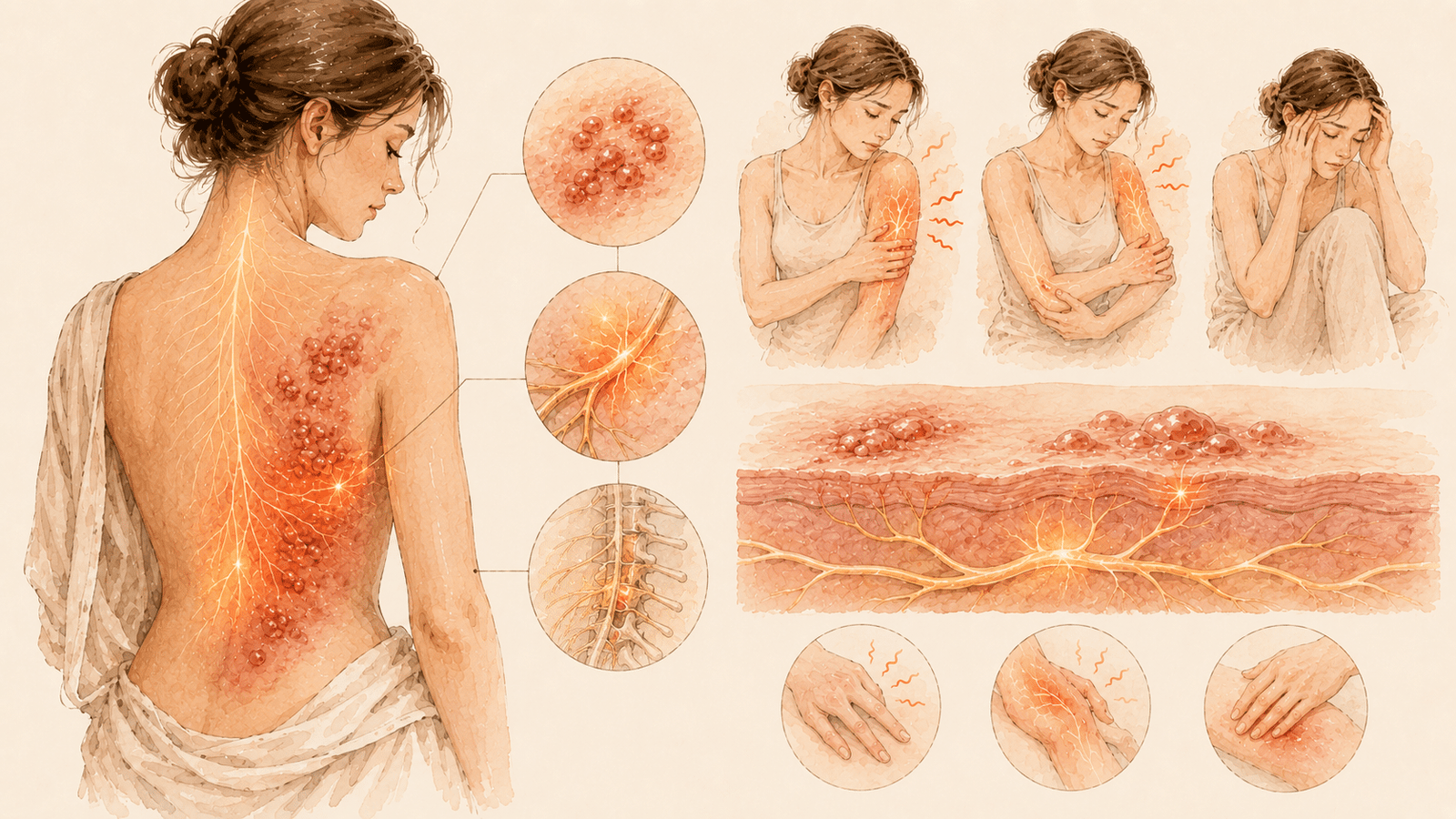
This is the part that catches many people off guard. Shingles primarily affects the nerves, not the skin. So the burning, tingling, and shooting sensations often appear before any visible rash. It’s a nerve outbreak with a skin reaction layered on top.
I’ve personally heard people describe their early shingles symptoms as “weird heat on the back” or “an electric tickle along the ribs”. The discomfort often starts subtly and then escalates.
The Sensation Timeline: How Shingles Symptoms Develop
Shingles usually unfolds in stages, and understanding the progression helps a lot.
Stage 1: Early Nerve Sensations (Days 1–4)
The first sign is typically a burning, tingling, or itching sensation on one side of the body. This is often paired with mild fatigue or sensitivity to touch. Some people also feel a “pins and needles” sensation, similar to a limb falling asleep.
I’ve spoken to people who initially blamed these symptoms on stress, posture, or new clothing. The cause turned out to be much deeper.
Stage 2: Rash Appears (Days 3–5)
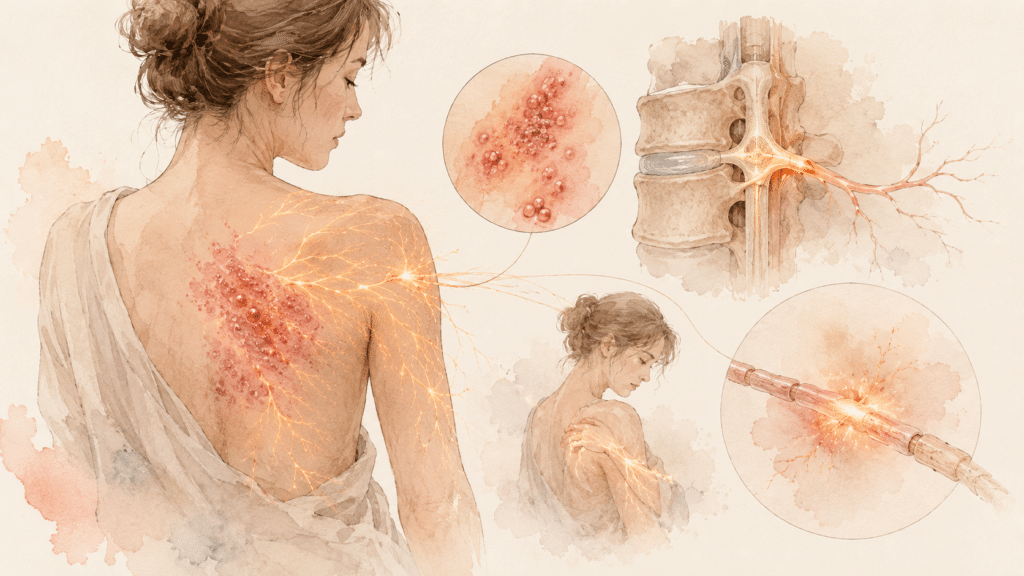
A red rash usually appears within a few days of the early sensations. It often follows a band-like pattern called a dermatome, which corresponds to the path of a specific nerve. This is why shingles typically affects only one side of the body.
Stage 3: Blisters and Inflammation (Days 5–10)
The rash develops into fluid-filled blisters that can be painful or itchy. The Mayo Clinic recognises this stage as the peak of viral activity.
Stage 4: Healing (Days 10–21)
The blisters dry up and form scabs. Most people heal within 2–4 weeks. Burning sensations may continue for some time after the rash heals.
Stage 5: Postherpetic Neuralgia (After 30+ Days)
This is the longest-lasting and most challenging stage. Some people continue experiencing nerve pain long after the rash has cleared. This is called postherpetic neuralgia, and it requires specific treatment.
Where Shingles Most Commonly Appears
Shingles can affect any part of the body, but it shows up most often on:
- The torso, in a band-like pattern around the ribs
- The face, especially near the eyes
- The neck and shoulder area
- The lower back and hips
- The arms or legs in some cases
If shingles affects the area near the eye, please seek medical care immediately. It can lead to vision complications
without prompt treatment.
Postherpetic Neuralgia: The Long-Term Nerve Issue
Postherpetic neuralgia (PHN) is the most common long-term complication of shingles. It happens when the virus damages nerves during the active phase, causing pain that persists long after the rash heals.
The CDC notes that PHN can last weeks, months, or even years in some cases. The likelihood of developing PHN increases with age and the severity of the original shingles outbreak.
The pain can feel like the following:
- Burning or scalding sensations
- Shooting or electric jolts
- Constant aching
- Hypersensitivity, where even clothing feels painful
I’ve spoken to people who described PHN as “more exhausting than the original shingles itself”. This isn’t an exaggeration. It’s a real, deeply impactful condition.
Common Causes of Shingles Outbreaks
Shingles doesn’t appear randomly. It’s usually triggered by something that weakens the immune system. Here are the most common causes.
Aging
The risk increases sharply after age 50. The Cleveland Clinic confirms that most shingles cases occur in older adults.
Stress
High stress weakens the immune system, making it easier for the virus to reactivate. I’ve personally noticed people developing shingles during particularly stressful life events.
Weakened Immune System
Conditions like HIV, cancer treatments, immunosuppressive medications, and chronic illness increase the risk.
Recent Illness or Surgery
Anything that taxes the immune system, including major surgeries or significant infections, can trigger shingles.
Lack of Sleep and Poor Nutrition
Long-term poor health habits weaken the body’s defences and create the conditions for the virus to reactivate.
Hormonal Changes
Significant hormonal shifts, including during menopause or pregnancy, sometimes contribute.
Risk Factors That Increase the Chance of Severe Shingles
Some people are at higher risk of more severe symptoms or postherpetic neuralgia. These factors include:
- Age over 50
- Weakened immune system
- Delayed treatment of the rash
- A more painful initial rash
- A larger area of skin involvement
- Shingles near the face or eyes
Addressing these factors quickly improves long-term recovery and reduces complications.
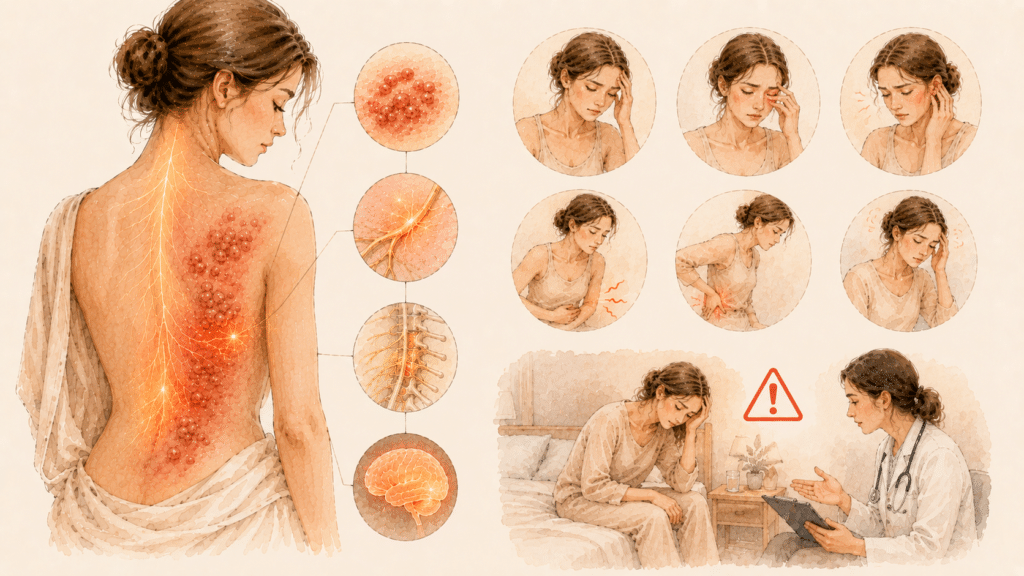
When Shingles Becomes a Red Flag
Most shingles cases are uncomfortable but manageable. Some require urgent attention. Please see a doctor immediately if you experience:
- Shingles near the eyes
- Severe pain or rash spreading quickly
- Confusion or fever
- Difficulty hearing or balance issues
- Rash covering large parts of the body
- Symptoms in someone with a weak immune system
Conditions like ophthalmic shingles or disseminated shingles need fast medical care to prevent complications.
How Doctors Diagnose Shingles
When I had a friend dealing with early shingles, the diagnostic process was straightforward but thorough. Doctors usually diagnose shingles based on the appearance and pattern of the rash, paired with patient history.
If the diagnosis isn’t clear, lab tests like PCR or viral cultures may be used. For postherpetic neuralgia, doctors often perform a neurological exam and assess pain patterns.
Early diagnosis matters. Starting antiviral medications within 72 hours of rash onset significantly improves outcomes.
Treatment Options That Truly Help
Treatment depends entirely on the stage and severity, but here’s what generally works in real-world cases.
Antiviral Medications
Doctors typically prescribe acyclovir, valacyclovir, or famciclovir. These medications work best when started within 72 hours of rash appearance. They reduce the severity, duration, and risk of postherpetic neuralgia.
Pain Management
NSAIDs help with mild pain, while stronger options may be needed for moderate cases. For nerve pain, doctors often prescribe gabapentin, pregabalin, or duloxetine.
Topical Treatments
Calamine lotion, lidocaine patches, and capsaicin creams can ease itching and nerve sensitivity. Brands like Aspercreme and Salonpas offer over-the-counter options for mild nerve pain.
Steroids in Severe Cases
For severe inflammation or facial involvement, doctors may prescribe corticosteroids to reduce swelling and pain.
Treatment for Postherpetic Neuralgia
Nerve pain that lingers after shingles often requires long-term management. Common treatments include nerve-pain medications, lidocaine patches, and sometimes nerve blocks. The Mayo Clinic confirms that early intervention reduces the risk of chronic PHN.
Cool Compresses and Skincare
Lukewarm baths and cool compresses help reduce itching. Avoid scratching to prevent infection. Fragrance-free moisturisers from trusted brands like CeraVe and Cetaphil help soothe sensitive skin.
Lifestyle Adjustments
Rest, balanced meals, hydration, and stress reduction support faster recovery. I’ve personally seen how lifestyle plays a huge role in healing speed.
How to Prevent Shingles
Prevention plays a major role, especially as we age. Here are the most effective strategies.
Get the Shingles Vaccine
The Shingrix vaccine is currently the most effective protection against shingles. The CDC recommends it for adults aged 50 and older. It significantly reduces the risk of both shingles and postherpetic neuralgia.
Maintain a Strong Immune System
Healthy sleep, balanced meals, regular exercise, and stress management all support immune function. Tiny daily habits add up over time.
Avoid Stress Overload
Chronic stress weakens immunity. Practices like mindfulness, deep breathing, and therapy reduce long-term risk.
Limit Alcohol and Quit Smoking
Both weaken the immune system and increase nerve sensitivity. Reducing them improves overall resilience.
Manage Underlying Conditions
People with chronic illnesses benefit from working closely with their doctors to keep the immune system functioning well.
Frequently Asked Questions
Most people describe it as burning, tingling, shooting, or electric-like pain on one side of the body.
Yes. This is called zoster sine herpete. It causes nerve pain without the typical skin symptoms.
The rash usually heals in 2–4 weeks. Nerve pain may continue for weeks or months afterward, depending on the case.
The virus can spread to people who haven’t had chickenpox or the chickenpox vaccine, but it spreads as chickenpox, not shingles.
Yes. While most cases occur in older adults, anyone with a weakened immune system can develop shingles.
Final Thoughts
Shingles is a deeply uncomfortable but treatable condition. From early tingling and burning to long-term postherpetic neuralgia, the symptoms can affect daily life in significant ways. The good news is that early diagnosis and treatment make a real difference.
If you ever feel a strange burning, tingling, or sensitivity on one side of your body, especially with fatigue or sensitivity to touch, don’t dismiss it. Track the symptoms, watch the area carefully, and consult a qualified doctor quickly. Your nerves work hard for you every day. The kindest thing you can do is take their warnings seriously