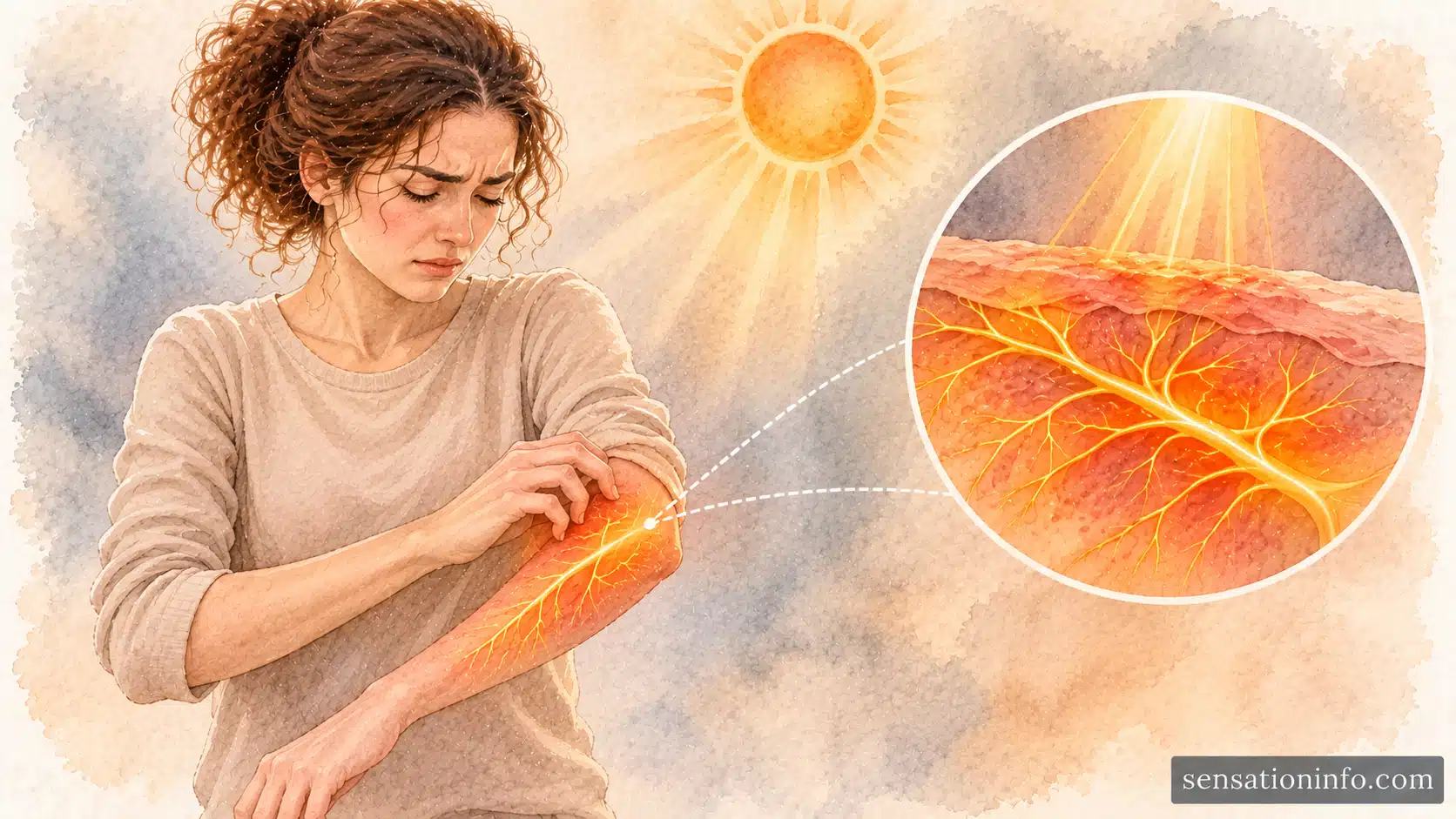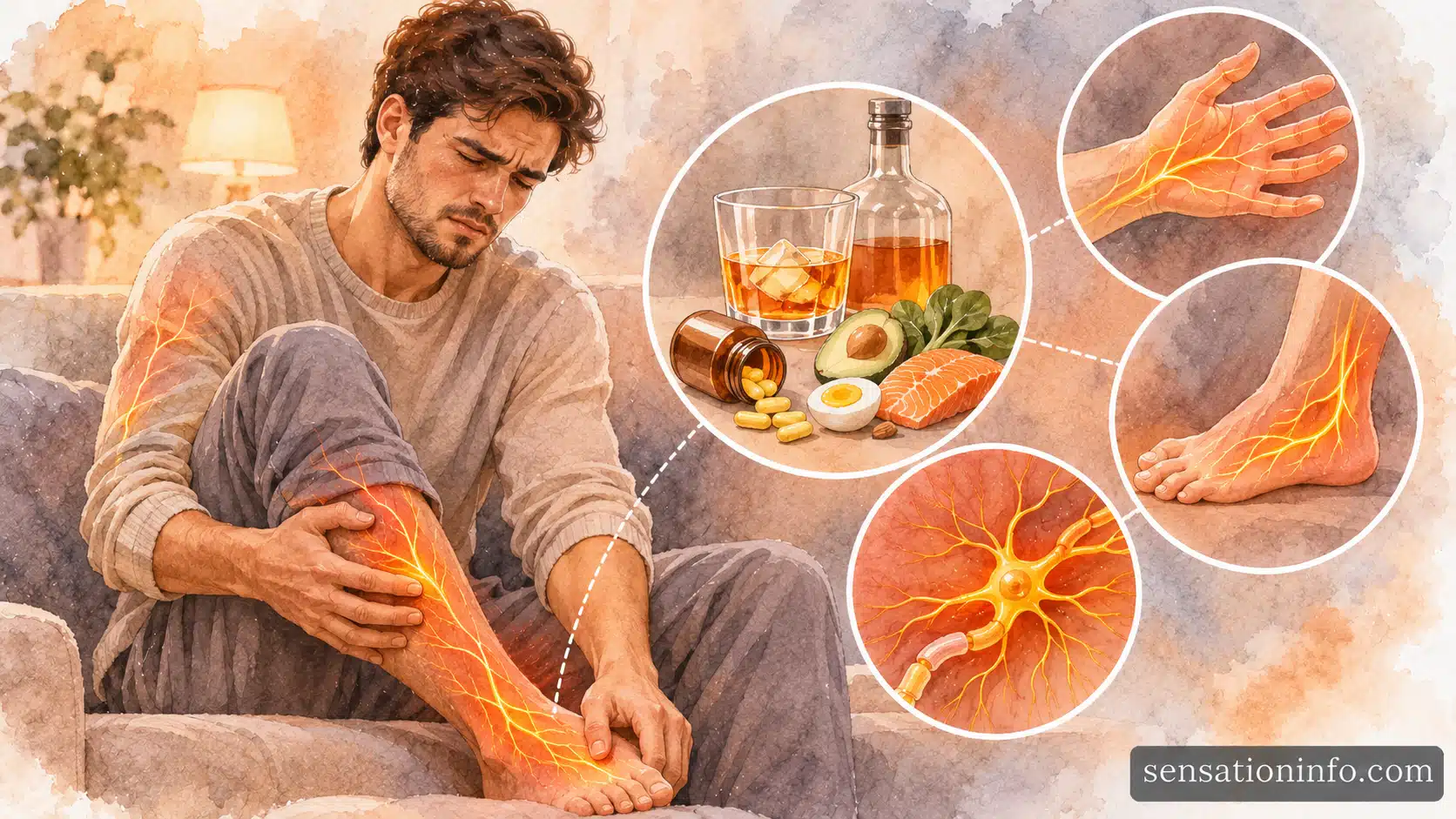

Tingling after drinking alcohol, especially in your feet and hands, often means your nerves are running low on B vitamins that alcohol drains from the body. Over time, alcohol also harms nerves directly, a condition called alcohol related neuropathy. A single tingle after a heavy night is usually something simpler, like sleeping on an arm. But if you have ongoing numbness and tingling in hands and feet and you drink regularly, it is worth a doctor visit now, because early care gives your nerves the best chance to recover.
Why Do My Hands and Feet Tingle After Drinking Alcohol?
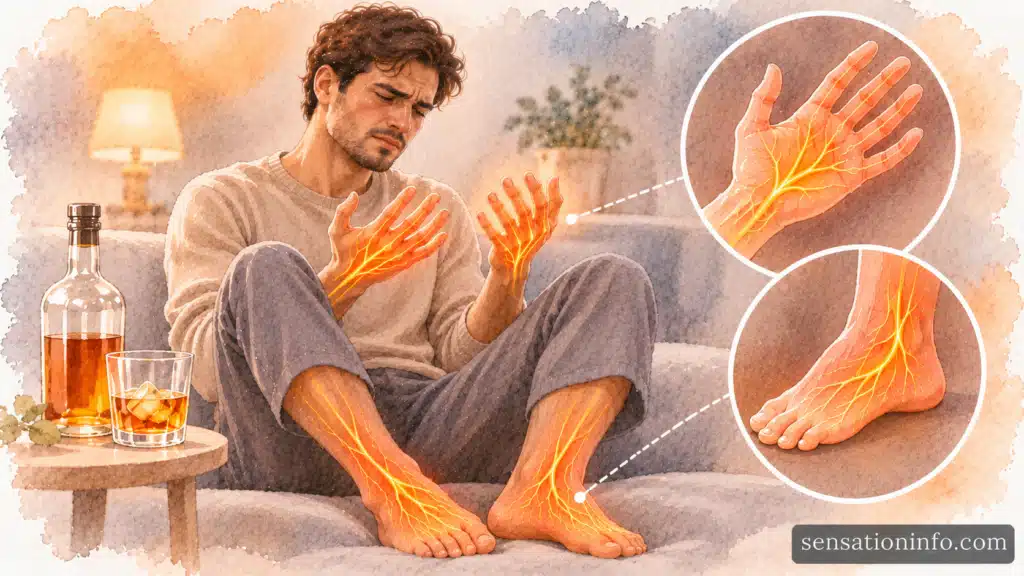
Alcohol affects your nerves in two ways at once. It is toxic to nerve fibers, and it pushes out the vitamins those fibers need to work.
The nerves to your toes and feet are usually hit first, and the trouble then slowly moves up the legs.
Up to half of long term heavy drinkers develop this kind of nerve damage. So when a patient who drinks most days tells me their feet feel “fizzy” or “asleep,” I take it seriously, even if they feel fine otherwise.
Poor eating makes it worse. Many people who drink heavily skip meals or replace food with alcohol, so the body loses vitamins faster and takes in fewer.
Which Vitamins Does Alcohol Drain, and How Does That Affect My Nerves?
Several vitamins matter here, not just one. In fact, when I order blood work for a patient who drinks, I check the whole group, because more than one is often low.
The table below shows the vitamins I check and why alcohol lowers each one. It also shows what a shortage can feel like, so you can see why one blood test is rarely enough.
| Vitamin | Why alcohol lowers it | What a shortage can cause |
| Thiamine (vitamin B1) | Alcohol blocks its absorption and its storage in the liver | Tingling and burning in the feet; in severe cases, sudden confusion and unsteady walking |
| Vitamin B12 | Heavy drinking damages the gut lining, so less is absorbed | Numbness and tingling in hands and feet, trouble walking, memory problems |
| Vitamin B6 | Heavy drinking with a poor diet | Nerve damage with pins and needles |
| Folate (vitamin B9) | Alcohol often replaces food | Deep tiredness, a sore red tongue, anemia |
| Vitamin E | Heavy drinking with a poor diet | Nerve damage |
Why Thiamine Matters Most
Thiamine is the vitamin I worry about first. Your nerves need it to send signals, and alcohol is the most common reason people run short.
On top of nerve damage, a severe drop in thiamine can affect the brain. That condition, called Wernicke encephalopathy, is a medical emergency, and I cover its warning signs below.
Why B12 Is Easy to Miss
Low B12 can look exactly like alcohol nerve damage. It is also common in people who take metformin (Glucophage) for diabetes or acid reducers such as omeprazole (Prilosec).
Because of this, I never assume alcohol is the only cause. If you want the full picture of how low B12 shows up in the nerves, our guide to vitamin B12 deficiency walks through the signs and tests in detail.
What Does Alcohol Related Nerve Damage Feel Like?
Most people first notice pins and needles or numbness in their toes. Then, over months, it spreads up the legs and can later reach the hands.
Patients describe it in different ways. Some feel burning at night, much like a burning sensation in the lower legs and feet that makes sheets feel heavy. Others say their feet feel padded, as if they are walking on cotton.
Weakness and balance trouble often follow. You may trip more, find it hard to feel the floor in the dark, or notice your ankles giving way.
Signs Beyond the Hands and Feet
In more severe cases, alcohol also damages the nerves that run your internal organs. These are easy to miss, so I ask about them directly.
The signs below can show up alongside tingling. Mention any of them to your doctor, because each one changes how urgently you need care:
- Feeling lightheaded when you stand up
- Bladder trouble, such as weak flow or leaking
- Constipation or diarrhea that comes and goes
- Erection problems
- Trouble swallowing or speaking
- Feeling unusually hot, especially after exercise
Is Tingling After One Night of Drinking Normal?
Usually, yes, if it fades within a few hours. After a heavy night, people often sleep deeply in one position and press on a nerve in the arm or leg.
What matters is the pattern. Tingling that comes back again and again, sits in both feet, or lingers for days is not a one off; it points toward nerve damage or a vitamin shortage.
This comparison helps you sort your own experience. Use it as a guide for when to book a visit:
| Usually harmless | See a doctor |
| Tingling in one arm or leg after sleeping awkwardly | Tingling in both feet or both hands |
| Fades within a few hours | Lasts more than 2 weeks or keeps coming back |
| No weakness | Weakness, tripping, or poor balance |
| Happened once | You drink most days or have a history of heavy drinking |
What Else Could Be Causing My Tingling?
Alcohol is a common cause, but it is rarely the only suspect. Many of my patients who drink also have diabetes, take medicines that lower B12, or have a pinched nerve.
The table below lays out the patterns I see most. It helps you and your doctor think about causes beyond alcohol.
| Where it is | What it feels like | What comes with it | Likely cause | How urgent |
| Both feet, spreading up the legs | Burning, pins and needles, numbness | Regular heavy drinking, poor appetite | Alcohol related neuropathy with thiamine deficiency | Book a visit within weeks |
| Hands and feet | Numbness, tingling, unsteady walk | Metformin or acid reducer use, fatigue | Vitamin B12 deficiency | Book a visit within weeks |
| Both feet | Burning, worse at night | High blood sugar, thirst, frequent urination | Diabetic neuropathy | Book a visit within weeks |
| Thumb, index, and middle finger | Numbness, worse at night | Wrist bending, hand use | Carpal tunnel syndrome | Book a visit |
| One arm or leg after sleep | Dead, heavy feeling | Slept in one position | Pressure on a nerve | Usually fades in hours |
| Face, arm, or leg on one side | Sudden numbness | Face drooping, slurred speech | Stroke | Call 911 |
Because the symptoms overlap so much, diabetic neuropathy is the first thing I rule out alongside alcohol. Still not sure which pattern fits you? Our nerve symptom checker can help you narrow down which nerve may be involved before your appointment.
When Is Tingling After Drinking an Emergency?
Most tingling is not an emergency. However, a few signs mean you need help right away, and each one below comes with the action to take.
- New confusion, an unsteady walk, and eye trouble such as double vision or jerking eyes: call 911. These are signs of Wernicke encephalopathy, which needs thiamine immediately.
- Sudden numbness or weakness on one side, face drooping, or slurred speech: call 911.
- Weakness that spreads up your legs over hours or days: go to the emergency room.
- New loss of bladder or bowel control: get same day care.
- Tingling that lasts more than 2 weeks or keeps spreading: book a doctor visit.
One more safety point matters a lot. If you drink heavily every day, do not stop all at once on your own, because withdrawal can be dangerous; ask your doctor to help you stop safely, sometimes with supervised care.
What Will My Doctor Ask, and What Tests Will I Need?
The most useful thing you can bring is an honest account of how much you drink. I never judge the answer, but I need it to treat you properly.
Your doctor will likely ask the questions below. Thinking about them ahead of time makes the visit faster and more accurate:
- How many drinks you have on a typical day, and for how many years
- What you eat on a normal day, and whether you skip meals
- Where the tingling started and how fast it is spreading
- Any weakness, falls, or bladder changes
- Medicines you take, including metformin, acid reducers, and supplements
After a physical exam of your reflexes, strength, and sensation, blood tests usually come next. These check thiamine, B6, B12, folate, blood sugar, A1c, thyroid, liver, and kidney function.
If the cause is still unclear, a nerve conduction study and electromyography (EMG), which test how well nerves and muscles carry signals, can show the type and extent of damage. Good questions to ask include “Which of my vitamins are low?” and “Is my diabetes or a medicine adding to this?”
Can the Tingling Go Away If I Stop Drinking?
Often it can improve, but it depends on how long the damage has been building. Stopping alcohol halts the damage from getting worse, which is the single most important step.
Improvement may begin within a few months. That said, full recovery can take several years, and nerve damage that has been present for a long time may not fully reverse.
Mild cases recover faster. So the sooner you act, the more feeling you are likely to keep.
How Is It Treated, and What Can I Do Now?
Treatment starts with stopping alcohol safely. Counseling, support groups, and medicines for alcohol use disorder all help, and a slip is a setback, not a failure.
Next comes replacing what is missing. Your doctor may prescribe thiamine, folic acid, B12, or other vitamins based on your blood tests, so take them as directed rather than guessing doses on your own.
For daily comfort, physical therapy can rebuild strength and balance. Pain medicine, if needed, is kept at the lowest dose that works.
If your feet have lost feeling, small daily habits protect them from injury you cannot feel. These are the ones I ask every patient to start:
- Check your feet every day for cuts, blisters, or redness.
- Test bath water with your elbow, not your foot.
- Wear well fitting shoes, even at home.
- Keep a night light on to prevent falls.
Key Takeaways
These points sum up what matters most about tingling after drinking alcohol. Each one stands on its own as a quick reminder.
- Tingling after drinking alcohol that keeps coming back often reflects nerve damage and low B vitamins, especially thiamine.
- Alcohol harms nerves directly and drains thiamine, B12, B6, folate, and vitamin E.
- Symptoms usually start in the toes and spread slowly upward.
- Confusion with an unsteady walk and eye problems is an emergency; call 911.
- Stopping alcohol safely and replacing vitamins can halt the damage, and many people improve over months to years.
Frequently Asked Questions
Alcohol related nerve damage usually follows years of heavy drinking combined with poor nutrition, and up to half of long term heavy drinkers develop it. There is no single safe threshold for every person, so anyone who drinks regularly and has tingling in the feet or hands should talk with a doctor.
A doctor should check vitamin levels with blood tests before choosing supplements, because thiamine, B12, B6, and folate can each be low for different reasons. A doctor can then prescribe the right vitamins and doses and look for other causes such as diabetes.
Alcohol related nerve damage can improve after stopping alcohol and correcting vitamin shortages, sometimes starting within a few months, although full recovery can take several years. Damage that has been present for many years may not fully reverse, so earlier treatment gives the best chance of recovery.
Doctor’s Recommendation
Start with your primary care doctor, who can order vitamin blood tests and help you stop drinking safely. A neurologist is the right next step if tingling keeps spreading, you have weakness or balance trouble, or tests do not explain your symptoms, since they can perform nerve conduction testing. To find one near you, our list of neuropathy specialists in the USA can help you choose a doctor experienced with nerve damage.
References
- Cleveland Clinic. Alcohol-Related Neuropathy. Cleveland Clinic. 2026.
- MedlinePlus. Alcoholic Neuropathy. MedlinePlus Medical Encyclopedia, National Library of Medicine. Accessed 2026.
- MedlinePlus. Metabolic Neuropathies. MedlinePlus Medical Encyclopedia, National Library of Medicine. Accessed 2026.
- Cleveland Clinic. Wernicke-Korsakoff Syndrome. Cleveland Clinic. Accessed 2026.
- Cleveland Clinic. Vitamin B12 Deficiency. Cleveland Clinic. Accessed 2026.