
Pins and needles in your hands happen when a nerve is temporarily compressed or irritated, cutting off normal signal flow between your hand and brain. The most common cause is simply sleeping or sitting in a position that puts pressure on a nerve. Shaking your hand or changing position usually brings relief within seconds. If the feeling keeps coming back, lasts more than a few minutes without an obvious cause, or shows up with weakness or pain, it may point to a condition like carpal tunnel syndrome, vitamin deficiency, or nerve damage that needs medical attention.
What Does Pins and Needles in Your Hands Actually Feel Like?
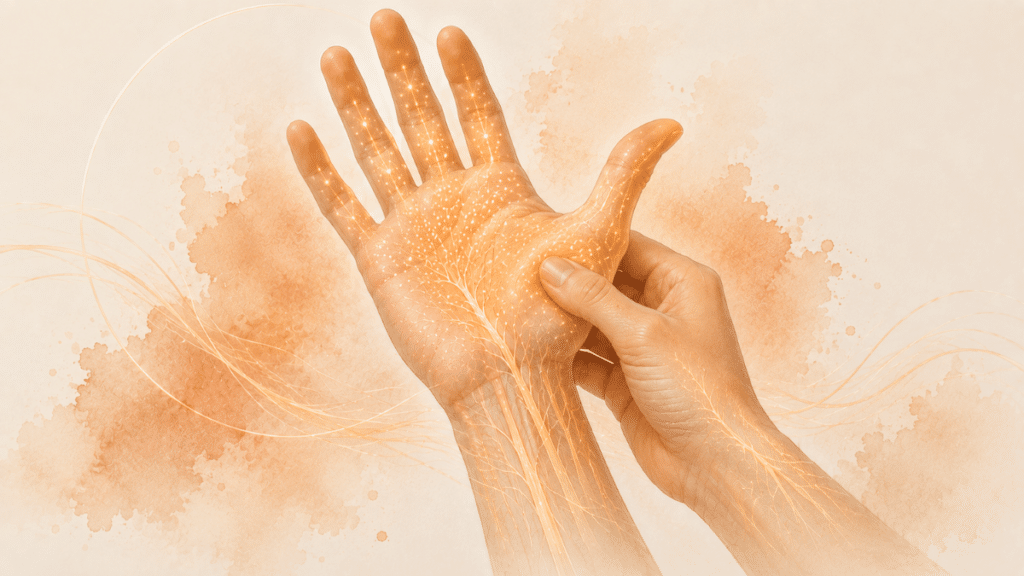
You probably already know the sensation. It starts as a mild prickling, almost like tiny needles tapping the surface of your skin. Then it builds into a buzzy, electric tingle that can spread across your fingers, palm, or the back of your hand.
The medical name for this is paresthesia. It describes any abnormal sensation of tingling, prickling, or numbness that occurs without anything physically touching your skin. Paresthesia can be temporary, lasting just a few seconds after you shift position, or chronic, returning repeatedly over weeks or months.
Some people describe it as a “fizzing” feeling. Others say their hand feels like it is full of static electricity. The intensity can range from barely noticeable to genuinely uncomfortable, especially when blood flow and nerve signals start returning to the area.
Why Do Your Hands Get Pins and Needles?
Your hands are packed with nerve fibers. Three major nerves, the median, ulnar, and radial, travel from your neck through your arm and into your fingers. Each one passes through narrow spaces where bones, ligaments, and muscles sit close together. Any pressure, swelling, or irritation along that path can disrupt nerve signals and trigger that familiar tingling.
Think of a nerve like a garden hose. If you step on it, water stops flowing. When you lift your foot, water rushes back. That sudden rush is the pins and needles you feel as nerve signals start firing again.
Common Causes of Pins and Needles in Hands
Sleeping in an awkward position
This is the number one reason most people feel pins and needles in their hands. Tucking your hand under a pillow or bending your wrist while you sleep compresses a nerve for an extended period. You wake up with a numb, tingling hand that recovers within a minute of shaking it out.
Carpal tunnel syndrome
Carpal tunnel syndrome (CTS) occurs when the median nerve gets squeezed as it passes through a narrow passage in your wrist called the carpal tunnel. According to the National Institutes of Health, the incidence of CTS in the general population ranges from 1% to 5%, and it is roughly three times more common in women than men [SOURCE: NIH StatPearls]. You will typically feel tingling in your thumb, index finger, middle finger, and half of your ring finger. Symptoms are often worse at night or after repetitive hand motions like typing, gripping, or using vibrating tools.
Cubital tunnel syndrome
This involves the ulnar nerve, which runs along the inner side of your elbow (your “funny bone” area). Leaning on your elbows for long periods or keeping your elbows bent while sleeping can compress this nerve. The result is pins and needles in your ring finger and little finger.
Cervical radiculopathy (pinched nerve in the neck)
A herniated disc or bone spur in the cervical spine can press on nerve roots that feed into the arm and hand. Depending on which nerve root is affected, you may feel tingling that travels from your neck, down your arm, and into specific fingers.
Thoracic outlet syndrome
This condition occurs when nerves or blood vessels get compressed in the space between your collarbone and first rib. It can cause tingling, numbness, and weakness in the hand and arm. People who carry heavy bags on one shoulder, have poor posture, or perform overhead work repeatedly are more likely to develop it.
Vitamin B12 deficiency
Your nerves need B12 to maintain the protective coating (myelin sheath) that surrounds them. When B12 levels drop too low, that coating breaks down and nerve signals become disrupted. Tingling in both hands and feet is one of the earliest signs. Vegans, older adults, and people with digestive conditions that reduce nutrient absorption are at higher risk.
Diabetes and prediabetes
High blood sugar over time damages small nerve fibers throughout your body, a condition called diabetic peripheral neuropathy. The National Institute of Neurological Disorders and Stroke estimates that approximately 20 million Americans live with some form of peripheral neuropathy [SOURCE: NINDS]. While tingling usually begins in the feet, it can affect the hands as well, especially as the condition progresses.
Pregnancy
Fluid retention during pregnancy can cause swelling that narrows the carpal tunnel, putting pressure on the median nerve. Pins and needles in the hands are especially common during the second and third trimesters and often resolve after delivery.
Anxiety and hyperventilation
Stress triggers your body’s fight or flight response. Rapid, shallow breathing (hyperventilation) changes the balance of carbon dioxide in your blood, which can cause tingling in your hands, fingers, and around your mouth. The sensation is real, not imagined, but it is not caused by nerve damage.
Medications
Several medications can cause tingling in the hands as a side effect. These include certain chemotherapy drugs, some antibiotics like metronidazole (Flagyl), anticonvulsants like phenytoin (Dilantin), and some HIV medications. If you notice new tingling after starting a medication, mention it to your prescribing doctor.
Less Common but Serious Causes
Not all pins and needles are harmless. Some causes require prompt medical evaluation.
Multiple sclerosis (MS) can cause tingling or numbness in the hands when the immune system damages the protective coating around nerves in the brain and spinal cord. Tingling is one of the most commonly reported early symptoms of MS.
Stroke or transient ischemic attack (TIA) can cause sudden numbness or tingling on one side of the body. This is a medical emergency.
Peripheral artery disease reduces blood flow to the extremities and can cause tingling, especially during physical activity.
Autoimmune conditions like rheumatoid arthritis, lupus, and Guillain Barre syndrome can affect nerve function and produce tingling in the hands.
Tumors or cysts pressing on a nerve in the wrist, arm, or spine can cause persistent pins and needles.
When Should You See a Doctor?
Most temporary pins and needles go away on their own. See a doctor if you notice any of the following.
The tingling lasts longer than a few minutes and does not improve when you change position. It happens frequently without an obvious cause. It spreads from your hands up into your arms. It comes with weakness, making it hard to grip objects or button a shirt. You notice muscle wasting in your hand. The tingling started after an injury to your neck, back, or arm. You also have changes in bladder or bowel control, which could signal spinal cord involvement.
Call emergency services immediately if pins and needles in your hand come on suddenly with drooping on one side of the face, difficulty speaking, confusion, sudden severe headache, or weakness on one side of the body. These are warning signs of a stroke.
How Doctors Diagnose the Cause

Your doctor will start with a detailed history. They will want to know which fingers are affected, when it started, what makes it better or worse, and whether you have other symptoms like pain, weakness, or clumsiness.
A physical and neurological exam checks reflexes, muscle strength, sensation, and range of motion to narrow down where the nerve problem is occurring.
If the cause is not obvious, additional tests may include nerve conduction studies (NCS), which measure how fast electrical signals travel through your nerves, electromyography (EMG), which records electrical activity in your muscles, blood tests to check for diabetes, vitamin deficiencies, thyroid disorders, and autoimmune markers, and imaging like an MRI of the cervical spine or wrist.
| Test | What It Checks | Commonly Used For |
|---|---|---|
| Nerve conduction study | Speed and strength of nerve signals | Carpal tunnel, ulnar neuropathy |
| Electromyography (EMG) | Electrical activity in muscles | Nerve root problems, neuropathy |
| Blood panel | B12, glucose, thyroid, inflammatory markers | Vitamin deficiency, diabetes, autoimmune causes |
| MRI | Soft tissue structures | Herniated disc, tumors, spinal stenosis |
Treatment for Pins and Needles in Hands
Treatment depends entirely on the underlying cause. There is no single pill or therapy that works for every type of tingling.
Home care and lifestyle changes
For mild, intermittent pins and needles related to posture or positioning, simple changes often make a big difference. Avoid sleeping with your wrists bent. A nighttime wrist splint keeps your wrist in a neutral position and can significantly reduce symptoms of carpal tunnel syndrome. Take regular breaks from repetitive hand activities. Every 20 to 30 minutes, stop typing or gripping and gently stretch your fingers, wrists, and forearms. Improve your posture. Slouching compresses the nerves in your neck and shoulders. Sitting upright with your shoulders relaxed opens up the nerve pathways. Shake it out. When you feel tingling coming on, shaking your hands vigorously for 10 to 15 seconds can restore normal nerve signaling quickly.
Exercises and physical therapy
A physical therapist can teach you nerve gliding exercises, which gently move and stretch the median or ulnar nerve through its full range. These exercises help the nerve slide more freely through tight spaces and can reduce symptoms over time. Strengthening the muscles around the wrist and forearm also supports the structures that protect your nerves.
Medical treatments
Wrist splinting is often the first line treatment for carpal tunnel syndrome. Wearing a splint at night prevents your wrist from bending and pressing on the median nerve while you sleep.
Anti inflammatory medications like ibuprofen (Advil) or naproxen (Aleve) can reduce swelling that contributes to nerve compression. Your doctor may also recommend a corticosteroid injection into the carpal tunnel for more targeted relief.
Vitamin supplementation is necessary when a deficiency is the root cause. B12 injections or high dose oral supplements can begin reversing nerve damage if caught early.
Blood sugar management is essential for diabetic neuropathy. Keeping blood glucose within a healthy range slows further nerve damage and can improve symptoms.
Prescription medications for nerve pain, such as gabapentin (Neurontin) or pregabalin (Lyrica), may help when tingling is accompanied by burning or shooting pain.
Surgical options
Surgery becomes an option when conservative treatments fail or when nerve compression is severe. For carpal tunnel syndrome, a procedure called carpal tunnel release involves cutting the ligament that forms the roof of the carpal tunnel. This gives the median nerve more room. The surgery has a high success rate and can often be done as an outpatient procedure. For cubital tunnel syndrome, surgery may involve moving the ulnar nerve to a less vulnerable position at the elbow.
What Does Not Work (Common Myths)
Myth: Cracking your knuckles causes pins and needles. There is no evidence that knuckle cracking damages nerves or causes tingling.
Myth: Pins and needles always mean poor circulation. While blood flow matters, the vast majority of pins and needles cases are nerve related, not circulation related.
Myth: Wearing a copper bracelet or magnetic band helps. No credible scientific evidence supports these products for treating nerve symptoms.
Myth: If it goes away on its own, it is never serious. Intermittent tingling that keeps returning can still indicate an underlying condition that needs attention, especially if it follows a consistent pattern.
How Long Does Recovery Take?
Recovery depends on the cause and how long the nerve has been affected.
| Cause | Typical Recovery Timeline |
|---|---|
| Positional compression (sleeping on hand) | Seconds to minutes |
| Carpal tunnel (mild, with splinting) | 2 to 6 weeks for noticeable improvement |
| Carpal tunnel (after surgery) | 4 to 12 weeks, full recovery up to 6 months |
| Vitamin B12 deficiency | Weeks to months with supplementation |
| Diabetic neuropathy | Ongoing management; some symptoms may not fully resolve |
| Cervical radiculopathy | 4 to 12 weeks with conservative care |
Nerve tissue heals slowly compared to other tissues in the body. Early treatment generally leads to better outcomes.
Pins and Needles in Hands During Pregnancy

Tingling in the hands during pregnancy is very common, affecting up to 60% of pregnant women according to some estimates. The hormonal changes and fluid retention of pregnancy cause swelling in the wrist that compresses the median nerve.
Wearing a wrist splint at night, elevating your hands, and doing gentle wrist stretches can ease symptoms. For most women, the tingling resolves within a few weeks to months after delivery as fluid levels return to normal. If symptoms are severe or do not improve postpartum, follow up with your doctor.
Pins and Needles in Hands at Night: Why It Gets Worse When You Sleep
Many people notice that tingling in their hands is worst during sleep. There are a few reasons for this. You are more likely to bend your wrists or tuck your hands under your body without realizing it. Your blood pressure drops slightly during sleep, which can reduce blood flow to compressed nerves. You are also not moving or repositioning as frequently as you do during the day.
Using a wrist splint, sleeping with your arms at your sides rather than curled up, and elevating your hands slightly with a pillow can all help.
Can You Prevent Pins and Needles in Your Hands?
You cannot prevent every episode, but you can reduce how often it happens.
Practice good ergonomics at your desk. Keep your wrists straight while typing and position your keyboard so your forearms are parallel to the floor. Take regular breaks during repetitive tasks. Stretch your hands, wrists, and fingers for 30 seconds every 20 to 30 minutes. Stay physically active. Regular exercise improves circulation and supports overall nerve health. Manage underlying conditions. Keeping diabetes, thyroid disorders, and autoimmune conditions well controlled reduces the risk of nerve damage. Maintain adequate B12 intake through diet or supplementation, especially if you follow a vegan or vegetarian diet. Avoid prolonged pressure on your elbows or wrists during work, sleep, or leisure activities.
Frequently Asked Questions
Is pins and needles in hands dangerous?
In most cases, no. Temporary pins and needles from a compressed nerve are harmless and resolve in seconds. However, persistent or recurring tingling can signal conditions like carpal tunnel syndrome, diabetes, or vitamin deficiency that benefit from early treatment. Sudden pins and needles on one side of the body with other neurological symptoms could indicate a stroke, which is a medical emergency.
Can anxiety cause pins and needles in hands?
Yes. Anxiety triggers hyperventilation and changes in blood chemistry that can produce real tingling in your hands and fingers. The sensation is temporary and resolves as your breathing returns to normal. If you experience frequent anxiety related tingling, learning controlled breathing techniques and addressing the underlying anxiety can help.
Why do I get pins and needles in my hands when I wake up?
Sleeping with your wrists bent or your arms tucked under your body compresses nerves for extended periods. The median nerve at the wrist and the ulnar nerve at the elbow are especially vulnerable during sleep. A nighttime wrist splint and adjusting your sleep position are the most effective solutions.
Should I be worried about pins and needles in one hand only?
Tingling in one hand is more likely to point to a local cause like carpal tunnel syndrome or a pinched nerve in the neck on that side. Tingling in both hands at the same time is more commonly associated with systemic causes like diabetes, B12 deficiency, or anxiety.
Can dehydration cause pins and needles?
Dehydration alone rarely causes pins and needles. However, dehydration can worsen electrolyte imbalances, particularly low levels of potassium, calcium, or magnesium, which may contribute to nerve irritability and tingling. Staying well hydrated supports overall nerve and muscle function.
How do I know if my pins and needles are from carpal tunnel?
Carpal tunnel syndrome typically affects the thumb, index finger, middle finger, and part of the ring finger. The little finger is usually not involved. Symptoms are often worse at night or after repetitive hand use. Shaking your hands may temporarily relieve the tingling. A nerve conduction study can confirm the diagnosis.
Key Takeaways
- Pins and needles in your hands are usually caused by temporary nerve compression and are not dangerous.
- Carpal tunnel syndrome is the most common medical cause of recurring hand tingling.
- Nighttime symptoms often improve with a wrist splint and adjusting your sleep position.
- Persistent tingling in both hands may point to a systemic issue like diabetes or vitamin B12 deficiency.
- Early diagnosis and treatment lead to better outcomes for nerve related conditions.
- See a doctor if tingling lasts more than a few minutes, comes with weakness, or keeps returning without explanation.
Doctor’s Recommendation
If you are experiencing numbness or tingling that is focused specifically in your fingers, it may be helpful to learn more about the specific patterns and causes of numbness in fingers, including how different nerve pathways produce different symptom patterns and what diagnostic steps doctors typically recommend. Understanding which fingers are affected can help you and your doctor narrow down the cause more quickly.
Frequentlu Asked Questions
In most cases, no. Temporary pins and needles from a compressed nerve are harmless and resolve in seconds. However, persistent or recurring tingling can signal conditions like carpal tunnel syndrome, diabetes, or vitamin deficiency that benefit from early treatment. Sudden pins and needles on one side of the body with other neurological symptoms could indicate a stroke, which is a medical emergency.
Yes. Anxiety triggers hyperventilation and changes in blood chemistry that can produce real tingling in your hands and fingers. The sensation is temporary and resolves as your breathing returns to normal. If you experience frequent anxiety related tingling, learning controlled breathing techniques and addressing the underlying anxiety can help.
Sleeping with your wrists bent or your arms tucked under your body compresses nerves for extended periods. The median nerve at the wrist and the ulnar nerve at the elbow are especially vulnerable during sleep. A nighttime wrist splint and adjusting your sleep position are the most effective solutions.
Tingling in one hand is more likely to point to a local cause like carpal tunnel syndrome or a pinched nerve in the neck on that side. Tingling in both hands at the same time is more commonly associated with systemic causes like diabetes, B12 deficiency, or anxiety.
Can dehydration cause pins and needles? A5: Dehydration alone rarely causes pins and needles. However, dehydration can worsen electrolyte imbalances, particularly low levels of potassium, calcium, or magnesium, which may contribute to nerve irritability and tingling. Staying well hydrated supports overall nerve and muscle function.
Carpal tunnel syndrome typically affects the thumb, index finger, middle finger, and part of the ring finger. The little finger is usually not involved. Symptoms are often worse at night or after repetitive hand use. Shaking your hands may temporarily relieve the tingling. A nerve conduction study can confirm the diagnosis.
References
- National Institute of Neurological Disorders and Stroke. Peripheral Neuropathy. NINDS. 2024.
- Genova A, Dix O, Saefan A, et al. Carpal Tunnel Syndrome. StatPearls [Internet]. National Institutes of Health. 2023.
- Cleveland Clinic. Paresthesia: What It Is, Causes, Symptoms & Treatment. Cleveland Clinic. 2025.
- Mayo Clinic. Carpal Tunnel Syndrome: Diagnosis and Treatment. Mayo Clinic. 2024.