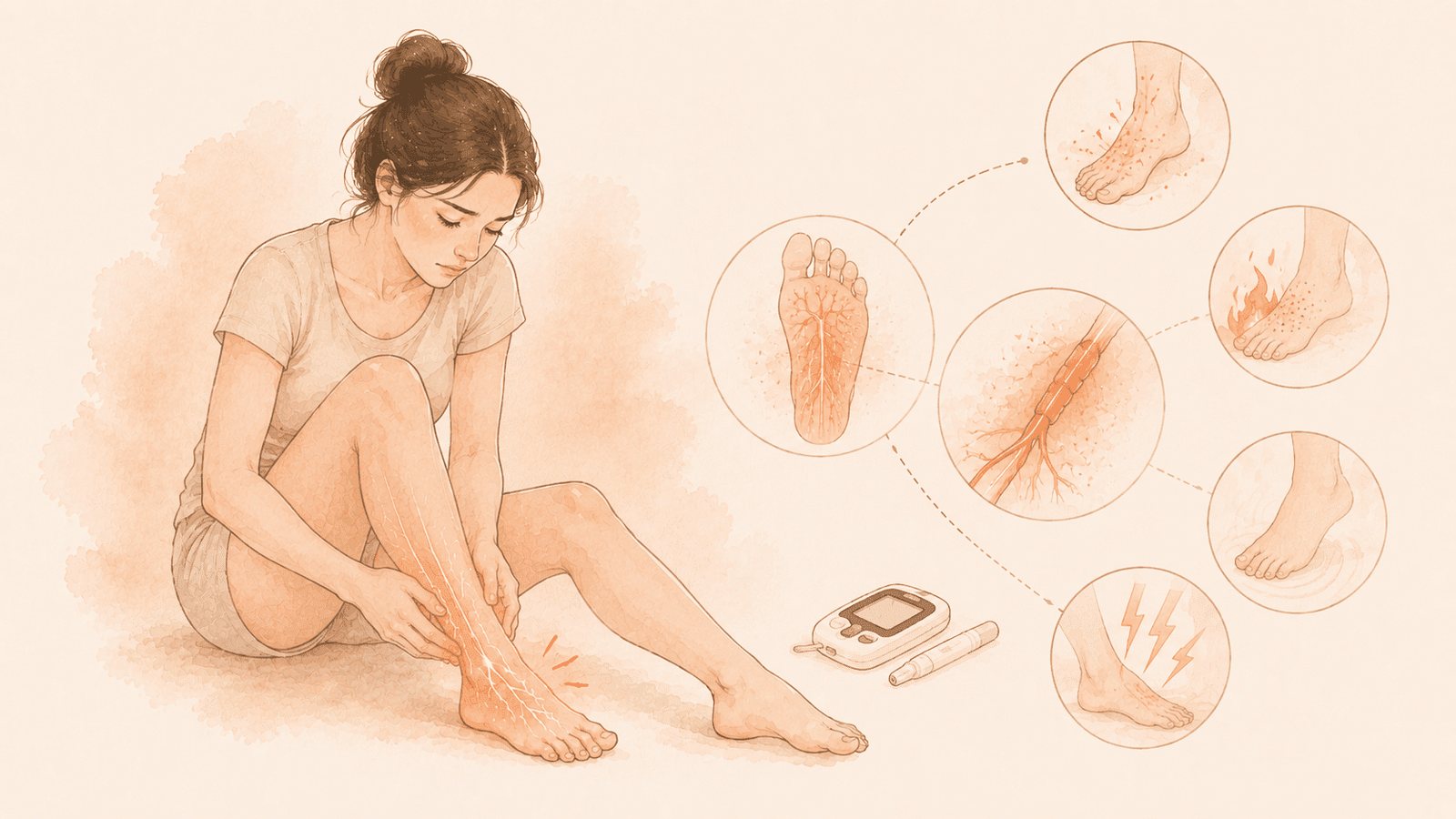

The first time I heard someone describe diabetic neuropathy, they said it felt like walking on a bed of hot needles while wearing invisible socks. I remember thinking that sounded dramatic. Years later, after speaking with dozens of people living with diabetes and reading through clinical literature, I realized that description was actually pretty accurate.
If you or someone you love is dealing with diabetes, understanding what nerve damage feels like, why it happens, and what you can do about it is genuinely life-changing. Let me walk you through it.
What Diabetic Neuropathy Actually Is
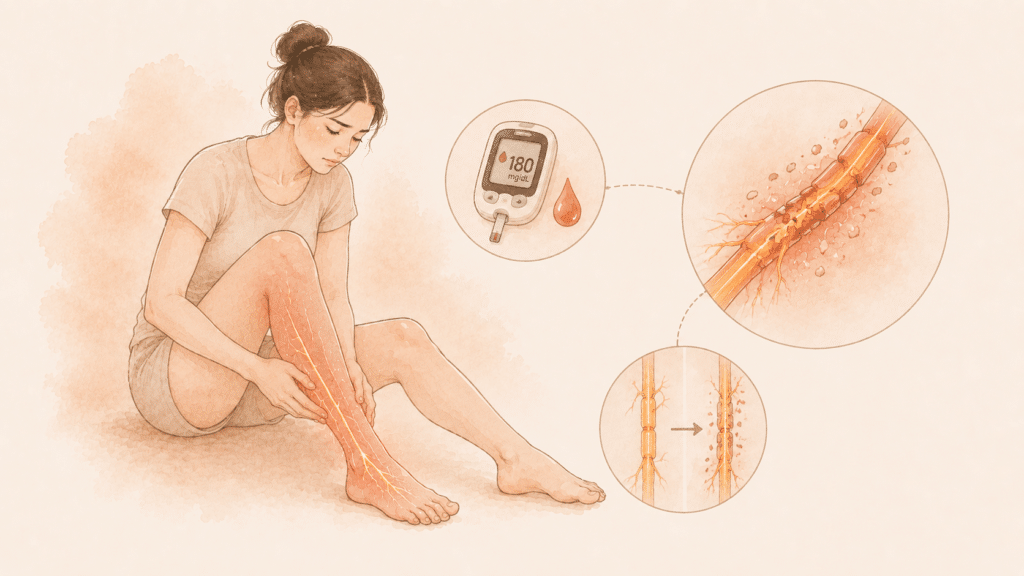
Diabetic neuropathy is nerve damage caused by long-term high blood sugar. It’s one of the most common complications of diabetes, and according to the National Institute of Diabetes and Digestive and Kidney Diseases (NIDDK), it affects roughly half of people with diabetes at some point.
The damage usually creeps in slowly. That’s part of what makes it tricky. By the time most people notice the tingling or burning, the nerves have already been struggling for a while.
I always tell people: your nerves are like the electrical wiring of your body. When sugar levels stay high for too long, that wiring slowly gets corroded.
The Blood Sugar–Nerve Link
Here’s where logic helps more than fear. Nerves rely on a steady supply of oxygen and nutrients from tiny blood vessels. When blood sugar is consistently elevated, two things happen.
First, those small blood vessels get damaged, which means nerves don’t get the oxygen they need. Second, excess glucose triggers chemical changes that interfere with how nerves send signals.
Think of it like a phone line that’s been left out in the rain for years. Eventually, the signal becomes patchy, distorted, or just stops working altogether.
This is why doctors at institutions like the Mayo Clinic and Cleveland Clinic emphasize blood sugar control so heavily. It’s not just about avoiding a diabetes diagnosis getting worse. It’s about protecting the entire nervous system.
What the Sensations Really Feel Like
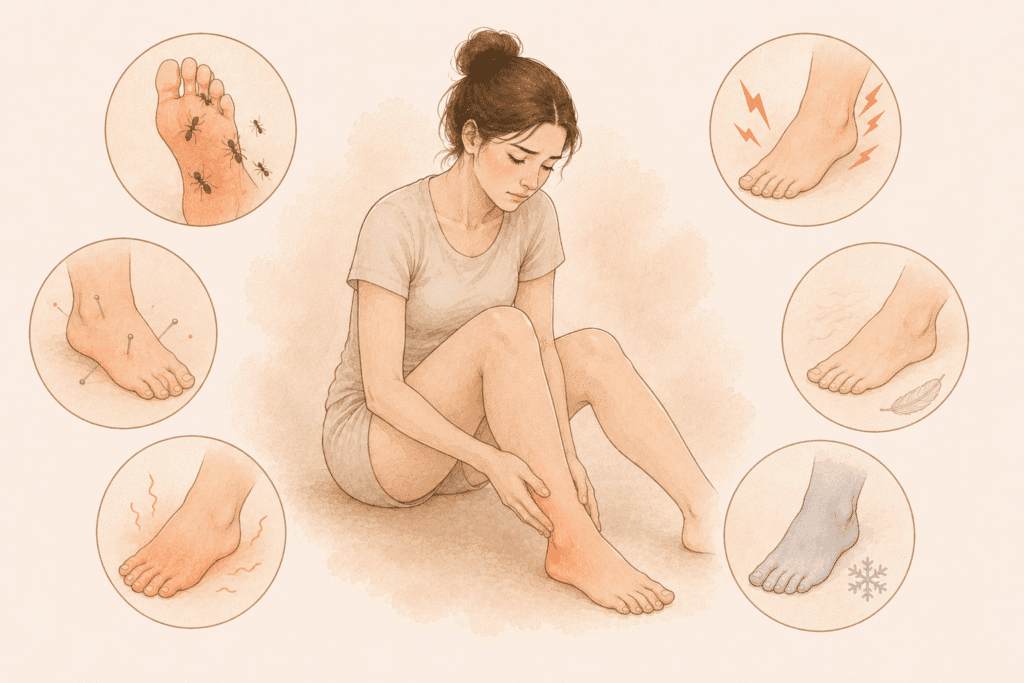
This is the part people most often ask me about. The classic symptoms of diabetic neuropathy in the feet (and sometimes hands) include:
A tingling or “pins and needles” feeling, often worse at night. A burning sensation that can feel like your feet are sitting too close to a heater. Sharp, electric-shock-like pains that come and go without warning. Numbness, which sounds harmless but is actually one of the most dangerous symptoms.
One gentleman I spoke with described it perfectly. He said his feet felt “loud” all day, like they were constantly buzzing in the background of his life. That phrase stuck with me because it captures something clinical descriptions often miss: neuropathy isn’t just pain, it’s a constant, exhausting presence.
How Symptoms Progress
Diabetic neuropathy doesn’t usually arrive all at once. It tends to follow a pattern, and recognizing the stages can help you catch it earlier.
In the early stage, you might notice mild tingling in your toes, especially at night. It’s easy to dismiss as tired feet or poor circulation from sitting too long.
The middle stage brings more persistent burning, numb patches, and sometimes a strange sensitivity where even bedsheets feel uncomfortable against the skin. People often start losing the ability to sense temperature properly, which is a quiet but important red flag.
In advanced stages, numbness takes over. This is where the real danger lies. You can step on something sharp, develop a blister, or burn your foot without feeling it. That’s how small injuries turn into serious infections, and in severe cases, lead to amputations. The American Diabetes Association considers daily foot checks essential for this exact reason.
The Different Types of Diabetic Neuropathy
Not all nerve damage looks the same. There are four main types, and they affect different parts of the body.
Peripheral neuropathy is the most common. It targets the feet and legs first, then sometimes the hands. This is the type most people are referring to when they talk about diabetic neuropathy tingling burning feet.
Autonomic neuropathy affects the nerves that control automatic functions, things like digestion, heart rate, and blood pressure. Symptoms can include bloating, dizziness when standing up, or unexplained sweating.
Proximal neuropathy is rarer and usually hits the hips, thighs, or buttocks. It often causes weakness and pain on one side of the body.
Focal neuropathy comes on suddenly and affects a specific nerve, often in the head, torso, or leg. It can cause sharp pain or muscle weakness, but it usually improves over weeks or months.
Knowing which type you’re dealing with matters because treatment approaches differ.
Prevention: Where the Real Power Lies
Here’s the part I genuinely believe most people underestimate. Prevention isn’t glamorous, but it works.
Keeping blood sugar within your target range is the single most effective thing you can do. The landmark Diabetes Control and Complications Trial (DCCT) showed that tight glucose control significantly reduces the risk of neuropathy.
Beyond that, a few habits make a real difference:
Regular physical activity improves circulation and nerve health. Even a 30-minute walk most days helps. Quitting smoking matters more than most people realize, since smoking damages the same small blood vessels that high glucose attacks. Limiting alcohol is also important because alcohol itself is toxic to nerves.
I also recommend something simple that often gets ignored: looking at your feet every single day. A quick check for cuts, redness, or blisters takes 20 seconds and can prevent serious problems.
Treatment Options That Actually Help
If neuropathy has already started, the goal shifts to managing symptoms and slowing progression. There’s no magic cure, and I’d be skeptical of anyone selling one.
Medications commonly prescribed include certain antidepressants like duloxetine (Cymbalta) and anticonvulsants like pregabalin (Lyrica) and gabapentin (Neurontin). These weren’t originally designed for nerve pain, but they work by calming overactive nerve signals.
Topical treatments like capsaicin cream or lidocaine patches help some people manage localized burning.
Physical therapy can be surprisingly effective, especially for balance issues that develop with peripheral neuropathy. There’s also growing interest in transcutaneous electrical nerve stimulation (TENS) units, though results vary.
For severe cases, some patients try spinal cord stimulation, which involves a small implanted device. It’s not first-line treatment, but it’s an option worth discussing with a specialist.
What I want to emphasize: treatment works best when combined with blood sugar control. Medication alone, without addressing the underlying cause, is like mopping the floor while the tap is still running.
Blood Sugar Control: The Daily Reality
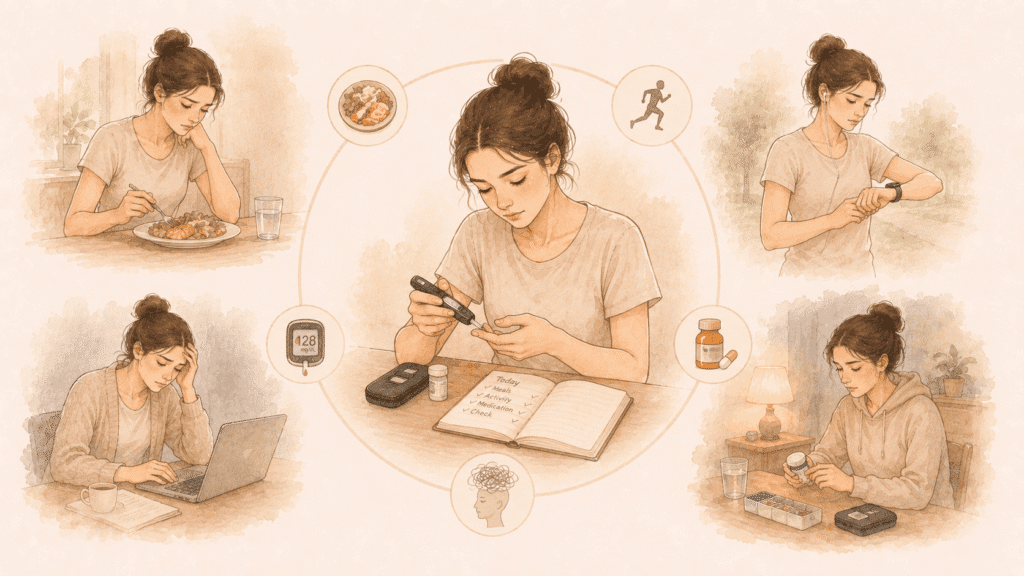
Talking about blood sugar control in theory is easy. Living it is another story.
Most endocrinologists I’ve spoken with recommend checking your A1C every three to six months, aiming for a target your doctor sets (often below 7% for most adults). Continuous glucose monitors (CGMs) like the Dexcom G7 or Abbott’s FreeStyle Libre have honestly changed the game here. They give real-time feedback that helps people understand how specific foods, stress, or sleep affect their glucose.
I’m not affiliated with any of these companies, but I’ve watched friends and family members gain genuine insight into their condition through these devices.
Diet plays a huge role too. You don’t need a perfect diet, just a consistent one. Fiber, lean proteins, and reducing refined carbs go a long way.
FAQ
In most cases, no. But early-stage nerve damage can sometimes improve with strict blood sugar control. The earlier you catch it, the better your chances.
Not necessarily. Some people see significant improvement once their glucose stabilizes, especially if the nerves haven’t been damaged for too long.
If you’re experiencing persistent tingling, burning, or numbness, yes. A neurologist or endocrinologist can run nerve conduction studies and tailor treatment.
Some evidence supports alpha-lipoic acid and vitamin B12 for certain people, but always check with your doctor before starting anything.
Final Thoughts
Diabetic neuropathy isn’t just a medical term, it’s a daily experience that millions of people manage with quiet resilience. Understanding what’s happening inside your body removes some of the fear and replaces it with a plan.
If I had to leave you with one takeaway, it would be this: take the early signs seriously, control what you can, and never underestimate the power of small daily habits. Your nerves can’t text you when they’re in trouble, so listen closely when they whisper.