

The first time my sister-in-law called me at 2 a.m., panicking because her hands felt like “they belonged to someone else”, I genuinely didn’t know what to say. She was seven months pregnant, her fingers were numb, and Google had convinced her she was having a stroke. Spoiler: she wasn’t. She had something far more common and, honestly, far less scary once she understood it.
If you’re reading this with pins and needles crawling up your arms or legs right now, I get it. Tingling during pregnancy is one of those symptoms nobody really warns you about, and when it hits, your brain immediately jumps to the worst conclusion. So let me walk you through what’s actually happening, when it’s normal, and when you genuinely need to call your doctor.
Why Tingling Happens in the First Place
Pregnancy changes your body in ways most people don’t fully appreciate until they’re living through it. Your blood volume increases by nearly 45% by the third trimester, your hormones shift dramatically, and fluid retention becomes a daily reality. All of this puts pressure on your nerves.
Tingling in hands and feet during pregnancy usually shows up because nerves are getting compressed or irritated by swelling. It’s your body’s way of saying, “Hey, something’s pressing on me.” Most of the time, it’s harmless. But the why behind it matters, because the cause determines what you should do about it.
Carpal Tunnel Syndrome in Pregnancy
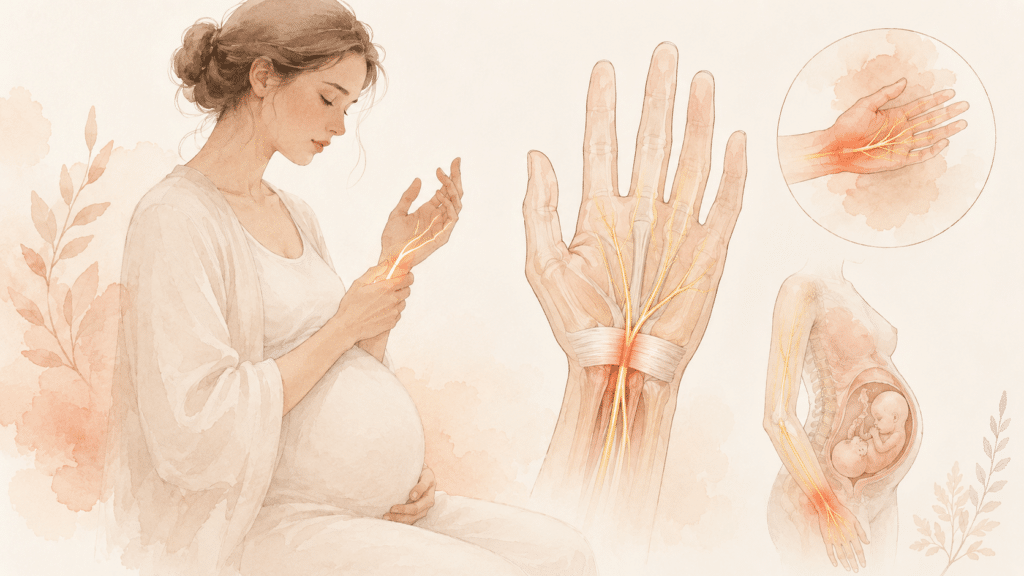
Here’s something that surprised me when I started researching this topic for a close friend: carpal tunnel syndrome (CTS) affects a significant portion of pregnant women, especially in the second and third trimesters. According to research published by the National Institutes of Health, CTS is one of the most common nerve-related complaints during pregnancy.
The median nerve, which runs through a narrow passage in your wrist, gets squeezed because of fluid buildup. That’s when you start feeling tingling, numbness, or that weird “burning” sensation in your thumb, index finger, and middle finger. It often gets worse at night, and many women wake up shaking their hands, trying to “wake them up”.
The good news? Pregnancy-related CTS usually resolves within a few weeks after delivery. Your body reabsorbs the extra fluid, and the nerve gets its breathing room back.
The Swelling and Nerve Connection
Let me explain this in plain language because I think it’s the missing piece for most women experiencing tingling.
Your body holds on to more water during pregnancy. That fluid doesn’t distribute evenly. It pools in your hands, feet, ankles, and sometimes even your face. When this swelling presses against nerves, especially in narrow spaces like your wrists or the soles of your feet, you feel that classic pins-and-needles sensation.
Add to this the weight gain, the shifting posture, and the way your growing belly pulls your spine forward, and you’ve got multiple pressure points working against you. It’s not in your head. It’s physics meeting biology.
Trimester-by-Trimester Breakdown
Tingling doesn’t show up randomly. It often follows a predictable pattern depending on which trimester you’re in.
First Trimester
Tingling here is less common but not impossible. Hormonal changes, especially the surge in progesterone, can affect circulation and nerve sensitivity. Some women also experience mild tingling due to early-pregnancy anaemia or vitamin B12 deficiency. If it shows up this early, mention it at your next prenatal visit.
Second Trimester
This is when many women first notice tingling, especially in their hands. Fluid retention begins to increase, and the median nerve starts feeling the squeeze. You might also notice tingling in your thighs, a condition called ‘meralgia paraesthetica’, caused by the expanding uterus pressing on the lateral femoral cutaneous nerve.
Third Trimester
Welcome to peak tingling territory. By now, swelling is at its highest, your weight has redistributed, and your sleeping positions are limited. Carpal tunnel symptoms often peak here, and many women also report tingling in their feet and legs after standing too long.
Safe Remedies That Actually Help
I want to be careful here because pregnancy isn’t the time to experiment with random remedies. But there are well-documented, doctor-approved ways to manage tingling, and they genuinely work for most women.
Wrist splints at night are probably the single most recommended solution for carpal tunnel symptoms during pregnancy. They keep your wrist in a neutral position and prevent that overnight compression that wakes you up. They’re cheap, drug-free, and surprisingly effective.
Elevating your hands and feet whenever possible helps reduce fluid buildup. I know it sounds too simple, but gravity is your friend here. Prop your feet up on a pillow while resting, and try not to let your hands hang down for long stretches.
Gentle stretching, prenatal yoga, and swimming have all been shown to help with circulation and nerve compression. The buoyancy of water reduces pressure on your joints and nerves, which is why so many obstetricians recommend pool exercises in the third trimester.
Staying hydrated might sound counterintuitive when you’re already retaining water, but drinking enough actually helps your body regulate fluid balance better. Reducing sodium intake can also make a noticeable difference within a few days.
If you’re someone who works at a desk, take frequent breaks. Repetitive hand motions like typing or scrolling on your phone make CTS symptoms worse. I’d suggest a five-minute break every hour to stretch your wrists and shake out your hands.
When You Should Actually Call Your Doctor
This is where I want to be very clear. Most tingling during pregnancy is harmless. But there are warning signs you should never ignore.
Call your doctor if your tingling comes with severe swelling, especially if it’s sudden or affects your face. This can be a sign of pre-eclampsia, a serious pregnancy complication involving high blood pressure. Severe headaches, vision changes, and upper abdominal pain alongside tingling are red flags.
Numbness that doesn’t go away, weakness in your hands or legs, or difficulty gripping objects deserves immediate medical attention. The same goes for tingling that follows a specific pattern, like only on one side of your body, which could indicate something neurological.
If your tingling is paired with extreme fatigue, pale skin, or shortness of breath, anaemia or a B12 deficiency might be the cause. These are easily diagnosed with a blood test and treated with supplements.
Trust your instincts here. I always tell friends that calling your OB-GYN about something “small” is never an overreaction. They’d much rather hear from you and rule things out than have you sit at home worrying.
Frequently Asked Questions
n most cases, yes. Carpal tunnel and fluid-related tingling usually resolve within a few weeks postpartum as your body returns to its non-pregnant state.
Usually not. It’s often related to hormonal changes or mild deficiencies. But always mention it to your doctor so they can rule out anemia or other underlying issues.
Most doctors avoid prescribing medications for tingling during pregnancy unless it’s severe. Non-drug remedies like splints, stretching, and elevation are the first line of defense.
Yes, especially in the later trimesters. It’s usually caused by swelling and the extra weight pressing on nerves in your lower body.
Final Thoughts
Tingling during pregnancy is one of those symptoms that feels alarming but is usually your body’s way of adapting to massive changes. I’ve watched friends, family members, and even strangers in online communities work through this exact issue, and the pattern is almost always the same: it’s uncomfortable, it’s inconvenient, and it passes.
What matters is staying informed, listening to your body, and knowing when to escalate. The vast majority of pregnancy tingles are normal. A small percentage isn’t, and recognising the difference is what keeps both you and your baby safe.
If you take one thing from this article, let it be this: don’t suffer in silence, and don’t panic either. Talk to your doctor, try the simple remedies, and remember that this phase, like everything else in pregnancy, is temporary.