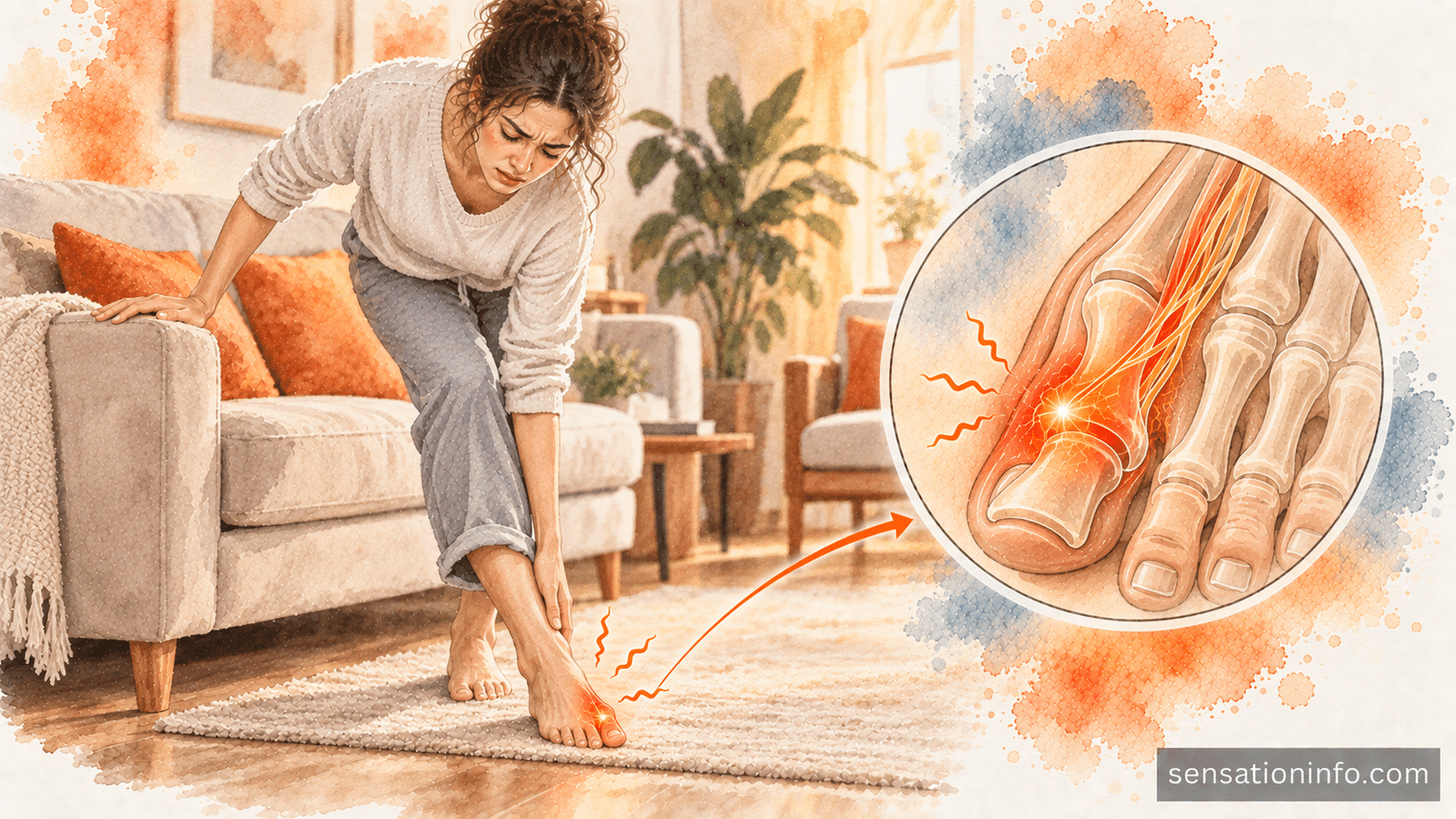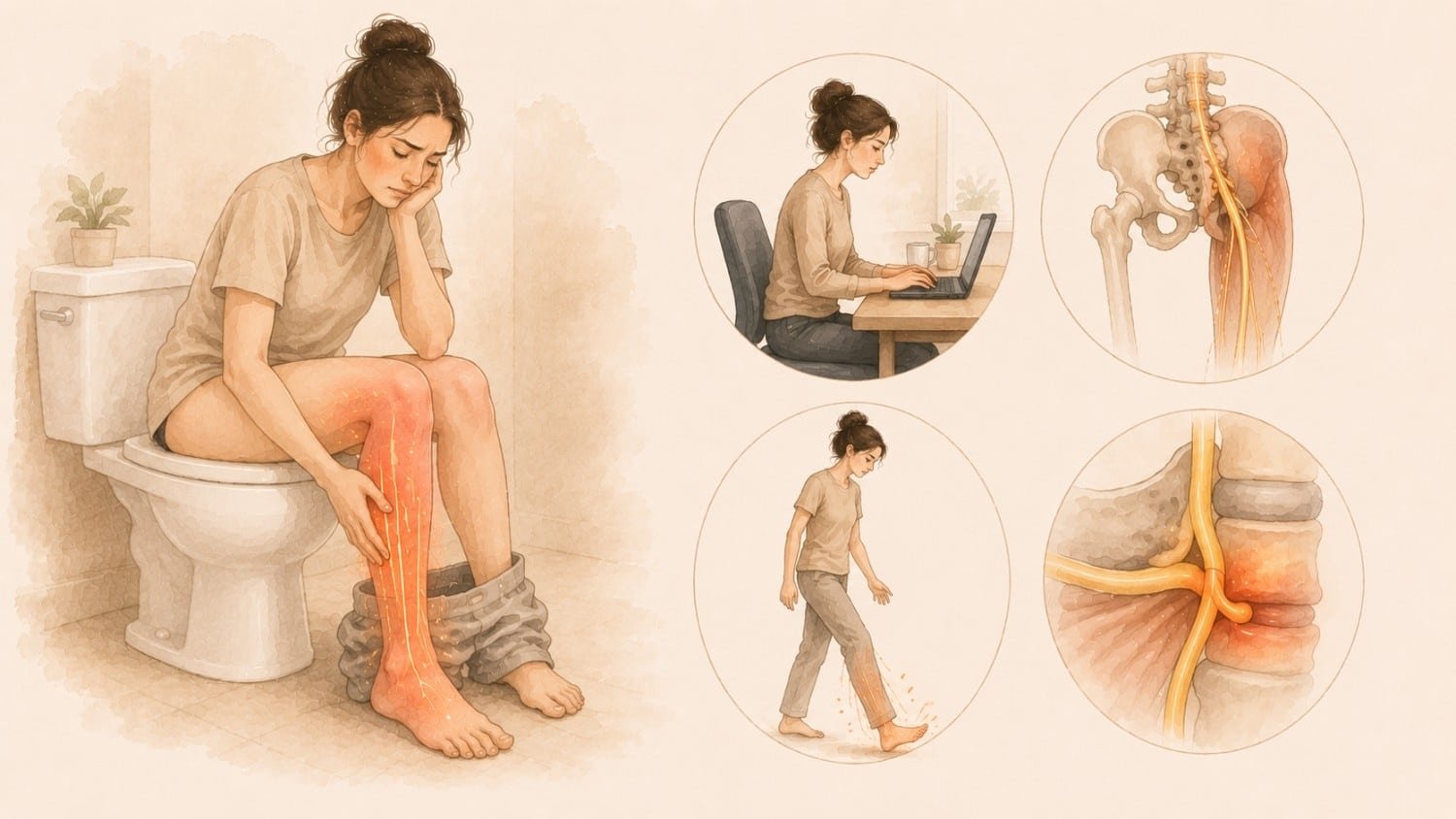

Have you ever sat down on the toilet, minding your own business, and suddenly felt your leg go completely numb? Or are you sitting at your desk, deep in work, and then you stand up and feel like you are walking on pins and needles? I have been there — probably more times than I can count.
That weird sensation of your leg “falling asleep” is something almost everyone experiences, yet it still catches us off guard every time. Let me explain what is actually happening in your body and when you should be concerned about it.
Why Your Legs Go Numb When You Sit
The sensation we call “falling asleep” has a medical name: paraesthesia. It happens when pressure is placed on a nerve, cutting off its blood supply temporarily. Think of it like stepping on a garden hose — water cannot flow, and something downstream suffers.
When you sit in a certain position, you are essentially putting pressure on the nerves in your legs and feet. The most common culprit is the peroneal nerve, which runs along the outside of your knee and down your lower leg. This nerve is particularly vulnerable because it has very little padding protecting it.
Your sciatic nerve is another frequent victim. This is the largest nerve in your body, running from your lower back down through your buttocks and into each leg. When you sit on a hard surface or cross your legs, you can compress this nerve and get that classic “pins and needles” feeling.
What is happening technically is that the pressure restricts blood flow to the nerve. Without an adequate blood supply, the nerve cannot transmit signals properly. When you finally change position and blood flow returns, you get that flooding sensation of pins and needles as the nerve “wakes up” again.
Positions That Cause Numbness the Most
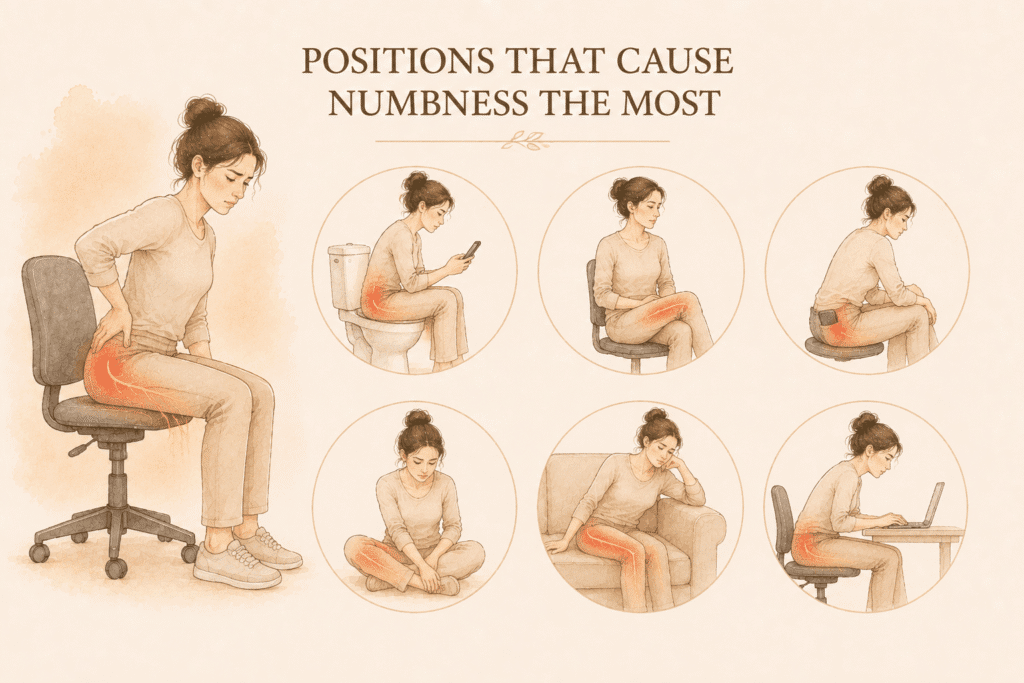
Certain sitting positions are notorious for triggering numbness. Let me walk you through the usual suspects.
Sitting on the toilet is a classic example. The hard seat and the specific angle at which you sit compress the nerves in your buttocks and thighs. This is especially true if you are on your phone and sitting there longer than intended — I am guilty of this one.
Crossing your legs is another major cause. Whether you cross at the knees or at the ankles, this position puts direct pressure on the peroneal nerve and can restrict blood flow to your lower legs.
Sitting on a hard chair or bench for extended periods does the same thing. The hard surface provides no cushioning for the nerves running through your buttocks and down your legs.
Sitting with your legs tucked under you, which many people do when sitting on the floor or on a low chair, compresses multiple nerves and blood vessels at once.
Even sitting at a desk with your chair too high or too low can cause problems. If your chair is too high, your legs dangle, and pressure points form under your thighs. If it is too low, you might slouch and compress nerves in your lower back.
How Long Is Normal
Here is the good news: temporary numbness from sitting is usually perfectly normal and resolves within seconds to a few minutes once you change position. That is the typical timeframe for most people.
However, there is a point where “normal” becomes “not normal”. If your leg stays numb for more than 10 to 15 minutes after you stand up and move around, that might indicate something more going on. Persistent numbness could be a sign of nerve damage or compression that is not resolving on its own.
If you experience numbness frequently — multiple times per day or every time you sit in a certain position — that is also worth getting checked out. Occasional numbness is common, but when it happens all the time, it could be a symptom of an underlying condition.
Numbness accompanied by weakness, difficulty walking, or loss of bladder or bowel control is something you should take seriously and seek medical attention for immediately. These could indicate a more serious problem with your spine or nervous system.
Prevention and Ergonomic Tips
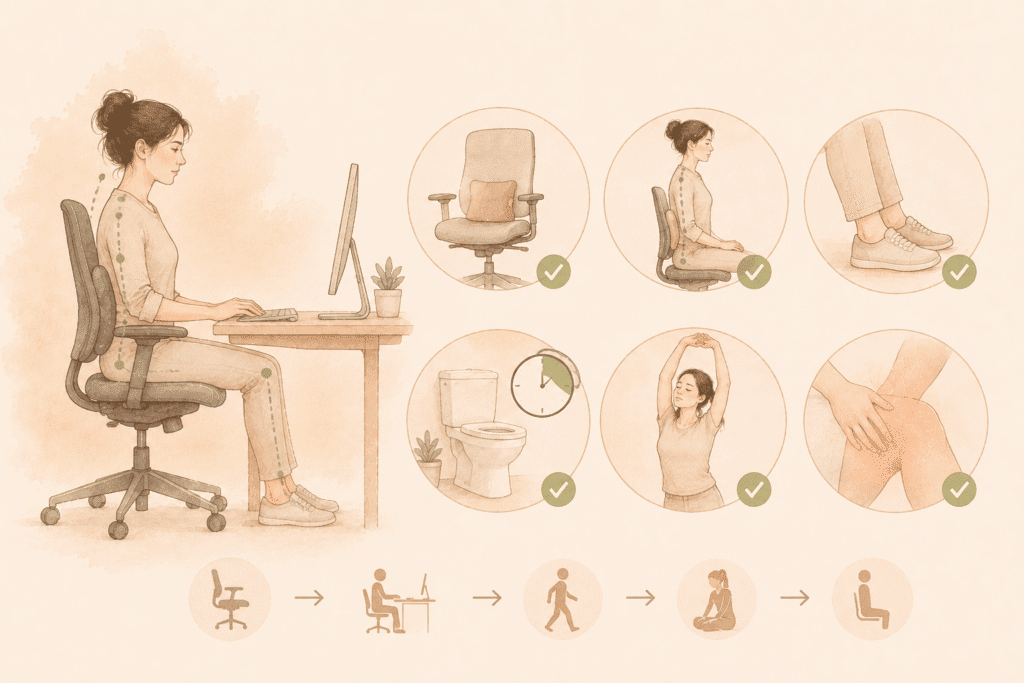
The good news is that most sitting-related numbness is preventable with some simple adjustments to how you sit.
First, pay attention to your chair. If you spend any significant time sitting, invest in a chair with proper cushioning. A seat cushion or lumbar support can make a huge difference. I personally use a memory foam seat cushion at my desk, and it has eliminated most of the issues I used to have.
Watch your posture. Sitting up straight with your feet flat on the floor takes pressure off your lower back and allows proper blood flow to your legs. Avoid crossing your legs for prolonged periods — I know it is a hard habit to break, but your legs will thank you for it.
If you work at a desk, make sure your chair is at the right height. Your feet should rest flat on the floor, and your thighs should be parallel to the ground. If your chair is adjustable, take advantage of that. If it is not, a footrest can help.
For those long sessions on the toilet, well, the simplest solution is to not sit there longer than necessary. But if you need more time, consider using a toilet seat cushion.
Taking regular movement breaks is important. Set a reminder to stand up, walk around, and stretch every 30 to 60 minutes. Even just standing up and sitting back down can restore blood flow and prevent compression.
When you do feel that first tingle of numbness, change position immediately. Do not wait for it to get worse. Standing up and walking around for a few seconds is usually enough to reset things.
Frequently Asked Questions
Occasional numbness from sitting is generally not dangerous. However, if it happens frequently or lasts a long time, it could indicate an underlying issue that deserves medical attention.
Prolonged and repeated compression could potentially cause temporary or chronic nerve damage in some cases. That is why prevention matters.
Some people are more prone to numbness due to their body shape, nerve placement, or underlying conditions. Also, being overweight or having less muscle mass means there is less padding to protect your nerves.
For most people, occasionally crossing their legs is fine. If you do it constantly for hours every day, it could contribute to circulation issues or nerve compression over time.
If numbness persists beyond 15 minutes or is accompanied by pain, weakness, or tingling, it is worth mentioning to your doctor. These could be signs of conditions like peripheral neuropathy or a herniated disc.
Final Thoughts
Having your legs fall asleep when you sit is one of those universal experiences that almost everyone goes through. In most cases, it is completely harmless and just your body reminding you to change position.
The key is paying attention to how often it happens and how long the numbness lasts. Occasional, brief numbness is normal. Frequent or persistent numbness is not something to ignore.
Making some simple ergonomic adjustments — the right chair height, better posture, and regular movement breaks — can go a long way toward preventing that frustrating pins-and-needles sensation. Your nerves will thank you for it.