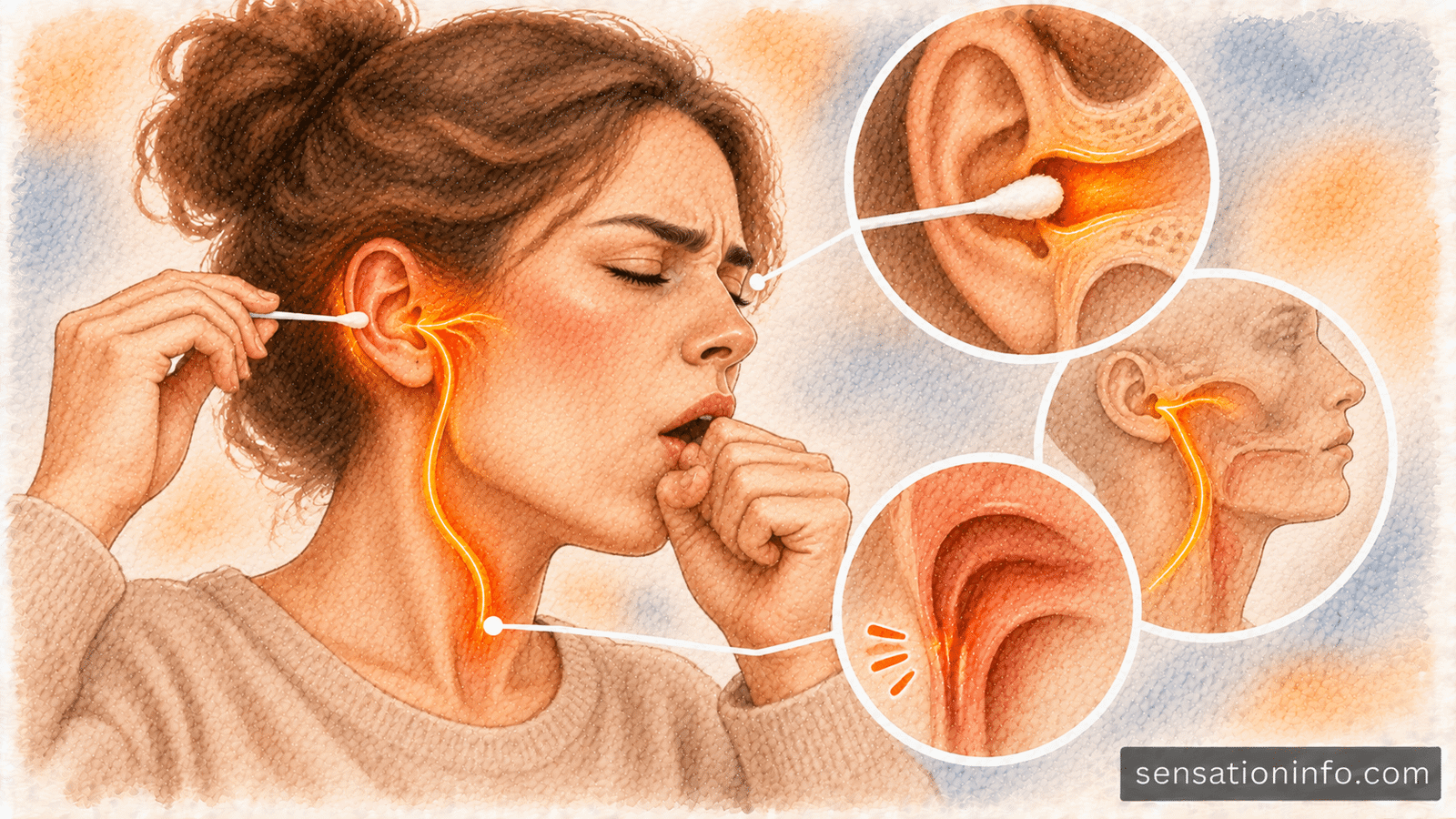

If you have ever wondered why does cleaning my ear make me cough, the answer is a tiny nerve branch called Arnold’s nerve. It carries feeling from your ear canal, but it belongs to the vagus nerve, the same nerve that runs your throat and cough reflex, so your brain briefly mistakes a touch in the ear for a tickle in the throat.
This ear cough reflex is harmless and affects about 2 in 100 healthy people. If a constant itch keeps sending you back for the cotton swab, it can be a form of neuropathic itch, and that habit makes the reflex fire more often.
Why Does Cleaning My Ear Make Me Cough in the First Place?
Your ear canal and your throat share wiring. When a swab, fingertip, or earbud brushes the skin deep in the canal, the signal travels along a nerve that also carries messages from your voice box, and your brain answers with the reflex it uses for the throat: a cough.
Which nerve links the ear to the throat?
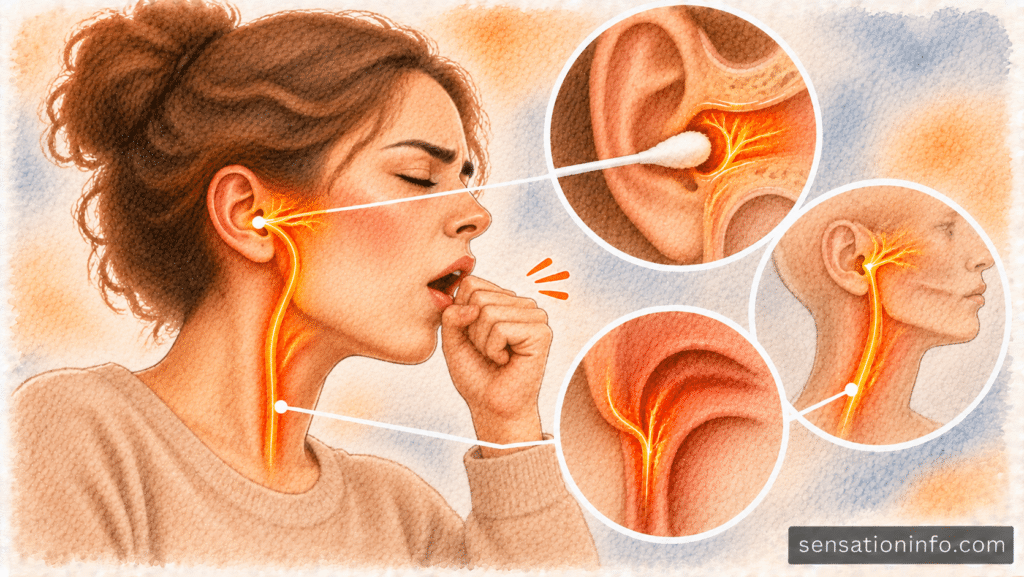
The vagus nerve is the 10th cranial nerve and the longest one in the body. One of its main jobs is supplying the throat (pharynx) and voice box (larynx), which is where many cough signals start.
A small offshoot, the auricular branch of the vagus nerve, also called Arnold’s nerve, peels off near the base of the skull and supplies skin in the ear canal and part of the eardrum. Because both areas report to the same nerve center in the brainstem, a touch in one can feel like an irritation in the other.
Why do only some people cough?
The exact path of these fine nerve branches varies from person to person, which helps explain why only some people react. In healthy adults and children, the ear cough reflex shows up in about 2%.
The picture changes in people who already have a long lasting cough. In one study, the reflex appeared in 23.3% of adults with chronic cough, more often in women than men, and usually in just one ear. Doctors see this as a sign of cough hypersensitivity, where the vagus nerve has become overly sensitive and fires a cough at small triggers.
What Does the Ear Cough Reflex Feel Like?
Most people describe a sudden tickle at the back of the throat a second or two after something touches the ear canal, followed by one or a few dry coughs. It stops as soon as the touch stops.
Patients often tell me it happens on one side only, and that it surprised them the first time a doctor looked in their ear. Some notice it mainly with in ear headphones, hearing aids, or after a haircut.
The list below covers the triggers I hear about most. Knowing yours helps you avoid the cough and tells your doctor which ear to check.
- Cotton swabs, fingertips, or bobby pins in the ear canal
- An ear exam with an otoscope (the lighted scope doctors use)
- Putting in earbuds, earplugs, or hearing aids
- Water from a shower or swim reaching deep in the canal
- Loose hair clippings falling into the ear after a haircut
- Ear drops or ear irrigation
Is It the Ear Reflex or Something Else?
A brief cough only while something touches your ear is almost always the harmless reflex. A cough that keeps going when nothing is in your ear points to a different cause, or to something stuck in the ear.
The symptom pattern table below links what you notice to the likely cause. Find the row closest to your experience, then check how urgent it is.
| Where it is | What it feels like | What comes with it | Likely cause | How urgent |
|---|---|---|---|---|
| Ear canal and throat | Tickle and dry cough only while the ear is touched | Nothing else | Arnold’s nerve ear cough reflex | Harmless; no visit needed |
| One ear and throat | Dry cough that keeps going for weeks | Ear fullness or a scratchy feeling in the ear | Hair or earwax resting on the eardrum | Doctor visit within a few weeks |
| One ear | Fullness, muffled hearing, itch | Cough when touching that ear | Earwax blockage (cerumen impaction) | Doctor visit if symptoms last |
| Ear canal | Pain, itch, swelling | Discharge, pain when pulling the earlobe | Outer ear infection, often after swab scratches | Doctor visit within a few days |
| Throat and chest | Cough with or without ear touching | Heartburn, hoarseness, postnasal drip | Acid reflux, postnasal drip, or asthma | Doctor visit if it lasts 8 weeks |
| Ear and face, one side | Burning ear pain | Blistering rash in or around the ear, facial weakness | Ramsay Hunt syndrome (shingles of a facial nerve) | Same day care |
| Throat | Cough with tightness | Lip or tongue swelling, trouble breathing after ear drops | Allergic reaction to ear drops | Call 911 |
What is usually harmless, and what needs a doctor?
Usually harmless: a cough that only happens while your ear is touched and stops right away. You can live with this reflex for life without any treatment.
See a doctor: a cough that lasts 8 weeks or longer, a cough that started along with ear fullness or muffled hearing, or ear pain, drainage, or bleeding. Those are not part of the reflex and deserve a look inside the ear and a check of your airways.
Could Something in My Ear Be Causing a Cough That Won’t Stop?
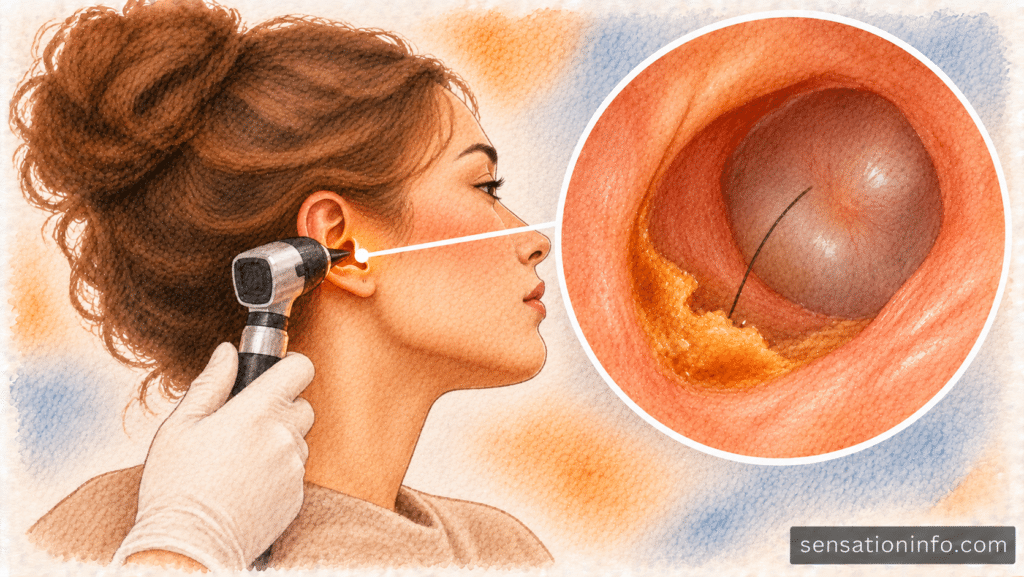
Yes, occasionally. A loose hair, a plug of earwax, or a small object resting on the eardrum can rub Arnold’s nerve all day long and keep a cough going for weeks or months.
In reported cases, people with months of dry cough that did not improve with reflux medicine, nasal sprays, inhalers, or antibiotics had loose hairs lying on the eardrum. Once a doctor removed the hairs, the throat tickle and cough eased or stopped completely.
Earwax works the same way. Cotton swabs tend to push wax deeper rather than remove it, which can leave a plug sitting against the eardrum. If you have a lingering cough plus a full or blocked ear, mention both to your doctor in the same visit.
Which Other Symptoms Change the Urgency?
The reflex itself never comes with pain, rash, or weakness. When those appear, the cause is something else.
Ear pain with drainage suggests infection. A rash in or around the ear with facial weakness can signal Ramsay Hunt syndrome, which needs prompt treatment. Heartburn, a sour taste, or a burning sensation in the throat points toward reflux driving the cough, and a feeling that your chest and throat are tight needs its own evaluation.
When Should I See a Doctor?
Most ear coughs need no care at all. These specific signs do.
The thresholds below tell you exactly what to do. If any line matches you, act on it.
- Trouble breathing, lip or tongue swelling, or wheezing after ear drops: call 911.
- New facial drooping or weakness with ear pain or an ear rash: get same day care.
- Ear pain with fever, drainage, or bleeding, especially after using a swab: see a doctor within a day or two.
- Sudden hearing loss in one ear: see a doctor within 24 hours.
- Coughing up blood, unexplained weight loss, or night sweats with cough: book a doctor visit this week.
- Cough lasting 8 weeks or more, or ear fullness that lasts more than a week: book a doctor visit.
What Will My Doctor Check?
The visit is usually quick. The first thing I ask is whether the cough happens only when the ear is touched, or also on its own.
Then I look in both ears with an otoscope to check for wax, hair, objects, or infection, and I may gently touch each canal with a cotton tip to see whether it triggers a cough. If you have a chronic cough, expect questions about reflux, allergies, asthma, smoking, and medicines such as lisinopril (Zestril) and other ACE inhibitors, which commonly cause a dry cough.
The questions below are worth bringing. They cover what most patients wish they had asked.
- Is there wax, hair, or anything else touching my eardrum?
- Could my cough be partly coming from my ear?
- Is it safe for me to use ear drops at home?
- What else should we check if my cough continues?
If you notice other odd sensations along with the cough, our nerve symptom checker can help you see which nerve they might be coming from before your visit.
How Do I Clean My Ears Without Coughing?
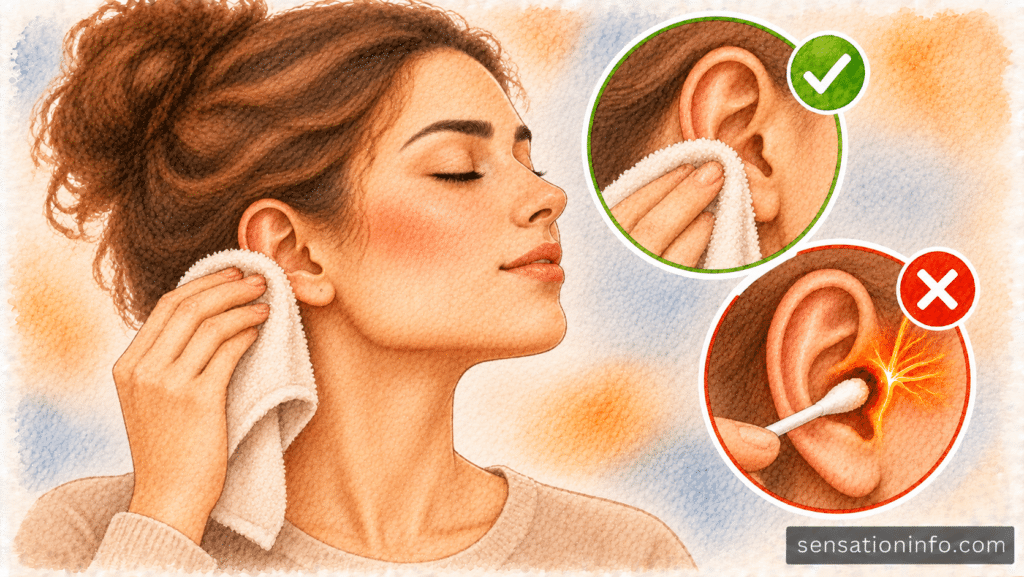
The simplest answer is to stop cleaning inside the ear canal. Earwax is normal, and your ears clean themselves by slowly moving wax outward.
The habits below protect your ears and keep the reflex quiet. They are the same steps I give every patient who coughs during ear care.
- Keep cotton swabs, bobby pins, keys, and toothpicks out of the ear canal.
- Wipe only the outer ear with a washcloth after a shower.
- Ask your doctor before using wax softening drops or irrigation, and never use them if you have had ear surgery or a hole in the eardrum.
- Skip ear candles, which do not remove wax and can damage the ear canal and eardrum.
- Put cotton balls in your ears during haircuts to keep clippings out.
- Clean hearing aids and earbuds as directed, and give your ears breaks from in ear devices.
- Let a clinician remove wax if your ear feels blocked.
If a coughing fit starts while you are inserting an earbud or hearing aid, pause, take slow breaths through your nose, and swallow. The tickle usually fades within seconds.
Key Takeaways
These points sum up what matters most. Each one stands on its own as a quick reminder.
- Cleaning your ear can make you cough because Arnold’s nerve, a branch of the vagus nerve, links the ear canal to the throat’s cough reflex.
- The ear cough reflex appears in about 2% of healthy people and is harmless.
- The reflex is far more common in adults with chronic cough, which points to an oversensitive cough nerve.
- Hair, earwax, or objects resting on the eardrum can cause a cough that lasts for weeks, and removing them can stop it.
- Cotton swabs push wax deeper and can scratch the canal, so clean only the outer ear.
- See a doctor for a cough lasting 8 weeks, ear pain with drainage, sudden hearing loss, or facial weakness.
Frequently Asked Questions
Yes. Coughing when something touches the ear canal is a known reflex called Arnold’s nerve reflex, or the ear cough reflex. It happens in about 2 in 100 healthy people and is harmless, because a branch of the vagus nerve links the ear canal to the throat’s cough reflex.
The ear cough reflex usually happens on one side only. The fine branches of Arnold’s nerve differ between the left and right ear and from person to person, so one ear canal can be more sensitive to touch than the other.
Yes, but it is uncommon. In children, the ear cough reflex appears at about the same low rate as in healthy adults, around 2 to 3 in 100, even among children who have a chronic cough.
Doctor’s Recommendation
An ear, nose, and throat doctor (otolaryngologist) is the right specialist if your cough lasts 8 weeks or longer, your ear feels blocked, or you suspect something is touching your eardrum, while your primary care doctor is a good first stop for a new cough. At the visit, expect a look in both ears with an otoscope or microscope, safe removal of any wax or hair, a gentle touch test of each ear canal, and questions about reflux, allergies, asthma, and your medicines; if the ears are clear and the cough continues, ask about a referral to a pulmonologist or a laryngologist who treats chronic cough.
References
- National Library of Medicine. Prevalence of Arnold nerve reflex in subjects with and without chronic cough: Relevance to Cough Hypersensitivity Syndrome. Pulmonary Pharmacology and Therapeutics (PubMed). 2019.
- National Library of Medicine. Oto-tricho-tussia: An Unexpected Cause of Cough. Case Reports in Otolaryngology (PubMed Central). 2020.
- Mayo Clinic. Chronic cough: Symptoms and causes. Mayo Clinic. 2024.
- Mayo Clinic. Earwax blockage: Symptoms and causes. Mayo Clinic. 2025.
- American Academy of Otolaryngology Head and Neck Surgery. Dos and Don’ts of Earwax (Cerumen). AAO-HNS Patient Information. 2021.