

Numbness in the knuckles is rarely caused by standard carpal tunnel syndrome because the nerve responsible for that condition does not supply feeling to the back of your hand. Instead, this specific tingling usually points to irritation of the radial nerve or inflammation in the tendons that run across the top of your hand joints.
If you spend hours typing or clicking a mouse and are dealing with this frustrating loss of feeling in your hands, adjusting your keyboard angle and resting the affected wrist are the fastest ways to find immediate relief.
Why Your Knuckles Go Numb When You Type

Typing forces your hands into an unnatural palms down posture for extended periods. This constant upward bending of the wrist places immense pressure on the sensory nerves and tendons gliding over your knuckles.
When you rest your wrists on a hard desk surface while lifting your fingers to strike the keys, you create a pinch point. This specific mechanical strain restricts blood flow and compresses the superficial nerves traveling to the back of your fingers. Over time, this repetitive friction leads to swelling, tingling, and a noticeable dead sensation across the tops of your knuckles.
Carpal Tunnel Syndrome vs. Knuckle Numbness
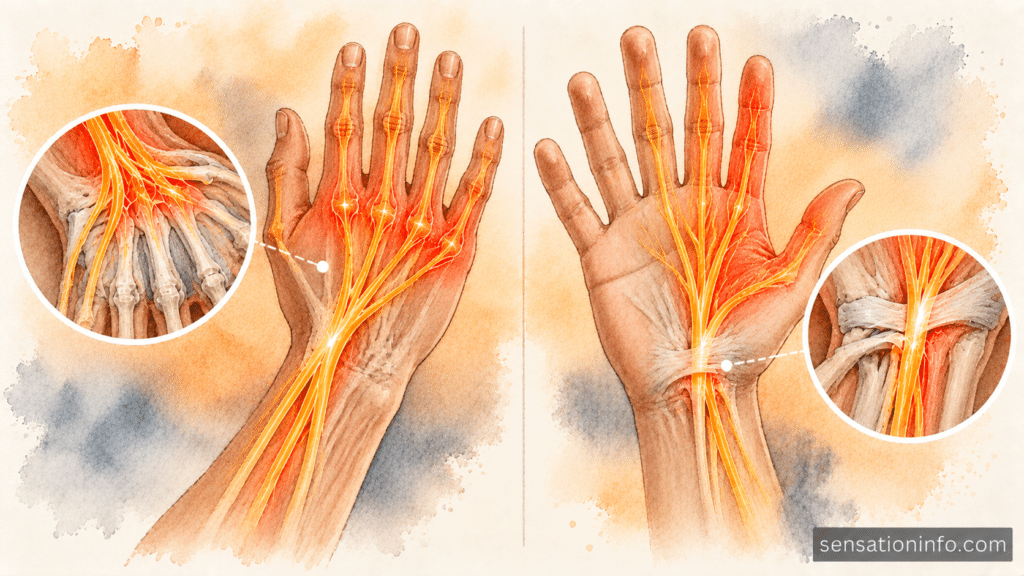
Many office workers mistakenly assume any hand tingling is a sign of carpal tunnel syndrome. It is highly unlikely that carpal tunnel syndrome is causing your knuckle numbness.
The median nerve, which is compressed in carpal tunnel syndrome, only provides sensation to the palm side of your thumb, index, middle, and half of your ring finger. It does not travel to the back of your hand. If the tops of your knuckles feel dead or tingly, a completely different nerve is crying out for help.
| Feature | Carpal Tunnel Syndrome | Keyboard Induced Knuckle Numbness |
| Location of Numbness | Palm side of the thumb, index, and middle fingers | Back of the hand, knuckles, and top of fingers |
| Primary Nerve Affected | Median nerve | Radial nerve or Ulnar nerve |
| Common Desk Trigger | Resting the palm heavily on the edge of a desk | Bending the wrist backward to reach high keys |
| Associated Pain | Aching deep inside the wrist or palm | Sharp or burning pain across the back of the hand |
The Real Anatomical Causes of Knuckle Numbness
When you type for eight hours a day, several specific structures on the back of your hand endure microscopic damage.
Radial Nerve Irritation
The superficial branch of the radial nerve travels down your forearm and spreads across the back of your hand to supply feeling to the knuckles of your thumb, index, and middle fingers. When you wear a tight watch or constantly bend your wrist backward while using a mouse, you can compress this nerve. This specific compression is medically known as Wartenberg syndrome. It causes a burning or prickling numbness exclusively on the back of the hand.
Extensor Tendon Inflammation
The muscles that lift your fingers to type are called extensor muscles. Their tendons run directly over your knuckles. Continuous, rapid typing can cause these tendons to become inflamed, a condition known as extensor tendonitis. As these tendons swell, they press against the tiny nerve branches under the skin, creating a feeling of numbness or thickness right over the knuckles.
Cubital Tunnel Syndrome
If your numbness is strictly located in the knuckles of your pinky and ring fingers, the problem might actually be starting at your elbow. Leaning your elbows on hard armrests while you type compresses the ulnar nerve. This compression leads to an uncomfortable tingling in your elbow and pinky finger that radiates down the outside of your hand.
Red Flag Symptoms: When to See a Doctor
Most keyboard strain can be managed safely at home. However, nerve compression can occasionally signal a medical emergency or require urgent orthopedic intervention. Seek immediate medical care if you experience any of the following warning signs.
- Sudden onset of weakness: You suddenly cannot open a jar, turn a doorknob, or lift your fingers against resistance.
- Muscle wasting: You notice the muscles between your thumb and index finger look sunken or smaller than the other hand.
- Color and temperature changes: Your knuckles turn blue, stark white, or feel ice cold compared to the rest of your arm.
- Complete loss of sensation: You cannot feel a sharp pinprick or hot water on the back of your hand.
- Spreading symptoms: The numbness rapidly travels up your arm into your shoulder or neck.
How Doctors Diagnose Keyboard Strain
If your knuckle numbness persists longer than a few weeks, an orthopedic doctor or neurologist can help pinpoint the exact nerve involved.
Your doctor will likely start with a physical evaluation. They may tap lightly along the nerves in your wrist and elbow to see if it triggers an electric shock sensation. This is known as a Tinel sign. They will also test your finger strength and check your reflexes.
If the diagnosis is unclear, your doctor might order a nerve conduction study. This test uses tiny electrical impulses to measure how fast signals travel through your radial, ulnar, and median nerves. A slowed signal clearly identifies exactly where a nerve is pinched or damaged.
Home Care and Ergonomic Fixes That Actually Work
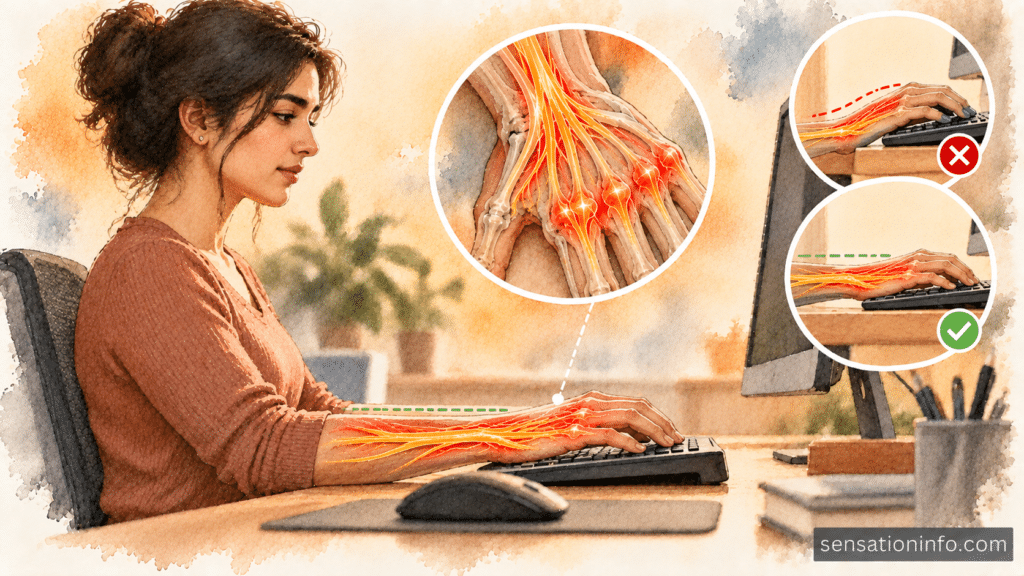
You can usually reverse mild knuckle numbness by changing how you interact with your computer. The goal is to keep your wrists in a neutral, straight position.
- Float your wrists: Never rest your wrists on the desk while actively typing. Your hands should float above the keyboard so your fingers drop down onto the keys.
- Use a negative tilt keyboard tray: A keyboard that tilts slightly away from you prevents you from bending your wrists backward. This relieves immense pressure on the radial nerve.
- Apply cold therapy: If your knuckles feel thick or burning after a long workday, apply an ice pack wrapped in a towel for 15 minutes to reduce tendon swelling.
- Consider nocturnal bracing: Wearing a rigid wrist splint while you sleep prevents you from curling your hands into a fist overnight. This gives inflamed nerves hours of uninterrupted healing time.
- Try over the counter relief: Oral anti-inflammatory medications like ibuprofen (Advil) or naproxen (Aleve) can temporarily reduce the tissue swelling that presses on your superficial hand nerves. Always take these exactly as directed on the package.
Taking proactive steps is the most effective way of preventing repetitive nerve strain at your desk before it becomes a chronic medical issue.
Prevention and Recovery Timeline
Mild nerve irritation from a few days of heavy typing usually resolves within 48 to 72 hours of resting the hand. If you have been ignoring the numbness for months, recovery will take much longer.
Tendon inflammation and chronic nerve compression can take four to six weeks of strict ergonomic modification to heal completely. During this time, you must take frequent microbreaks. Stop typing every thirty minutes, drop your arms to your sides, and shake your hands gently to restore blood flow. If your symptoms do not improve after a month of home care, physical therapy is the next logical step to safely stretch and glide the trapped nerves.
Key Takeaways
- Knuckle numbness is rarely caused by carpal tunnel syndrome because the median nerve does not cover the back of the hand.
- Bending your wrist backward to type constantly stretches the radial nerve and inflames the extensor tendons.
- Numbness isolated to the pinky and ring finger knuckles usually indicates ulnar nerve compression at the elbow.
- Keeping your wrists perfectly straight and floating above the keyboard is the most effective way to prevent top of hand nerve pain.
- If you experience sudden hand weakness or muscle wasting, you need an evaluation by a medical professional to prevent permanent nerve damage.
Frequently Asked Questions
Typing forces your wrists to bend backward for long periods. This unnatural angle compresses the superficial radial nerve and inflames the extensor tendons on the back of your hand, leading to a temporary dead or weird sensation in your knuckles.
Yes, wearing a rigid wrist splint, especially at night, keeps your wrist in a straight and neutral position. This relieves the pressure on the compressed nerves and allows inflamed tendons over your knuckles to heal faster.
Yes, you should immediately take a microbreak when you feel numbness. Drop your arms to your sides, shake your hands gently to restore blood flow, and check your keyboard height before you resume typing.
Doctor’s Recommendation
If your knuckle numbness is accompanied by severe weakness, persistent pain, or if conservative home treatments have not brought relief after several weeks, it is crucial to seek a professional clinical evaluation. For readers seeking specialized diagnostic care, reviewing our guide to the best carpal tunnel doctors in New York can help you understand what to look for in a qualified hand specialist or neurologist, ensuring you get an accurate diagnosis for your specific nerve entrapment.
References
- National Institute of Neurological Disorders and Stroke. Peripheral Neuropathy Fact Sheet. 2023.
- Mayo Clinic. Ulnar Nerve Entrapment. 2022.
- Cleveland Clinic. Wartenberg Syndrome (Superficial Radial Nerve Compression). 2021.
- Centers for Disease Control and Prevention. Work-Related Musculoskeletal Disorders & Ergonomics. 2020.