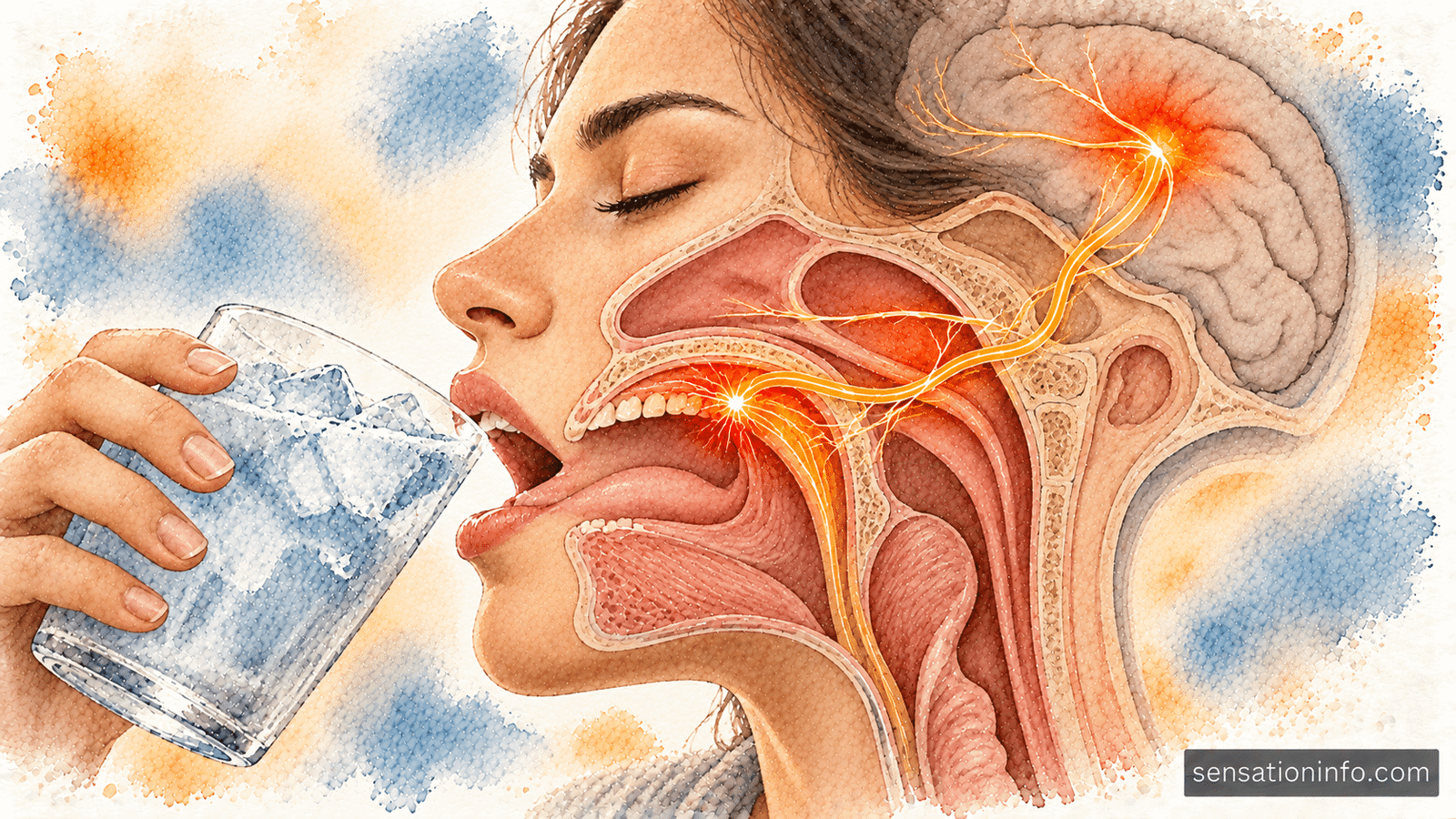

Numbness on the roof of the mouth after eating ice cream or drinking an icy beverage is a harmless temporary reaction. The sudden drop in temperature shocks the nerve endings located in your hard palate. This intense cold causes your blood vessels to constrict rapidly and creates a numb or painful sensation that often spreads upward into your head.
If the cold sensation moves beyond the roof of your mouth and you experience worrying numbness spreading to the side of your tongue, it might indicate a different nerve irritation rather than a simple cold shock. Usually the numbness from a cold drink fades within a few minutes once your mouth warms up.
What Causes the Roof of Your Mouth to Go Numb from Cold?
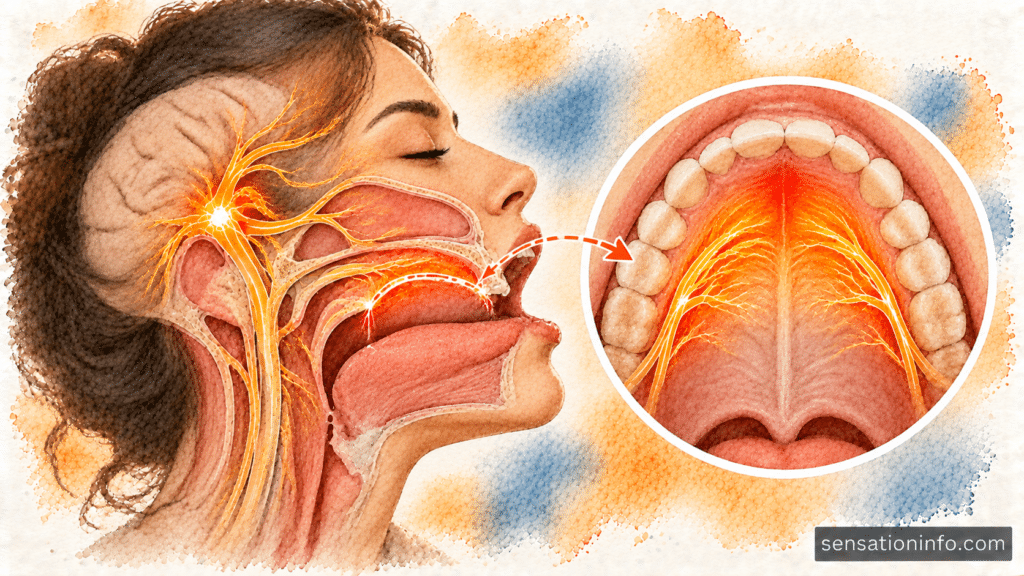
The numbness occurs because the sudden cold forces the blood vessels in your palate to narrow rapidly to preserve body heat.
When you consume something very cold, the temperature inside your oral cavity drops drastically. The roof of your mouth contains a dense network of blood vessels and highly sensitive nerves. The rapid temperature change forces the blood vessels in this area to narrow quickly. This biological process is known as vasoconstriction. The human body uses vasoconstriction to prevent the loss of core body heat when exposed to cold environments.
Once you swallow the cold food and your mouth begins to warm up again, the blood vessels rapidly widen. This rapid expansion is called vasodilation. This rapid narrowing and widening triggers pain receptors in the roof of your mouth. These receptors send an urgent signal through the trigeminal nerve directly to your brain. The brain registers this sudden rush of blood flow as an intense throbbing, numbing, or aching sensation.
The Link Between Palate Numbness and Brain Freeze
The numb feeling on your hard palate is often the very first warning sign of a brain freeze, which happens when the cold overstimulates a major nerve cluster behind your nose.
Sphenopalatine ganglioneuralgia is the formal medical term for brain freeze. The sphenopalatine ganglion is a major nerve cluster located just above the roof of your mouth and behind your nasal cavity. When this nerve cluster gets shocked by cold, it sends massive warning signals to the brain.
Because the trigeminal nerve also carries sensory information from your face and forehead, your brain gets confused about exactly where the cold signal is coming from. The brain mistakenly interprets the sudden temperature shock on your palate as a sudden freezing sensation in your forehead. This physiological phenomenon is called referred pain. Referred pain is the exact reason a cold drink in your mouth causes a throbbing ache behind your eyes and forehead.
According to the Mayo Clinic, people who experience migraine headaches are significantly more likely to experience brain freeze and intense palate numbness after eating cold foods. Medical researchers believe the trigeminal nerve pathway is naturally more sensitive in people who are prone to migraines.
Normal vs Concerning Palate Numbness
Most numbness on the roof of the mouth is perfectly normal, but understanding the accompanying symptoms can help you determine if something more serious is happening.
| Symptom Pattern | Most Likely Cause | Required Action |
| Numbness strictly after cold drinks | Cold shock and vasoconstriction | None needed. Will resolve in minutes. |
| Numbness with a rough burned patch | Thermal burn from hot food | Wait a few days for the tissue to heal. |
| Numbness with lip tingling after fruit | Oral allergy syndrome | Avoid the trigger food and monitor symptoms. |
| Persistent numbness with no trigger | Chronic nerve irritation | Schedule a doctor appointment. |
| Numbness with sudden facial drooping | Stroke or severe neurological event | Call emergency services immediately. |
4 Fast Ways to Stop Roof of Mouth Numbness
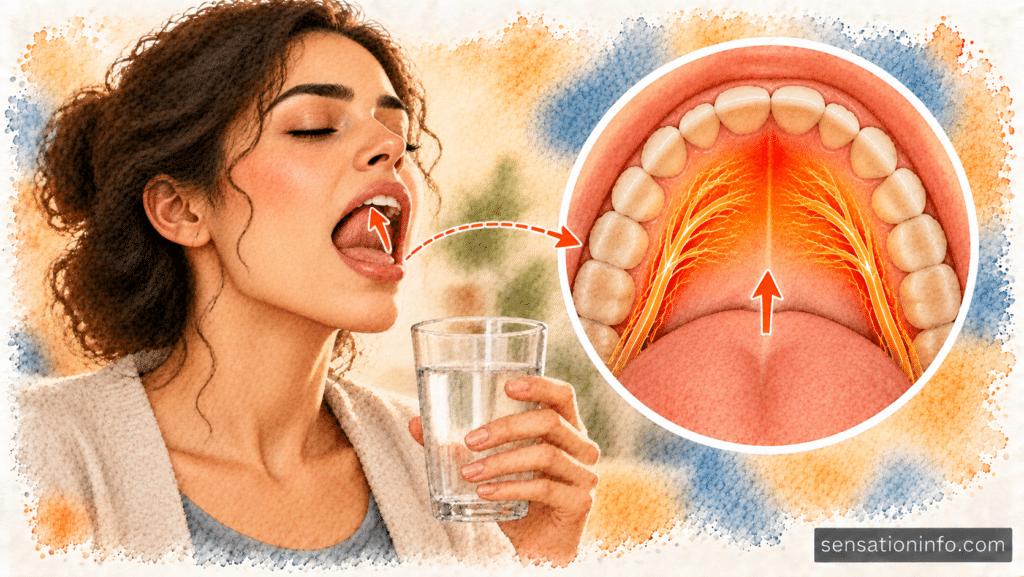
Waiting is the most common approach to relief, but you can actively warm the palate to speed up your recovery and stop the pain immediately.
1. Press Your Tongue to Your Palate
Your tongue is naturally warm and highly vascular. Pressing it flat against your chilled hard palate transfers core body heat directly to the cold tissue. This is the fastest way to reverse the vasoconstriction causing the numbness.
2. Drink Room Temperature Water
Swishing warm or room temperature liquid helps normalize the temperature inside your oral cavity instantly. Avoid drinking hot liquids immediately, as the sudden shift from freezing to hot can shock the tissue further and cause a thermal burn.
3. Breathe Through Your Nose
Breathing through your mouth pulls cool room air across your damp palate and prolongs the chill. Breathing through your nose allows the air to warm up in your nasal passages before it reaches your throat and mouth.
4. Create a Warm Air Pocket
Cup your hands over your mouth and nose and breathe out slowly. The trapped warm breath will help raise the temperature inside your mouth quickly without requiring you to consume anything else.
Could the Numbness Be Caused by Something Else?
While icy drinks are the most common culprit for temporary palate numbness, other benign everyday issues can cause the roof of your mouth to feel numb or tingly.
Thermal Burns from Hot Food
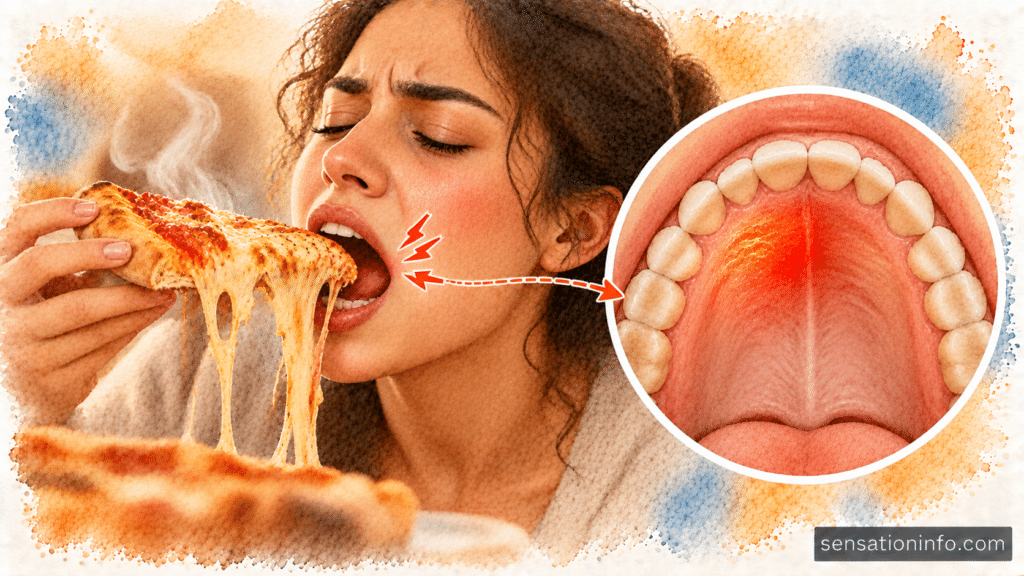
Hot food can temporarily deaden the surface nerves. A classic example is a pizza burn where hot melted cheese scalds the hard palate. This can leave a numb and rough patch of skin that lasts for several days as the delicate tissue heals.
Oral Allergy Syndrome
Certain foods can trigger mild allergic reactions. Oral allergy syndrome occurs when your immune system reacts to pollen proteins found in some raw fruits and vegetables. This can cause the roof of your mouth, lips, and throat to tingle or feel slightly numb. If you also experience sudden tingling creeping across your lips and tongue, an oral allergy is a highly likely cause.
Chronic Nerve Irritation
If the numb feeling turns into a persistent scalding sensation, you might be dealing with a chronic nerve condition. Burning mouth syndrome often presents as chronic pain or numbness in the palate and tongue without any clear trigger. You can find specific management strategies if you are dealing with chronic unexplained burning pain in your mouth.
Dental Anesthesia
Recent dental work will naturally leave the upper mouth numb for several hours. The numbing medication used during upper tooth extractions or fillings targets the nerves in the palate directly to block all pain signals. This will wear off gradually over two to four hours.
When to See a Doctor for Palate Numbness
Numbness on the roof of the mouth resulting strictly from cold drinks is entirely safe and requires absolutely no medical treatment. However, sudden or persistent numbness in your mouth or face without a clear temperature trigger warrants a professional medical evaluation.
Seek emergency medical care immediately if the numbness in your mouth is accompanied by any of the following warning signs:
- Sudden facial drooping on one or both sides
- Slurred speech or an inability to speak clearly
- Sudden confusion or disorientation
- Weakness or numbness on one entire side of your body
- Severe difficulty swallowing your own saliva
Schedule an appointment with a doctor or dentist if the roof of your mouth stays numb for more than a few consecutive days. You should also seek a professional opinion if the numbness spreads to your cheeks or jawline. Persistent nerve changes in the face require a proper medical workup to rule out compressed nerves or hidden dental infections. If you have overlapping facial symptoms, discovering what causes uncomfortable tingling creeping into your face and jaw might provide helpful insight before your doctor visit.
Key Takeaways
- Numbness on the roof of the mouth after eating cold food is a normal physiological response to sudden temperature changes.
- The rapid chilling and warming of blood vessels in the palate triggers the sphenopalatine ganglion and causes the sensation known as brain freeze.
- Sphenopalatine ganglioneuralgia is the formal medical term for brain freeze.
- The numbness and pain are completely harmless and typically resolve within minutes without any medical intervention.
- You can stop the numbness faster by pressing your warm tongue against the roof of your mouth or by drinking room temperature water.
- Persistent numbness that does not resolve or numbness accompanied by facial weakness requires immediate medical evaluation to rule out serious conditions like a stroke.
Frequently Asked Questions
No. Brain freeze and the associated palate numbness are completely temporary. The cold shocks the nerves and constricts blood vessels briefly but it does not cause any permanent structural or nerve damage.
The temperature of the food and how fast you consume it play a major role. Eating ice cream very quickly on a hot day causes a more extreme temperature shock than eating it slowly in a cool room.
There are no medications designed or recommended to prevent brain freeze. The safest and most effective prevention method is to eat frozen foods slowly and keep them away from the roof of your mouth.
Doctor’s Recommendation
If your palate numbness persists for several days, spreads to other areas of your face, or occurs without exposure to cold temperatures, a clinical evaluation is the safest next step. Finding a qualified neurologist or nerve specialist can help you identify underlying nerve irritation and rule out more complex conditions. For guidance on locating an experienced physician, review our directory of top rated neuropathy specialists in the USA to find the right care provider near you.
References
- Mayo Clinic. Brain freeze: What causes it?. Mayo Clinic Patient Care and Health Information. 2022.
- National Institutes of Health. How to Prevent Brain Freeze. NIH News in Health. 2021.
- Cleveland Clinic. Sphenopalatine Ganglioneuralgia (Brain Freeze). Cleveland Clinic Health Library. 2023.
- Centers for Disease Control and Prevention. Food Allergies and Oral Allergy Syndrome. CDC Health Information. 2020.