


Globus sensation is the persistent and uncomfortable feeling that a pill, a piece of food, or a ball of mucus is stuck in your throat when your airway is actually completely clear. This annoying tightness happens when the cricopharyngeal muscle in your neck goes into a spasm. Because the pressure can move around, understanding the exact location the lump is felt can help reassure you that you are experiencing a harmless muscle spasm rather than a dangerous physical blockage. You can still swallow food and drink water normally, and eating often makes the tightness temporarily disappear.
What Does a Globus Sensation Feel Like?
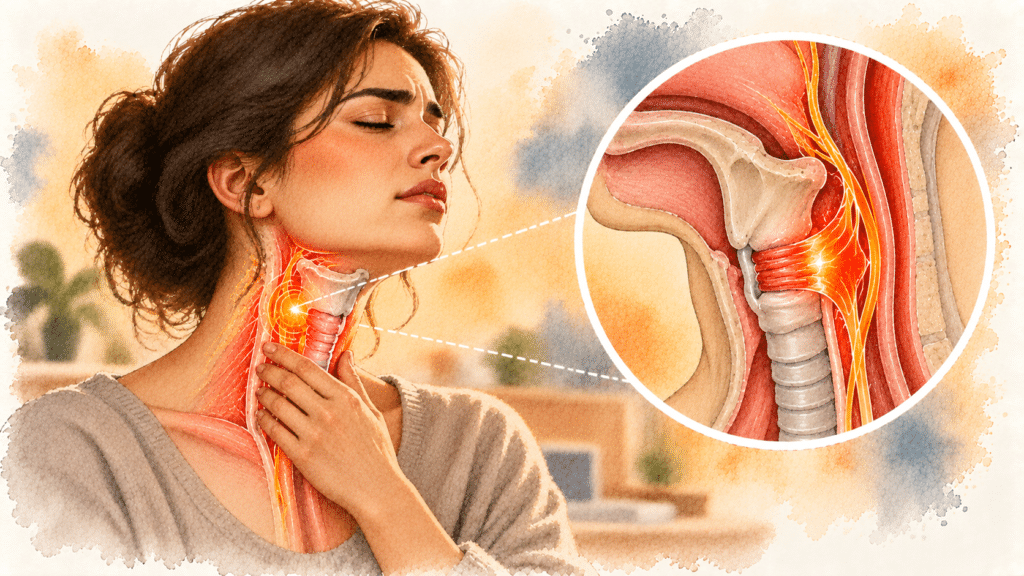
People describe this condition in many different ways because muscle spasms vary in intensity. The medical term for this is globus pharyngeus. It is a sensory issue, meaning your brain is receiving a signal of pressure even though nothing is lodged in the tissue.
Common symptoms include:
- A feeling of a tight band wrapped around the front of the neck.
- The sensation of a pill or a crumb stuck near the Adam’s apple or the suprasternal notch at the base of the throat.
- A constant need for throat clearing that never actually removes any phlegm.
- Throat tightness that gets noticeably worse when you swallow nothing but your own saliva.
- Pressure that builds up during stressful situations and relaxes when you are deeply focused on a fun task.
The Most Common Causes of a Lump in the Throat
To stop the muscle spasms, you must figure out what is irritating your throat box in the first place. The tissue in your neck is highly sensitive to acid, mucus, and emotional stress.
Silent Acid Reflux (Laryngopharyngeal Reflux)
Silent acid reflux is the leading physical cause of globus sensation. Unlike traditional heartburn, silent reflux happens when stomach acid travels all the way up your esophagus and spills over into your vocal cords. Because your throat does not have a protective lining to handle stomach acid, the tissue becomes inflamed. Your throat muscles tighten up to protect your airway from the acid, which creates the lump feeling. If you frequently wake up with a sour taste or a hoarse voice, silent acid reflux burning the delicate throat tissue is the most likely culprit.
High Stress and Anxiety
Your nervous system has a direct connection to your vocal cords. When you experience a panic attack or chronic worry, your body prepares for a fight or flight response. Your airway opens wider to take in more oxygen, but if you are just sitting at your desk, those muscles become exhausted and tense up. Many patients find that throat tightness caused by severe anxiety and stress is the hardest type to treat because worrying about the lump actually makes the spasm worse.
Postnasal Drip and Mucus
Chronic allergies or sinus infections cause thick mucus to drip down the back of your throat all day and night. This constant dripping irritates the esophageal sphincter. The tissue swells up in response to the irritation, creating a feeling of heaviness or a stubborn ball of phlegm that you cannot cough up.
Globus Sensation Versus Dysphagia (When to Worry)

It is very common to panic and worry that the throat tightness is dangerous or fatal when you first feel it. Globus sensation is annoying but it is completely harmless. However, you must know how to tell it apart from dysphagia. Dysphagia is the medical term for a true physical blockage that makes swallowing difficult.
| Warning Sign | Globus Sensation (Harmless) | Dysphagia (Seek Medical Care) |
| Eating Food | Eating meals makes the lump feeling go away completely. | Food gets physically stuck, causes choking, or comes back up. |
| Pain Level | Uncomfortable tightness and pressure, but zero pain. | Sharp pain in the chest or throat when you swallow. |
| Consistency | The feeling comes and goes depending on your stress level. | The problem happens every single time you try to eat solid food. |
| Weight Loss | No change in your body weight. | Sudden and unintentional weight loss because eating is too hard. |
If you experience pain, choking, or if food gets stuck in your chest, go to an emergency room or a gastroenterologist immediately.
How Doctors Diagnose the Condition
If your symptoms last for more than two weeks, you should visit an ear nose and throat doctor. The doctor will review your medical history and physically feel the outside of your neck to check for swollen lymph nodes or thyroid issues.
The gold standard for diagnosing a lump in the throat feeling is a flexible laryngoscopy. The doctor uses a numbing spray and gently inserts a tiny camera through your nose to look directly down at your vocal cords. This painless test takes less than two minutes. The camera allows them to see if acid is burning the tissue, if mucus is dripping from your sinuses, or if the muscles are just holding tension.
If they suspect a swallowing problem, they might order a barium swallow test. You will drink a chalky liquid that shows up on an x ray so the doctor can watch exactly how your esophagus moves when you swallow.
Proven Treatments and Home Relief

Treatment depends entirely on the root cause. If you want to know how long the globus sensation typically lasts, the answer is that it will persist until you remove the trigger.
Hydration and Swallowing Habits Stop dry swallowing. When you feel the lump, your brain tells you to swallow to clear it. Swallowing an empty throat strains the muscles and makes the spasm worse. Keep a bottle of water with you at all times. Taking slow sips of warm water relaxes the pharyngeal muscles and washes away irritating mucus.
Acid Reflux Management If silent reflux is the cause, you must change your diet. Stop eating spicy foods, tomatoes, and citrus fruits. You must also stop drinking caffeine and alcohol because they relax your esophageal sphincter and let stomach acid escape. Stop eating at least three hours before you go to sleep. Your doctor might prescribe a daily proton pump inhibitor like omeprazole (Prilosec) to lower your stomach acid production while your throat heals.
Stress Reduction If anxiety is causing your throat to close up, practice deep diaphragmatic breathing. Inhale deeply into your belly for four seconds, hold for four seconds, and exhale slowly for six seconds. This forces your nervous system to calm down and releases the tension in your vocal cords. Physical therapy for your neck and jaw can also release trapped muscle tightness.
Key Takeaways
- Globus sensation is a harmless muscle spasm that makes it feel like a lump is in your throat.
- Silent acid reflux and high anxiety are the most common triggers for this tight sensation.
- You can still swallow food and water normally with this condition, and eating often provides temporary relief.
- Stop dry swallowing and start sipping warm water to relax the vocal cords and neck muscles.
- Seek immediate medical care if you experience pain, choking, or if food physically gets stuck in your chest.
Frequently Asked Questions
The most common physical cause is silent acid reflux where stomach acid burns the vocal cords. The most common psychological cause is severe anxiety which creates heavy muscle tension in the neck.
Food and liquids are heavy enough to push through the tight muscle spasms easily. In fact, the act of eating forces the throat muscles to coordinate properly, which is why eating often makes the tight feeling temporarily stop.
Yes. Aggressively clearing your throat slams your vocal cords together and causes microscopic swelling. This irritation makes your brain think there is even more mucus present, which makes the lump feeling much worse.
Doctor’s Recommendation
If you need fast relief from the panic and tightness right now, I highly suggest learning the specific physical techniques that force your throat muscles to relax. Reading about proven ways to get rid of the lump feeling immediately will teach you laryngeal massage methods and breathing exercises you can do at home to break the muscle spasm cycle today.
References
Cleveland Clinic. Globus Sensation: Causes & Treatment. 2022.
Mayo Clinic. Laryngopharyngeal reflux: What is it?. 2023.
Centers for Disease Control and Prevention. Swallowing Disorders. 2021.

One Response