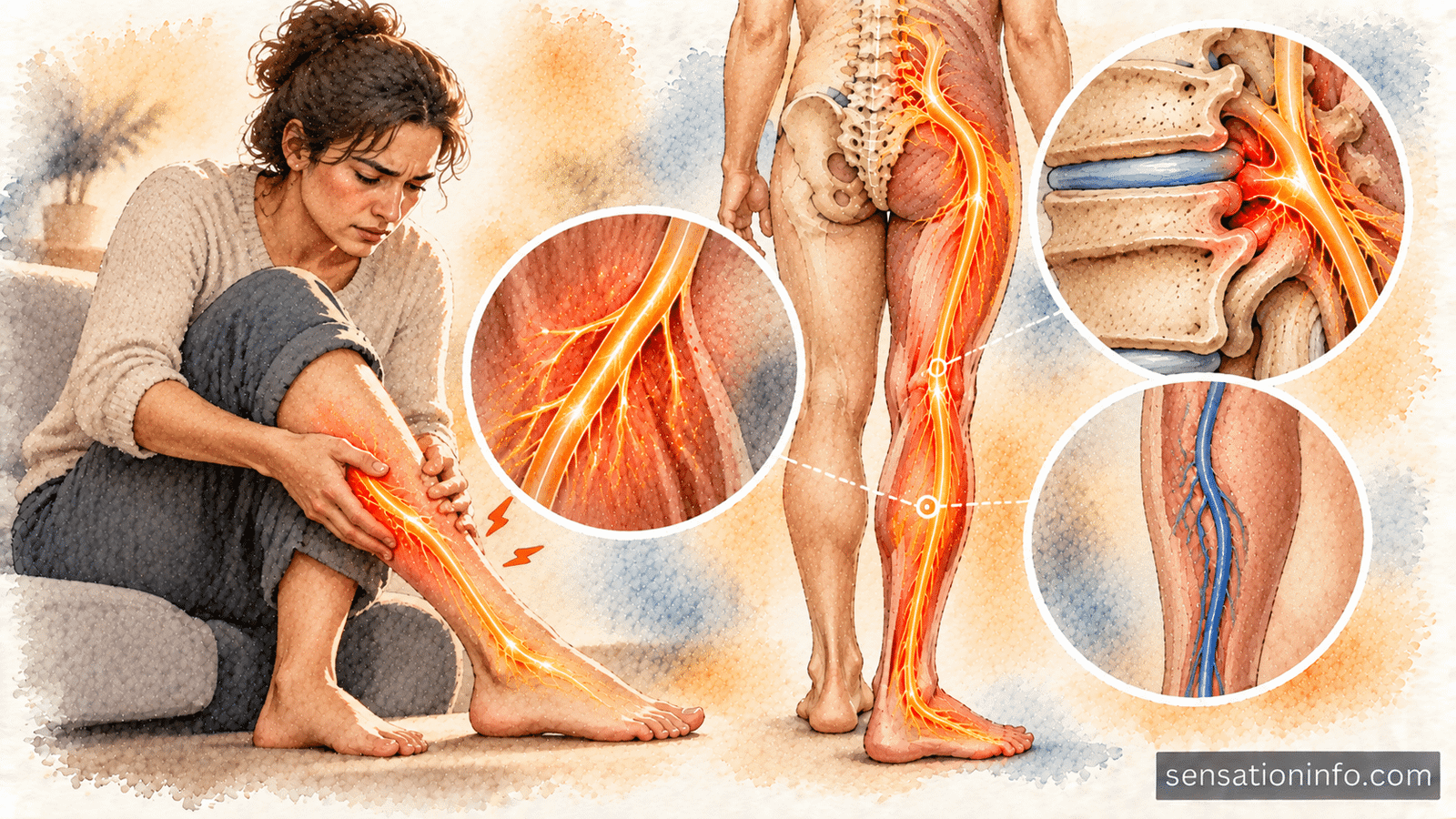

If you have ever felt a sudden, prickly sensation on the back of your lower leg, you are not alone. This uncomfortable pins and needles in the calf occurs when localized nerve irritation, spinal compression, a fluid-filled cyst behind your knee, or vascular pressure temporarily disrupts the nerve signals traveling down your limb.
Understanding exactly what triggers this uncomfortable pins and needles sensation in your legs is the most reliable way to determine when simple home measures will fix the problem, and when it is time to seek professional medical care.
Immediate Red Flags: When to Seek Urgent Care
While a fleeting tingly feeling in the calf is usually harmless and resolves with movement, certain accompanying symptoms require immediate medical attention. When sensory changes are accompanied by vascular or motor warnings, the situation escalates from a simple annoyance to a potential emergency.
You should go to the emergency department or contact a physician directly if your calf tingling occurs alongside:
- Sudden loss of muscle strength that makes it difficult to lift your foot or walk
- Sharp, shooting pain traveling up your thigh and into your groin
- Intense swelling, redness, and a deep warmth radiating from the calf muscle
- Numbness that rapidly spreads down into your foot and toes
- A newly developed fever, chills, or sudden onset shortness of breath
Swelling and warmth combined with tingling can indicate a deep vein thrombosis (a blood clot), while rapidly spreading numbness often points to acute nerve compression that requires urgent clinical evaluation.
The Nerve Anatomy of the Lower Leg
A “pins and needles” feeling, clinically known as paresthesia, is your brain’s way of reporting abnormal signaling from a sensory nerve. To understand why your calf tingles, it helps to visualize the nerve pathways traveling through the lower half of your body.
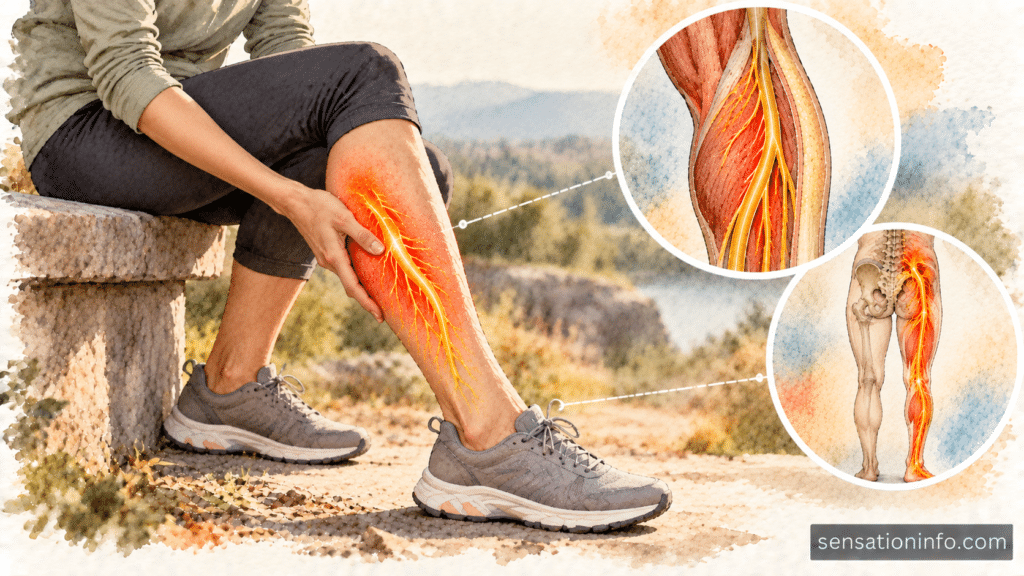
The most critical nerve for the outer calf is the sural nerve, which runs superficially just beneath the skin along the back and outside edge of the lower leg. Because it sits so close to the surface, the sural nerve is highly vulnerable to external pressure from the outside world.
Deeper within the leg, robust branches of the sciatic nerve travel down from the lower spine. The sciatic nerve originates in the lumbar spine, specifically from the L4 through S3 nerve roots. When the S1 nerve root becomes compressed at the level of the lower back, it frequently refers altered sensations entirely down the back of the thigh and straight into the belly of the calf muscle. When these nerve pathways are squeezed, stretched, or temporarily deprived of healthy blood flow, they send spontaneous, misfired electrical signals to the brain that your conscious awareness registers as a localized buzzing or prickling.
Common Causes of Calf Tingling
Identifying the source of your paresthesia often comes down to recognizing the specific patterns, triggers, and companion sensations you experience throughout the day.
External Sural Nerve Compression
External compression is the single most frequent reason people experience isolated calf tingling. The sural nerve can be easily irritated by tight clothing, thick athletic straps, tall restrictive boots, or even the familiar habit of sitting with your legs tightly crossed for an hour. When you apply mechanical pressure directly over the outer calf, the small blood vessels supplying the nerve become temporarily restricted. This brief lack of oxygen causes the nerve fibers to become irritable, producing a tingling sensation that typically resolves within minutes once you change your posture or remove the tight shoe strap.
S1 Radiculopathy (Sciatica)
When the tingling radiates from higher up, it is often due to S1 radiculopathy, more commonly known as sciatica. A bulging or herniated disc in the lower lumbar spine, or bony overgrowths called bone spurs, can physically press against the S1 spinal nerve root. This internal compression causes a dull ache and a pronounced pins and needles sensation that travels down the back of the leg and settles heavily in the calf. Because this persistent discomfort is driven by mechanical pressure on the nerve root, relieving sciatica tingling through proper posture and core support directly targets the structural source of the pain
Baker’s Cyst
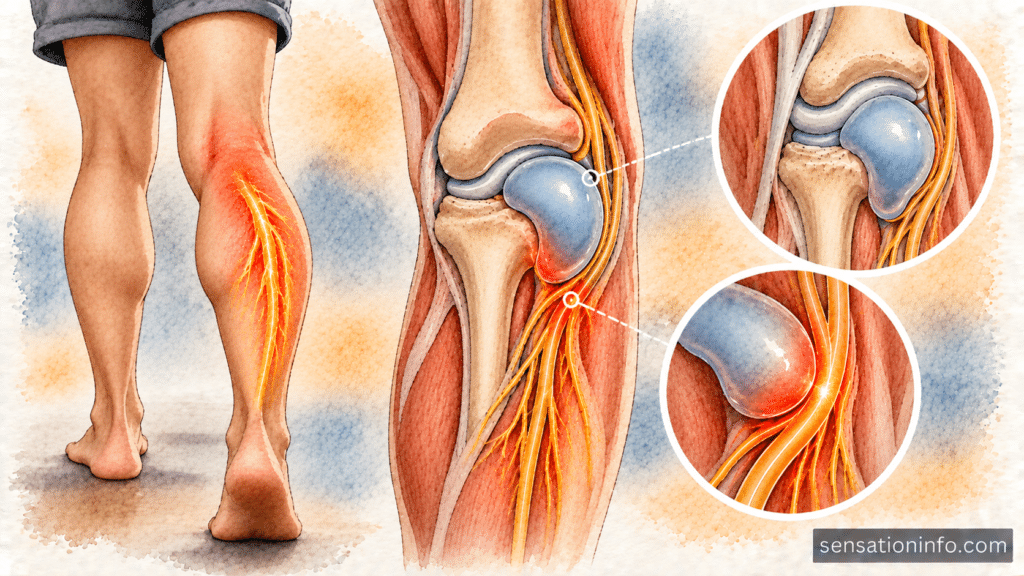
Another frequent structural cause of calf tingling is a Baker’s cyst. The knee joint naturally produces synovial fluid to keep the cartilage lubricated, but conditions like osteoarthritis or meniscus tears can cause the joint to generate excessive fluid. This excess fluid often bulges outward into the back of the knee, creating a fluid pocket. As the cyst expands beneath the skin, it presses downward against the blood vessels and the tibial nerve branches traveling into the calf. This creates a distinct feeling of fullness behind the knee accompanied by a prickly sensation cascading down the back of the lower leg.
Muscle Spasms and Cramps
Local muscle compression plays a surprisingly significant role in sensory changes. If you experience an intense calf cramp during the night or after vigorous exercise (a “charley horse”), the powerful muscle contraction physically squeezes the sensory nerves running through the muscle fibers. Even after the cramp entirely releases, the bruised nerve fibers may continue to tingle and buzz for several hours as they recover from the sudden compression. When these localized muscular symptoms are accompanied by similar sensations extending into your arches or toes, differentiating a lingering calf cramp from broader foot nerve issues ensures you target the true source of the radiating discomfort.
Neurological and Systemic Conditions
When calf tingling occurs persistently without external pressure, structural spinal issues, or recent muscle tension, physicians broaden their view toward systemic conditions affecting the peripheral nervous system.
| Condition | Core Mechanism | Distinctive Features |
| Diabetic Neuropathy | Chronically high blood sugar damages the microscopic blood vessels supplying peripheral nerves. | Tingling is almost always bilateral (both legs), slowly progressing upward from the toes into the calves over months or years. |
| Vitamin B12 Deficiency | Low B12 levels strip the protective myelin coating from peripheral nerves. | Systemic tingling that often affects the calves, feet, and hands simultaneously, sometimes accompanied by fatigue. |
| Peripheral Arterial Disease | Cholesterol plaques narrow the arteries supplying the lower legs, starving nerves of oxygen. | Tingling and burning distinctly triggered by walking or exercise, which stops entirely after a few minutes of rest. |
| Respiratory Alkalosis | Hyperventilation from panic or anxiety temporarily drops blood calcium levels, making nerves hyperexcitable. | Sudden, harmless bilateral tingling across the calves, hands, and face that resolves smoothly once calm breathing is restored. |
If you primarily notice your leg discomfort manifesting when you finally lay down to rest for the evening, the sudden nighttime vascular shifts and resting nerve changes are often what trigger a disruptive burning sensation in the legs when lying down.
How Doctors Diagnose Calf Tingling
Evaluating paresthesia in the lower leg requires a structured clinical approach to separate benign local compression from spinal or systemic disease.
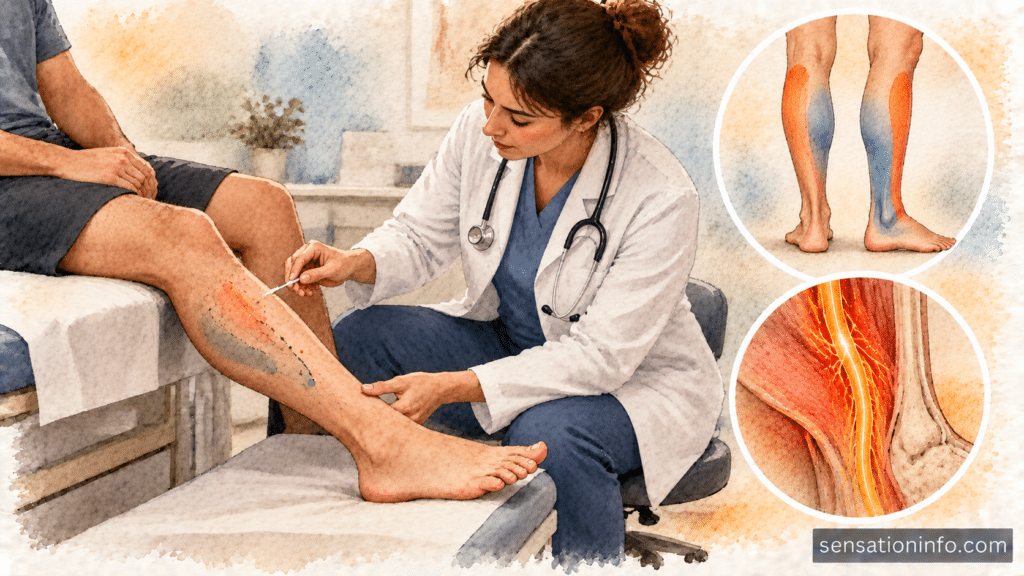
Your clinician will begin by taking a detailed history, asking exactly when the tingling started, whether it worsens with specific activities like walking or sitting, and if it is accompanied by back pain or joint swelling. During the physical examination, the doctor will use a cotton wisp and a clean safety pin to map the exact geographical pattern of your altered sensation across the calf. They will check your deep tendon reflexes at the knee and ankle and test your ability to walk on your heels and toes to ensure your motor nerves are intact.
If spinal compression is suspected, doctors typically order a high-resolution Magnetic Resonance Imaging (MRI) scan of the lumbar spine. This imaging clearly visualizes the spinal discs and nerve roots to identify herniations. If a Baker’s cyst appears likely based on swelling behind the knee, a simple diagnostic ultrasound rapidly confirms the presence of excess joint fluid. Finally, comprehensive laboratory blood panels are ordered to screen for fasting glucose levels, hemoglobin A1c, vitamin B12, and inflammatory markers to confidently rule out systemic metabolic neuropathy.
Targeted Treatments for Calf Paresthesia
Treating calf tingling depends entirely on addressing the specific underlying mechanism causing the nerve irritation. Removing the root cause allows the inflamed sensory nerves the time and space necessary to heal.
Relieving Mechanical Pressure
The most immediate treatment for localized sural nerve irritation is simply removing the source of external compression. Loosening tight athletic straps, switching to wider boots, and being mindful to avoid crossing your legs for prolonged periods allows proper blood flow to return to the superficial calf nerves. In many cases of benign external compression, modifying these simple physical habits resolves the tingling completely within a few days.
Managing Spinal Compression
If the paresthesia stems from S1 radiculopathy and lumbar compression, treatment primarily focuses on relieving the mechanical pressure on the lower spine.
- Physical therapy: Targeted programs designed to strengthen the core musculature and improve pelvic posture provide excellent spinal support.
- Oral medication: Over the counter nonsteroidal anti-inflammatory medications like ibuprofen or naproxen safely reduce the local inflammatory swelling directly around the irritated nerve root.
- Spinal injections: In chronic radiculopathy cases that do not respond to physical therapy, physicians frequently utilize targeted epidural steroid injections to deliver potent anti-inflammatory medication precisely to the source of spinal compression.
Draining and Treating a Baker’s Cyst
Managing a Baker’s cyst involves treating the underlying knee joint inflammation that created the excess fluid. Resting the joint, applying ice packs, and utilizing an elastic compression bandage help shrink the cyst by reducing overall synovial fluid production. Physical therapy focusing on gentle hamstring stretching decreases the mechanical stress on the back of the knee. When a cyst becomes remarkably large and painful, an orthopedic specialist can use ultrasound guidance to drain the excess fluid with a fine needle, instantly relieving the physical pressure against the calf nerves.
Long-Term Management of Neuropathy
For systemic conditions like peripheral neuropathy, medical management shifts toward long term metabolic control. Maintaining tight, consistent blood sugar regulation is the absolute foundation for treating diabetic nerve damage. When vitamin B12 deficiency is confirmed through laboratory testing, physicians prescribe oral supplements or direct intramuscular injections to rebuild the damaged nerve coatings. For patients experiencing severe, disruptive neuropathic tingling that does not respond to lifestyle adjustments, membrane stabilizing medications such as gabapentin or pregabalin often provide significant relief from the constant buzzing.
Practical Home Care Strategies
Alongside professional medical treatment, practical home care strategies can dramatically improve daily comfort and prevent minor nerve irritations from escalating.
- Warm compresses: Applying a warm, moist compress to the calf for fifteen minutes twice a day relaxes tight muscle fibers and encourages healthy local circulation.
- Proper hydration: Drinking adequate water combined with balanced electrolytes prevents the intense muscle cramps that frequently leave nerves bruised and irritated in their wake.
- Supportive footwear: Choosing shoes with rigorous arch support and a moderate heel to toe drop prevents excessive mechanical strain on the calf muscles and surrounding connective tissues throughout the day.
- Daily stretching: Performing gentle, sustained calf stretches facing a wall for thirty seconds at a time prevents the gastrocnemius muscle from placing structural tension on the underlying traversing nerves.
Key Takeaways
- Tingling in the calf most commonly originates from superficial sural nerve irritation, S1 spinal radiculopathy, or internal fluid pressure from a Baker’s cyst behind the knee.
- External mechanical factors like tight athletic straps, restrictive clothing, and prolonged leg crossing are frequent and easily correctable causes of lower leg paresthesia.
- Systemic metabolic conditions, particularly poor blood sugar control and vitamin B12 deficiency, can damage small nerve fibers and create widespread tingling across both calves simultaneously.
- Immediate emergency medical evaluation is necessary if calf tingling is accompanied by sudden leg weakness, rapidly spreading numbness, or severe redness and swelling suggestive of a blood clot.
- Accurate clinical diagnosis involving neurological examination, spinal imaging, and laboratory screening ensures the precise underlying cause is identified and properly treated through targeted physical therapy, medication, or cyst drainage.
Frequently Asked Questions
Vigorous exercise increases blood flow and causes the calf muscles to expand slightly within their connective tissue sheath. This temporary swelling can press against the sural nerve or local vascular structures, creating a brief tingling sensation that usually resolves quickly once you rest, hydrate, and gently stretch.
Yes. A cyst expanding behind the knee joint primarily pushes downward into the anatomical space of the calf. The physical presence of this fluid pocket can compress the nerves traveling into the lower leg, producing distinct tingling and a feeling of restrictive fullness in the calf long before it causes actual knee joint pain.
Tingling caused by a lower back problem, such as a herniated disc, typically originates in the lower back or buttock and shoots continuously down the back of the thigh directly into the calf. Local nerve issues originate strictly in the lower leg and are usually worsened by specific tight clothing or direct physical pressure on the calf itself.
Doctor’s Recommendation
If you experience persistent calf tingling that does not improve after removing tight clothing, adjusting your posture, or practicing gentle daily stretching, consulting a medical professional is the safest next step. A board-certified neurologist or a specialist in peripheral nerve disorders can perform a comprehensive clinical examination, order appropriate lumbar magnetic resonance imaging, and accurately distinguish benign local compression from complex neuropathic or spinal conditions. To locate experienced clinical experts in your region, explore our comprehensive directory of neuropathy specialists in the USA for dedicated diagnostic and treatment support.
References
American Diabetes Association. Standards of Care in Diabetes—2024. Diabetes Care. 2024.
National Multiple Sclerosis Society. Sensory symptoms in MS. National MS Society. 2024.