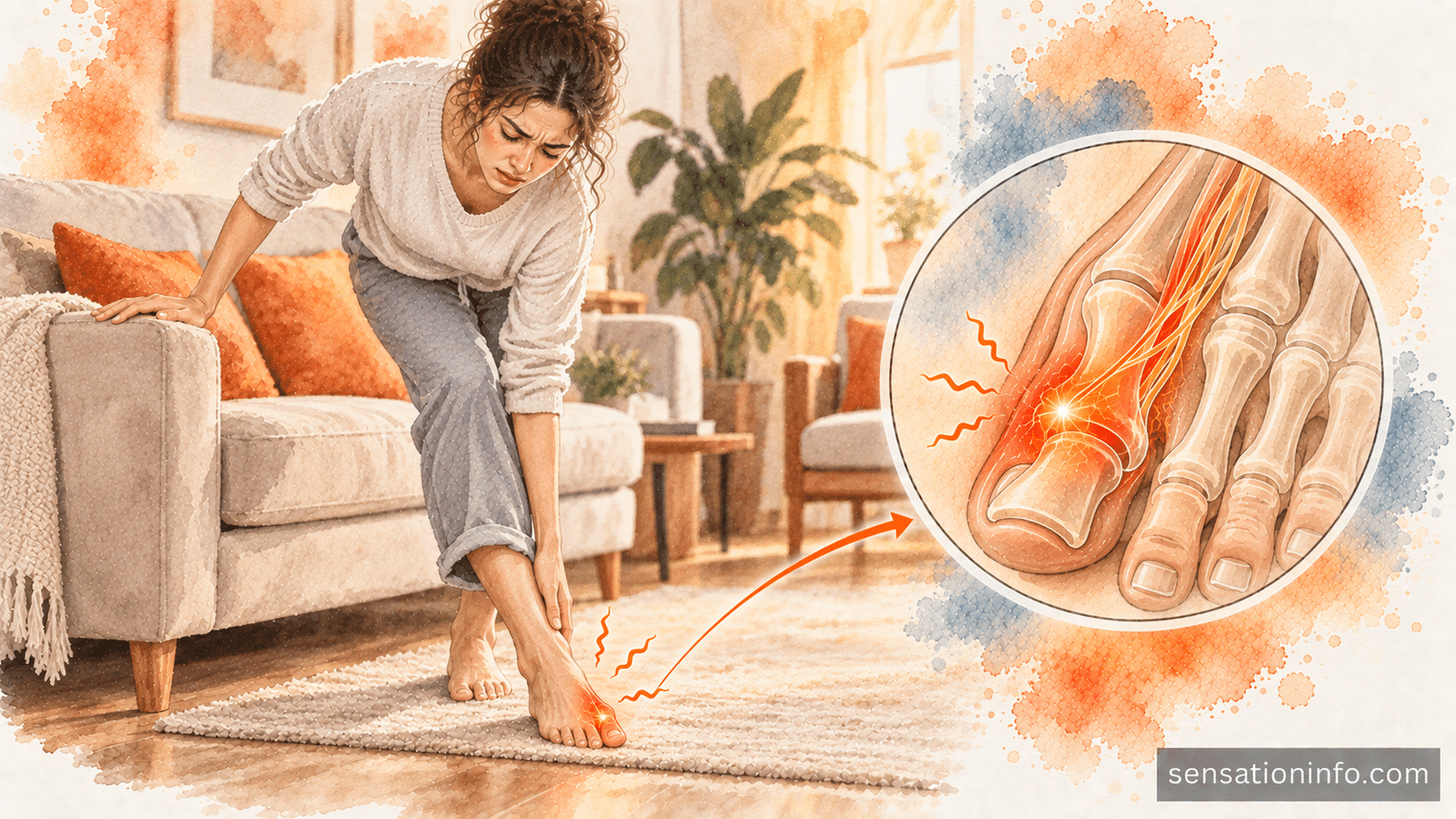

Have you ever stood up after sitting cross-legged for too long and felt like your leg had completely disappeared? That weird, dead, “is this still attached to me?” feeling. I’ve been there too, doing that classic limp-walk to the kitchen while shaking my leg awake. The first time my numbness lasted way longer than it should have, I genuinely paused mid-step and thought, “Okay, that’s not normal.”
Numb legs can range from a temporary annoyance to a sign of something deeper. In this article, I’ll walk you through what causes numbness in legs, when it’s harmless, and when it’s worth taking seriously. Everything I’m sharing is based on credible medical sources like the Mayo Clinic, Cleveland Clinic, the NHS, and the National Institute of Neurological Disorders and Stroke.

What Numbness in Legs Really Means
Numbness in legs is a partial or complete loss of sensation that happens when the nerves supplying your legs get compressed, irritated, or damaged somewhere along the way. Sometimes it’s local, like a pinched nerve in the lower back. Sometimes it’s systemic, like diabetes or a nutrient deficiency.
Your legs depend on a long network of nerves running from your lower spine through your hips, thighs, and calves and into your feet. So when numbness shows up, the question isn’t really, “What’s wrong with my leg?” It’s “Where along the nerve path is the issue?”
Why Leg Numbness Happens More Often Than People Realise
Most people think of numb legs as a “slept on it weird” problem, and sometimes it really is. But persistent numbness usually points to something more specific. Sitting too long, posture issues, and tight clothing can compress nerves temporarily. Long-term causes are usually related to nerves, blood flow, or systemic conditions.
I’ve personally noticed that whenever I sit at a desk for hours without moving, one of my legs almost always reminds me about it. Tiny details, real consequences.
Common Causes of Numbness in Legs
Let me break down the most common reasons behind numb legs, both from real-world observation and trusted medical sources.
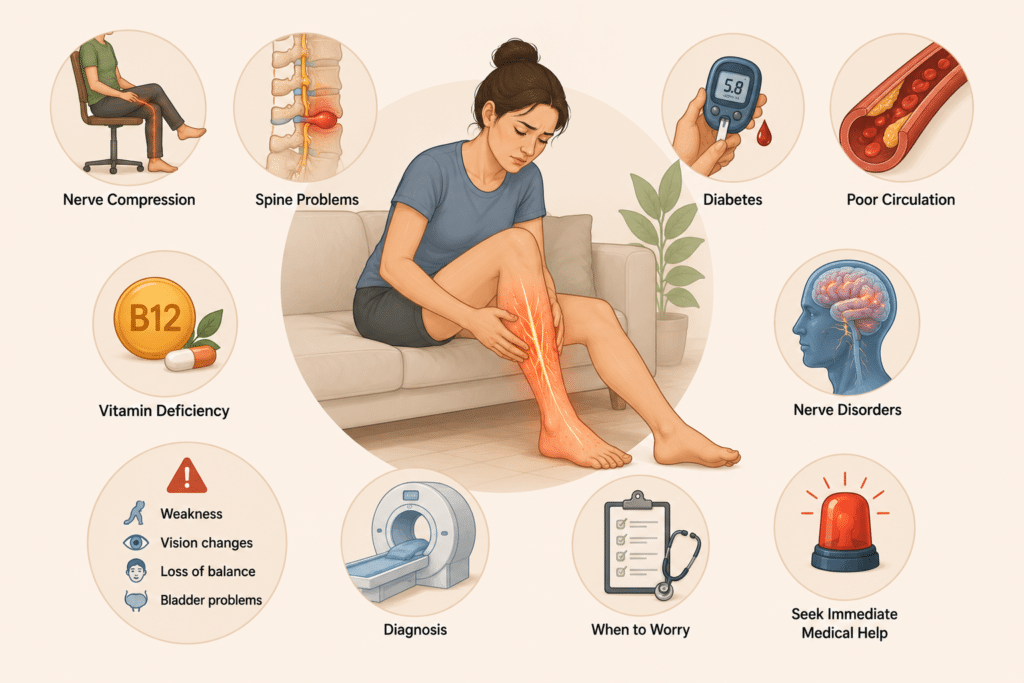
Sciatica
This is one of the most common causes. Sciatica happens when the sciatic nerve, the longest nerve in the body, gets compressed or irritated, often due to a herniated disc or muscle spasm in the lower back.
The numbness usually affects only one leg and travels from the lower back, through the buttock, and down the leg. It often comes with sharp pain or tingling. I had a friend who blamed his “weird leg numbness” on his shoes for months before realising it was his herniated disc.
Peripheral Artery Disease (PAD)
PAD happens when arteries in the legs narrow due to plaque buildup. This reduces blood flow and can cause numbness, coldness, and pain while walking, often relieved by rest.
According to the Cleveland Clinic, PAD is more common in smokers, people with diabetes, and those with high cholesterol. Persistent leg numbness paired with cold feet or slow-healing wounds deserves immediate attention.
Multiple Sclerosis (MS)
MS happens when the immune system damages the protective covering of nerves, leading to all sorts of strange sensations, including leg numbness, tingling, and weakness.
The National MS Society recognises numbness as one of the earliest and most common symptoms. It’s usually paired with fatigue, vision changes, or balance issues. If your numbness comes with other neurological signs, consult a neurologist.
Spinal Stenosis
Spinal stenosis is the narrowing of spaces in the spine, which puts pressure on nerves. It’s a common cause of leg numbness in older adults, especially when walking or standing for long periods.
The numbness usually improves when you sit down or lean forward. If your symptoms ease when you lean over a shopping cart, that’s a textbook sign.
Diabetic Neuropathy
Long-term high blood sugar damages tiny nerves, especially in the legs and feet. The CDC notes that nearly half of people with diabetes develop some form of neuropathy.
The numbness usually starts in the feet and slowly travels upward. It often comes with burning, tingling, or balance issues. Early blood sugar control genuinely slows the damage.
Vitamin B12 Deficiency
Low B12 affects nerve health and can cause numbness, tingling, and weakness in the legs. It’s especially common in vegetarians, older adults, and people on long-term acid reflux medications like omeprazole.
A simple blood test confirms it, and treatment is usually as easy as supplementation. I’ve personally seen people feel completely different within weeks of correcting their levels.
Pinched Nerve in the Lower Back
A pinched nerve, often from a herniated disc or bone spur, can cause numbness in one or both legs. Unlike sciatica, the pattern depends on which nerve root is affected.
If your numbness shows up with back stiffness or weakness in the legs, your spine deserves attention.
Pregnancy-Related Compression
During pregnancy, the growing uterus can press on nerves in the lower back and pelvis, leading to leg numbness. It’s usually temporary and resolves after delivery.
If it becomes severe or persistent, it’s worth raising with a doctor for proper monitoring.
Restless Leg Syndrome (RLS) and Nerve Irritation
RLS causes uncomfortable sensations and an urge to move the legs. Some people describe it as numbness mixed with tingling, especially at night. It’s often linked to iron deficiency, dopamine imbalance, or genetics.
Stroke or Transient Ischemic Attack (TIA)
This is rare but worth mentioning. Sudden numbness on one side of the body, especially with weakness, slurred speech, or vision changes, can be a sign of a stroke. Treat this as an emergency.
One Leg vs Both Legs Numb: What the Pattern Tells You
This pattern-based thinking is exactly how neurologists narrow down causes during a clinical exam.
If only one leg is numb, the cause is usually local. Sciatica, a pinched nerve, or PAD top the list.
If both legs are numb, systemic causes like diabetes, B12 deficiency, or spinal stenosis are more likely.
If numbness travels from the lower back down, the spine is usually involved.
If numbness shows up after walking and improves with rest, PAD or spinal stenosis becomes a strong suspect.
If numbness appears suddenly with weakness or speech issues, treat it as an emergency.
I’ve personally found that recognising patterns saves a lot of time, both in self-awareness and during doctor visits.
Red Flags You Should Never Ignore
Most cases of leg numbness are mild and treatable, but some need urgent attention. Please see a doctor immediately if your numbness comes with:
- Sudden weakness in one or both legs
- Loss of bladder or bowel control
- Severe back pain
- Slurred speech or facial drooping
- Cold, pale, or discoloured limbs
- Chest pain or shortness of breath
Conditions like cauda equina syndrome, stroke, or arterial blockages need immediate care. Trust your instincts. If something feels off, don’t wait it out.
How Doctors Diagnose Numbness in Legs
When I finally got mine evaluated, I was surprised at how thorough the process was. Diagnosing numbness isn’t a guessing game.
A proper workup usually includes a physical exam, neurological exam, and tests like the straight leg raise. Doctors often order blood tests for B12, blood sugar, and thyroid function, plus imaging like MRI or CT scans if a spinal cause is suspected.
Nerve conduction studies and EMG help check nerve health. PAD is usually diagnosed using ankle-brachial index tests or Doppler ultrasound. The right diagnosis prevents months of guesswork.
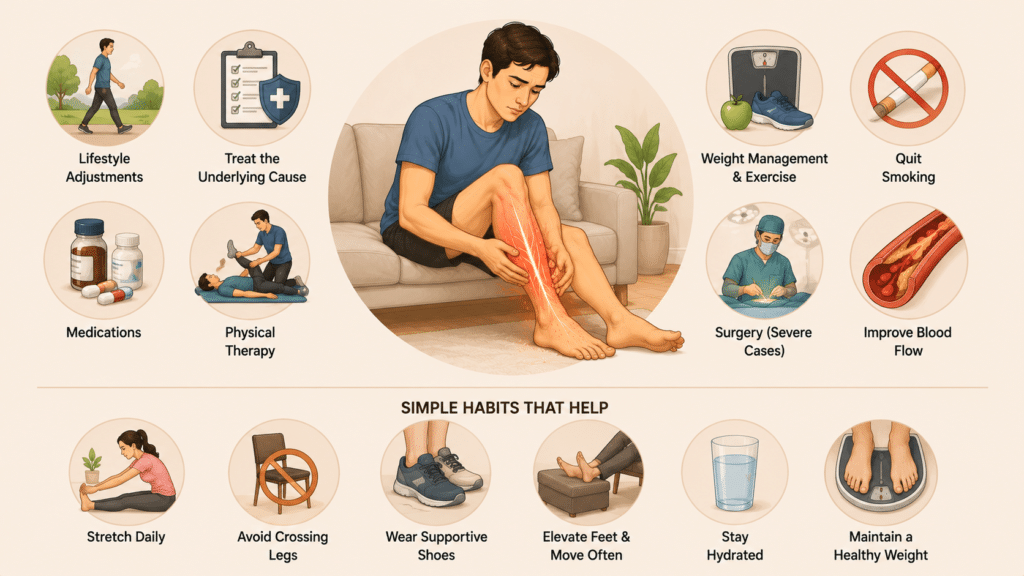
How to Treat Numbness in Legs
Treatment depends entirely on the cause, but here’s what generally helps in real-world cases.
Lifestyle Adjustments
For mild cases, simple changes often do a lot. Avoiding long sitting hours, improving posture, stretching daily, and staying hydrated can ease symptoms. I started taking short walking breaks every hour, and within weeks my random episodes reduced sharply.
Address the Underlying Condition
If diabetes is the cause, blood sugar management is crucial. If B12 deficiency is involved, supplementation usually clears the numbness. PAD and spinal stenosis need targeted medical treatment.
Medications
Doctors may prescribe gabapentin, pregabalin, or duloxetine for nerve-related numbness. NSAIDs help with inflammation-driven causes. PAD patients may need cholesterol or blood-flow medications.
Physical Therapy
A skilled physiotherapist can be a real difference-maker, especially for sciatica, spinal stenosis, and posture-related issues. Targeted stretches and nerve glides reduce compression.
Weight Management and Exercise
Light walking, swimming, and stretching improve blood flow and reduce nerve pressure. Even 20 minutes a day can produce noticeable improvements.
Quit Smoking
Smoking accelerates PAD and damages blood vessels. Quitting genuinely changes the long-term outcome.
Surgery (in severe cases)
If conservative treatment fails, surgical options like discectomy, spinal decompression, or vascular bypass may be required. These are not first-line treatments but provide real relief when nothing else works.
Simple Habits That Reduce Leg Numbness
Tiny adjustments often help more than people expect. Stretching the hamstrings and lower back daily, avoiding crossing your legs for long periods, choosing supportive shoes, and maintaining a healthy weight all genuinely matter.
If you sit at a desk all day, raising your feet slightly and shifting positions helps. Even small movements reduce nerve compression.
Frequently Asked Questions
It’s usually due to nerve compression, posture issues, or systemic causes like diabetes or B12 deficiency. Persistent numbness needs medical evaluation.
Not usually. Brief numbness from sitting too long is normal. Worry only if it lasts a long time or comes with other symptoms.
Yes, briefly. Stress can trigger hyperventilation and hypersensitive nerves, which sometimes leads to temporary numbness.
Sudden numbness with weakness, slurred speech, vision changes, or loss of bladder control is an emergency. Get medical help immediately.
Final Thoughts
Numbness in legs may feel small, but it’s often your body’s way of waving a small red flag. From sciatica and PAD to diabetes and spinal stenosis, the causes are varied, and so are the fixes. Most cases improve significantly with the right diagnosis and care.
If your legs keep going numb, don’t ignore it and don’t panic either. Track the pattern, note the triggers, and talk to a qualified doctor. Your legs carry you through life. The least you can do is listen when they try to talk back.