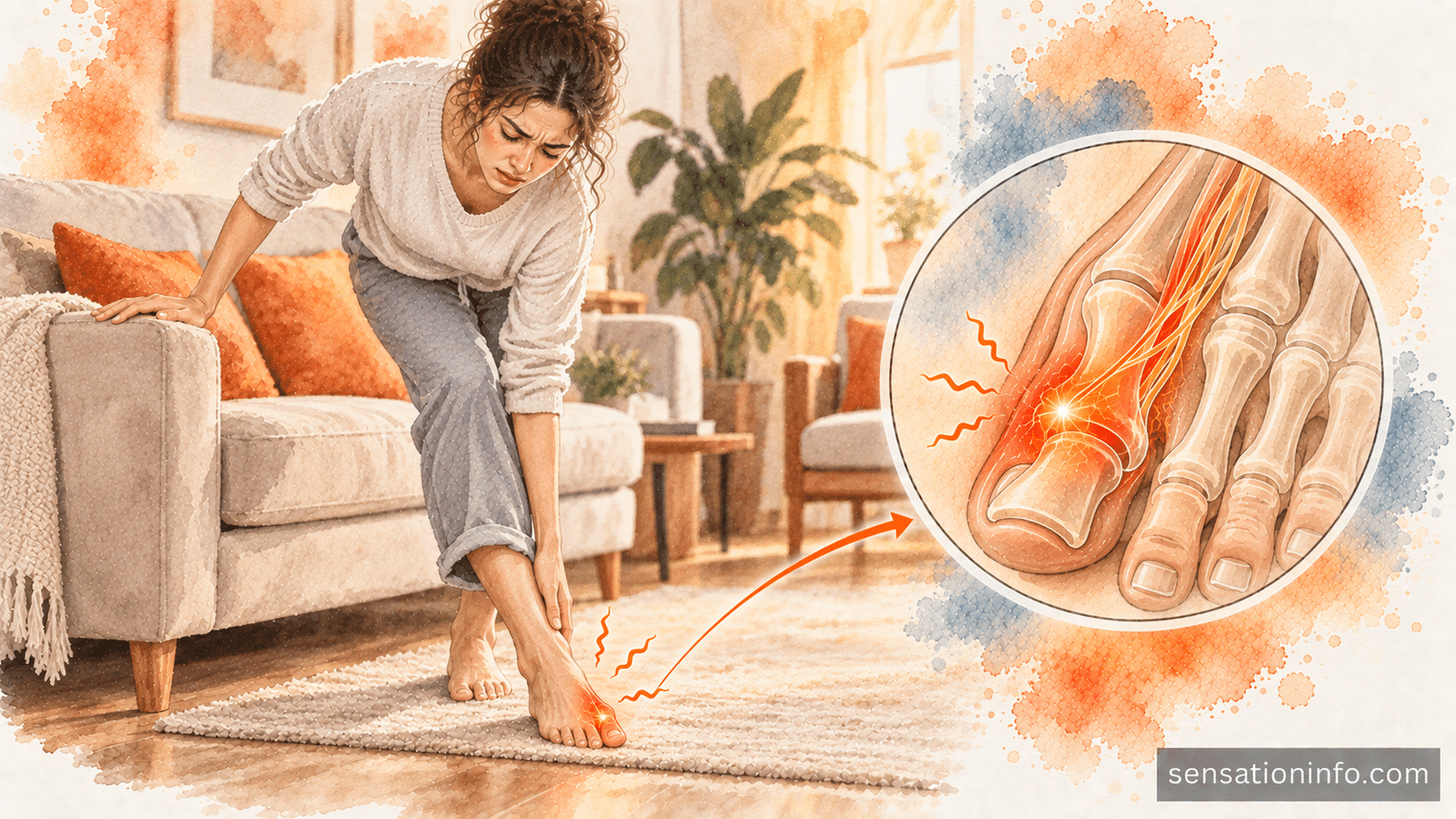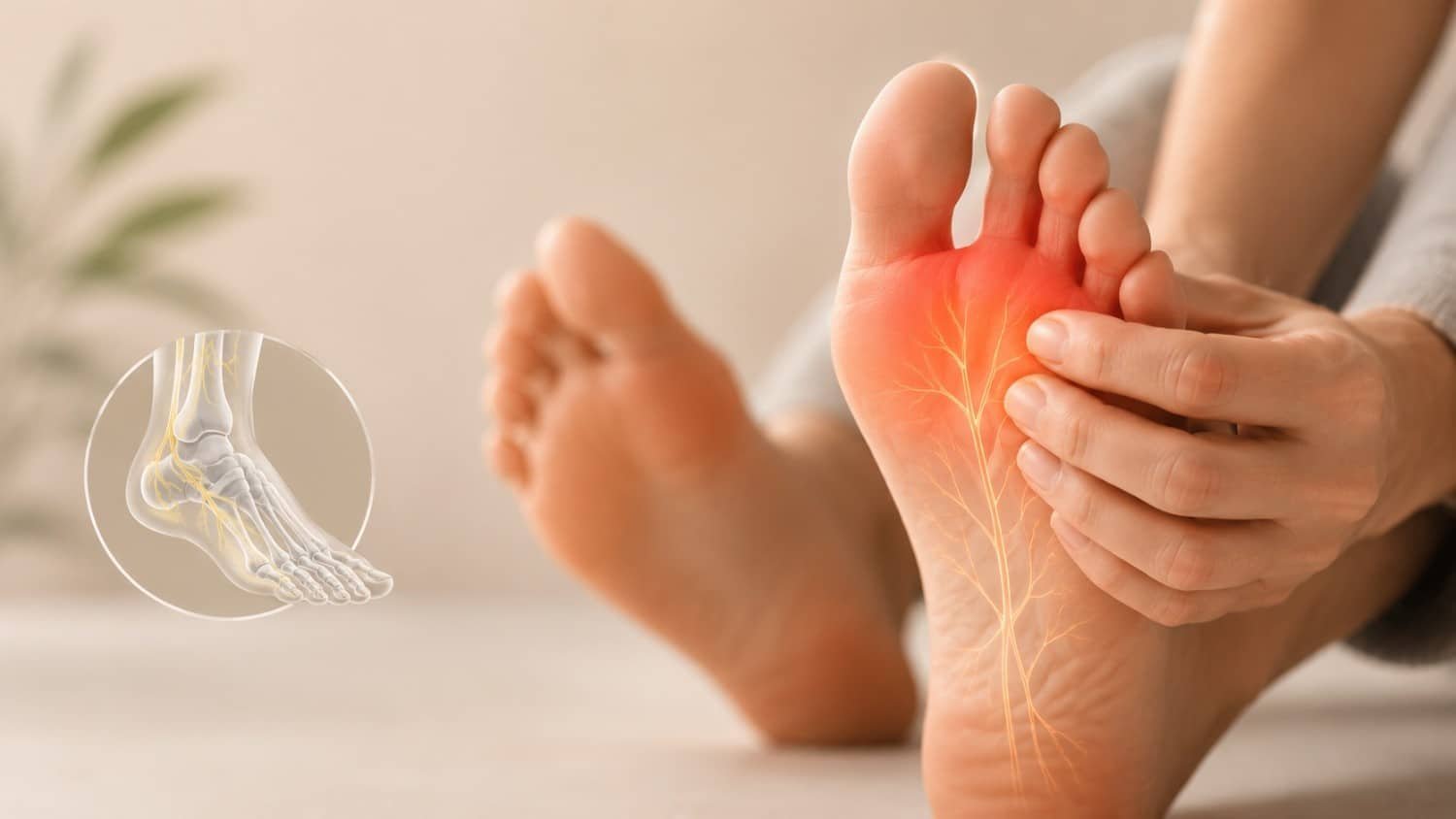

I still remember the first time my toes went numb for no obvious reason. I had been sitting at my desk for hours, stood up to grab coffee, and suddenly realised two of my toes felt like they belonged to someone else. Not painful, just oddly disconnected. Naturally, I did what most people do — wiggle them aggressively and hope for the best.
Sometimes toe numbness is harmless and temporary. Other times, it’s your body quietly trying to get your attention.
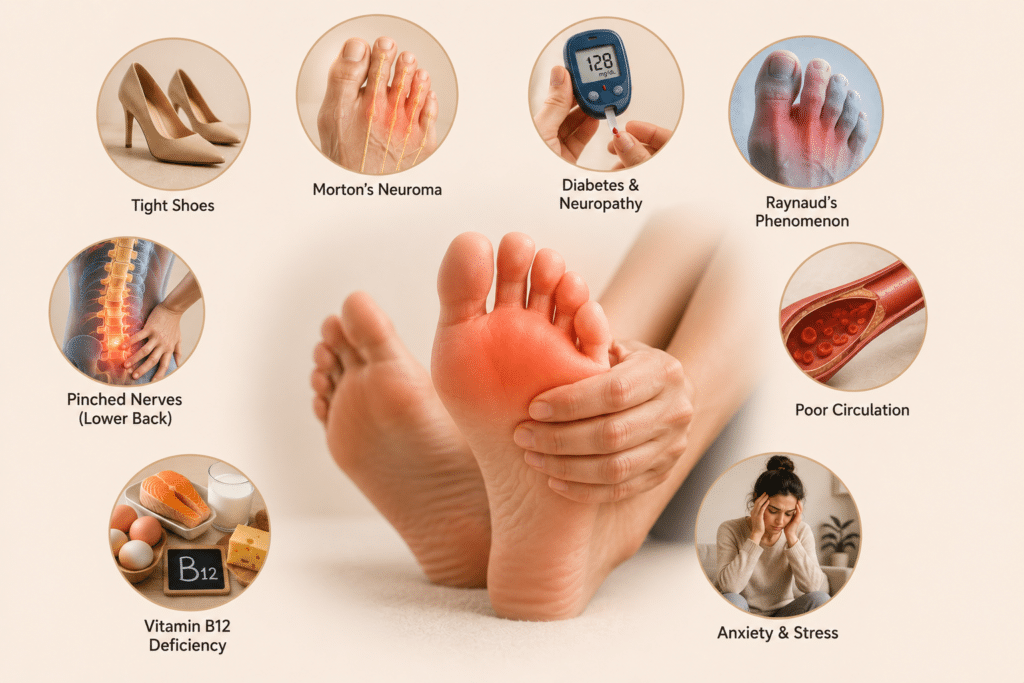
A numb sensation in the toes can happen because of pressure on nerves, circulation issues, footwear problems, or medical conditions like diabetes and Raynaud’s phenomenon. The tricky part is figuring out which one applies to you.
In this guide, I’ll walk you through the most common numbness in toes causes and treatment options, what different toe patterns can reveal, and when numb toes deserve proper medical attention.
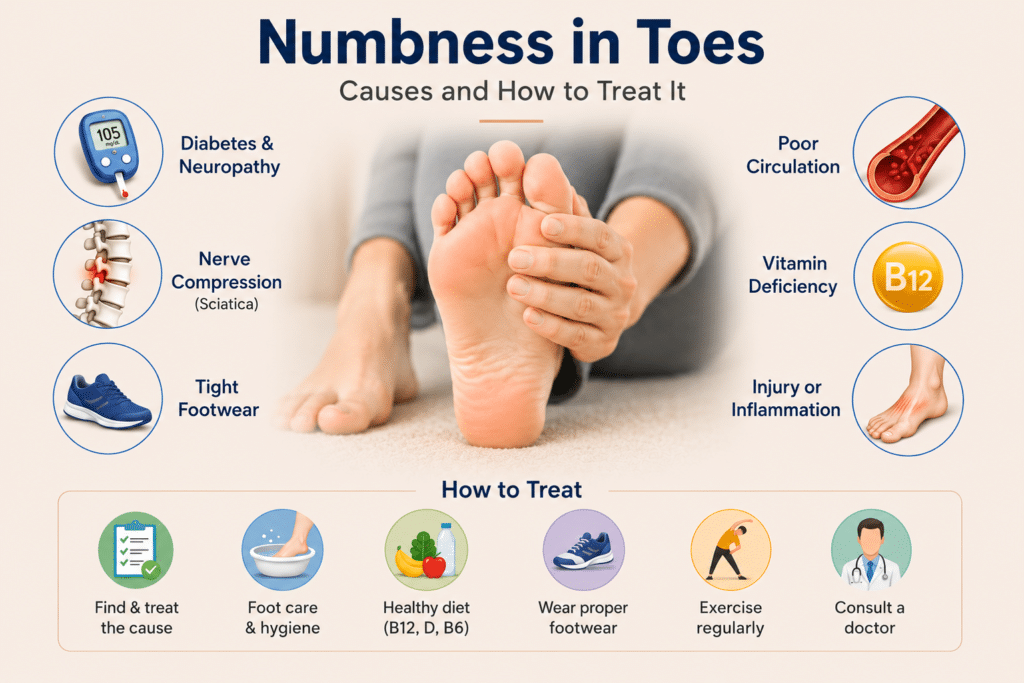
What Does Numbness in Toes Actually Feel Like?
Toe numbness isn’t always complete loss of feeling. For many people, it feels more like this:
- Pins and needles
- Tingling
- Burning
- Coldness
- Reduced sensation
- A “dead toe” feeling
- Electric buzzing
Sometimes it affects one toe. Sometimes several. And occasionally, it spreads into the foot or leg.
I’ve noticed people often ignore numb toes because they seem minor compared to chest pain or severe headaches. But nerves and circulation problems often start subtly.
Why Toes Go Numb So Easily
Your toes sit at the farthest edge of your circulation and nerve network. That means even small disruptions in blood flow or nerve function show up there first.
Your toes also deal with:
- Tight footwear
- Pressure from walking
- Cold temperatures
- Long sitting hours
- Poor posture
- Repetitive strain
Honestly, the human foot handles a ridiculous amount of abuse every day.
Common Causes of Numbness in Toes
Tight Shoes and Footwear Pressure
This is one of the most common and most overlooked causes.
Shoes that squeeze the front of the foot compress tiny nerves between the toes. High heels, narrow sneakers, tight formal shoes, and even some running shoes can trigger numbness surprisingly fast.
I once bought a pair of “stylish but slightly too narrow” shoes. My toes filed a formal complaint within two days.
Footwear-related numbness usually improves quickly after removing pressure.
Common signs include:
- Numbness during walking
- Tingling after removing shoes
- Symptoms limited to the front of the foot
- Relief when barefoot
Morton’s Neuroma
Morton’s neuroma happens when tissue thickens around a nerve between the toes, usually between the third and fourth toes.
According to the Mayo Clinic, it commonly causes the following:
- Tingling
- Burning
- Toe numbness
- A feeling like standing on a pebble
The symptoms often worsen in tight shoes or after long periods of standing.
This condition is surprisingly common in runners, retail workers, and people who spend long hours on their feet.
Diabetes and Peripheral Neuropathy
Diabetes is one of the biggest medical causes of numb toes.
Long-term high blood sugar damages tiny nerves, especially in the feet and toes. The Centers for Disease Control and Prevention notes that diabetic neuropathy affects millions of people worldwide.
The numbness often starts gradually and may include the following:
- Burning
- Tingling
- Reduced balance
- “Sock-like” numbness
- Pain worsening at night
If you have diabetes, numb toes should never be ignored.
Early blood sugar control genuinely slows nerve damage progression.
Raynaud’s Phenomenon
Raynaud’s phenomenon causes blood vessels in the fingers and toes to overreact to cold temperatures or stress.
The toes may turn:
- White
- Blue
- Red
Alongside:
- Numbness
- Cold sensations
- Tingling
- Pain during rewarming
The Cleveland Clinic describes Raynaud’s as a circulation disorder that commonly affects the extremities.
I’ve spoken with people who thought their toes were simply “always cold” for years before realising Raynaud’s was the reason.
Pinched Nerves in the Lower Back
Sometimes the problem isn’t in the foot at all.
A compressed nerve in the lower spine can send numbness down the leg and into specific toes.
Common causes include:
- Herniated discs
- Sciatica
- Spinal stenosis
- Poor posture
If your numb toes come with back pain, leg tingling, or weakness, your spine deserves attention too.
Poor Circulation
Reduced blood flow can temporarily starve nerves of oxygen, leading to numbness.
This commonly happens due to:
- Long sitting periods
- Smoking
- Peripheral artery disease (PAD)
- Cold weather
- Cardiovascular issues
Poor circulation often causes the following:
- Cold feet
- Pale toes
- Cramping
- Slow wound healing
Your circulation system matters far more than most people realise until it stops cooperating.
Vitamin B12 Deficiency
Vitamin B12 plays a huge role in nerve health.
Low B12 can cause:
- Toe numbness
- Tingling
- Weakness
- Burning sensations
- Balance problems
It’s especially common in the following:
- Vegetarians
- Older adults
- People taking long-term acid reflux medication like omeprazole
A simple blood test usually confirms it.
Anxiety and Stress
This surprises many people, but anxiety can absolutely trigger numbness sensations.
When the nervous system stays stuck in fight-or-flight mode:
- Blood flow shifts
- Muscles tense
- Nerves become hypersensitive
That combination can create tingling or numbness in the toes and feet.
I’ve personally noticed mild foot tingling during high-stress periods combined with terrible posture and too much caffeine. The human nervous system can get dramatic under pressure.
Toe-Specific Patterns: What They Often Mean
This is something many articles skip, but it genuinely helps narrow things down.
Big Toe Numbness
Often linked to:
- Sciatica
- Lower back nerve compression
- Tight footwear
- Arthritis
Third and Fourth Toe Numbness
Classic Morton’s neuroma territory.
Especially if it feels like burning or walking on a pebble.
All Toes Numb
Usually points toward:
- Peripheral neuropathy
- Diabetes
- Circulation issues
- Vitamin deficiency
One Toe Only
More likely related to:
- Local nerve compression
- Injury
- Footwear irritation
Numb Toes During Running
Common causes include:
- Tight running shoes
- Swollen feet
- Nerve compression
- Poor shoe fit
Honestly, many runners buy shoes based on looks instead of toe space, and their nerves absolutely notice.
When Numb Toes Become Serious
Most numb-toe episodes are harmless. But certain symptoms deserve immediate medical attention.
Seek urgent care if numbness appears with the following:
- Sudden weakness
- Loss of bladder control
- Severe back pain
- Facial drooping
- Slurred speech
- One-sided body numbness
- Open sores or infections
- Black or blue toes
These symptoms can signal stroke, spinal cord compression, severe circulation problems, or advanced neuropathy.
Persistent numbness lasting weeks should also be evaluated properly.
How Doctors Diagnose Toe Numbness
When I first looked into chronic numbness symptoms years ago, I assumed doctors would instantly know the cause. In reality, diagnosis is usually pattern-based.
Doctors may use:
- Physical examination
- Neurological testing
- Blood sugar tests
- Vitamin B12 screening
- MRI scans
- Nerve conduction studies
- Ultrasound imaging
- Circulation tests
A good diagnosis depends on understanding the whole picture, not just one symptom.
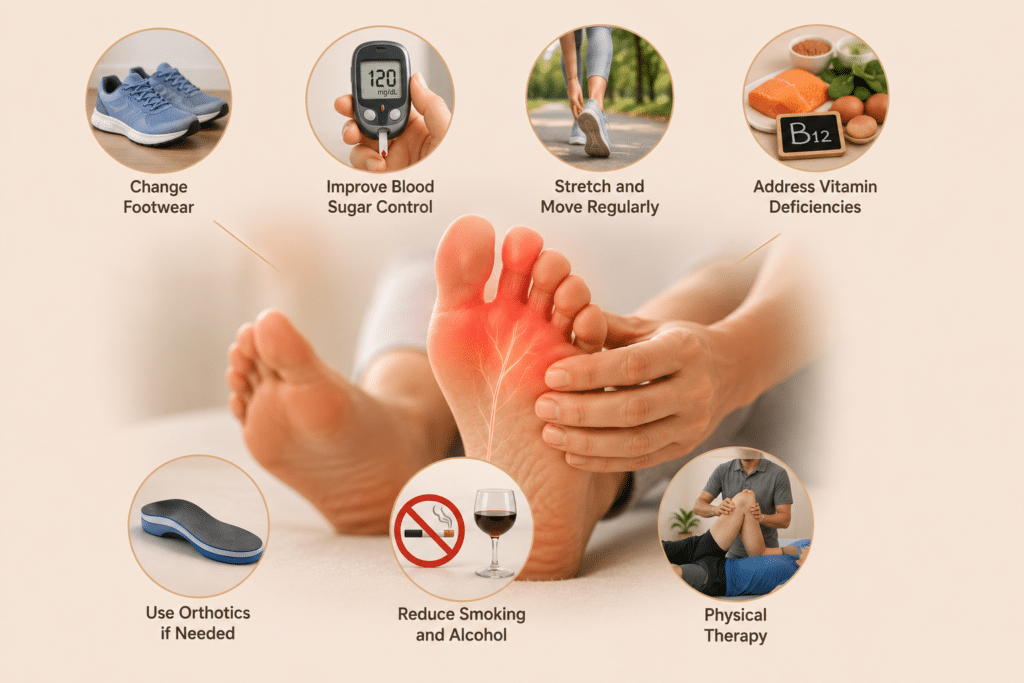
Numbness in Toes: Causes and Treatment
Change Footwear First
Honestly, this fixes more cases than people expect.
Choose shoes with:
- Wide toe boxes
- Proper arch support
- Enough front toe space
- Soft cushioning
Brands like Hoka, Brooks, and New Balance often work well for people dealing with foot nerve irritation.
Improve Blood Sugar Control
If diabetes is involved, blood sugar management becomes the priority.
Good glucose control significantly slows nerve damage progression.
Stretch and Move Regularly
Long sitting hours compress nerves and reduce circulation.
Simple habits help:
- Walking breaks
- Toe stretches
- Calf stretches
- Ankle rotations
Tiny changes genuinely make a difference over time.
Address Vitamin Deficiencies
If blood tests confirm low B12, supplementation often improves symptoms dramatically.
Never self-diagnose deficiencies blindly, though. Testing matters.
Use orthotics if needed.
Custom orthotics or metatarsal pads can reduce nerve pressure in conditions like Morton’s neuroma.
Podiatrists recommend these frequently because they often work surprisingly well.
Reduce Smoking and Excess Alcohol
Both worsen circulation and nerve health significantly.
This is one of those boring health truths that unfortunately keeps being true.
Physical Therapy
Physical therapists can help with:
- Nerve glides
- Posture correction
- Gait mechanics
- Lower back stability
Especially helpful for sciatica-related numbness.
Frequently Asked Questions
Yes. Tight shoes commonly compress nerves in the front of the foot, causing tingling or numbness.
It can be. Diabetic neuropathy often starts in the toes and feet before spreading upward.
Usually because of tight shoes, foot swelling, nerve compression, or poor footwear fit.
Yes. Anxiety can affect circulation and nerve sensitivity, which sometimes creates numbness or tingling sensations.
You should seek medical attention if numbness becomes persistent, painful, spreading, or appears with weakness, wounds, or circulation changes.
Final Thoughts
Numbness in toes might seem like a small issue, but your nerves and circulation often reveal problems quietly before they become obvious.
Sometimes the solution is as simple as changing shoes. Other times, it requires managing blood sugar, improving circulation, correcting posture, or treating nerve conditions properly.
The important thing is paying attention to patterns.
And honestly, if your toes have been trying to send you warning signals for weeks, it’s probably time to stop pretending they’re being dramatic.