
Have you ever experienced a strange tingling, numbness, or burning sensation that seemed to appear out of nowhere and then quietly hung around for a few days? I’ve talked to many people who brushed off these signs as “just stress” or “a weird sleeping position”. Sometimes that’s exactly what it is. But sometimes, especially when symptoms keep coming back, the body is trying to tell a deeper story.
Multiple sclerosis, or MS, is one of those conditions that often starts with subtle sensations long before anyone considers it. In this article, I’ll walk you through the early signs of MS, especially the tingling and numbness many people miss. Everything I share here is grounded in trusted medical sources like the National MS Society, Mayo Clinic, Cleveland Clinic, and the National Institute of Neurological Disorders and Stroke.
What Multiple Sclerosis Really Is
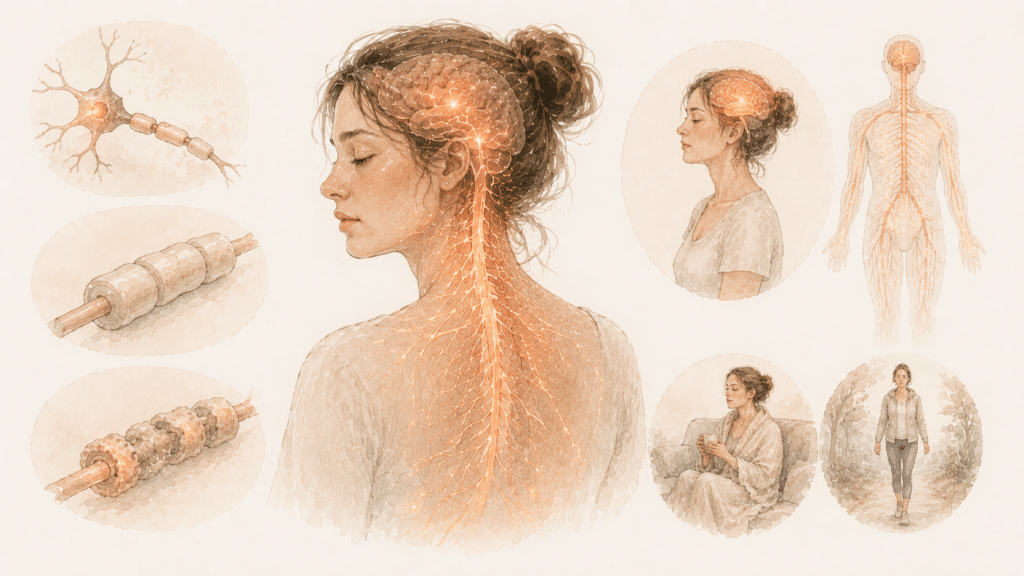
Multiple sclerosis is a chronic autoimmune condition where the body’s own immune system attacks the protective coating around nerves, called myelin. This damage disrupts the way nerves communicate with the brain and the rest of the body.
The Mayo Clinic explains that MS is unpredictable. It can affect movement, sensation, vision, balance, and cognition. Because it’s a nervous system condition, the symptoms tend to feel “weirder” than other illnesses, which is partly why people delay getting evaluated.
Why Early Sensations Often Get Ignored
One of the biggest reasons MS gets diagnosed late is that the early symptoms are easy to dismiss. Tingling, numbness, fatigue, or odd sensations look so much like ordinary stress symptoms that even doctors sometimes miss them initially.
I’ve personally heard people describe their first MS sensation as “a foot that felt fizzy” or “an arm that wouldn’t behave for a few hours.” These small clues often turn into something much more meaningful once the bigger picture appears.
Common Early Sensation Symptoms in MS
Let me walk you through the most common early signs of MS related to sensations. These aren’t meant to scare anyone. They’re meant to help you recognise patterns.
Tingling and Numbness
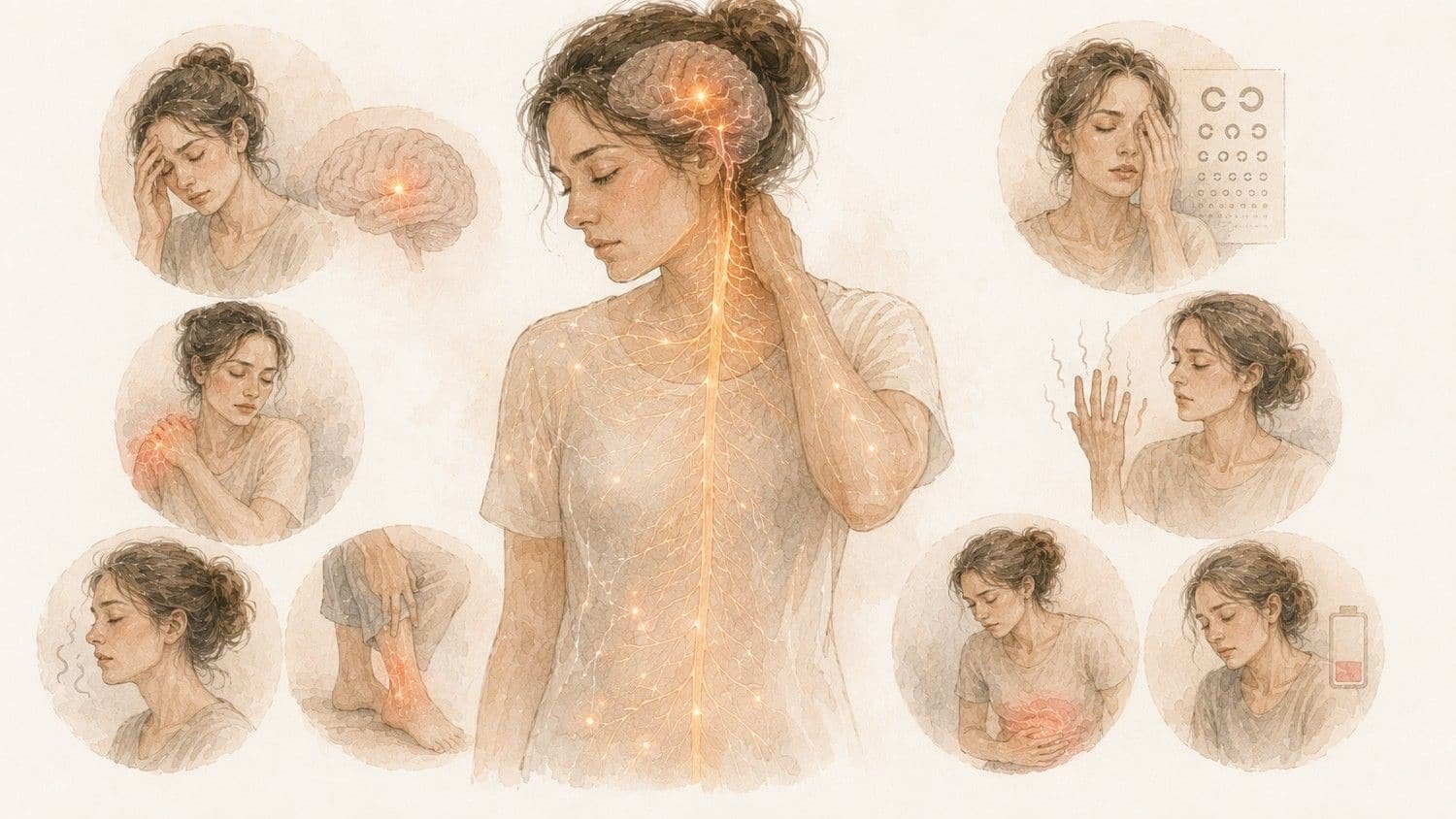
Tingling and numbness are some of the most common early symptoms of MS. They often appear in the arms, legs, hands, feet, or face. The sensations can come and go, sometimes lasting days or weeks.
According to the National MS Society, this is one of the first signs that brings people in for diagnosis. The tingling usually doesn’t have an obvious trigger and doesn’t follow the typical “I slept on it” pattern.
Burning Sensations
Some people describe an internal burning, often in the legs or back. It’s not caused by skin issues but by nerve misfires. The sensation can last a few hours or stick around for days.
I’ve talked to people who initially blamed their burning sensations on detergents or new clothes before realising the cause was neurological.
Electric Shock Sensations (Lhermitte’s Sign)
This is one of the most distinct sensations associated with MS. Lhermitte’s sign is a brief, electric-shock-like sensation that travels down the spine when the neck bends forward. It can extend into the arms and legs.
The Mayo Clinic recognises this as a classic neurological sign. While it can appear in other conditions, it strongly raises suspicion of MS, especially when paired with other symptoms.
Muscle Tightness and Banding (MS Hug)
The “MS hug” is a tight, banding sensation that wraps around the torso or chest. It can feel like a strong squeeze or constant pressure.
Although it sounds dramatic, it’s a documented MS symptom caused by spasms in the small muscles between the ribs. People often describe it as “feeling like a tight belt that won’t loosen.”
Hypersensitive or Painful Skin
In MS, even gentle touch can feel painful. This is called allodynia. Clothing, water, or a light breeze can trigger discomfort.
This symptom often confuses people because the skin looks completely normal. It’s a nerve-driven sensation.
Vibrating or Buzzing Feelings
Many people with MS describe vibrating, buzzing, or “pulsing” sensations, often in the legs or back. These can feel strange but are well-documented in neurological literature.
Cold or Hot Patches on the Body
MS can cause unusual cold spots or warm patches, sometimes on one limb. These sensations don’t match the surrounding temperature, which is one of the key giveaways.
Itching Without a Rash
This is one of the lesser-known MS sensations. It’s an internal, nerve-driven itch that can’t be soothed with creams. It often comes and goes without explanation.
Weakness or Heaviness
A leg or arm that suddenly feels heavy or weak is another early sign. The weakness is sometimes mild but can affect walking or balance.
Facial Tingling or Numbness
Facial sensations are an under-recognised early sign of MS. These can include tingling, burning, or numbness on one side of the face. The trigeminal nerve is often involved in these episodes.

Lhermitte’s Sign Explained in More Detail
Since Lhermitte’s sign is one of the most distinctive MS sensations, it deserves its own deeper section.
It’s triggered when you bend your neck forward, sometimes even slightly. The sensation usually feels like a brief electric jolt or buzz running down the spine. It can radiate into the arms, legs, or both sides of the body.
I’ve met people who first noticed Lhermitte’s sign while looking down at their phone or doing yoga. The Cleveland Clinic clearly recognises this sign as a possible early indicator of MS or spinal cord involvement.
What the MS Hug Really Feels Like
The MS hug is often misinterpreted. People think it’s heart-related, panic-related, or muscular. While these can also cause similar feelings, the MS hug has unique characteristics.
It usually feels like a tight squeeze around the chest, ribs, or abdomen. It can come and go, last hours, or even days. Some people describe it as feeling like a corset that won’t loosen.
This symptom often becomes one of the most disruptive sensory experiences in MS but responds well to medications, stretching, and stress reduction.
How MS Sensations Progress Over Time
MS progresses differently in everyone. Some people experience symptoms only occasionally. Others have stronger flare-ups.
Relapsing-remitting MS is the most common form, where symptoms appear, ease, and reappear. Other forms include secondary progressive MS and primary progressive MS, which involve more steady changes.
In early stages, sensations like tingling and numbness may come for days or weeks and then disappear for months. Over time, these episodes can become more frequent or intense.
When MS Sensations Become a Red Flag
While MS itself is not an emergency, certain symptoms always require quick medical evaluation.
Please see a doctor immediately if you experience:
- Sudden weakness or paralysis
- Loss of vision in one eye
- Severe balance issues
- Confusion or speech problems
- Sudden severe numbness on one side of the body
- Difficulty walking
- Persistent dizziness
These can indicate a major MS flare-up or another serious neurological condition. Early evaluation often leads to better long-term outcomes.
How Doctors Diagnose MS
When MS is suspected, the diagnostic process is thorough. Diagnosing MS isn’t a single test but a combination of clinical signs and imaging.
A neurologist typically begins with a detailed history and neurological exam. They check reflexes, balance, vision, and sensation. From there, the workup usually includes:
- MRI scans of the brain and spinal cord
- Blood tests to rule out other conditions
- Evoked potential tests, which measure how fast nerves respond to stimuli
- Lumbar puncture (spinal tap) to check for inflammation markers
The McDonald criteria help doctors confirm MS based on the patterns of attacks and MRI findings. Diagnosis can take time, especially in early stages where symptoms come and go.
Treatment Options That Truly Help
Treating MS focuses on three things. Reducing flare-ups, slowing progression, and managing symptoms. Here’s what generally works in real-world cases.
Disease-Modifying Therapies (DMTs)
These are medications designed to slow MS progression and reduce relapses. Common examples include interferon beta, glatiramer acetate, ocrelizumab, and fingolimod. The National MS Society confirms that DMTs play a major role in long-term outcomes.
Symptom-Specific Medications
Doctors may prescribe gabapentin, pregabalin, or duloxetine for nerve-related sensations. Muscle relaxants help with spasticity. Antidepressants and anxiolytics can support emotional and physical balance.
Physical Therapy
Physical therapy helps with movement, balance, and reducing nerve irritation. Targeted exercises and posture training improve overall functioning.
Occupational Therapy
For people with daily activity challenges, occupational therapy improves quality of life through adaptive techniques and assistive tools.
Lifestyle Changes
Stress management, balanced meals, regular exercise, and proper sleep significantly reduce symptom intensity. Cooling techniques help during heat-related flare-ups, since heat sensitivity is common in MS.
I’ve personally seen people improve drastically when they prioritise hydration, sleep, and stress reduction. These small things genuinely help.
Cognitive Therapy
Some people experience cognitive symptoms in MS, like brain fog or slowed thinking. Cognitive rehabilitation and mental exercises help maintain function.

Living Well With MS
A diagnosis of MS does not mean a poor quality of life. Modern treatments have transformed long-term outcomes. Many people with MS live full, active lives with the right support.
Small daily habits matter a lot. Avoiding heat, staying hydrated, eating anti-inflammatory foods, and getting enough rest reduce flare-ups. Building a strong support system, both medical and personal, makes the journey easier.
I’ve spoken with people living with MS who run businesses, travel the world, raise families, and manage demanding careers. Awareness and early action make all the difference.
Frequently Asked Questions
Tingling, numbness, fatigue, vision changes, and balance issues are common early signs. Sensations are often the first noticeable symptom.
Yes. Especially in relapsing-remitting MS, sensations may appear, fade, and return at unpredictable times.
They can be uncomfortable or painful, especially burning sensations or the MS hug. Many people experience mild but persistent tingling.
No. Most tingling is unrelated to MS. Worry only when sensations are persistent, recurring, or paired with vision or balance changes.
There’s currently no cure, but treatments significantly slow progression and improve daily life. Research is advancing every year.
Final Thoughts
Multiple sclerosis often begins with subtle sensations that are easy to dismiss. Tingling, numbness, burning, or electric shock-like feelings can quietly signal that something deeper deserves attention. Recognising these signs early gives people the best chance at managing the condition well.
If your body keeps producing strange sensations that don’t quite fit a normal pattern, don’t ignore them and don’t panic either. Track the symptoms, note the timing, and talk to a qualified doctor or neurologist. The nervous system is remarkable, but it’s also honest. The kindest thing you can do is take the time to listen carefully when it speaks up.