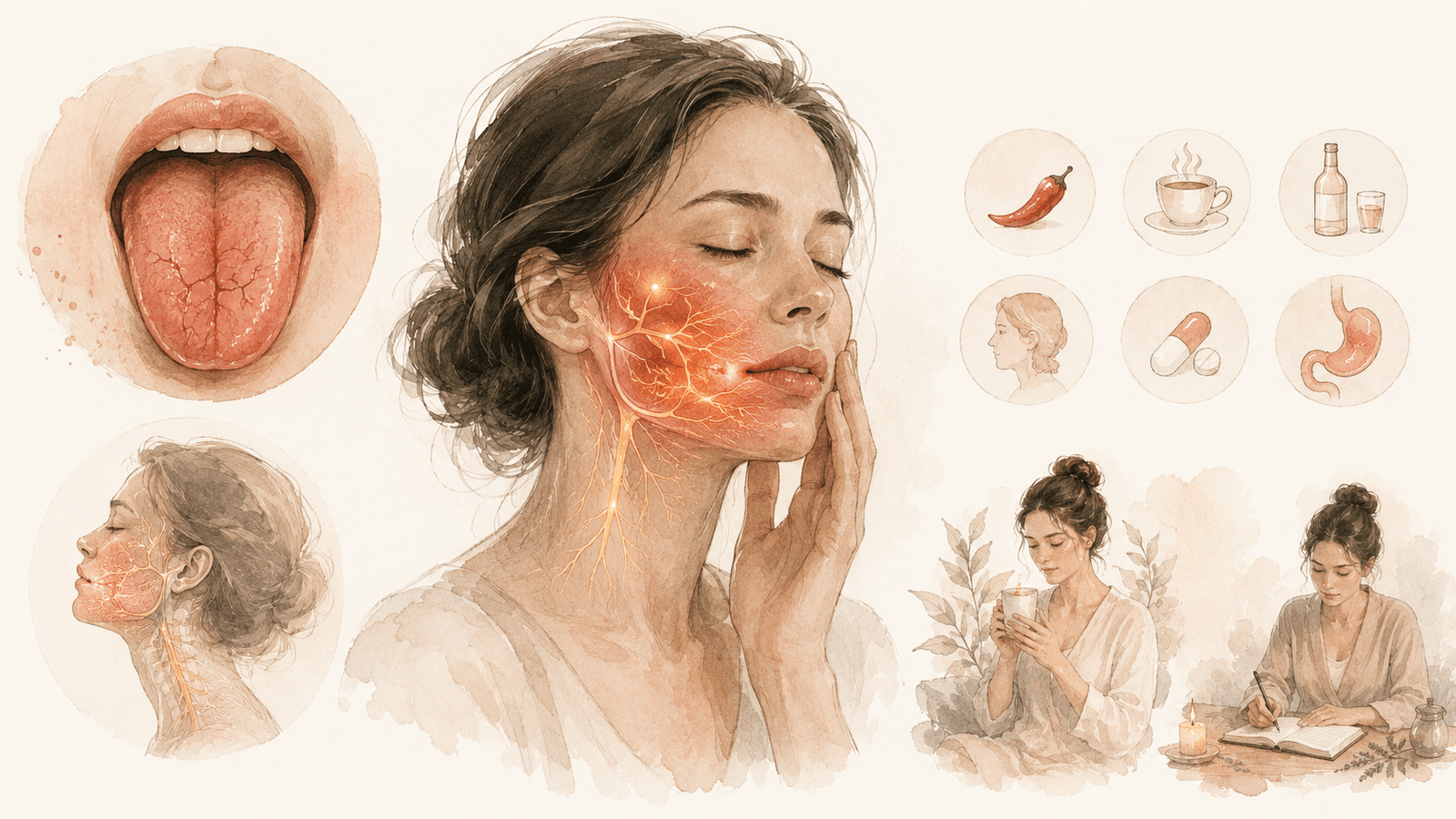

A few years ago, a close family friend confided in me about a strange sensation she’d been dealing with for months. Her mouth felt like she’d just sipped scalding coffee, except there was no coffee. No injury. No visible cause. Just a constant burning that doctors initially dismissed as stress.
It turned out she had burning mouth syndrome, a condition I had honestly never heard of until that moment. Since then, I’ve learned how common, misunderstood, and frustrating this condition really is. If you’re experiencing something similar, you’re not imagining it, and you’re definitely not alone.
What Is Burning Mouth Syndrome?
Burning mouth syndrome, often shortened to BMS, is a chronic condition that causes a burning, scalding, or tingling sensation in the mouth. It can affect the tongue, lips, palate, or the entire oral cavity.
What makes it so confusing is that the mouth typically looks completely normal. No sores, no redness, no obvious irritation. Yet the discomfort can be intense enough to interfere with eating, sleeping, and daily life.
According to the National Institute of Dental and Craniofacial Research (NIDCR), BMS most commonly affects women, especially those who are postmenopausal. But it can affect anyone, and the symptoms vary significantly from person to person.
Primary vs Secondary BMS
This distinction matters more than most people realize, because it changes how the condition is treated.
Primary BMS has no identifiable underlying medical cause. The burning sensation is believed to result from problems with the nerves that control pain and taste in the mouth. Essentially, the nerves are misfiring, sending pain signals when there’s no actual injury.
Secondary BMS is caused by an underlying condition. Once that condition is identified and treated, the burning often improves or resolves entirely.
Distinguishing between the two requires a thorough medical workup, which I’ll get to shortly.
Common Causes of Burning Mouth Syndrome
When we talk about burning mouth syndrome causes and treatment, it helps to break down the potential triggers. Secondary BMS can stem from a surprisingly wide range of issues.
Nutritional deficiencies are among the most common culprits. Low levels of iron, zinc, folate, vitamin B1, B2, B6, or B12 can all trigger oral burning. A simple blood panel can catch most of these.
Hormonal changes, particularly during menopause, are strongly linked to BMS. The drop in estrogen seems to affect the sensitivity of nerves in the mouth.
Dry mouth (xerostomia) is another major contributor. It can result from medications like antidepressants, antihistamines, and blood pressure drugs, or from conditions like Sjögren’s syndrome.
Oral conditions such as oral thrush (a yeast infection), geographic tongue, or allergic reactions to dental materials can mimic or cause BMS.
Acid reflux (GERD) sometimes sends stomach acid up far enough to irritate the mouth, especially at night.
Diabetes, particularly when poorly controlled, can cause neuropathy that affects the mouth just like it affects the feet.
Psychological factors including chronic anxiety, depression, and stress don’t directly cause BMS, but they can amplify the sensation and make it harder to manage.

Triggers That Make It Worse
Even when the root cause isn’t clear, certain triggers consistently worsen symptoms. People with BMS often notice flare-ups after:
Spicy foods, acidic foods like citrus and tomatoes, alcohol-based mouthwashes, cinnamon and mint products (yes, even toothpaste), carbonated drinks, and high-stress days.
I’ve spoken with people who didn’t connect their morning mouth burn to their evening glass of wine until they kept a symptom journal. Tracking what you eat, drink, and use can be genuinely revealing.
Symptoms Beyond the Burn
While burning is the headline symptom, BMS often comes with other strange sensations.
Many people report a metallic or bitter taste in their mouth that doesn’t go away with brushing. Others describe a dry feeling even though their saliva production is normal. Some experience tingling or numbness alongside the burning.
Interestingly, the discomfort often follows a pattern. For many people, it starts mild in the morning and intensifies throughout the day, peaking in the evening. Others wake up with it already in full force.
Eating or drinking sometimes provides temporary relief, which is one of the quirks that distinguishes BMS from other oral pain conditions.
How BMS Is Diagnosed
Diagnosing burning mouth syndrome is essentially a process of elimination. There’s no single test that confirms it, so doctors work to rule out everything else.
A typical workup includes a thorough oral exam to check for visible issues, blood tests to identify nutritional deficiencies or thyroid problems, oral swabs to rule out fungal infections, allergy testing if dental materials are suspected, and a review of all medications you’re taking.
In some cases, your doctor might recommend imaging or a biopsy if something unusual shows up.
The Mayo Clinic emphasizes that getting a proper diagnosis often requires patience and sometimes multiple specialists, including dentists, oral medicine specialists, ENTs, and neurologists. It’s not glamorous, but it’s necessary.

Treatment Options That Actually Help
Here’s where things get more hopeful. While BMS can be frustrating, several treatments have real evidence behind them.
For secondary BMS, treating the underlying cause is the priority. Correcting a B12 deficiency, managing diabetes, switching medications that cause dry mouth, or treating oral thrush can dramatically reduce symptoms.
For primary BMS, treatment focuses on managing the nerve dysfunction. Options include:
Clonazepam, a medication originally used for anxiety and seizures, has shown strong results when dissolved in the mouth rather than swallowed. It seems to calm the misfiring nerves locally.
Capsaicin rinses in very diluted concentrations can desensitize pain receptors over time. It sounds counterintuitive to treat burning with something spicy, but it works for some people.
Alpha-lipoic acid, an antioxidant supplement, has shown promise in several studies for reducing BMS symptoms.
Tricyclic antidepressants at low doses can help when the pain seems neuropathic in nature.
Cognitive behavioral therapy (CBT) isn’t a cure, but it helps people manage the psychological toll of chronic pain. The mind-body connection in BMS is real, and CBT often makes a meaningful difference.
I want to be honest here: there’s no universal cure for primary BMS. Treatment is often about finding the right combination that gives you significant relief, not necessarily complete resolution.
Diet Tips for Managing BMS
Food can be both a trigger and a comfort with BMS. A few practical adjustments tend to help most people.
Stick to cool or room-temperature foods when symptoms flare. Avoid acidic items like citrus, tomatoes, and vinegar-based dressings. Skip carbonated drinks, which seem harmless but often worsen symptoms. Choose mild, non-minty toothpaste, since brands free of sodium lauryl sulfate are often gentler.
Stay hydrated throughout the day. Sipping water frequently helps with dryness and can provide brief relief from burning.
Sugar-free gum or lozenges can stimulate saliva, which sometimes calms the mouth. Just avoid mint flavors, which can backfire.
One overlooked tip: yogurt and other cool dairy products often soothe a burning mouth. It’s not a treatment, but it’s a gentle comfort during flare-ups.
Coping with the Daily Reality
Living with BMS isn’t just a physical challenge. It’s mentally draining too. The invisible nature of the condition means people often feel dismissed by friends, family, and even some doctors.
Joining a support group, online or in person, can help more than you’d expect. Knowing others understand what you’re going through reduces the isolation.
Stress management matters too. Whether it’s yoga, meditation, journaling, or just regular walks, anything that lowers your overall stress level tends to reduce flare-up intensity.
And please, give yourself permission to take it seriously. Chronic pain is exhausting, and dismissing your own discomfort to seem “tough” only adds to the burden.

FAQ
Not necessarily. Secondary BMS often resolves once the underlying cause is treated. Primary BMS can persist for years, but symptoms often fluctuate and can improve significantly with the right treatment plan.
Stress is rarely the sole cause, but it can intensify symptoms and may contribute to nerve sensitivity over time. Managing stress is part of effective treatment.
Sometimes. A small percentage of people experience spontaneous remission, but most need active management to find lasting relief.
Rinsing with cool water, sucking on ice chips, and avoiding known triggers can provide temporary relief. They aren’t cures, but they help during flare-ups.
A dentist or oral medicine specialist is often the best starting point since they can rule out local oral causes. From there, they can refer you to other specialists if needed.
Final Thoughts
Burning mouth syndrome is one of those conditions that can quietly take over your daily life while remaining invisible to everyone else. The lack of obvious symptoms doesn’t make it any less real.
If you’re dealing with it, my honest suggestion is to be persistent. Push for a thorough workup, track your triggers carefully, and don’t settle for a doctor who shrugs and tells you it’s all in your head. The right diagnosis and treatment combination exists, and it’s worth the effort to find it.
Your mouth shouldn’t feel like it’s on fire. And with the right approach, it doesn’t have to stay that way.