
I still remember the morning a close friend texted me saying, “My leg feels like it’s on fire from my hip to my foot.” He thought he’d slept in a weird position. Three days later, the pain was still there, his foot kept going numb, and walking up stairs felt like a punishment. That was his introduction to sciatica, and honestly, it’s how most people discover it. Painfully and unexpectedly.
If you’ve been dealing with sciatica-tingling in your leg and foot, you’re not imagining it, and you’re definitely not alone. Sciatica affects millions of adults globally, and understanding what’s happening inside your body makes managing it far less frustrating. Let me walk you through everything I’ve learned about sciatica sensations, where they come from, and what genuinely helps.
What Sciatica Actually Is
Sciatica isn’t a condition on its own. It’s a symptom of something else compressing or irritating the sciatic nerve, the longest nerve in the human body. This nerve starts in your lower back, runs through your hips and buttocks, and travels down each leg.
When something pinches or pressures this nerve, you feel the effects along its entire path. According to the Cleveland Clinic and Mayo Clinic, the most common cause of sciatica is a herniated disc in the lumbar spine, but it can also stem from bone spurs, spinal stenosis, or even tight piriformis muscles.
The pain rarely stays in one place. That’s the strange and frustrating part of sciatica. It travels.
The Sensation Patterns You Should Know About
Sciatica doesn’t feel the same for everyone, and that’s where things get genuinely interesting. The sensations depend on which nerve root is being irritated and how severely.
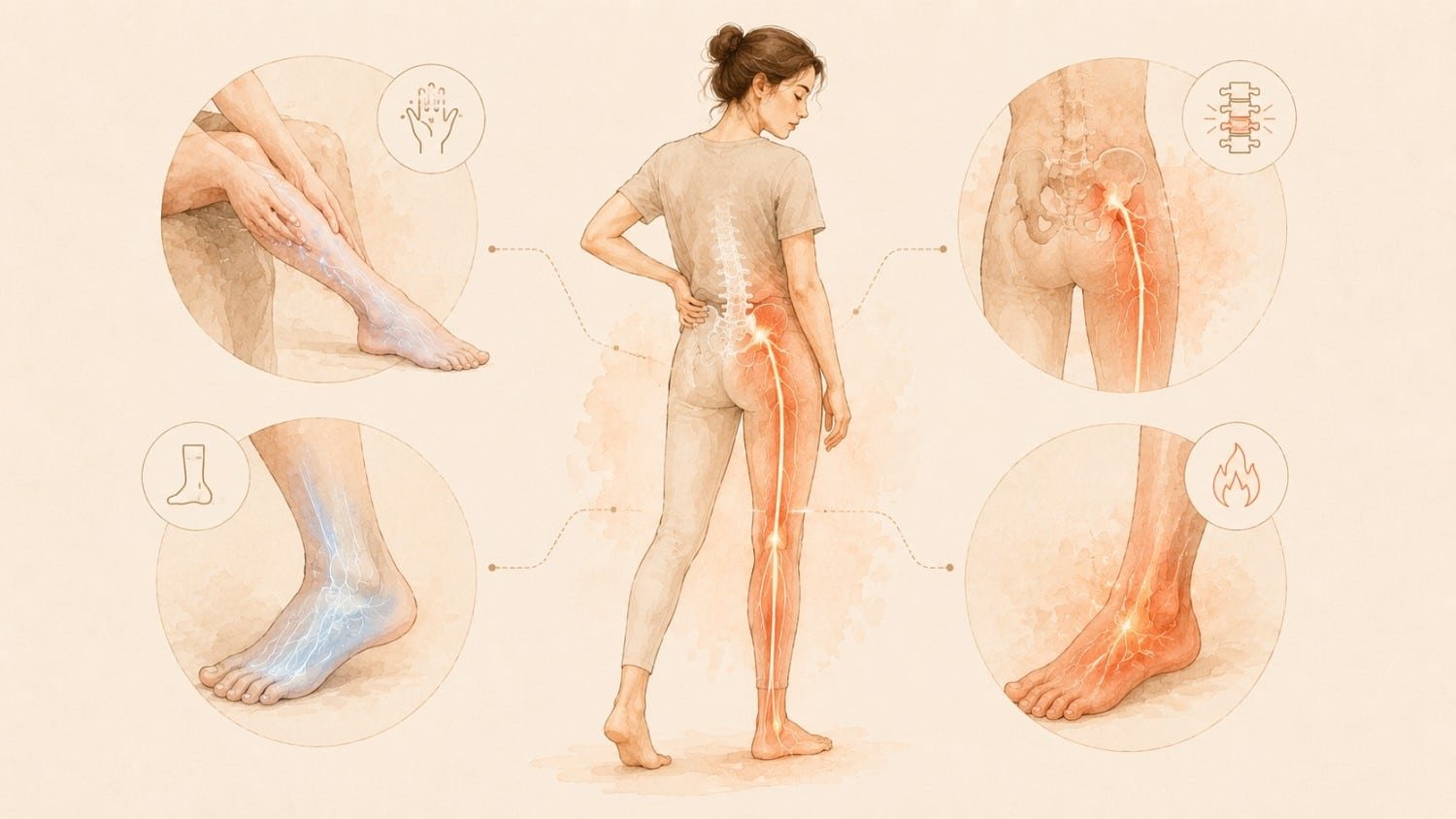
Tingling
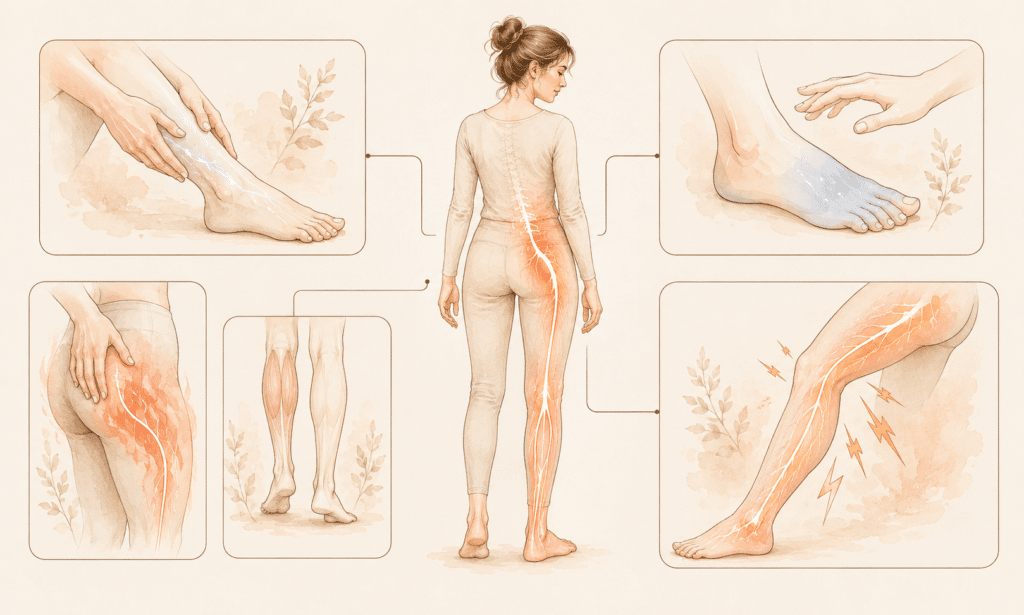
The most common early symptom is a tingling sensation, often described as pins and needles. It usually starts in the lower back or buttock and travels down the leg. Some people feel it on the outer thigh, others on the calf or the top of the foot.
This tingling is your nerve trying to send signals through an irritated or compressed pathway. It’s uncomfortable, but it’s also a useful clue for diagnosis.
Numbness
Numbness in sciatica typically shows up in specific regions of the leg or foot. You might find that a patch of your skin feels less responsive to touch, or you can’t feel temperature changes properly. In severe cases, you may lose sensation in part of your foot entirely.
This usually points to more significant nerve compression and should never be ignored.
Burning
Burning pain is one of the most distressing forms of sciatica. It feels like a hot wire running from the lower back down the leg. Many people describe it as worse at night, especially when lying flat. This sensation often signals nerve inflammation rather than simple compression.
Sharp, Shooting Pain
This is the classic sciatica feeling most people imagine. A sudden electric-shock-like pain that shoots from the back of the thigh down the leg, sometimes reaching the foot. It can be triggered by sneezing, coughing, bending, or even standing up too quickly.
Muscle Weakness
In some cases, sciatica also affects motor function. You might struggle to lift your foot (a condition called foot drop), have trouble climbing stairs, or feel a strange wobble while walking. This is a major red flag and needs prompt medical attention.
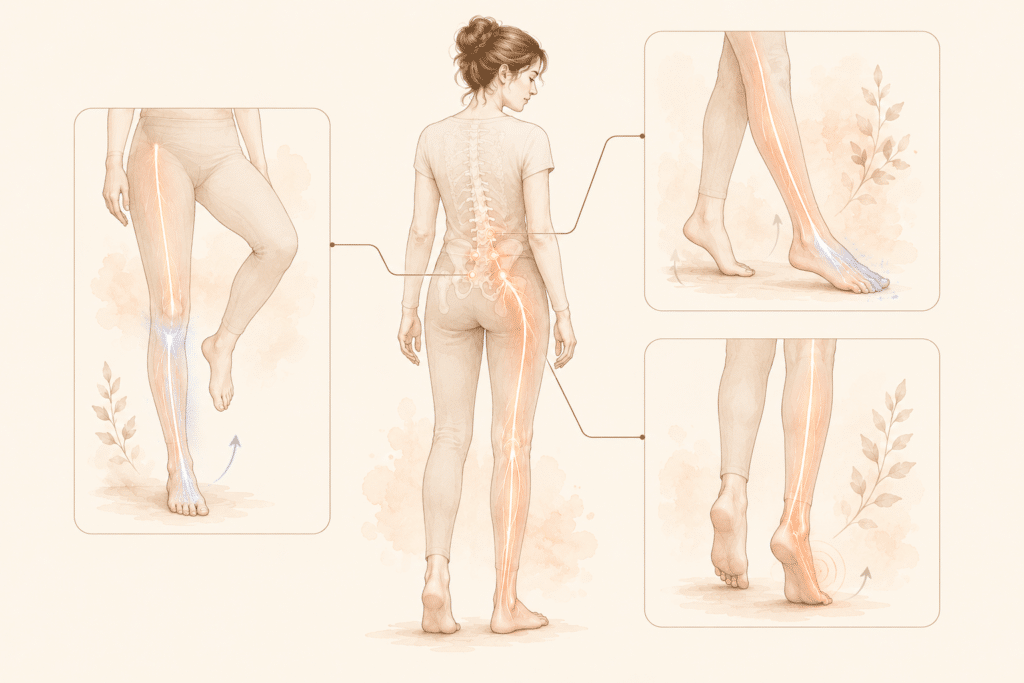
Understanding L4, L5, and S1 Nerve Mapping
This is the part that genuinely changes how people understand their symptoms. Sciatica isn’t random. It follows precise nerve maps, and identifying which nerve root is affected helps doctors diagnose the exact issue.
L4 Nerve Root
When the L4 nerve is irritated, the pain or tingling usually runs down the front of the thigh and into the inner part of the leg. Many people also notice weakness when trying to lift the foot upward or extend the knee.
L5 Nerve Root
L5 is the most commonly affected nerve in sciatica cases. Pain and tingling travel down the side of the leg and across the top of the foot, often reaching the big toe. You might also feel difficulty walking on your heels.
S1 Nerve Root
S1 irritation typically causes pain down the back of the leg into the heel and outer foot. Walking on your toes can feel weak, and the reflex in your ankle may be reduced.
Knowing which area you feel symptoms in helps your doctor pinpoint the source faster, which speeds up treatment significantly.
What Triggers Sciatica in Everyday Life
Most sciatica cases don’t show up overnight. They build slowly through daily habits we rarely think about.
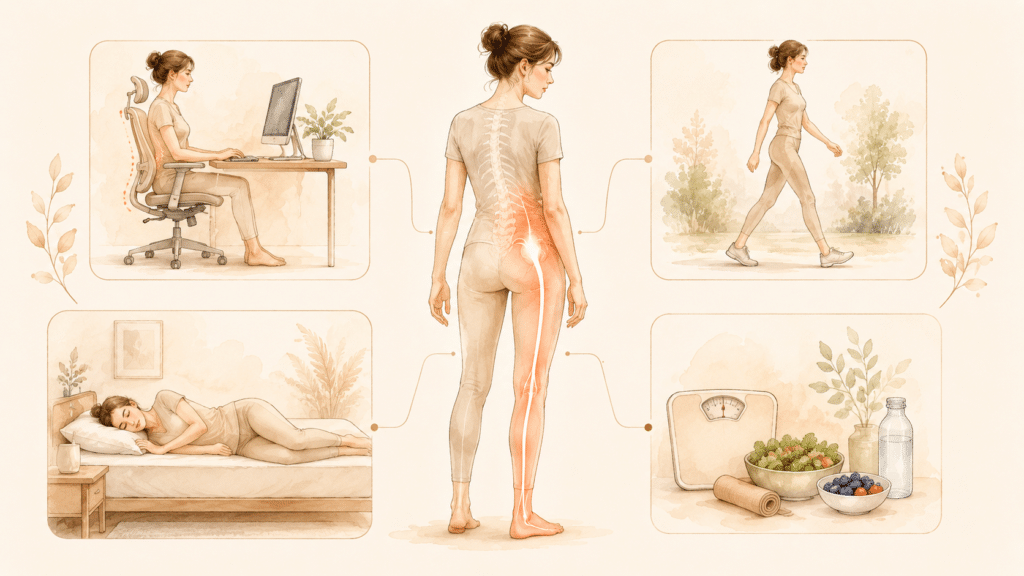
Long hours of sitting, especially at desks without lumbar support, are one of the biggest culprits. Combine that with poor posture, weak core muscles, and minimal movement, and you’ve got a recipe for disc problems.
Heavy lifting with the wrong form is another major trigger. I’ve personally felt a flare-up after lifting a suitcase incorrectly, and it took weeks to fully recover.
Pregnancy, obesity, diabetes, and even sleeping on a poor mattress can also contribute. Sciatica isn’t picky about who it affects.
Treatment Options That Actually Help
Now to the part everyone wants to know about. The good news is that most sciatica cases improve without surgery. The bad news is that recovery takes patience, and there’s no magic overnight fix.
Medications
Doctors typically start with anti-inflammatory medications like ibuprofen or naproxen to reduce nerve inflammation. In some cases, muscle relaxants or nerve pain medications like gabapentin or pregabalin (Lyrica) are prescribed for stronger symptoms.
Steroid injections are sometimes used for severe inflammation, especially when oral medications aren’t enough. These are usually administered by pain specialists.
Physical Therapy
This is, honestly, the most underrated part of sciatica recovery. A trained physiotherapist can identify the exact muscle imbalances and postural issues contributing to your symptoms. Targeted stretching, core strengthening, and posture correction often work better than medication for long-term relief.
I’ve watched friends go from barely walking to fully recovered through consistent physiotherapy alone.
Heat and Ice Therapy
Ice helps in the first 48 hours of a flare-up by reducing inflammation. After that, heat works better by relaxing tense muscles and improving blood flow to the area. Most people benefit from alternating both.
Lifestyle Adjustments
Small changes make a surprising difference. A proper ergonomic chair, regular movement breaks, sleeping on a medium-firm mattress, and avoiding prolonged sitting all support recovery.
Weight management also matters because excess weight increases pressure on the lumbar spine, worsening nerve compression.
Exercises That Genuinely Help
Movement is medicine when it comes to sciatica. The right exercises gently stretch and strengthen the muscles around the spine, reducing pressure on the sciatic nerve.
Knee-to-chest stretches, piriformis stretches, and gentle hamstring stretches are widely recommended by physiotherapists. Pelvic tilts and bird-dog exercises help strengthen the core, which protects your spine long-term.
Yoga poses like child’s pose, cat-cow, and pigeon pose are excellent for flexibility and tension relief. However, always avoid forward folds during acute pain phases because they can worsen disc-related sciatica.
A general rule I share with anyone dealing with sciatica is to move daily, but never push through sharp pain. Discomfort is fine. Pain is a warning sign.
When Surgery Becomes a Real Consideration
Most sciatica cases resolve within six to twelve weeks with conservative treatment. But surgery becomes necessary in specific situations.
If you experience progressive muscle weakness, loss of bladder or bowel control, or severe pain that doesn’t improve after months of treatment, surgery may be the right path. The most common procedures are microdiscectomy and laminectomy, both designed to relieve pressure on the affected nerve.
According to the American Academy of Orthopaedic Surgeons, most patients who undergo these surgeries for severe sciatica experience significant improvement in pain and mobility. Still, surgery should always be a last resort after exploring non-surgical options.
Frequently Asked Questions
Most cases improve within four to twelve weeks with proper care. Chronic sciatica can persist longer and may require ongoing management.
Yes, gentle walking improves circulation and reduces stiffness. But avoid long walks during acute flare-ups.
Often, yes. Many cases resolve naturally with rest, gentle movement, and lifestyle adjustments. Persistent cases need medical attention.
Lying flat increases pressure on certain spinal nerves and reduces blood flow to irritated tissues, intensifying the burning or tingling sensations.
Yes. Stress increases muscle tension and inflammation, both of which can amplify sciatic nerve symptoms.
Final Thoughts
Sciatica isn’t just back pain. It’s a layered condition that can shift, travel, and surprise you in ways most people aren’t prepared for. The tingling, numbness, and burning sensations are your body’s way of pointing to a problem deeper inside the spine or surrounding muscles.
The encouraging part is that sciatica is highly manageable. With the right combination of medical care, physiotherapy, lifestyle adjustments, and patience, most people return to normal life without surgery. I’ve seen it happen in my own circle multiple times.
If you’re currently navigating sciatica, please don’t ignore early symptoms. Talk to a doctor, start gentle movement, and respect what your body is telling you. Nerves heal slowly, but they do heal. And once you get to the other side of sciatica, you’ll appreciate every pain-free step a lot more than before.