

Have you ever woken up at 2 AM with one hand completely buzzing, the other dead asleep, and zero memory of how you ended up in that position? I have, more times than I’d like to admit. The first few times, I genuinely thought I’d somehow trapped my arm in another dimension. Turns out, there’s a much more grounded explanation.
Tingling in hands while sleeping is one of those sneaky symptoms that’s easy to dismiss but worth understanding properly. In this article, I’ll walk you through why it happens, what your sleep position has to do with it, and when it’s a sign of something deeper. Everything I’m sharing is based on credible medical sources like the Mayo Clinic, Cleveland Clinic, and the American Academy of Orthopaedic Surgeons.
What Tingling in Hands at Night Really Means
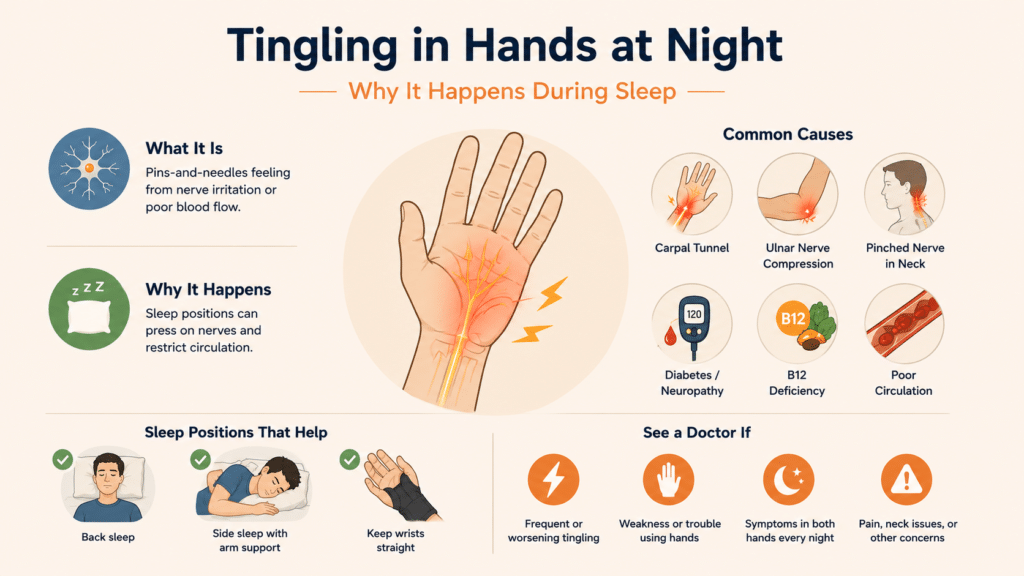
Tingling, medically called ‘paraesthesia’, is that pins-and-needles sensation that often comes with numbness or mild weakness. When it shows up at night, it usually means a nerve in your arm or hand is being compressed, irritated, or starved of proper blood flow.
Your body doesn’t shift around randomly during sleep. It does it to relieve pressure points. But if a nerve stays squashed too long, it sends out distress signals, and you wake up with that classic buzzing sensation.
Why Sleep Position Plays a Bigger Role Than You Think
Let’s start with the most common reason. Your sleeping posture.
When you sleep with bent wrists, tucked elbows, or your arm under a pillow or head, you’re basically pressing on nerves for hours. The median, ulnar, and radial nerves are the usual victims. They don’t enjoy being trapped between bone, muscle, and gravity all night.
I once realised I was sleeping with my wrist folded under my cheek every single night. No wonder my hand kept waking me up before my alarm did.
Common Causes of Tingling Hands at Night
Let me break down the most common reasons behind nighttime tingling, both from personal observation and credible medical sources.
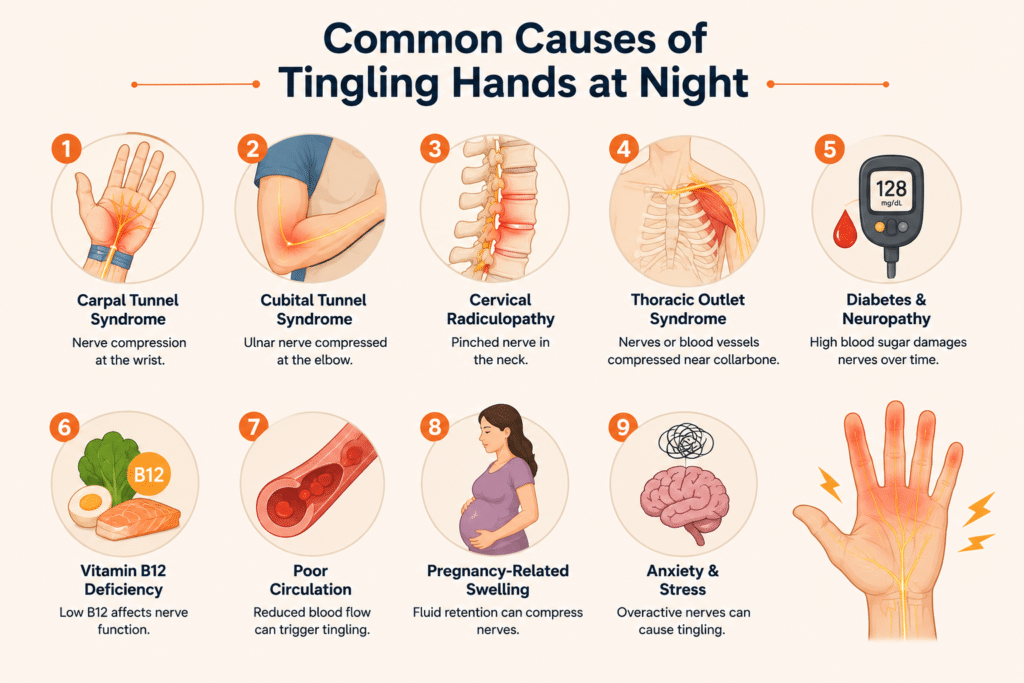
Carpal Tunnel Syndrome (CTS)
This is hands down the most common cause. Carpal tunnel syndrome happens when the median nerve gets compressed at the wrist. The American Academy of Orthopaedic Surgeons confirms that nighttime symptoms are a hallmark of CTS.
Most people sleep with bent wrists without realising it, which squeezes the nerve for hours. The tingling usually affects the thumb, index, middle, and half of the ring finger. Many people describe waking up and shaking their hand to “wake it up”. That’s textbook carpal tunnel.
Cubital Tunnel Syndrome (Ulnar Nerve Compression)
If your ring and little fingers tingle most at night, the ulnar nerve at the elbow is likely the culprit. Sleeping with bent elbows, especially under your pillow, presses the nerve against bone for hours.
I had a friend who only realised this after switching from a side-curl sleep position to a more relaxed one. His symptoms eased within weeks; no medication was needed.
Cervical Radiculopathy (Pinched Nerve in the Neck)
Sometimes the issue isn’t in the hand at all. It’s in the neck. A herniated disc or bone spur in the cervical spine can press on a nerve root, sending tingling all the way down the arm to the fingers.
If your tingling comes with neck stiffness, shoulder pain, or arm weakness, this is worth taking seriously. Sleeping on a poor pillow makes this much worse.
Thoracic Outlet Syndrome (TOS)
This one is less common but very real. TOS happens when nerves or blood vessels between the collarbone and first rib get compressed. Sleeping with your arms above your head or in awkward shoulder positions can trigger it.
Symptoms often include tingling, coldness, and weakness in the hand. People with poor posture or repetitive shoulder use are more prone to it.
Diabetes and Peripheral Neuropathy
Diabetes is a major cause of nighttime tingling that gets overlooked far too often. High blood sugar damages small nerves over time, and the symptoms tend to get worse at night, when distractions are minimal.
The CDC notes that nearly half of people with diabetes develop some form of neuropathy. If your tingling shows up in both hands and feet, especially at night, this is worth ruling out.
Vitamin B12 Deficiency
Low B12 affects nerve function and can cause tingling, weakness, or balance issues. It’s especially common in vegetarians, older adults, and people on long-term acid reflux medications like omeprazole.
A simple blood test confirms it, and treatment is usually as easy as supplementation. Honestly, this is one of the most underrated causes I’ve come across.
Poor Circulation
If your arm gets cold at night or feels heavy when you wake up, circulation might be a factor. Conditions like Raynaud’s, low blood pressure, or even dehydration can reduce blood flow during sleep, triggering tingling.
Tight pyjama sleeves, compression bands, or sleeping on a hand for too long can also restrict circulation. Tiny things, real consequences.
Pregnancy-Related Swelling
Many pregnant women, especially in the second and third trimesters, experience tingling in the hands at night. Fluid retention compresses the median nerve, causing temporary carpal tunnel-like symptoms.
It’s usually harmless and resolves after delivery, but it’s worth mentioning to a doctor for proper monitoring.
Anxiety and Stress
Anxiety can absolutely cause tingling in the hands at night. When the nervous system is stuck in overdrive, nerves misfire more easily. Add poor sleep, and the cycle continues.
I’ve personally noticed my own random tingling spike during high-stress weeks. Once I improved my sleep and stress patterns, the symptoms eased significantly.
Body-Side Patterns That Tell You More
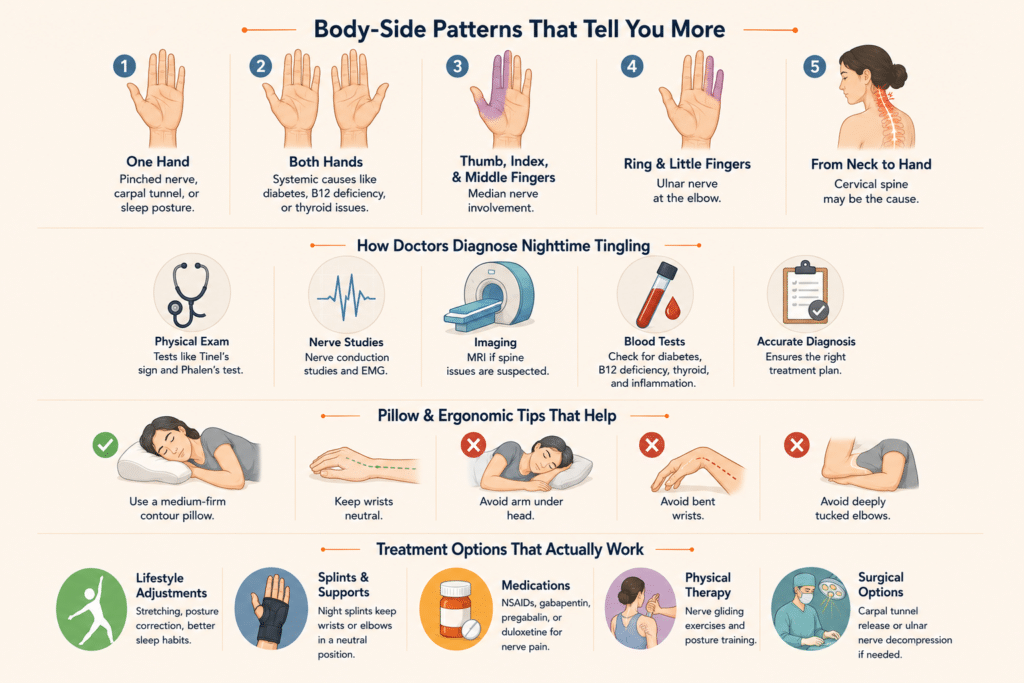
The pattern of tingling at night gives big clues about the cause.
If only one hand tingles consistently, think pinched nerve, carpal tunnel, or sleep posture.
If both hands tingle, suspect systemic causes like diabetes, B12 deficiency, or thyroid issues.
If your thumb, index, and middle fingers are affected, the median nerve is the most likely suspect.
If your ring and little fingers tingle, the ulnar nerve at the elbow is doing the heavy lifting.
If tingling moves from your neck to your hand, your cervical spine deserves attention.
This pattern-based thinking is exactly what neurologists use during the first few minutes of a clinical exam.
How Doctors Diagnose Nighttime Tingling
When I finally got mine checked, I was surprised at how thorough the process was. Diagnosing tingling isn’t a guessing game, especially when it’s interrupting sleep.
A standard workup includes a physical exam, with tests like Tinel’s sign and Phalen’s test for carpal tunnel. Doctors may also order nerve conduction studies and EMG to check nerve function. If the cause is suspected to be in the spine, an MRI may be needed.
Blood tests are commonly used to check for diabetes, thyroid issues, B12 deficiency, and inflammation markers. Without proper diagnosis, treatment becomes guesswork. You deserve more than that.
Pillow and Ergonomic Tips That Genuinely Help
This is where most people skip ahead, but it’s actually the most useful part. Tiny sleep adjustments fix more cases than people realise.
A neutral wrist position is everything. Wrist splints worn at night are one of the most evidence-backed treatments for carpal tunnel. Brands like Mueller, Futuro, and Vive offer affordable, comfortable options.
The pillow you use also matters more than you’d think. A pillow that’s too high or too low causes neck strain, which leads to nerve compression. A medium-firm contour pillow usually works best for side and back sleepers.
I personally switched from a fluffy pillow to a contour memory foam one, and my morning tingling reduced sharply. Not magic, just neutral spine alignment.
Avoid sleeping with your arm under your head, your wrists bent, or your elbow tucked deeply. These positions are basically nerve compression in slow motion.
Treatment Options That Actually Work
Treatment depends entirely on the cause, but here’s what generally helps.
Lifestyle Adjustments
For mild cases, fixing sleep posture, stretching before bed, and improving ergonomic habits during the day can reduce nighttime tingling significantly. I started doing simple wrist stretches before bed, and within weeks my hands stopped waking me up.
Splints and Supports
Night splints are highly effective for carpal tunnel and ulnar nerve issues. They keep your wrists or elbows neutral while you sleep, preventing the nerve compression that triggers tingling.
Medications
Doctors may prescribe NSAIDs, gabapentin, pregabalin, or duloxetine for nerve-related tingling. Steroid injections are sometimes used for severe carpal tunnel cases.
Physical Therapy
A skilled physiotherapist can teach nerve gliding exercises that genuinely reduce symptoms. They also help correct posture, which makes a bigger difference than people expect.
Surgical Options
If conservative treatments fail, procedures like carpal tunnel release or cubital tunnel decompression have very high success rates. Surgery is rarely the first step, but it works well when nothing else does.
Frequently Asked Questions
Sleep posture is the most common reason. Bent wrists, tucked elbows, or arm-under-pillow positions compress nerves for hours, leading to tingling.
Yes, if it happens regularly, lasts long after waking, or comes with weakness or pain. Persistent symptoms usually have a treatable cause.
It can contribute, especially through electrolyte imbalances, but it’s rarely the sole cause.
Yes, especially for carpal tunnel. Many people experience noticeable relief within a few weeks of consistent nightly use.
Final Thoughts
Tingling in hands at night may seem like a small annoyance, but it’s often your body pointing to something specific, like nerve compression, posture issues, or an underlying condition. The good news is that most cases improve with the right adjustments.
If your hands keep waking up before you do, don’t ignore it. Track the pattern, fix your sleep setup, and talk to a qualified doctor when needed. Your hands carry you through your day. They deserve a quiet, comfortable night, not a buzzing one.