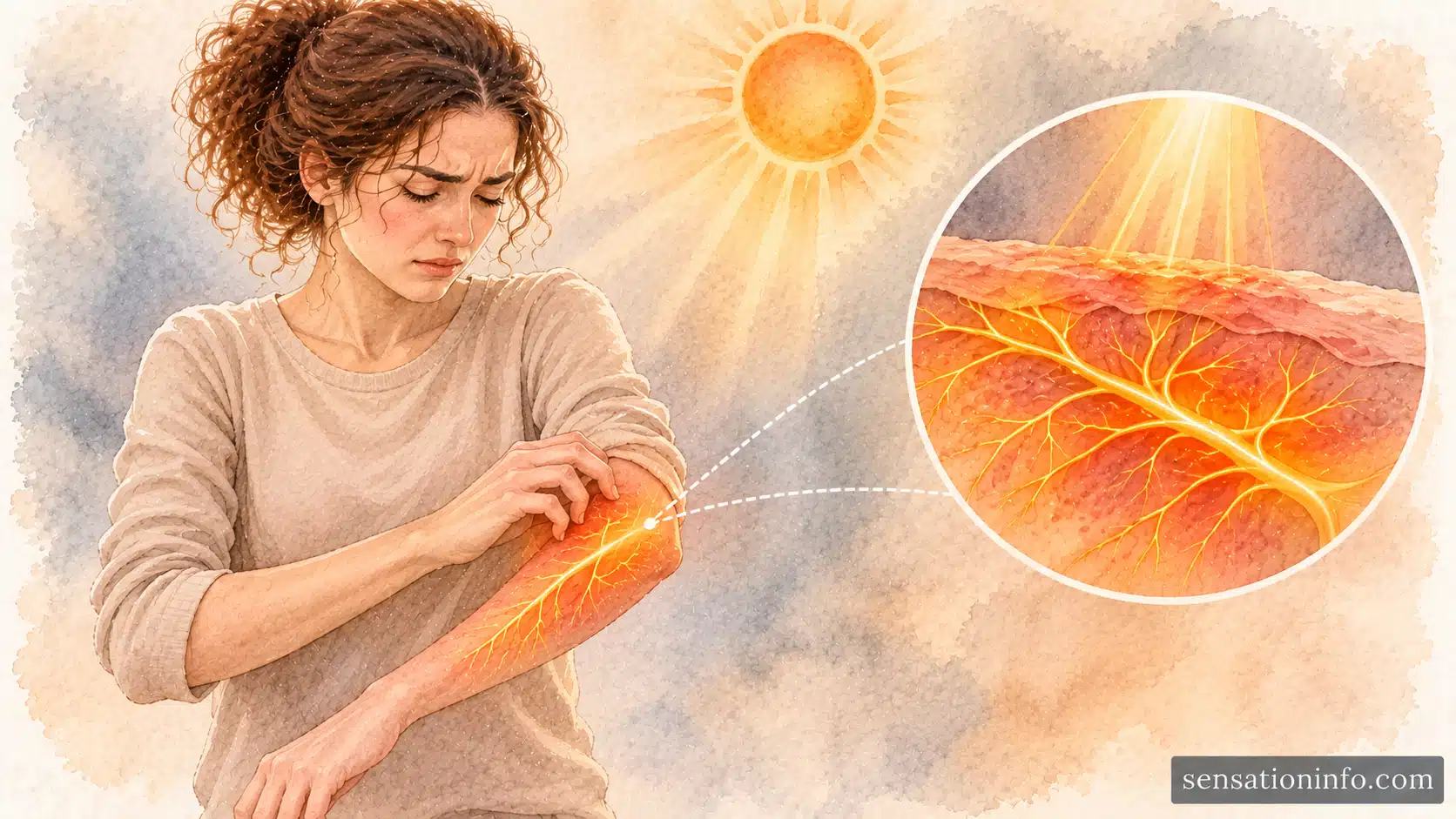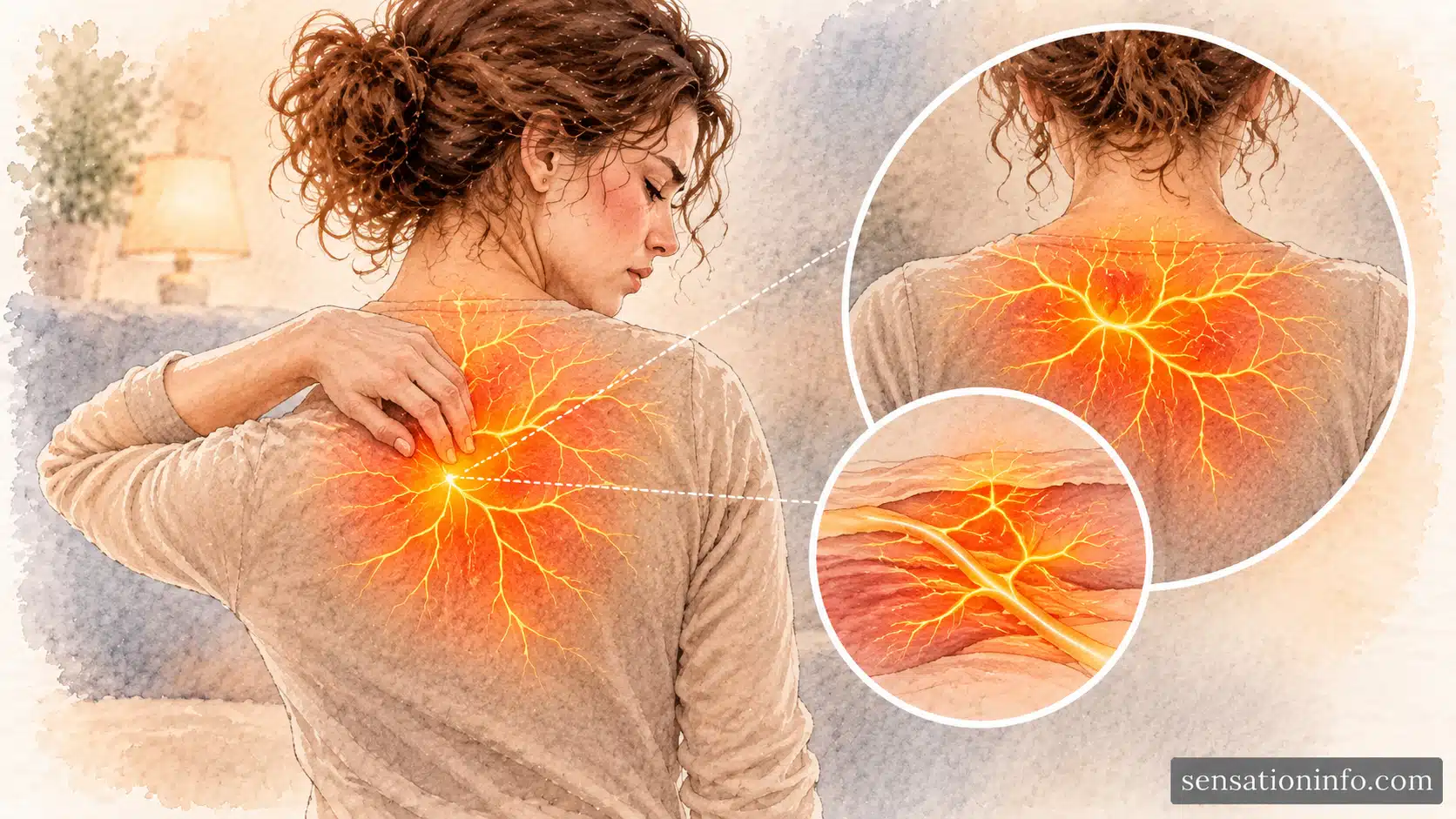

Notalgia paresthetica is a nerve condition that causes itching, tingling or burning in one small patch of skin between your spine and the inner edge of a shoulder blade. It is a form of neuropathic itch, which means the signal comes from an irritated nerve rather than from the skin itself. That is why creams and scratching rarely settle an itchy upper back like this.
The good news is that it is not dangerous and does not spread to other organs. It can last for months or years, but there are treatments that calm it.
Why Does One Spot on My Back Keep Itching and Tingling?
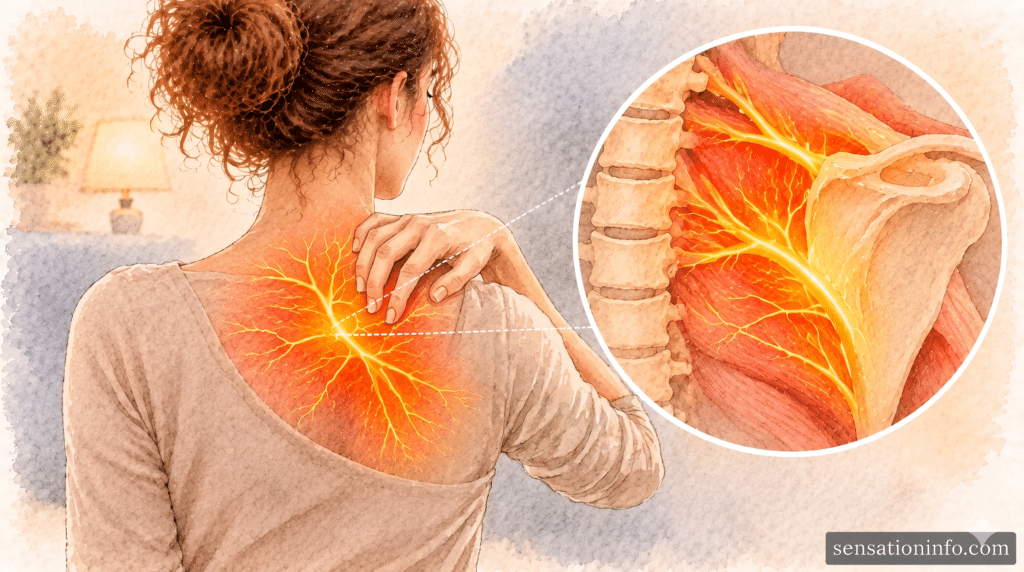
That spot itches because small nerve branches supplying it are irritated on their way to the skin. The skin looks normal at first, yet the nerve keeps sending false itch and tingle messages.
The nerves involved come off the spine in the upper and middle back, roughly at levels T2 to T6. On their way to the skin, they pass through the back muscles at a sharp angle, which makes them easy to pinch or stretch. Wear and tear in the spine can add pressure as well.
Patients often tell me they have rubbed the spot against door frames for years or bought a back scratcher just for it. Many feel embarrassed, or have been told it is “just dry skin.” It is not, and it has a name.
Common Symptoms of Notalgia Paresthetica
The main symptom is a nagging itch in a palm sized area, usually on one side of the upper back. However, many people describe more than itch.
These are the sensations I hear most often in clinic. Recognizing them helps you describe the problem clearly to your doctor:
- Itching that comes and goes in waves.
- Tingling, pins and needles or a crawling feeling in the same patch.
- Burning, stinging or a sore, tender feeling to touch.
- Numbness, or a strange sense of heat or cold in the area.
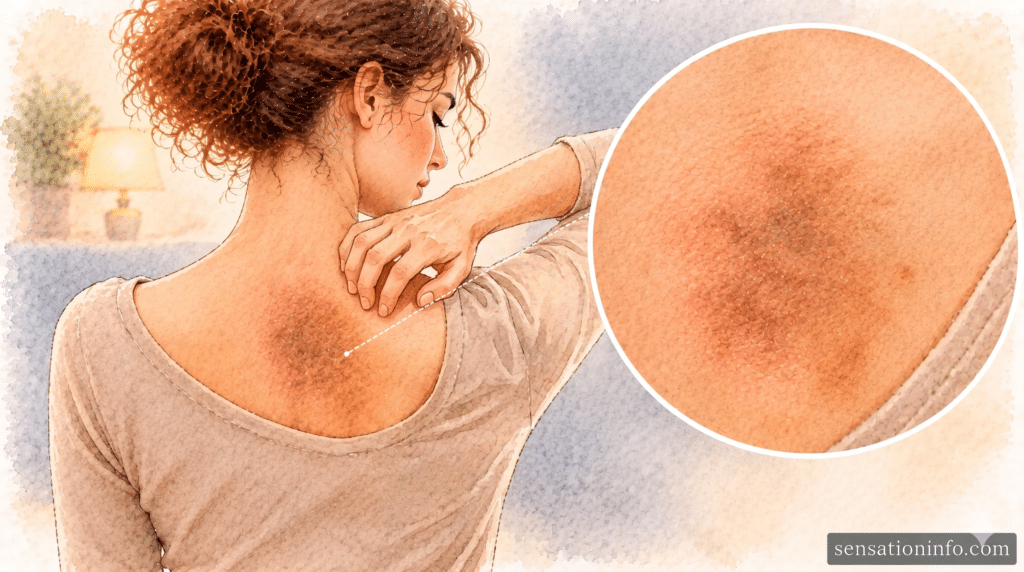
- A brownish or grayish patch of skin, called hyperpigmentation, from months of scratching and rubbing.
The patch usually sits on one side, but some people feel it on both. The itch can also be hard to reach, which is why many people never get proper relief from scratching.
Is It a Skin Problem or a Nerve Problem?
It is a nerve problem, not a primary skin problem. The condition does not start with a rash, and any skin change comes later from rubbing.
This difference explains why so many treatments fail. The table below compares nerve itch with ordinary skin itch, so you can see which pattern fits you better:
Feature | Nerve itch (notalgia type) | Skin itch (rash type) |
| How it starts | Itch or tingling on normal looking skin | Red, bumpy or scaly rash first |
| Where it is | One fixed patch, often by one shoulder blade | Spread over a wider area |
| Other feelings | Burning, numbness, tingling | Mainly itch |
| Response to moisturizer or steroid cream | Little or no change | Often improves |
| Skin changes | Brown patch from scratching over time | Rash, blisters or scaling |
Causes and Risk Factors
In most people, the exact cause is not clear. The leading explanation is irritation of the nerve branches, sometimes combined with an overactive itch control system in the nervous system.
Several conditions can contribute to that nerve irritation. Knowing them helps your doctor decide whether you need any tests:
- Degenerative disk disease and arthritis changes in the upper spine.
- A herniated disk or bulging disk in the upper or middle back.
- Tight or overworked upper back muscles that squeeze the nerve branches.
- Diabetes, which can damage small nerves.
- A past episode of shingles in that area.
It mainly affects adults, especially those over 50, and it is more common in women than men. Among people with long lasting itch, roughly 8 percent have this condition.
In young children, the same symptoms are rare and need a doctor’s review. In that age group, it can be linked to a rare inherited condition called multiple endocrine neoplasia type 2A, which affects hormone glands.
Other Conditions That Can Feel Similar
Several problems cause itching, tingling or burning in the upper back, and a few need different care. This table maps the patterns I sort through when someone points to their shoulder blade:
| Where it is | What it feels like | What comes with it | Likely cause | How urgent |
| One patch beside a shoulder blade | Itch, tingling, burning | Brown patch, no rash | Notalgia paresthetica | See a doctor within weeks |
| A stripe around one side of the chest or back | Pain, itch or tingling, then blisters | Rash appears days later, sometimes fever | Shingles | See a doctor within 1 to 2 days |
| Shoulder blade spreading into the arm | Tingling, burning, aching | Neck pain, arm numbness or weakness | Pinched nerve in the neck (cervical radiculopathy) | See a doctor soon |
| Wide area of the back | Itch with red, scaly or bumpy skin | Visible rash | Eczema, contact dermatitis or psoriasis | See a doctor if it lasts |
| Between the shoulder blades with chest discomfort | Pressure or aching | Shortness of breath, sweating, nausea | Heart attack | Call 911 |
If the feeling is more of a deep burn in the muscle than an itch on the skin, a burning sensation in the shoulder blade from muscle strain or posture is more likely. Likewise, tingling in the back that moves around or spreads down the body points to other nerve causes.
When Should I See a Doctor?
Most cases are not urgent, but long lasting itch deserves a proper diagnosis. This comparison shows which column your symptoms fall in:
| Usually less worrying | Book a doctor visit |
| A brief itch that settles after a shower or change of clothes | Itch or tingling in the same spot lasting more than 2 weeks |
| Itch that clears with a fragrance free moisturizer | A brown patch that keeps growing from scratching |
| Mild itch only with tight or wool clothing | Itch that wakes you at night or affects work |
A few signs need same day help. Act on these right away:
- Sudden pain or pressure between the shoulder blades with chest discomfort, shortness of breath, sweating or nausea: call 911, because these can be heart attack signs.
- A painful band of blisters on one side of the body: see a doctor within a day or two, because shingles treatment works best early.
- New arm or leg weakness, or trouble walking, with back symptoms: get same day care.
- Fever, spreading redness or pus where you have scratched: get same day care for possible infection.
What Should I Tell My Doctor?
The most useful thing you can bring is a clear map of where the itch sits and how it behaves. Even so, many patients arrive unsure how to describe it.
Before your visit, a nerve symptom checker can help you sort what the sensation feels like and what makes it worse. Then be ready to cover these points:
- Exactly where the itch sits, and whether it is on one side or both.
- How long it has been there, and whether it comes in waves.
- Other feelings in the patch, such as burning, numbness or tenderness.
- Neck or back pain, past shingles, diabetes or back injuries.
- Creams, medicines and home remedies you have already tried.
Good questions to ask include “Could this be a nerve itch rather than a skin problem?”, “Do I need any scans?” and “Would physical therapy help my back?”
What Will the Exam and Tests Involve?
Most people are diagnosed from their story and an exam alone. In my exam, I look at the skin, check for a brown patch, test light touch and pinprick in the area, and examine the neck and spine.
Blood tests and scans are rarely needed. However, if you have ongoing focused back pain or other nerve symptoms, an MRI of the spine can show disk or arthritis changes. A small skin biopsy is only used when the patch looks unusual and another skin condition needs to be ruled out.
Treatment Options That Help
There is no single cure, but most people get meaningful relief by combining treatments. The goal is to calm the irritated nerve, not just to soothe the skin.
What Can I Do at Home?
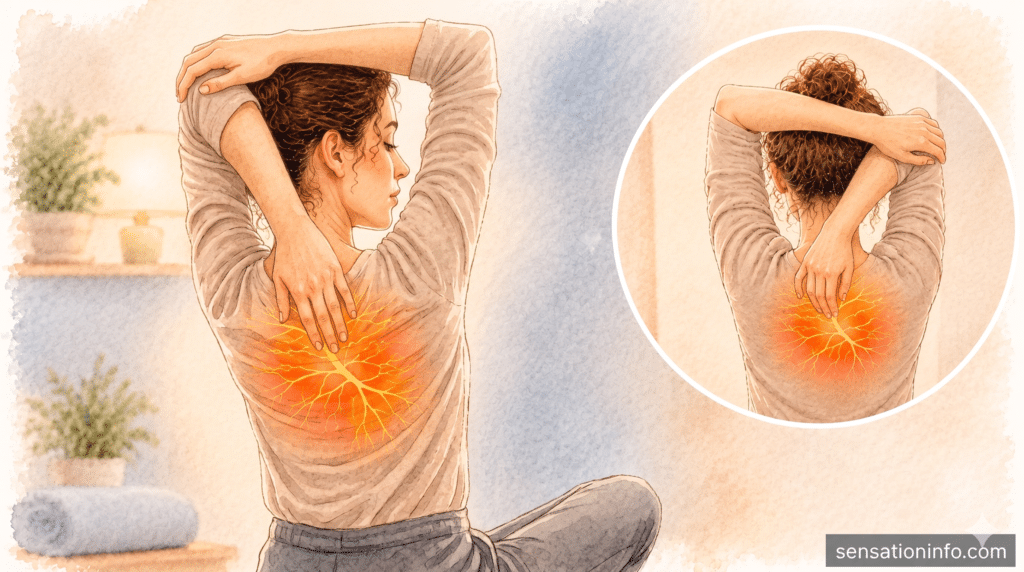
Home care is the base of treatment and helps every other step work better. Start with these changes:
- Do daily upper back strengthening and chest stretching, which can ease pressure on the nerve branches.
- Use a cold pack or cool cloth on the patch when the itch flares.
- Wear soft, loose clothing, and avoid wool or rough seams over the area.
- Keep nails short, and pat or press the skin instead of scratching.
- Watch your posture at desks and phones, since long hours hunched forward can aggravate the area.
What Medical Treatments Help?
Topical treatments are usually the first step. Capsaicin cream, made from chili peppers, is the most common choice and works by calming the nerve endings, although it burns at first and relief often fades after stopping. Numbing creams with lidocaine can also help, while steroid creams and antihistamine pills usually do little for nerve itch.
For stronger symptoms, medicines that calm nerve signals are often used. Gabapentin (Neurontin) is the most commonly used and often the most effective oral medicine, and oxcarbazepine (Trileptal) is another option.
An antihistamine at bedtime may help some people stop scratching in their sleep. Your doctor will choose the medicine and dose.
Other options include TENS, a small device that sends gentle electrical pulses through the skin, and physical therapy focused on the upper back. For stubborn cases, doctors may try botulinum toxin (Botox) injections, nerve blocks or ultraviolet light therapy.
How Long Does It Last, and How Do I Cope?
This condition often lasts months to years, and it tends to come and go. Many people have long quiet spells, and treatment can make flares much milder.
I tell patients to aim for control rather than a permanent cure. Tracking your flares, sleep and triggers for a few weeks often shows which changes help most.
Living with an itch you cannot reach is frustrating, and it can affect sleep and mood. That frustration is valid, and telling your doctor how much it affects you helps them treat it seriously.
Key Takeaways
This condition is common, often missed and very treatable. Keep these points in mind as you decide your next step:
- Notalgia paresthetica is a nerve itch that causes itching, tingling or burning in one patch beside a shoulder blade.
- It is caused by irritated nerve branches from the upper spine, not by a skin rash.
- Ordinary itch creams rarely help, while capsaicin, nerve calming medicines and back exercises often do.
- Itch in the same spot for more than 2 weeks deserves a doctor visit.
- Pain between the shoulder blades with chest pressure or shortness of breath is an emergency.
Frequently Asked Questions
Notalgia paresthetica often appears on the side of the back that is easier to reach with the dominant hand, which for most people is the left side. The pattern is thought to relate to how the upper back nerves pass through the muscles, although the condition can affect either side or both.
The brown or gray patch comes from repeated scratching and rubbing rather than from the nerve problem itself. When the itch is controlled and scratching stops, the patch can fade slowly over time.
In adults, notalgia paresthetica is a benign nerve condition and is not a sign of cancer. In young children, similar symptoms are rare and should be checked by a doctor because they can be linked to an inherited hormone gland condition.
Doctor’s Recommendation
A dermatologist is the best specialist for a stubborn itch on the upper back, and a neurologist or physical medicine doctor can help when back pain or nerve symptoms are prominent. Your primary care doctor is a good first stop to rule out skin conditions, diabetes and shingles. If nerve symptoms spread beyond your back, a list of neuropathy specialists can help you find nerve focused care.
References
- Cleveland Clinic. Notalgia Paresthetica. Cleveland Clinic. 2023.
- StatPearls Publishing. Notalgia Paresthetica. StatPearls. National Library of Medicine. 2024.
- Truchuelo MT, Vañó Galván S. Chronic itch on the upper back, with pain. Cleveland Clinic Journal of Medicine. 2013.
- Centers for Disease Control and Prevention. Shingles Symptoms and Complications. CDC. 2026.
- Centers for Disease Control and Prevention. About Heart Attack Symptoms, Risk, and Recovery. CDC. 2026.