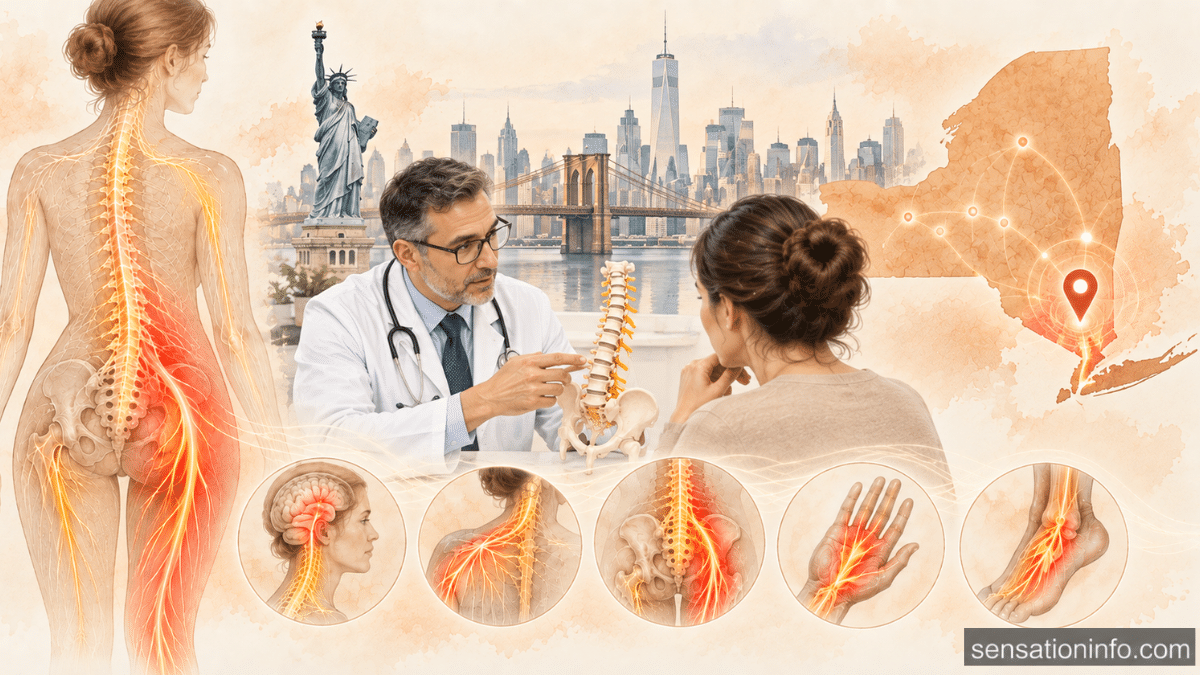

The best neuropathy specialists in New York practice at leading institutions including Weill Cornell, Columbia, Mount Sinai, HSS, and Montefiore. These 10 verified nerve doctors were selected based on board certifications in neuromuscular medicine, Castle Connolly recognition, published research, and expertise in diagnosing conditions that cause numbness in hands, burning pain, and peripheral nerve damage. Every profile link, address, and credential on this page has been individually confirmed. Specialists are listed for reference and are not ranked by preference.
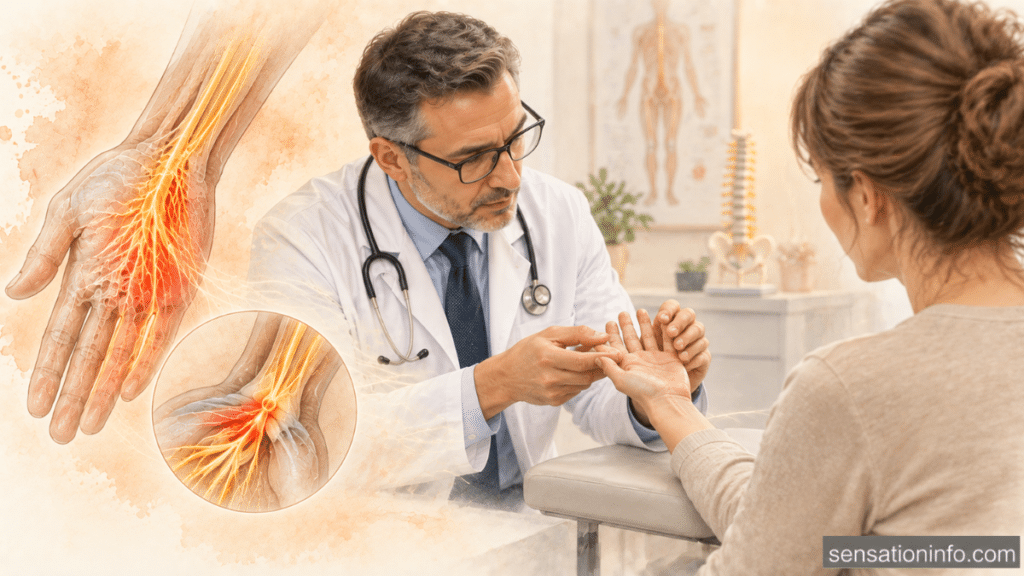
How This List Was Compiled
Finding the best neuropathy specialists in New York requires looking beyond general neurology directories. Every specialist on this list was verified through official hospital profile pages and cross-referenced with publicly available board certification records. Selection criteria included active practice at a major New York medical center, board certification in neurology or neuromuscular medicine, recognition by organizations such as Castle Connolly or the American Academy of Neurology, and a documented clinical or research focus on peripheral neuropathy and related nerve disorders.
Verified Nerve Specialists Accepting Patients in New York (2026)
1. Dr. Norman Latov, MD, PhD
Hospital/Clinic: NewYork-Presbyterian / Weill Cornell Medical Center
Specialty Focus: Peripheral neuropathy, Charcot-Marie-Tooth disease, inflammatory and immune-mediated neuropathies
Why Listed: Castle Connolly Top Doctor 2026. Director of the Peripheral Neuropathy Clinical and Research Center at Weill Cornell Medical College. Professor of Neurology and Neuroscience with over four decades of clinical and research experience in nerve disorders.
Address: 1305 York Avenue, 2nd Floor, New York, NY 10021
Contact: 646-962-3202
Profile: NewYork-Presbyterian Official Profile
What Sets Them Apart: Dr. Latov’s center is one of the few dedicated peripheral neuropathy clinics in the country, offering comprehensive evaluation from a single specialist rather than referrals across multiple departments.
2. Dr. Thomas H. Brannagan III, MD
Hospital/Clinic: NewYork-Presbyterian / Columbia University Irving Medical Center
Specialty Focus: Peripheral neuropathy, amyloidosis, inflammatory neuropathies, electrodiagnostic testing
Why Listed: Castle Connolly Top Doctor 2026. Director of Columbia’s Peripheral Neuropathy Center and Columbia Neuropathy Research Center. Triple board-certified in neurology, clinical neurophysiology, and neuromuscular medicine. Received the 2023 Clinician of the Year Award from Columbia Neurology.
Address: 710 West 168th Street, New York, NY 10032
Contact: 646-426-3876
Profile: NewYork-Presbyterian Official Profile
What Sets Them Apart: Dr. Brannagan directs both the clinical neuropathy center and the neuropathy research center at Columbia, giving patients access to the latest investigational treatments and clinical trials for rare and treatment-resistant neuropathies.
3. Dr. David M. Simpson, MD, FAAN
Hospital/Clinic: Mount Sinai Health System
Specialty Focus: Peripheral neuropathy, neuropathic pain, neuromuscular diseases, HIV-associated neuropathy, spasticity
Why Listed: Castle Connolly Top Doctor. Director of the Neuromuscular Diseases Division and Clinical Neurophysiology Laboratories at Mount Sinai. Fellow of the Royal College of Physicians. Recipient of the Mitchell B. Max Award in Neuropathic Pain (2018). Author of over 300 peer-reviewed publications.
Address: 1468 Madison Avenue, Annenberg 2nd Floor, Box 1052, New York, NY 10029
Contact: 212-241-8748
Profile: Mount Sinai Official Profile
What Sets Them Apart: Dr. Simpson is one of the nation’s leading researchers in neuropathic pain treatment, with particular expertise in pain syndromes that other neurologists may not routinely manage.
4. Dr. Lan Zhou, MD
Hospital/Clinic: Hospital for Special Surgery (HSS)
Specialty Focus: Small fiber neuropathy, inflammatory myopathy, neuromuscular pathology, nerve and skin biopsies
Why Listed: Castle Connolly Top Doctor 2024. Neurologist-in-Chief and Chair of the Department of Neurology at HSS. Quadruple board-certified in neurology, neuromuscular medicine, clinical neuromuscular pathology, and neuromuscular pathology. NIH-funded researcher studying muscle inflammation and regeneration.
Address: 535 East 70th Street, New York, NY 10021
Contact: 212-606-1880
Profile: HSS Official Profile
What Sets Them Apart: Dr. Zhou performs nerve, muscle, and skin biopsies directly, which is critical for diagnosing small fiber neuropathy, a condition that standard nerve conduction studies often miss.
5. Dr. Louis H. Weimer, MD
Hospital/Clinic: NewYork-Presbyterian / Columbia University Irving Medical Center
Specialty Focus: Peripheral neuropathy, autonomic dysfunction, neuropathic pain, Charcot-Marie-Tooth disease, syncope
Why Listed: Co-Director of the Columbia Neuropathy Research Center. Director of the EMG Laboratory and Clinical Autonomic Laboratory at Columbia. National Medical Advisory Board member of the Charcot-Marie-Tooth Association. Board-certified in neuromuscular medicine and neurology.
Address: 710 West 168th Street, New York, NY 10032
Contact: 646-426-3876
Profile: Columbia Neurology Official Profile
What Sets Them Apart: Dr. Weimer directs a dedicated autonomic testing laboratory, making him one of the few specialists in New York who can evaluate both peripheral nerve damage and the autonomic nervous system dysfunction that often accompanies neuropathy.
6. Dr. Daniel MacGowan, MD
Hospital/Clinic: Mount Sinai Health System
Specialty Focus: Neuromuscular diseases, peripheral neuropathy, electromyography, clinical neurophysiology
Why Listed: Castle Connolly Top Doctor annually since 2014. Named to the “Best Doctors in America” panel from 2009 through 2016. New York “Superdoc” designation from 2008 through 2016. Recipient of the Susan B. Bressman Award for Excellence in Teaching Neurology (2010).
Address: 10 Union Square East, Suite 5H, New York, NY 10003
Contact: 212-844-6511
Profile: Mount Sinai Official Profile
What Sets Them Apart: With over three decades in practice and fluency in seven languages including Mandarin and Cantonese, Dr. MacGowan serves one of New York’s most diverse patient populations with accessibility that few neurology practices can match.
7. Dr. Michael Rubin, MD, CM
Hospital/Clinic: NewYork-Presbyterian / Weill Cornell Medical Center
Specialty Focus: Peripheral neuropathy, electromyography, nerve injuries, myasthenia gravis, neuromuscular disease
Why Listed: Professor of Clinical Neurology at Weill Cornell. Recipient of the American Diabetes Association Charles H. Best Medal (1994) for contributions to diabetes-related nerve disease research. Author for the Merck Manual Professional Edition neurology sections. Named to America’s Top Physicians by the Consumers’ Research Council.
Address: 520 East 70th Street, Starr Pavilion Room 607, New York, NY 10021
Contact: 212-746-2320
Profile: Weill Cornell Official Profile
What Sets Them Apart: Dr. Rubin is a recognized authority on diabetic neuropathy and his writing for the Merck Manual serves as a reference for physicians worldwide, reflecting the depth of his clinical knowledge.
8. Dr. Comana M. Cioroiu, MD
Hospital/Clinic: NewYork-Presbyterian / Columbia University Irving Medical Center
Specialty Focus: Clinical neurophysiology, electrodiagnostic testing, peripheral neuropathy evaluation, EMG
Why Listed: Castle Connolly Top Doctor 2026. Associate Professor of Neurology at Columbia. Gold Foundation Humanism and Excellence in Teaching Award recipient. Alpha Omega Alpha medical honor society member. Patient rating of 5 out of 5 stars across 290 reviews.
Address: 710 West 168th Street, New York, NY 10032
Contact: 646-426-3876
Profile: NewYork-Presbyterian Official Profile
What Sets Them Apart: Dr. Cioroiu’s perfect patient satisfaction scores across hundreds of reviews reflect an approach that prioritizes clear communication and thorough diagnostic evaluation, which is especially valuable for patients navigating a complex neuropathy workup.
9. Dr. Jennifer A. Langsdorf, MD
Hospital/Clinic: NewYork-Presbyterian / Weill Cornell Medical Center
Specialty Focus: Peripheral neuropathy, carpal tunnel syndrome, radiculopathy, nerve injuries, neuromuscular disease
Why Listed: Trained at three leading institutions (Washington University, Harvard, and Hospital for Special Surgery). Board-certified in neurology and electrodiagnostic medicine. Member of the American Association of Neuromuscular and Electrodiagnostic Medicine. Practices at the Weill Cornell Peripheral Neuropathy Center alongside Dr. Latov.
Address: 1305 York Avenue, 2nd Floor, New York, NY 10021
Contact: 646-962-3202
Profile: Weill Cornell Official Profile
What Sets Them Apart: Dr. Langsdorf’s multi-institutional fellowship training gives her expertise in both the diagnostic and surgical aspects of nerve disorders, including conditions that cause pins and needles in the legs and entrapment neuropathies like carpal tunnel syndrome.
10. Dr. Steven Herskovitz, MD
Hospital/Clinic: Montefiore Medical Center / Albert Einstein College of Medicine
Specialty Focus: Peripheral neuropathies, entrapment neuropathies, peripheral neurotoxicology, carpal tunnel syndrome
Why Listed: Professor of Clinical Neurology and Director of the EMG Lab and Neuromuscular Division at Albert Einstein College of Medicine. Quadruple board-certified (ABIM, ABPN, ABEM, ABPN-AQNM). Co-author of the textbook Peripheral Neuropathies in Clinical Practice (Oxford University Press, 2010). Directs a neuromuscular fellowship training program.
Address: 111 East 210th Street, Bronx, NY 10467
Contact: 718-920-4930
Profile: Albert Einstein College of Medicine Official Profile
What Sets Them Apart: Dr. Herskovitz is one of the few neuropathy specialists in New York with deep expertise in neurotoxicology, making him a critical resource for patients whose nerve damage may be linked to medication side effects, chemical exposures, or occupational hazards.
Specialist Comparison
| Specialist | Location | Specialty Focus | Key Recognition |
|---|---|---|---|
| Dr. Norman Latov, MD, PhD | Weill Cornell, Manhattan | Peripheral neuropathy, immune neuropathies | Castle Connolly Top Doctor 2026, Director of Neuropathy Center |
| Dr. Thomas H. Brannagan III, MD | Columbia, Manhattan | Peripheral neuropathy, amyloidosis | Castle Connolly Top Doctor 2026, 2023 Clinician of the Year |
| Dr. David M. Simpson, MD, FAAN | Mount Sinai, Manhattan | Neuropathic pain, neuromuscular diseases | 300+ publications, Mitchell B. Max Award |
| Dr. Lan Zhou, MD | HSS, Manhattan | Small fiber neuropathy, neuromuscular pathology | Castle Connolly Top Doctor, Neurologist-in-Chief at HSS |
| Dr. Louis H. Weimer, MD | Columbia, Manhattan | Autonomic neuropathy, Charcot-Marie-Tooth | Co-Director, Columbia Neuropathy Research Center |
| Dr. Daniel MacGowan, MD | Mount Sinai, Union Square | Neuromuscular diseases, peripheral neuropathy | Castle Connolly Top Doctor since 2014 |
| Dr. Michael Rubin, MD, CM | Weill Cornell, Manhattan | Diabetic neuropathy, nerve injuries | ADA Charles H. Best Medal, Merck Manual author |
| Dr. Comana M. Cioroiu, MD | Columbia, Manhattan | Electrodiagnostics, peripheral neuropathy | Castle Connolly Top Doctor 2026, 5/5 patient rating |
| Dr. Jennifer A. Langsdorf, MD | Weill Cornell, Manhattan | Neuropathy, carpal tunnel, nerve injuries | Multi-institutional fellowship training |
| Dr. Steven Herskovitz, MD | Montefiore, Bronx | Entrapment neuropathies, neurotoxicology | Textbook author, quadruple board-certified |
How to Choose the Right Neuropathy Specialist
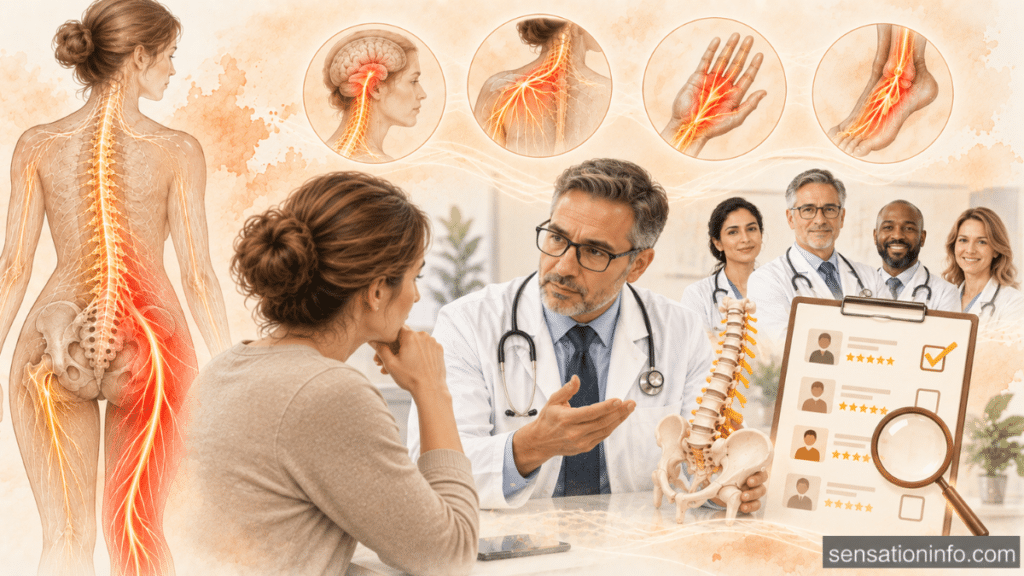
The right neuropathy specialist depends on your specific diagnosis, the severity of your symptoms, and whether your case requires subspecialty expertise. Choosing the right neuropathy specialist starts with understanding your specific type of nerve problem. A patient with burning sensations in the legs caused by small fiber neuropathy needs a different specialist than someone with carpal tunnel syndrome or diabetic nerve damage.
Look for a neurologist who is board-certified in neuromuscular medicine, not just general neurology. This subspecialty certification means the doctor has completed additional fellowship training specifically focused on nerve and muscle disorders. All 10 specialists on this list carry at least one relevant subspecialty certification.
Consider whether you need a specialist who performs nerve biopsies, runs a dedicated autonomic testing lab, or leads clinical trials for investigational treatments. For a newly diagnosed neuropathy patient, a comprehensive center like Weill Cornell’s Peripheral Neuropathy Center or Columbia’s Neuropathy Research Center offers the advantage of having diagnostic testing, treatment, and research access under one roof.
The best neuropathy specialists in New York are board-certified in neuromuscular medicine, not just general neurology. If your neuropathy has been difficult to diagnose or has not responded to initial treatment, seeking a second opinion at a different institution is a reasonable step. The specialists listed across Weill Cornell, Columbia, Mount Sinai, HSS, and Montefiore represent five independent neurology programs, giving patients multiple options for fresh perspectives.
Insurance coverage matters. Most specialists on this list accept major commercial plans and Medicare, but coverage for specific tests like skin biopsies or autonomic function testing varies. Call the office before your first appointment to confirm your plan is accepted and whether prior authorization is needed for diagnostic procedures.
Questions to Ask at Your First Appointment
Asking the right questions helps you evaluate whether a neuropathy specialist is the right fit for your case. Here are seven essential questions to bring to your first visit:
- What type of neuropathy do I have, and what is most likely causing it?
- Which diagnostic tests do you recommend, and what will each one tell us?
- Are there treatable or reversible causes of my neuropathy that we should rule out first?
- What are my treatment options, and how long before I can expect to see improvement?
- Should I consider a nerve or skin biopsy to get a more specific diagnosis?
- Are there any clinical trials I might be eligible for?
- How often should I schedule follow-up visits to monitor my condition?
What to Expect During Your First Visit
Most neuropathy specialist appointments in New York last 45 to 60 minutes and include a neurological exam, medical history review, and diagnostic test planning. A first appointment with a neuropathy specialist typically lasts 45 to 60 minutes. The doctor will begin with a detailed medical history, including questions about when your symptoms started, whether they are progressing, what medications you take, and whether you have conditions like diabetes, autoimmune disease, or a family history of nerve disorders.
The neurological examination involves testing sensation, reflexes, and muscle strength in your hands and feet. The specialist will often check your ability to feel vibration, light touch, pinprick, and temperature changes. These bedside tests help determine which nerve fibers are affected.
Most neuropathy specialists will order or schedule nerve conduction studies and electromyography (EMG) during the first or second visit. These electrodiagnostic tests measure how well your nerves transmit signals and can identify the location, type, and severity of nerve damage. The tests involve mild electrical stimulation and thin needles placed in specific muscles. Mild discomfort is normal, but the procedure is generally well tolerated.
Blood work is almost always part of the initial workup. Common tests include a complete metabolic panel, hemoglobin A1c, thyroid function, vitamin B12, folate, serum protein electrophoresis, and sometimes specific antibody panels depending on the clinical picture.
Regarding insurance, most initial neurologist consultations are covered under specialist visit copays. Nerve conduction studies and EMG are typically covered when ordered by a neurologist, though some plans require prior authorization. If a skin biopsy is recommended to evaluate small fiber neuropathy, check with your insurer beforehand, as this test has variable coverage depending on the plan.
Frequently Asked Questions
A general neurologist treats a wide range of brain and nervous system conditions, from migraines to epilepsy to multiple sclerosis. A neuropathy specialist is a neurologist with additional fellowship training in neuromuscular medicine, meaning they focus specifically on disorders affecting the peripheral nerves, muscles, and neuromuscular junction. For a common, straightforward neuropathy, a general neurologist may be sufficient. For complex, undiagnosed, or treatment-resistant cases, a neuromuscular specialist offers deeper expertise.
Wait times vary by institution and provider. Academic medical centers like Columbia, Weill Cornell, and Mount Sinai often have wait times of two to six weeks for a new patient appointment. Some practices offer earlier availability if your referring physician sends a note indicating urgency. Most offices on this list also offer virtual visit options for initial consultations, which can sometimes be scheduled sooner.
Some forms of neuropathy are reversible when the underlying cause is identified and treated early. Neuropathy caused by vitamin B12 deficiency, thyroid disorders, or medication side effects often improves significantly once the root cause is addressed. Inflammatory neuropathies like CIDP and GBS can respond well to immunotherapy. Diabetic neuropathy and inherited neuropathies like Charcot-Marie-Tooth disease are typically managed rather than cured, though treatment can slow progression and relieve symptoms.
Most major insurance plans, including Medicare and Medicaid, cover neurologist visits and standard diagnostic tests for neuropathy. Treatments like physical therapy, pain management medications, and IVIG infusions for inflammatory neuropathies are generally covered, though some require prior authorization. Coverage for newer treatments and clinical trial participation varies. Contact your insurance provider and the specialist’s office to verify coverage before your appointment.
Bring a list of all current medications and supplements, any previous nerve conduction study or EMG reports, recent blood work results, imaging reports (MRI or CT scans), and a written timeline of your symptoms. If you have been seen by other neurologists, request that their notes be sent to your new specialist before your visit. This prevents duplicate testing and helps the new doctor build on what is already known.
Consider a second opinion if your neuropathy remains undiagnosed after initial testing, if symptoms are progressing despite treatment, if your current doctor does not specialize in neuromuscular medicine, or if you have been told nothing more can be done. The specialists on this list work at five different institutions, and a fresh evaluation at a different center sometimes uncovers causes that were previously missed.
Key Takeaways
- New York has dedicated neuropathy centers at Weill Cornell and Columbia that offer integrated diagnostic testing, treatment, and clinical trial access in a single location.
- Board certification in neuromuscular medicine, not just general neurology, is the most reliable credential marker for a neuropathy specialist.
- Small fiber neuropathy often requires a skin biopsy for diagnosis, and not all neurologists perform this test. Dr. Lan Zhou at HSS is one specialist who does.
- Patients with autonomic symptoms alongside neuropathy should look for a specialist with autonomic testing capabilities, such as Dr. Weimer’s Clinical Autonomic Laboratory at Columbia.
- Some forms of neuropathy are treatable or reversible when caught early, making timely specialist referral important. Early diagnosis by the best neuropathy specialists in New York can change outcomes significantly.
- All specialists on this list are accepting new patients as of publication, with most offices offering virtual visit options for initial consultations.
Doctor’s Recommendation
If you are experiencing persistent numbness, tingling, or burning pain in your hands or feet, understanding the underlying cause is an important first step before choosing a specialist. Our doctor-authored guide on numbness in hands: 9 causes and what to do explains the medical reasons behind nerve-related symptoms and when to seek specialist care. Reading it before your appointment can help you ask more informed questions and better understand the diagnostic process.