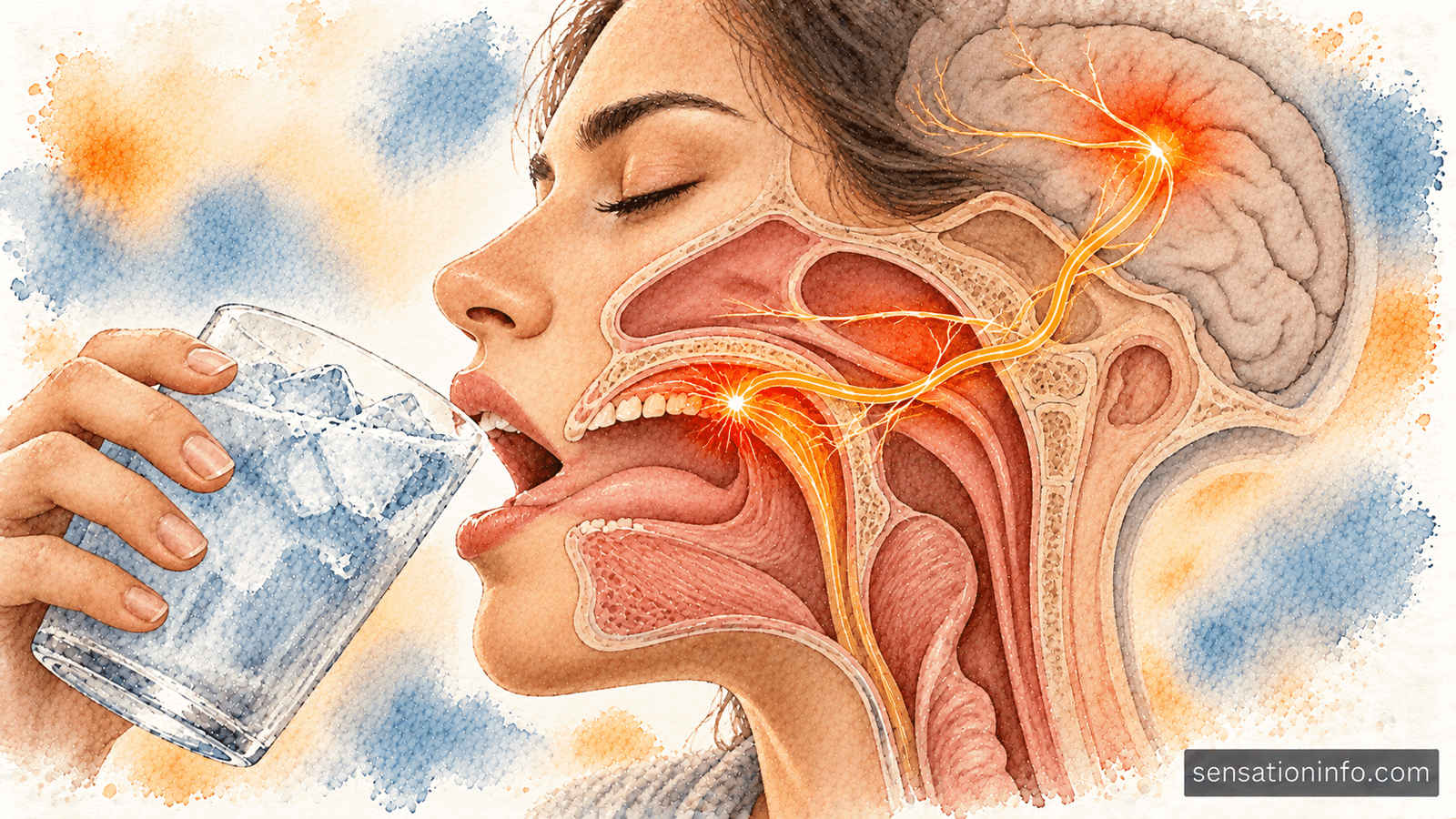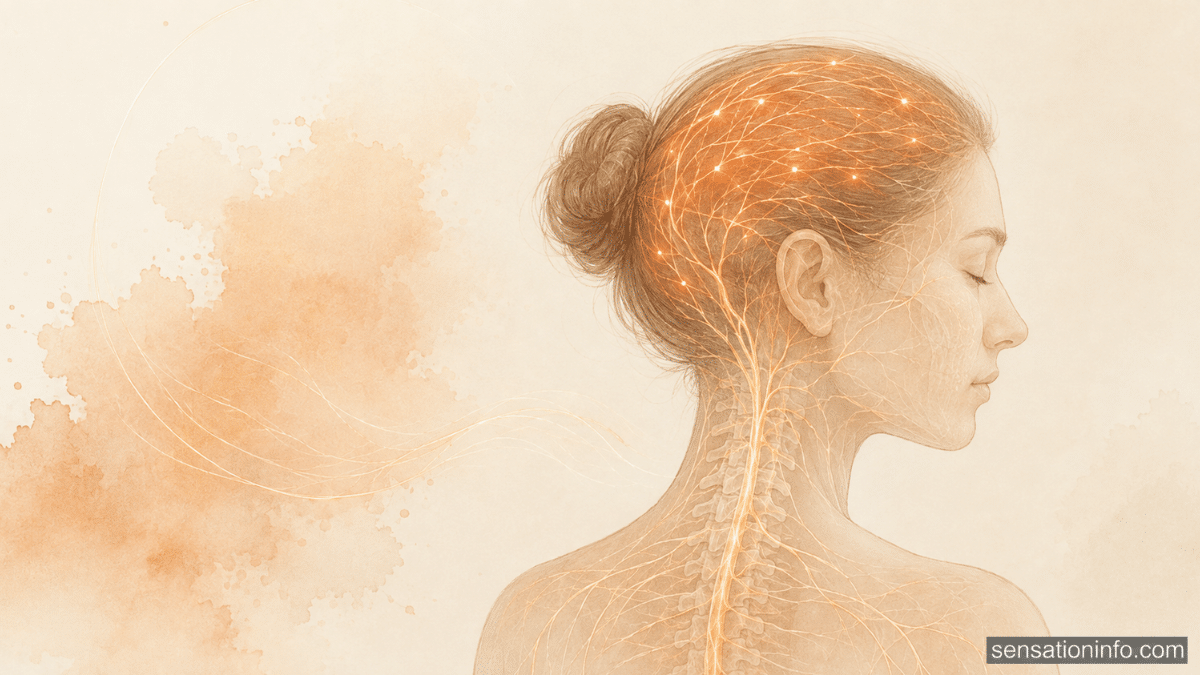

That prickling, crawling, or “pins and needles” feeling across your scalp can stop you mid thought. It might hit the crown of your head, creep along one side, or spread across the entire scalp like tiny electric pulses firing under the skin. In most cases, scalp tingling (a form of paresthesia) is harmless and temporary, triggered by something as simple as stress, a tight hairstyle, or sitting in an awkward position. But because the scalp shares nerve pathways with the head, neck, and face, the sensation can also be an early signal from your nervous system that something deeper needs attention.
This guide walks through every common and uncommon reason your scalp may be tingling, explains how to tell everyday causes from warning signs, and gives you a clear action plan so you know exactly when to manage it at home and when to see a doctor.
What Does Scalp Tingling Actually Feel Like?
People describe scalp paresthesia in different ways, and knowing the specific quality of your sensation can help narrow down the cause. You might feel a light “pins and needles” prickling, a fizzing or buzzing under the skin, a crawling sensation as though something is moving across your head, or a numb tingling where parts of your scalp feel partially “asleep.”
The tingling may be constant or come and go. It may cover the whole scalp or stay in one spot, such as the top of the head, the back near the neck, or one side near the temple. Some people also notice it alongside other sensations like burning, itching, or mild tenderness.
Common Causes of Tingling in the Scalp
Could Stress or Anxiety Be Making Your Scalp Tingle?
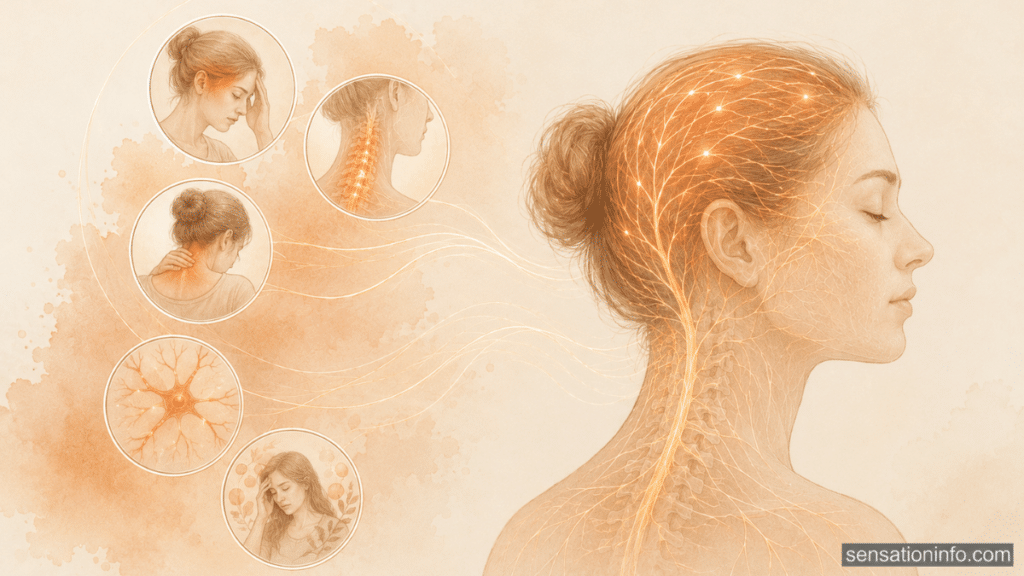
This is one of the most frequent causes, and it surprises many people. When you are anxious or under chronic stress, your body triggers the fight or flight response. Stress hormones like adrenaline and cortisol flood your system, and blood flow shifts away from the skin and toward major muscles. This change in circulation, combined with muscle tension in the scalp and neck, can produce tingling, prickling, or a “crawling” feeling across your head.
Anxiety related scalp tingling tends to come and go with stress levels, may move around the head rather than staying in one fixed spot, and often appears alongside other anxiety symptoms like a racing heart, shallow breathing, or a tight feeling in the chest. The sensation itself is not dangerous, but if it is frequent or distressing, addressing the underlying anxiety through techniques like diaphragmatic breathing, regular exercise, or working with a therapist can help it fade.
Is a Tight Hairstyle or Headwear Causing It?
Ponytails, braids, buns, headbands, hats, and helmets can all put sustained pressure on the nerves and blood vessels in your scalp. The result is that familiar tingling or numbness that appears after hours of wearing a tight style and usually resolves within minutes to hours once the pressure is removed. If you notice the tingling always follows a particular hairstyle or headgear, that mechanical pressure is the likely cause.
Over time, repeated traction on the hair follicles can lead to a condition called traction alopecia, which causes hair thinning along the hairline. Loosening your style or alternating between different hairstyles can both relieve the tingling and protect your hair.
Can Poor Posture or Neck Tension Cause Scalp Tingling?
Yes, and this connection is more common than many people realize. The nerves that supply sensation to your scalp originate in the upper cervical spine (the C2 and C3 vertebrae). When you spend long hours hunched over a computer, crane your neck forward while looking at your phone, or sleep in an awkward position, the muscles in the back of your neck tighten and can compress or irritate these nerve roots.
Researchers have classified this pattern as scalp dysesthesia, a neuropathic phenomenon linked to cervical spine problems. A study published in the Journal of the American Academy of Dermatology found that many patients with unexplained scalp burning, tingling, or itching had underlying cervical spine abnormalities visible on imaging. Simple neck stretches, posture correction, and physical therapy often improve or resolve the tingling.
What About Vitamin and Nutrient Deficiencies?
Your nerves need specific vitamins to maintain their protective myelin sheath and function properly. When levels drop too low, tingling and numbness can develop anywhere, including the scalp.
The most common deficiency linked to nerve tingling is vitamin B12. According to the National Institutes of Health, approximately 3.6% of U.S. adults have a B12 deficiency, and insufficiency affects roughly 12.5% of all adults. Neurological symptoms like numbness and tingling can develop even before anemia appears, making early detection important. The NIH notes that these neurological changes may occur “without anemia, so early diagnosis and intervention is important to avoid irreversible damage.”
Other nutrients whose deficiency can trigger scalp paresthesia include vitamin D, iron, zinc, and folate. Vegans, vegetarians, older adults, people who have had bariatric surgery, and those with gastrointestinal conditions like celiac disease or Crohn’s disease are at higher risk.
A simple blood test can check your levels. If a deficiency is found, supplementation or dietary changes usually reverse the tingling over weeks to months.
Could a Skin Condition Be Behind the Tingling?
Several scalp skin conditions can produce tingling, burning, or prickling alongside their more recognizable symptoms.
Seborrheic dermatitis is one of the most common. It causes flaky, scaly patches on the scalp (what most people call dandruff in its milder form) and affects roughly 5% of adults worldwide in its inflammatory form, according to the NIH. Beyond the visible flaking, many people also experience itching, burning, or a tingling irritation on the affected skin. Medicated shampoos containing ketoconazole, selenium sulfide, or zinc pyrithione are the standard treatment.
Contact dermatitis is another possibility. A new shampoo, hair dye, styling product, or chemical treatment can trigger an allergic or irritant reaction that causes tingling, burning, redness, and swelling on the scalp. The fix is identifying and removing the offending product.
Psoriasis of the scalp can also produce tingling and burning along with thick, silvery scales and red patches.
Is Sunburn or Temperature Change a Factor?
A sunburned scalp, especially in areas with thinning hair or along the part line, can tingle and burn as the skin becomes inflamed and begins healing. Cold, dry weather can also irritate the scalp and produce a prickling sensation. These causes are usually obvious from the circumstances and resolve with basic skin care.
Less Common but Important Causes
What Is Occipital Neuralgia, and Could It Explain Your Symptoms?
Occipital neuralgia occurs when the occipital nerves, which run from the top of the spinal cord up through the scalp, become inflamed or injured. According to Cleveland Clinic, it causes “sharp, stinging or burning sensations on your scalp or behind your eye,” along with aching, electric shock feelings, or throbbing pain that can last seconds to hours.
Common triggers include pinched nerves from cervical spine problems, neck muscle tightness, head or neck injuries, osteoarthritis of the upper spine, diabetes, and gout. Diagnosis can be tricky because the symptoms overlap with migraines and tension headaches. Treatment includes heat therapy, physical therapy, nerve blocks with numbing medication and steroids, anti inflammatory medications, and in severe cases, surgical options like occipital nerve stimulation.
Can Shingles Start With Scalp Tingling?
Yes. Shingles (herpes zoster) is caused by the reactivation of the varicella zoster virus, the same virus that causes chickenpox. According to the CDC, 1 in 3 people in the United States will develop shingles at some point in their lifetime.
Several days before the characteristic painful rash appears, many people experience a prodromal phase of tingling, itching, or burning in the area where the rash will eventually develop. When shingles affects the scalp, this early tingling can be the very first symptom, appearing before any visible blisters. The rash typically develops in a band on one side of the body or face, and the blisters scab over in 7 to 10 days. About 10% to 18% of people who develop shingles go on to experience postherpetic neuralgia, a complication involving persistent nerve pain that can last months or years, according to the CDC.
If you are over 50 or have a weakened immune system and develop new, unexplained scalp tingling on one side of your head, especially with burning pain, contact your doctor promptly. Early antiviral treatment within 72 hours of rash onset can reduce the severity and the risk of long term nerve pain.
What About Nerve Conditions Like Trigeminal Neuralgia?
The trigeminal nerve is the main nerve responsible for sensation in the face, and its branches extend to parts of the scalp, particularly the forehead and temples. Trigeminal neuralgia causes sudden, severe, shock like pain in the face that can also produce tingling, burning, or numbness between attacks. The National Institute of Neurological Disorders and Stroke notes that this condition most often affects people over age 50 and is more common in women.
The most frequent cause of classic trigeminal neuralgia is a blood vessel pressing on the nerve root near the brainstem. About 15% of cases are secondary to conditions like multiple sclerosis or tumors. Treatment typically involves anticonvulsant medications like carbamazepine (Tegretol), and surgical options are available for severe cases.
Could Multiple Sclerosis Cause Scalp Tingling?
Multiple sclerosis (MS) is an autoimmune disease in which the immune system attacks the myelin sheath that protects nerve fibers. Tingling and numbness in the arms, legs, trunk, or face are among the most common early symptoms, according to the National Institute of Neurological Disorders and Stroke. While scalp tingling is not the hallmark presentation, it can occur as part of the broader sensory disturbances caused by demyelination.
MS typically begins between ages 20 and 40 and is more common in women. If your scalp tingling occurs alongside other neurological symptoms like vision changes, muscle weakness, coordination problems, or unusual fatigue, it is important to see a neurologist for evaluation.
What Is Giant Cell Arteritis, and Why Is It Urgent?
Giant cell arteritis (also known as temporal arteritis) is inflammation of the blood vessels, particularly the temporal arteries that run along the sides of the head. According to Cleveland Clinic, it affects approximately 19 to 23 out of every 100,000 people in the United States and almost always occurs in people over age 50, with peak occurrence between ages 70 and 80.
Symptoms include a new, persistent headache (often throbbing and one sided), scalp tenderness, jaw pain that worsens with chewing, vision changes, fatigue, and fever. The scalp tenderness can feel like tingling or extreme sensitivity to touch, especially at the temples.
This condition is a medical emergency if it affects your vision. Untreated giant cell arteritis can lead to permanent blindness. If you are over 50 and develop new scalp tingling or tenderness with headache and vision changes, seek immediate medical care. Treatment involves high dose glucocorticoids, typically prednisone at 40 to 60 mg per day.
Can Medications Cause Scalp Tingling?
Certain medications list tingling or paresthesia as a side effect. These include some chemotherapy drugs, certain blood pressure medications, anticonvulsants like topiramate (Topamax), and some antibiotics. If your scalp tingling began shortly after starting a new medication or changing a dose, talk to your prescribing doctor. Do not stop any prescribed medication on your own.
When to See a Doctor About Scalp Tingling
Most scalp tingling is temporary and harmless. But certain patterns warrant medical evaluation. See your doctor if the tingling:
- Persists for more than a few days without an obvious cause
- Is accompanied by numbness, weakness, or coordination problems
- Occurs with vision changes, especially if you are over 50
- Follows a head or neck injury
- Comes with a rash, blisters, or open sores on the scalp
- Is associated with unexplained weight loss, fatigue, or fever
- Gets progressively worse over weeks
Seek emergency care if you experience sudden severe headache with scalp tenderness and vision loss, sudden facial drooping or difficulty speaking, or tingling that spreads rapidly down one side of the body. These could indicate giant cell arteritis, stroke, or another neurological emergency.
How Is the Cause of Scalp Tingling Diagnosed?
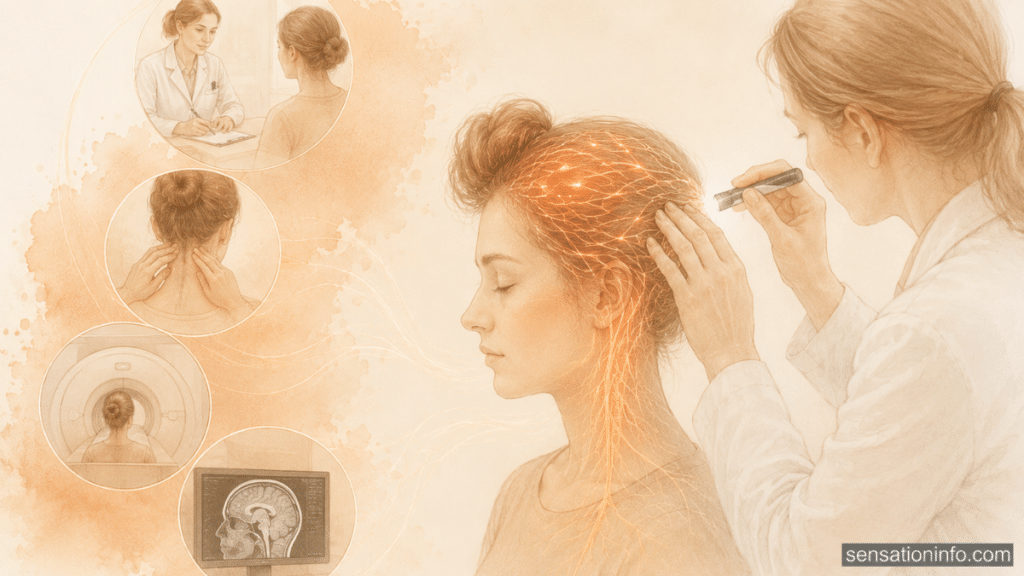
Your doctor will start with a detailed history and physical examination, asking about when the tingling started, what it feels like, where exactly on the scalp it occurs, and what other symptoms you have noticed.
Depending on the suspected cause, further tests may include blood work to check for vitamin deficiencies, thyroid function, inflammatory markers, and blood sugar levels. Imaging studies like an MRI or CT scan of the brain or cervical spine may be ordered if a nerve or structural problem is suspected. Nerve conduction studies can evaluate how well the nerves are functioning. In cases where giant cell arteritis is suspected, a temporal artery biopsy may be performed.
What Can You Do at Home to Relieve Scalp Tingling?
When the tingling is related to everyday causes like stress, tension, or minor skin irritation, several home strategies can help.
Manage stress actively. Regular physical activity, deep breathing exercises, adequate sleep, and mindfulness or meditation can lower the baseline level of stress hormones that contribute to tingling.
Fix your posture. Keep your screen at eye level, take breaks every 30 to 45 minutes to roll your shoulders and gently stretch your neck, and avoid cradling your phone between your ear and shoulder. These simple changes reduce compression on the cervical nerves that supply the scalp.
Loosen your hairstyle. Alternate between loose styles and give your scalp rest days without tight pulls. If a headband or hat triggers symptoms, choose a looser fit.
Eat for nerve health. Include foods rich in B vitamins (meat, fish, eggs, dairy, fortified cereals), vitamin D (fatty fish, fortified milk, sunlight), iron (lean meat, spinach, beans), and omega 3 fatty acids (salmon, walnuts, flaxseed). If you follow a plant based diet, consider a B12 supplement.
Try a gentle scalp massage. Using your fingertips to massage the scalp in small circles for a few minutes can improve circulation and ease muscle tension.
Check your hair products. Switch to a gentle, fragrance free shampoo if you suspect contact dermatitis. Introduce new products one at a time so you can identify the cause if tingling returns.
Myths About Scalp Tingling That Are Not True
“Scalp tingling always means something serious.” The vast majority of scalp tingling episodes are caused by stress, tension, or minor irritation. Serious causes exist but are far less common.
“Tingling in the head means you are having a stroke.” While stroke can cause tingling, it typically affects one side of the face or body and comes with other symptoms like sudden weakness, speech difficulty, or facial drooping. Isolated scalp tingling without these warning signs is very unlikely to be a stroke.
“You can diagnose the cause by the exact location of the tingling.” Location can offer clues (tingling at the back of the head may point toward occipital neuralgia, for instance), but many causes produce tingling that moves around or covers the whole scalp. A medical evaluation is needed for a definitive diagnosis.
How to Tell Scalp Tingling Apart From Similar Sensations
| Sensation | What It Feels Like | Common Causes |
|---|---|---|
| Tingling (paresthesia) | Pins and needles, prickling, buzzing | Anxiety, nerve compression, vitamin deficiency, neuropathy |
| Burning | Heat or stinging pain on the scalp | Sunburn, seborrheic dermatitis, occipital neuralgia, shingles |
| Itching (pruritus) | Urge to scratch | Dandruff, psoriasis, contact dermatitis, head lice |
| Numbness | Reduced or absent feeling | Nerve compression, neuropathy, MS |
| Crawling (formication) | Feeling of insects moving on skin | Anxiety, medication side effects, menopause |
Key Takeaways
- Scalp tingling is most commonly caused by stress, muscle tension in the neck, tight hairstyles, or minor skin irritation and is usually not a sign of a serious condition.
- Vitamin B12 deficiency is a frequently overlooked cause. The NIH reports that insufficiency affects roughly 12.5% of U.S. adults, and neurological symptoms can appear before anemia develops.
- Cervical spine problems can refer tingling to the scalp through the C2 and C3 nerve roots, and posture correction often helps.
- Shingles can begin with tingling days before any rash appears. One in three Americans will develop shingles in their lifetime, according to the CDC.
- Giant cell arteritis is the most urgent cause to rule out in adults over 50 who develop new scalp tenderness with headache and vision changes, because it can lead to permanent vision loss without prompt treatment.
- A doctor visit is warranted when scalp tingling persists beyond a few days, worsens progressively, or appears alongside neurological symptoms like weakness, vision changes, or coordination problems.
- Simple home measures such as stress management, posture correction, dietary improvements, and switching to gentle hair products resolve the tingling in a large percentage of cases.
Frequently Asked Questions
Scalp tingling alone is very rarely caused by a brain tumor. Brain tumors more commonly cause headaches, seizures, vision changes, or cognitive difficulties. However, if tingling is persistent and accompanied by other neurological symptoms such as weakness, speech problems, or personality changes, you should see a doctor for a thorough evaluation.
Dehydration can contribute to tingling sensations because it affects blood circulation and electrolyte balance, both of which are essential for proper nerve function. Drinking adequate water throughout the day and replenishing electrolytes after exercise or illness can help prevent this.
Scalp tingling at night is often related to the position of your neck and head on the pillow, which can compress cervical nerves. Stress and anxiety also tend to become more noticeable when external distractions fade at bedtime. Adjusting your pillow height and practicing a brief relaxation routine before sleep may reduce the sensation.
Stress related scalp tingling typically lasts minutes to hours during or after a stressful episode. If the underlying anxiety or stress is chronic, the tingling may come and go over weeks or months. Addressing the root cause of stress through exercise, therapy, sleep hygiene, or relaxation techniques usually resolves the symptom over time.
Doctor’s Recommendation
If you are also experiencing a burning feeling on your scalp alongside the tingling, you may find it helpful to read our guide on how to stop burning sensation on scalp. That article covers the clinical overlap between burning and tingling scalp symptoms, walks through targeted treatments, and explains when a combined burning and tingling pattern warrants further evaluation by a dermatologist or neurologist.
References
- National Institutes of Health, Office of Dietary Supplements. Vitamin B12: Fact Sheet for Health Professionals. 2024.
- Centers for Disease Control and Prevention. Shingles (Herpes Zoster): Signs and Symptoms. 2024.
- Centers for Disease Control and Prevention. Shingles Facts and Stats. 2024.
- Cleveland Clinic. Occipital Neuralgia: Symptoms, Causes, Treatment. 2024.
- Cleveland Clinic. Giant Cell Arteritis (Temporal Arteritis): Signs and Treatment. 2024.