
Have you ever stood up after sitting cross-legged for too long and felt like your feet had suddenly turned into TV static? That buzzing, prickling, “wait, are these even my feet?” feeling. I’ve had it more times than I can count, and the first time it lasted longer than usual, I remember genuinely wondering if something was wrong.
Tingling in feet is one of those symptoms most people brush off until it stops being occasional. In this article, I’ll walk you through what causes tingling in feet and toes, what each cause actually feels like, and when it’s time to stop ignoring it. Everything here is based on documented medical insights from sources like the Cleveland Clinic, Mayo Clinic, NHS, and CDC.
What Tingling in Feet Really Means
Tingling, medically called ‘paraesthesia‘, is that pins-and-needles sensation that often comes with numbness, burning, or mild prickling. It usually means a nerve somewhere along the path from your spine to your toes is being pressed, irritated, or damaged.
Sometimes it’s harmless, like sitting on your foot too long. Other times, it’s your body politely tapping you on the shoulder saying, “Hey, something deeper is going on here.” Knowing the difference matters more than people realise.
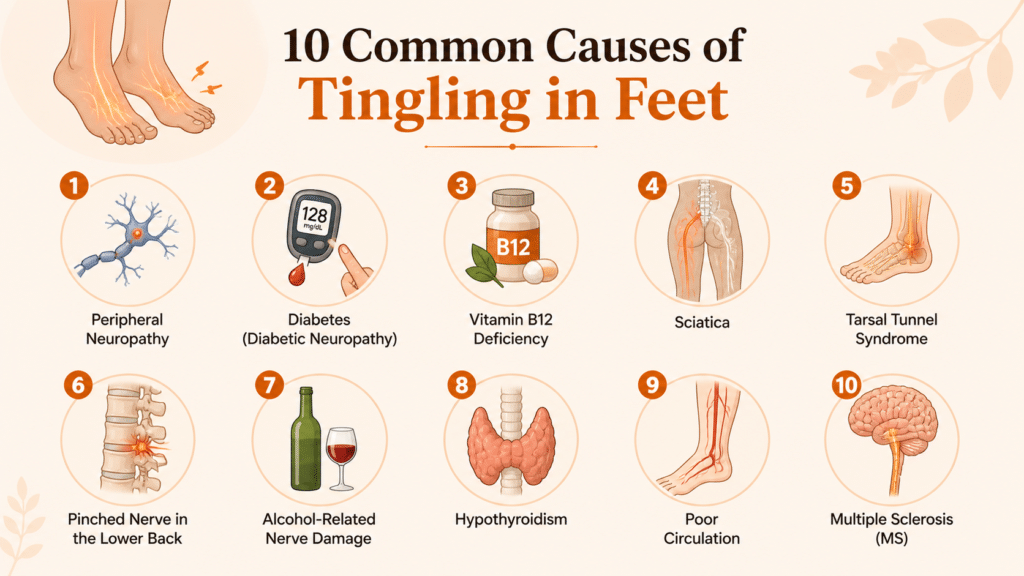
10 Common Causes of Tingling in Feet
Let me break down the most common reasons I’ve come across, both personally and through reliable medical sources.
1. Peripheral Neuropathy
This is the most common culprit. Peripheral neuropathy means damage to the nerves outside the brain and spinal cord, often the ones in your feet. According to the National Institute of Neurological Disorders and Stroke, it affects millions of adults globally.
The tingling is usually symmetrical, meaning both feet, and tends to start at the toes before creeping upward. It can come with burning, numbness, or a strange “wearing socks when you’re not” feeling.
2. Diabetes (Diabetic Neuropathy)
Diabetes is the leading cause of peripheral neuropathy. Long-term high blood sugar damages tiny blood vessels that feed your nerves. The CDC reports that nearly half of people with diabetes develop nerve damage at some point.
If you have diabetes and notice tingling, especially at night, it’s worth raising it with your doctor. Early control of blood sugar genuinely slows down the damage.
3. Vitamin B12 Deficiency
This one surprises a lot of people. Vitamin B12 is essential for healthy nerve function, and a deficiency can cause tingling, weakness, and balance issues. It’s especially common in vegetarians, older adults, and people on long-term acid reflux medication like omeprazole.
A simple blood test confirms it, and treatment is usually just supplementation. I’ve seen people feel dramatically better within weeks of fixing their B12 levels.
4. Sciatica
Sciatica happens when the sciatic nerve, which runs from your lower back down through your leg, gets irritated or compressed. The tingling typically affects only one foot and often comes with lower back or buttock pain.
If you sit for long hours or lift heavy things wrong, sciatica becomes a real risk. I remember a colleague who blamed his “weird foot tingling” on shoes for months before realising his herniated disc was the actual issue.
5. Tarsal Tunnel Syndrome
Think of this as carpal tunnel’s lesser-known cousin, but for the feet. The tibial nerve gets compressed near the ankle, causing tingling, burning, or shooting pain into the sole and toes.
Flat feet, ankle injuries, or prolonged standing can trigger it. People who work retail or in hospitals often deal with this without realising what’s happening.
6. Pinched Nerve in the Lower Back
A pinched nerve in the lumbar spine, often from a herniated disc or bone spur, can send tingling straight down to your feet. Unlike sciatica, the pattern depends on which nerve root is affected.
If your tingling shows up along with back stiffness or weakness in the legs, your spine deserves a closer look.
7. Alcohol-Related Nerve Damage
Heavy long-term alcohol use can damage peripheral nerves directly, a condition called alcoholic neuropathy. It also depletes B vitamins, which makes things worse.
The tingling tends to be persistent, symmetrical, and often paired with cramps or weakness. Reducing alcohol intake genuinely makes a difference, but recovery can be slow.
8. Hypothyroidism
An underactive thyroid affects more than just energy levels. It can cause fluid retention that compresses nerves, leading to tingling in the feet and hands.
If you’ve been feeling tired, gaining weight, or feeling cold all the time along with tingling, ask your doctor about a thyroid panel. It’s a simple test that often gets overlooked.
9. Poor Circulation
When blood flow to your feet drops, nerves don’t get the oxygen they need, and tingling kicks in. This is common in people with peripheral artery disease, smokers, or those who sit for long stretches.
Cold feet, slow-healing wounds, and tingling that worsens after walking are classic signs. Honestly, this is one of those causes people ignore until it becomes serious.
10. Multiple Sclerosis (MS)
MS is less common but worth mentioning. It happens when the immune system attacks the protective covering of nerves. Tingling in the feet is often one of the earliest symptoms, sometimes paired with vision problems, fatigue, or balance issues.
If your tingling comes with other neurological signs, please don’t self-diagnose. A neurologist is the right call.
How Tingling in Feet Affects Walking and Daily Life
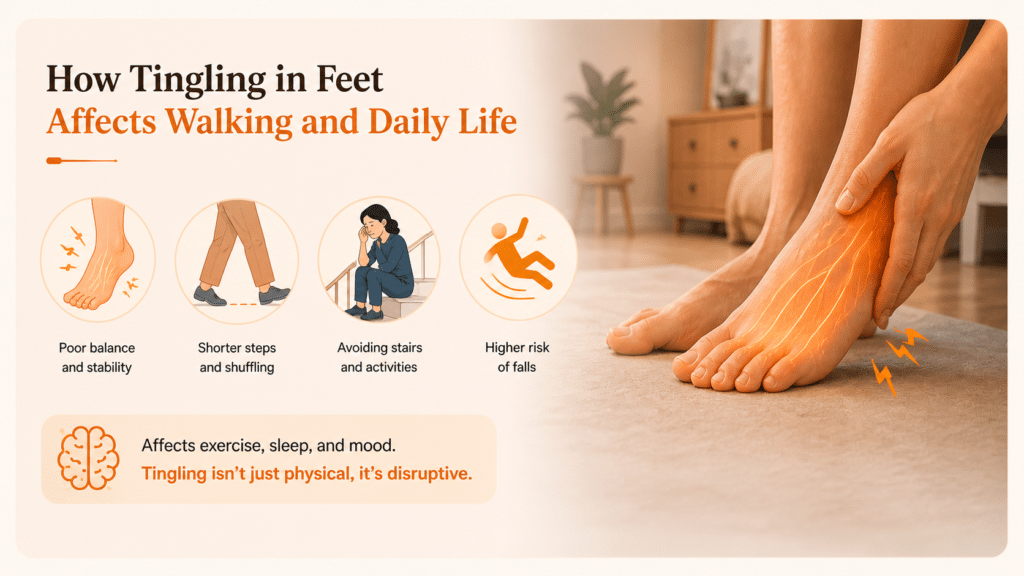
This is something most articles skip, but it genuinely matters. Persistent tingling can mess with your balance because your feet aren’t sending accurate signals to your brain. You stop trusting the ground under you.
I’ve noticed people with chronic foot tingling start shuffling, taking shorter steps, or avoiding stairs. Over time, that increases the risk of falls, especially in older adults. It also affects exercise habits, sleep quality, and even mood. Tingling isn’t just physical; it’s surprisingly disruptive.
How Doctors Diagnose Tingling in Feet
When I finally got mine checked years ago, I expected one quick test. Instead, the doctor went through a proper checklist, which honestly made me trust the process more.
The exam usually starts with checking reflexes, sensation, and muscle strength. If a nerve issue is suspected, doctors order nerve conduction studies and electromyography (EMG). For suspected spine-related causes, an MRI may be needed.
Blood tests are almost always part of the workup, especially to check blood sugar, B12, thyroid function, and kidney health. Diagnosing tingling without these tests is basically guessing, and you deserve better than that.
Treatment Options That Actually Help
Treatment depends entirely on the cause, but here’s what generally works.
Lifestyle Adjustments
For mild cases, simple changes do a lot. Wearing well-fitted shoes, avoiding prolonged sitting, staying hydrated, and managing blood sugar can ease symptoms significantly. I started taking short walking breaks every hour, and within weeks my random tingling episodes dropped sharply.
Nutritional Support
If a deficiency is the issue, fixing it usually solves the tingling. B12 injections or supplements, iron correction, and balanced nutrition are common starting points. Always confirm with a blood test before self-prescribing supplements, though.
Medication
Doctors may prescribe gabapentin, pregabalin, or duloxetine for nerve-related tingling, especially in diabetic neuropathy. NSAIDs help with inflammation-driven causes like sciatica.
Physical Therapy
A physiotherapist can be a real difference-maker, particularly for sciatica, tarsal tunnel, and posture-related issues. Targeted stretches and nerve glides relieve compression in ways medication alone can’t.
Medical Procedures
In stubborn cases, options like steroid injections or surgical decompression are considered. These are rarely first-line treatments but work well when conservative methods fail.
Simple Habits That Reduce Tingling
A few small habits genuinely help. Stretching your calves and hamstrings daily, avoiding crossing your legs for long periods, keeping your weight in check, and wearing supportive footwear all matter more than people think.
If you sit at a desk all day, raising your feet slightly and shifting positions often makes a noticeable difference. Tiny adjustments, real results.
Frequently Asked Questions
If tingling lasts more than a few days, spreads, comes with weakness, or affects your walking, see a doctor. Sudden tingling with slurred speech or facial drooping is an emergency.
Yes, briefly. Anxiety can trigger hyperventilation and temporary tingling, but persistent symptoms usually point to a physical cause.
Sometimes, especially if it’s posture-related. Chronic tingling from neuropathy or spinal issues rarely resolves without proper treatment.
Not exactly. Tingling is active prickling, while numbness is loss of sensation. They often appear together, though.
Final Thoughts
Tingling in feet may feel small, but it’s often your nervous system flagging something worth paying attention to. From diabetes and B12 deficiency to sciatica and circulation problems, the causes are varied, and so are the fixes.
If your feet keep buzzing, don’t just shake them off and move on. Track the pattern, note the timing, and talk to a qualified doctor. Your feet carry you through life. The least you can do is listen when they try to talk back.