

Have you ever felt like your palms were quietly heating up from the inside, almost like you’d been holding a warm mug, except there was no mug? I’ve had that happen, and the first time, I genuinely checked if I was running a fever. Spoiler, I wasn’t.
A burning sensation in the palms of hands is more common than people think, and it almost always points to something specific. In this article, I’ll walk you through what causes it, what it means, and how to fix it. Everything I’m sharing here is based on credible medical sources like the Mayo Clinic, Cleveland Clinic, and the American Academy of Orthopaedic Surgeons.
What a Burning Sensation in the Hands Really Means
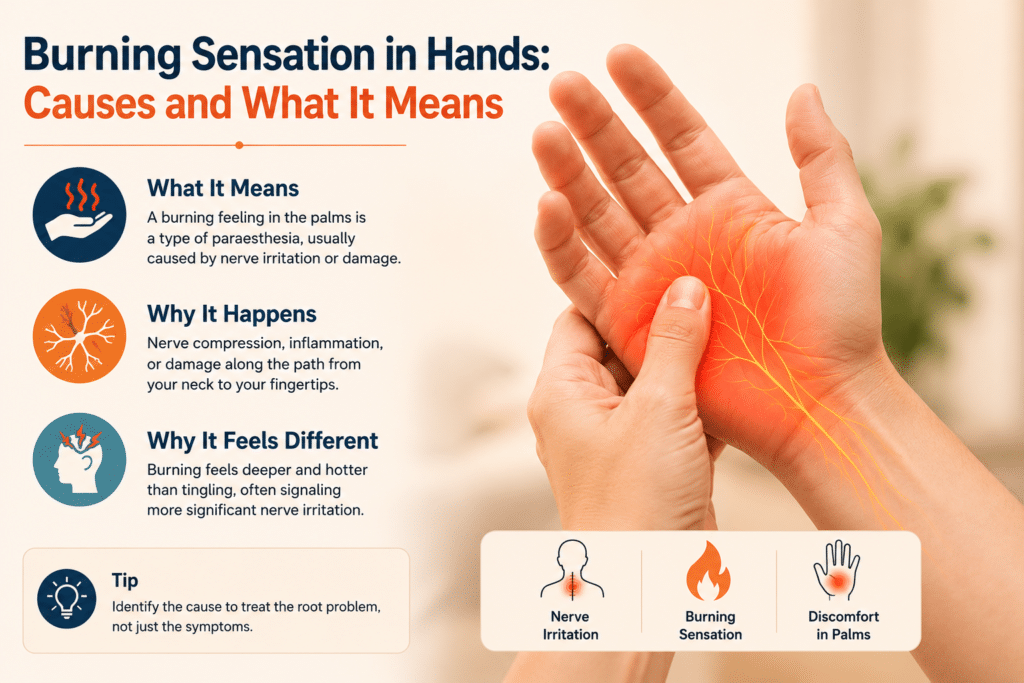
A burning sensation in the hands is a type of paraesthesia, which is the medical term for any abnormal skin or nerve sensation. Unlike tingling or numbness, burning has a distinct heat-like quality, sometimes mild, sometimes intense.
In most cases, the burning isn’t coming from your skin. It’s coming from a nerve somewhere along the path from your neck to your fingertips. That’s why creams, balms, and warm compresses often do little to help. You’re treating the wrong layer.
Why Burning in the Palms Feels Different From Tingling
Tingling is light and prickly, like static electricity. Burning, on the other hand, feels deeper, hotter, and more uncomfortable. It usually means a nerve is being irritated more aggressively, often due to compression, inflammation, or damage.
I’ve noticed people often confuse the two and self-diagnose incorrectly. But understanding the difference helps a lot, because the cause and treatment are not always the same.
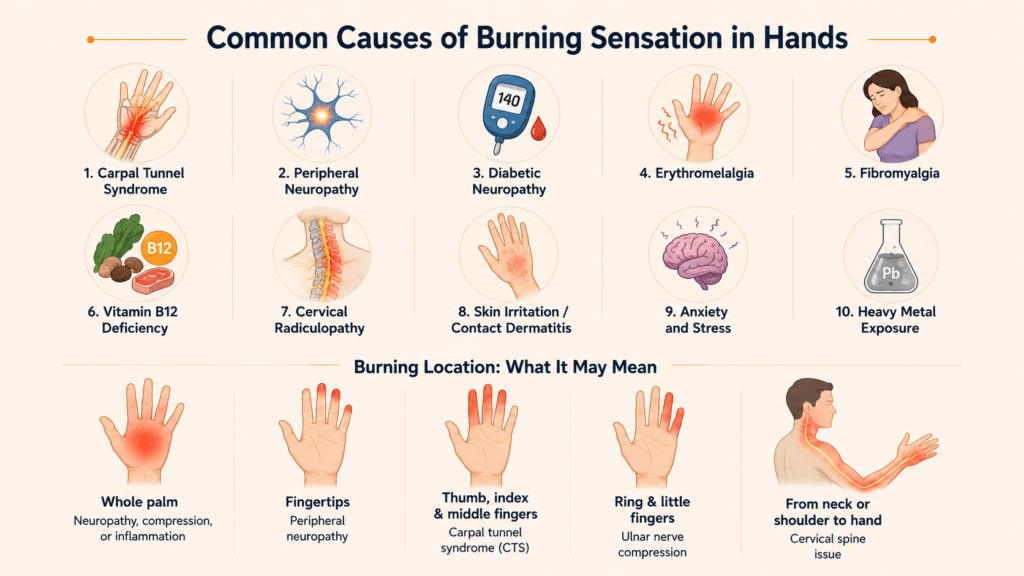
Common Causes of Burning Sensation in Hands
Let me walk you through the most common reasons behind a burning hand sensation, both from real-world experience and credible medical sources.
Carpal Tunnel Syndrome (CTS)
This is hands down one of the most common causes. Carpal tunnel syndrome happens when the median nerve gets compressed at the wrist. According to the American Academy of Orthopaedic Surgeons, burning, tingling, and weakness are classic signs.
The burning is usually felt in the palm, thumb, index finger, middle finger, and half of the ring finger. It tends to worsen at night and after long hours of typing or scrolling. If you wake up shaking your hand to “wake it up”, CTS is the prime suspect.
Peripheral Neuropathy
Peripheral neuropathy is a condition where the nerves outside the brain and spinal cord get damaged. The burning is often described as a “hot or scalded” feeling that doesn’t match anything happening on the surface.
It’s commonly caused by diabetes, vitamin deficiencies, alcohol use, or chemotherapy drugs. The Cleveland Clinic confirms that burning sensations are one of the earliest signs of nerve damage.
Diabetic Neuropathy
Diabetes is a major cause of burning hands that gets overlooked far too often. High blood sugar damages tiny nerves over time, and the symptoms tend to flare up at night.
The CDC notes that nearly half of people with diabetes develop nerve issues at some point. If you have diabetes and your palms burn, it’s worth raising it with your doctor immediately. Early action genuinely slows the damage.
Erythromelalgia
This is a less common but very real condition. Erythromelalgia causes intense burning, redness, and warmth in the hands or feet, often triggered by warm temperatures, exercise, or stress.
It’s a rare nerve and blood vessel disorder, but the symptoms are dramatic. Patients often describe their hands feeling like they’re “on fire”. If your burning is paired with redness and warmth, this is worth ruling out with a specialist.
Fibromyalgia
Fibromyalgia is a chronic condition that affects how the brain processes pain. People with fibromyalgia often describe a burning, tingling, or aching sensation in their hands, even though there’s no visible reason for it.
The condition is real and well-recognised by the National Institute of Arthritis and Musculoskeletal and Skin Diseases. It usually comes with widespread pain, fatigue, and sleep issues.
Vitamin B12 Deficiency
Low B12 affects nerve health and is a quietly common reason behind burning hands. It’s especially seen in vegetarians, older adults, and people on long-term acid reflux medications like omeprazole.
A simple blood test confirms it, and treatment is usually just supplementation. I’ve personally seen people feel completely different within weeks of correcting their levels.
Cervical Radiculopathy
Sometimes the issue isn’t even in the hand. It’s in the neck. A herniated disc or bone spur in the cervical spine can press on a nerve root, sending burning down the arm and into the palm.
If your burning sensation comes with neck pain or shoulder discomfort, this is worth taking seriously. Poor posture and bad pillows are common triggers.
Contact Dermatitis or Skin Irritation
Sometimes the cause is genuinely on the skin, like exposure to harsh chemicals, soaps, or detergents. The burning is usually paired with redness or dryness, even if a rash isn’t always visible.
Brands like CeraVe, Cetaphil, and Eucerin are commonly recommended by dermatologists for sensitive skin recovery.
Anxiety and Stress
Anxiety can cause real physical symptoms, including burning sensations. When the nervous system is stuck in fight-or-flight mode, nerves become hypersensitive and misfire easily.
These episodes are often brief, random, and worsen during stressful weeks. If your burning hands appear during high-anxiety periods, this could be the trigger.
Heavy Metal Exposure
Long-term exposure to lead, mercury, or arsenic can damage nerves and cause burning sensations. This is rare but documented, especially in industrial or occupational settings.
If you work around chemicals or metals and notice burning hands, mention it to your doctor for a proper screening.
Palm vs Finger Burning: What the Location Tells You
This is something most articles skip, but it makes a real difference.
If your whole palm burns, the cause is often nerve compression, neuropathy, or inflammation.
If your fingertips burn, peripheral neuropathy is the most likely cause, especially when paired with numbness.
If only your thumb, index, and middle fingers burn, CTS is at the top of the list.
If your ring and little fingers burn, the ulnar nerve at the elbow is usually involved.
If burning travels from the neck or shoulder to the hand, your cervical spine deserves attention.
This pattern-based approach is exactly how neurologists narrow things down quickly during a clinical exam.
When Burning in the Hands Becomes a Red Flag
Most cases of burning hands are mild and treatable, but some need urgent attention.
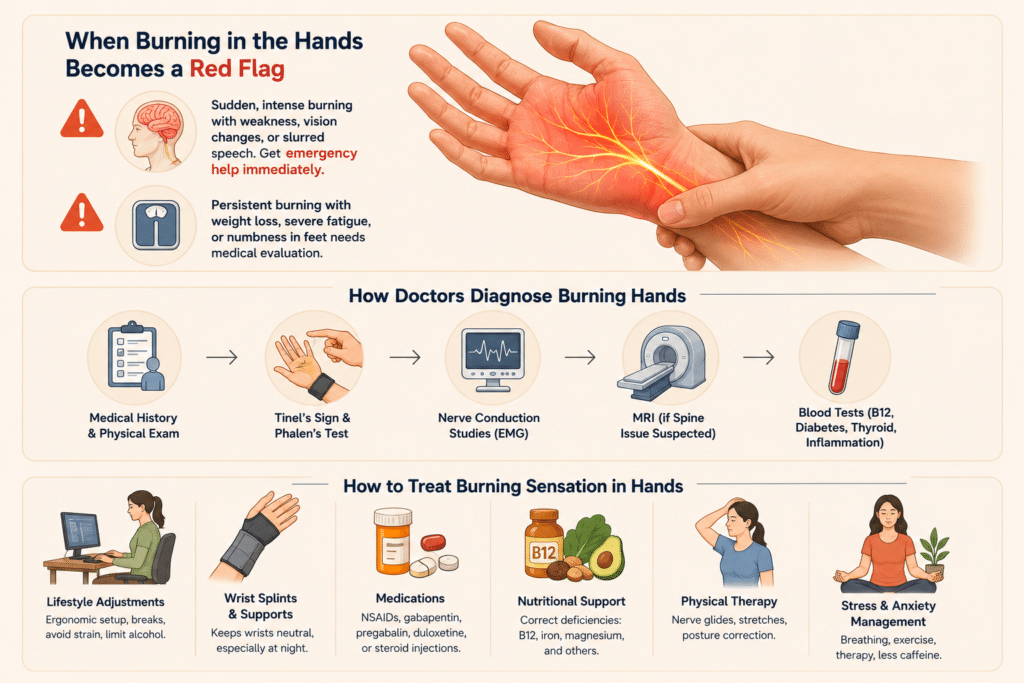
If the burning is sudden, intense, and paired with weakness, vision changes, or slurred speech, please treat it as an emergency. These can be early signs of a stroke or serious neurological issue.
Persistent burning paired with weight loss, severe fatigue, or numbness in the feet also needs proper investigation. Trust your instincts. If something feels off beyond just discomfort, get it checked.
How Doctors Diagnose Burning Hands
When I finally got mine checked years ago, I expected a quick five-minute conversation. Instead, the doctor went through a thorough checklist, which honestly made me trust the result more.
The exam usually starts with a detailed history and physical assessment. Tinel’s sign and Phalen’s test are commonly used to check for carpal tunnel. Doctors may also order nerve conduction studies and EMG to assess nerve health. If a spine issue is suspected, an MRI is recommended.
Blood tests are nearly always part of the workup, especially to rule out diabetes, B12 deficiency, thyroid issues, and inflammation. Without proper diagnosis, treatment becomes guesswork. You deserve more than that.
How to Treat Burning Sensation in Hands
Treatment depends entirely on the cause, but here’s what generally helps in real-world cases.
Lifestyle Adjustments
For mild cases, simple changes often do a lot. Wrist-friendly typing posture, avoiding repetitive strain, taking regular breaks, and reducing alcohol intake can ease symptoms significantly.
I switched to a vertical mouse and a wrist-neutral keyboard, and within weeks my random burning episodes reduced sharply.
Wrist Splints and Supports
Night splints are highly effective for carpal tunnel, especially when burning shows up at night. Brands like Mueller, Vive, and Futuro offer affordable, well-designed options that keep the wrist neutral while you sleep.
Medications
Doctors may prescribe NSAIDs, gabapentin, pregabalin, or duloxetine for nerve-related burning. For severe cases, corticosteroid injections sometimes provide noticeable relief.
For diabetic neuropathy, blood sugar control is the most important step.
Nutritional Support
If a deficiency is involved, supplements often clear the burning. B12, iron, and magnesium are common ones to check. Always confirm with a blood test before self-prescribing.
Physical Therapy
A skilled physiotherapist can teach nerve gliding exercises, stretches, and posture corrections that genuinely reduce burning. They also help with cervical-related causes that medications alone can’t address.
Stress and Anxiety Management
If anxiety is the trigger, calming the nervous system helps more than any cream ever could. Deep breathing, regular exercise, therapy, and reducing caffeine all help.
Frequently Asked Questions
It’s usually a nerve issue, deficiency, or carpal tunnel-related cause. Persistent burning rarely happens “for no reason,” even if the cause isn’t obvious yet.
It can contribute, especially through electrolyte imbalances, but it’s rarely the only cause.
Not usually. Brief, occasional burning is often harmless. Worry only when it becomes frequent, spreads, or is paired with weakness or numbness.
Sometimes, especially if it’s posture-related. Chronic burning usually needs proper diagnosis and treatment.
Final Thoughts
A burning sensation in the hands is uncomfortable, but it’s almost always treatable once you understand what’s behind it. From carpal tunnel and neuropathy to fibromyalgia and deficiencies, the causes are varied, and so are the solutions.
If your hands keep burning, don’t ignore it and don’t panic either. Track the pattern, note the triggers, and talk to a qualified doctor. Your hands work hard for you every single day. The least they deserve is to feel comfortable in their own skin.