
There’s something genuinely unsettling about climbing into bed exhausted, pulling the blanket over yourself, and then feeling like someone lit a match under your soles. If you’ve ever asked yourself, “why do my feet burn at night in bed?”, trust me, you’re not alone, and you’re not imagining it.
I’ve spent a fair amount of time researching this issue, talking to people who deal with it daily, and going through medical literature from sources like the Mayo Clinic, Cleveland Clinic, and the National Institute of Neurological Disorders and Stroke. What I’ve learned is that burning feet at night is rarely random. There’s almost always a reason, and in most cases, there’s also a fix.
Let me walk you through what’s actually going on.
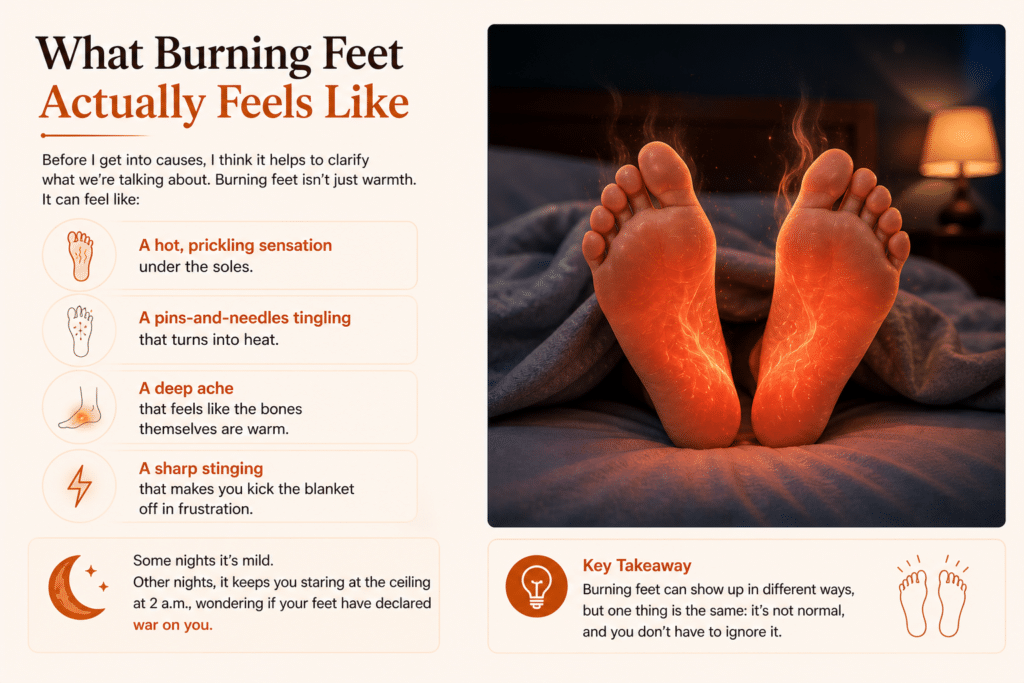
What Burning Feet Actually Feels Like
Before I get into causes, I think it helps to clarify what we’re talking about. Burning feet isn’t just warmth. It can feel like:
A hot, prickling sensation under the soles. A pins-and-needles tingling that turns into heat. A deep ache that feels like the bones themselves are warm. Or sometimes, a sharp stinging that makes you kick the blanket off in frustration.
Some nights it’s mild. Other nights, it keeps you staring at the ceiling at 2 a.m., wondering if your feet have declared war on you.
Why Symptoms Get Worse at Night
Here’s something most people don’t realise. Burning feet often feel worse at night, and there are real, logical reasons for that.
During the day, your brain is busy. You’re walking, working, scrolling, talking. Your nervous system is processing hundreds of signals at once. At night, when everything slows down, those nerve signals get amplified. It’s the same reason a small toothache feels enormous at midnight.
On top of that, body temperature naturally rises slightly in the evening as part of your circadian rhythm. Add a warm blanket, reduced air circulation, and stagnant blood flow from lying still, and your feet basically become a heat trap.
So the burning isn’t necessarily worse, it’s just louder when the world goes quiet.
The Most Common Causes of Burning Feet
In my research, I kept seeing the same few culprits show up again and again. Let me break them down honestly.
Peripheral Neuropathy
This is the big one. Peripheral neuropathy means the nerves in your feet aren’t communicating properly with your brain. They send confused signals, which your brain interprets as burning, tingling, or numbness.
According to the Cleveland Clinic, peripheral neuropathy affects millions of adults globally, and the feet are usually the first place it shows up. The nerves there are the longest in the body, so they’re the most vulnerable when something goes wrong.
Diabetes and Blood Sugar Issues
Diabetic neuropathy is one of the most common reasons people develop burning feet. High blood sugar over time damages the small blood vessels that feed your nerves, and those nerves slowly start to misfire.
If you have diabetes or pre-diabetes, this is worth taking seriously. The American Diabetes Association consistently lists nighttime foot burning as a key warning sign. I’ve spoken with people who ignored it for years, only to find out their A1C had been creeping up the entire time.
Vitamin B12 Deficiency
This one surprised me when I first learned about it. B12 is essential for nerve health, and a deficiency can cause your nerves to literally start losing their protective coating, called myelin. When that happens, signals get scrambled, and burning sensations show up, especially at night.
People who follow strict vegetarian or vegan diets, those over 50, and anyone on long-term acid reflux medication are at higher risk. A simple blood test can confirm it, and the fix is often as straightforward as supplementation under medical guidance.
Poor Circulation
If your blood isn’t flowing well to your feet, the tissues there don’t get enough oxygen. That triggers nerve irritation, and you feel it as warmth, tingling, or burning. Conditions like peripheral artery disease (PAD) fall into this category.
I noticed that many people who deal with this also report cold feet during the day and burning feet at night, which sounds contradictory but actually makes sense once you understand the circulation cycle.
Alcohol-Related Nerve Damage
Heavy alcohol use over time damages peripheral nerves directly. It also depletes B vitamins, which double-impacts nerve health. This is sometimes called alcoholic neuropathy, and burning feet at night is one of its earliest signs.
Hypothyroidism
An underactive thyroid slows down your entire metabolism, and that includes nerve repair. Fluid retention from low thyroid function can also press on nerves in the feet, creating that familiar burning feeling.
Tarsal Tunnel Syndrome
Think of this as carpal tunnel, but for the feet. A nerve called the tibial nerve gets compressed near the ankle, and the result is burning, tingling, or shooting pain along the sole. It often gets worse at night because pressure builds up when you’re lying down.
Night-Specific Triggers I’ve Noticed
Beyond medical causes, there are everyday things that quietly make burning feet worse. I’ve seen these come up repeatedly:
Wearing tight socks to bed. Sleeping in a room that’s too warm. Heavy blankets that trap heat. Eating spicy food close to bedtime, which can affect circulation. Dehydration throughout the day. Long hours of standing or walking before sleep.
I once spent a week swapping my thick winter blanket for a lighter one, and the burning reduced noticeably. Sometimes the smallest change makes the biggest difference.
How I’d Approach Relief, Step by Step
Now for the part that actually matters. Here’s what genuinely helps, based on real medical guidance and consistent user reports.
Cool Your Feet Before Bed
A short soak in cool (not ice-cold) water for ten minutes can calm overactive nerves. I’ve found this especially useful on hot, humid nights. Pat them dry and let them breathe before sleeping.
Elevate Your Feet
Propping your feet on a pillow improves blood flow back to the heart and reduces inflammation. It sounds small, but it works.
Switch to Breathable Sleepwear
Cotton socks, if you must wear them, beat synthetic ones every time. Better yet, leave your feet uncovered if your room allows it.
Manage Blood Sugar Carefully
If you’re diabetic or borderline, this is non-negotiable. Stable blood sugar is the single most powerful tool against diabetic neuropathy. Regular monitoring, balanced meals, and consistent exercise genuinely move the needle.
Add B-Complex Vitamins (After Testing)
Don’t guess. Get a blood test first. If you’re low on B12, B6, or folate, supplementing under a doctor’s advice can dramatically reduce burning over a few weeks.
Try Gentle Foot Stretches
Rolling a tennis ball under your foot for two minutes before bed releases tension in the plantar fascia and improves nerve flow. Simple, free, and surprisingly effective.
Consider Topical Creams
Capsaicin cream, derived from chilli peppers, sounds counterintuitive but actually desensitises overactive nerves over time. There are also lidocaine-based creams available. Always patch-test first.
Stay Hydrated
Dehydrated nerves are irritable nerves. I aim for steady water intake throughout the day, not just chugging right before bed.
When You Should Stop Self-Treating and See a Doctor
I’m a big believer in trying simple fixes first, but there are clear signals that mean you need professional help. Don’t ignore these:
The burning lasts more than two weeks despite lifestyle changes. You also feel numbness, weakness, or loss of balance. The skin on your feet changes colour or develops sores. You have diabetes and notice any new foot symptom. The pain wakes you up multiple nights in a row.
A general physician can run basic blood tests, and if needed, refer you to a neurologist or endocrinologist. Catching nerve issues early makes a massive difference in long-term outcomes.

Frequently Asked Questions
Is burning feet at night always serious? Not always. Sometimes it’s just heat, tight socks, or dehydration. But if it’s persistent, it deserves attention.
Can stress cause burning feet? Yes, indirectly. Chronic stress affects circulation and nerve sensitivity, which can worsen existing symptoms.
Does walking help or hurt? Light walking usually helps by improving circulation. Long, intense walks on hard surfaces can make it worse.
How long does relief take? For lifestyle-based causes, a few days to a couple of weeks. For nerve-related causes, expect a longer recovery, often months with proper treatment.
Final Thoughts
Burning feet at night isn’t something you should just live with or laugh off as “weird body stuff.” Your body is genuinely trying to tell you something, whether it’s a vitamin deficiency, a circulation issue, or an early warning sign of something bigger.
The good news is that most causes are manageable, sometimes with surprisingly simple changes. Start with the basics, pay attention to patterns, and don’t hesitate to get tested if symptoms stick around.
Your feet carry you through life. Listening to them, especially when they start whispering at 2 a.m., is one of the smartest things you can do for your long-term health.