
I’ve been researching nerve-related symptoms for years, and there’s something fascinating about the relationship between itching and tingling. Most people think these are separate sensations, but they often overlap and when they happen together, it usually means your nervous system is trying to tell you something. In this article, I’ll break down what itching and tingling mean when they occur together, why your skin might be sending these signals, and what you can actually do about it.
Understanding Itching and Tingling Together
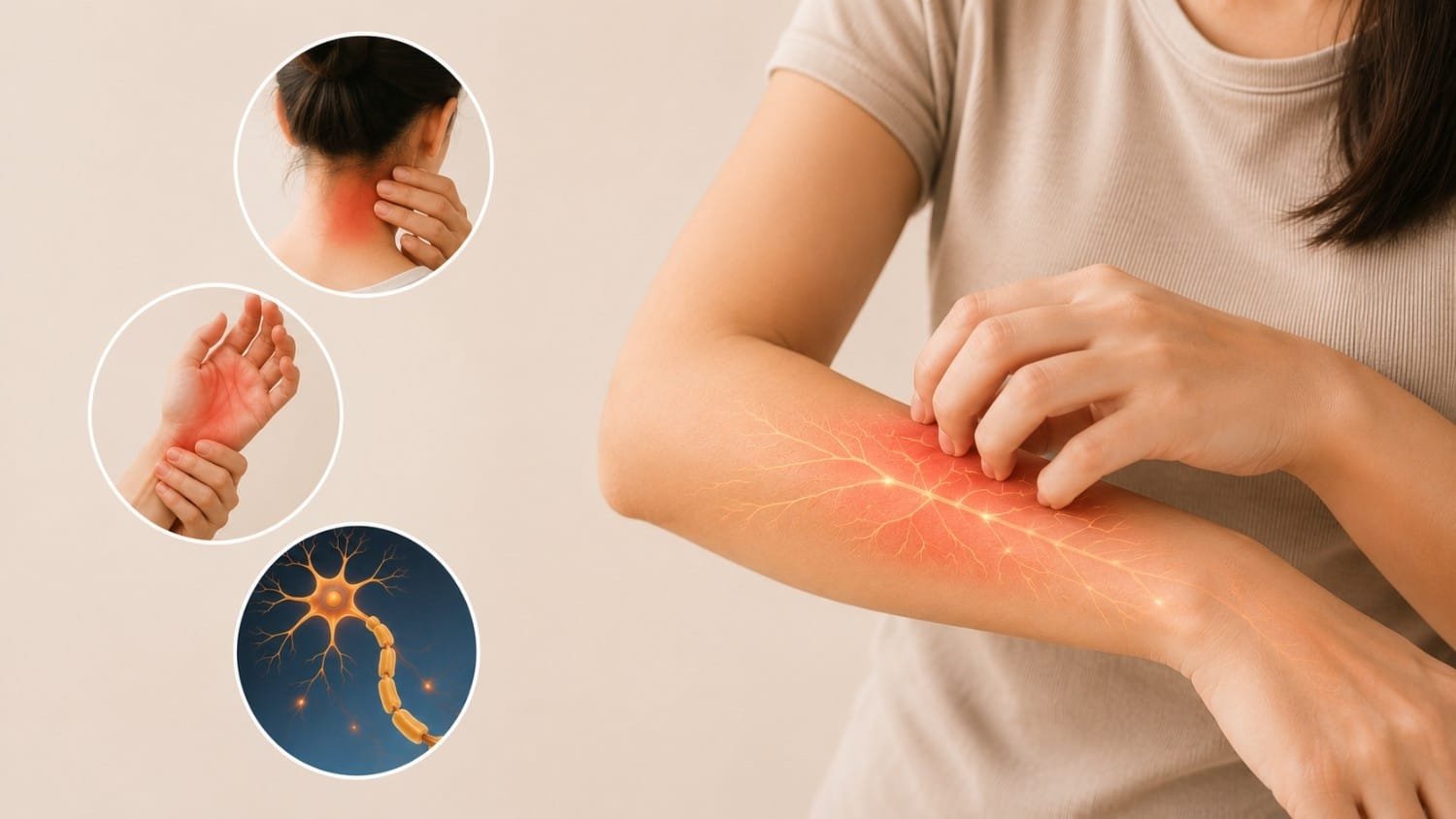
When people describe itching and tingling sensations, they’re usually talking about that strange combination where your skin feels irritated, prickly, and sensitive all at once. You might feel a crawling sensation, like something tiny is moving across your skin, or you might have intense itching that turns into that familiar “pins and needles” feeling when you scratch.
Here’s what I find most interesting: both itching and tingling involve your peripheral nerves the ones that run from your spinal cord to the rest of your body. These nerves have specific receptors that detect different sensations, and when they get irritated or damaged, they can fire off mixed signals. That’s why you often feel both at the same time.
This isn’t just a minor annoyance. Your skin is your largest sensory organ, and when it’s sending weird signals, it could be pointing to issues ranging from temporary irritation to conditions that need proper treatment.
Common Causes of Itching and Tingling
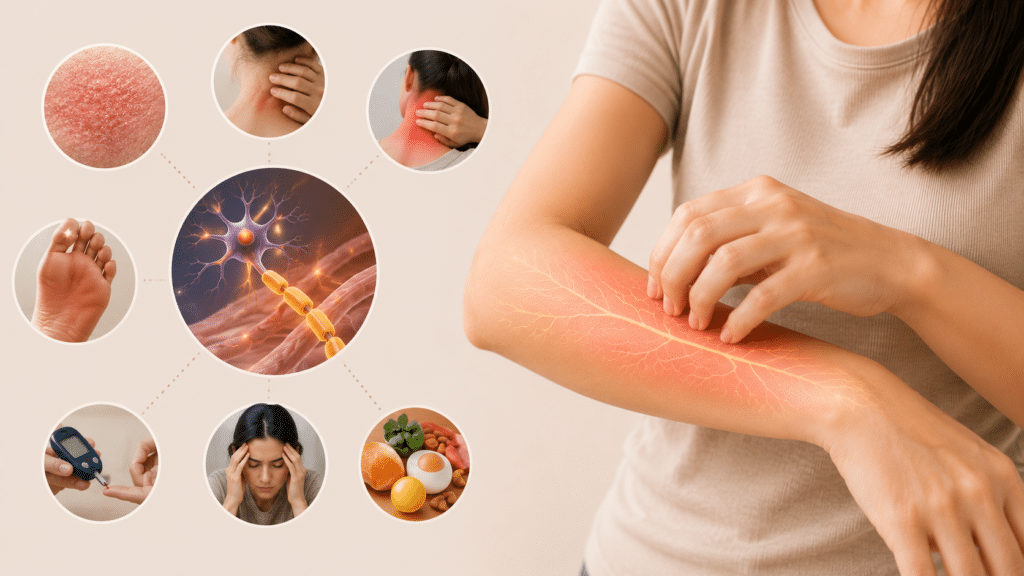
After years of looking into this, I’ve found that itching and tingling together typically stems from several recognizable categories of causes. Let me walk you through the main ones.
Neuropathic Conditions
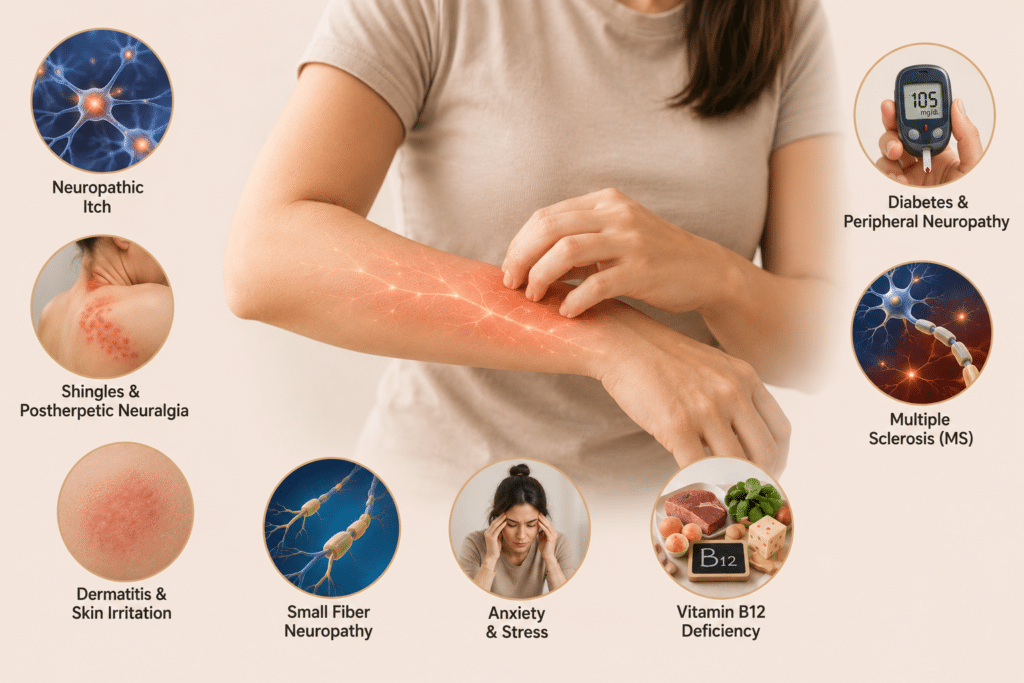
Neuropathy is one of the biggest culprits I see. When your peripheral nerves get damaged often from diabetes, vitamin deficiencies, or certain medications you can experience burning, itching, and tingling simultaneously. Diabetic neuropathy commonly affects the hands and feet first, creating that uncomfortable combination. The high blood sugar damages small blood vessels that supply your nerves, leading to these strange sensations.
Peripheral neuropathy can also result from chemotherapy, alcohol abuse, and certain autoimmune conditions. What makes this type particularly frustrating is that the itching often doesn’t respond to typical anti-itch creams because the problem isn’t with your skin, it’s with the nerves themselves.
Allergic Reactions
Allergies frequently cause both itching and tingling. When your immune system reacts to something food, medication, insect bite, or environmental allergen it releases histamine and other chemicals that affect your skin and nerves. The itching comes from the inflammatory response, while the tingling can result from the localized swelling pressing on tiny nerve endings.
Contact dermatitis, where your skin touches an irritant or allergen, creates this combination in the affected area. Poison ivy, certain metals, fragrances, and cleaning products are common triggers. Sometimes the reaction spreads beyond the initial contact point, which can be confusing.
Nerve Compression
Compressed nerves can cause surprisingly widespread symptoms. A pinched nerve in your neck or spine might create itching and tingling that radiates down your arm or leg. Carpal tunnel syndrome affects the hands and fingers, causing that familiar combination of itching, tingling, and sometimes burning. Thoracic outlet syndrome compresses nerves in your shoulder area, creating similar sensations.
The tricky part is that compression often causes symptoms in unexpected places. You might feel it in your forearm when the problem is actually in your neck. This is why paying attention to where the sensation starts and travels matters.
Skin Conditions
Eczema and psoriasis both involve itching that can progress to tingling, especially when you scratch. The damage to your skin’s surface exposes nerve endings, making them more sensitive. Scratching creates a vicious cycle itching leads to scratching, which damages skin further, leading to more itching and tingling.
Fungal infections like athlete’s foot cause intense itching and burning, often with accompanying tingling as the infection progresses. The fungus irritates the skin and affects the local nerve endings, creating that characteristic combination.
Systemic Health Issues
Your overall health plays a huge role. Thyroid disorders, particularly hypothyroidism, can cause dry skin that itches and tingles. Kidney disease often leads to generalized itching, sometimes with a crawling sensation. Liver problems create similar symptoms due to bile salt buildup in the skin.
Anemia and other blood disorders sometimes manifest as itching and tingling, especially in the extremities. Multiple sclerosis frequently includes sensory changes like these it’s often one of the earliest symptoms people notice.
Psychological Factors
I find that stress and anxiety play a bigger role than most people realize. When you’re stressed, your nervous system becomes more sensitive, which can lower your threshold for sensations like itching and tingling. This is sometimes called “stress-induced paresthesia.” Additionally, anxiety can cause muscle tension and hyperventilation, both of which affect nerve function.
When to Take This Seriously
I’m not trying to worry you, but some situations need prompt attention. Seek medical care if your itching and tingling come with a rash that spreads quickly, especially if it affects your face or comes with swelling. Any sudden onset of intense symptoms, especially after starting a new medication, needs evaluation.
If your symptoms are bilateral affecting both sides of your body this could indicate a systemic issue rather than a local nerve problem. Also get checked if you have weakness accompanying the itching and tingling, or if symptoms wake you up at night consistently.
A doctor should evaluate persistent symptoms that don’t improve with basic home care within a few weeks. Don’t assume it’s “nothing” I’ve seen plenty of people ignore symptoms that turned out to need treatment.
Treatment Approaches That Work
Treatment depends entirely on finding and addressing the underlying cause, but here’s what I typically see work well.
For neuropathic itching and tingling, medications like gabapentin, pregabalin, or certain antidepressants often help. These don’t just mask symptoms they actually calm down overactive nerves. Topical treatments like capsaicin cream or lidocaine patches can provide relief for localized symptoms.
Allergic reactions respond well to antihistamines, both oral and topical. For contact dermatitis, identifying and avoiding the trigger is crucial. A dermatologist can perform patch testing to pinpoint specific allergens.
For nerve compression issues, physical therapy often helps by addressing posture, muscle imbalances, and ergonomics. Wrist splints work well for carpal tunnel. Some people need anti-inflammatory medications or, in severe cases, surgical decompression.
Skin conditions like eczema need a multi-pronged approach: moisturizers, prescription topical steroids, and sometimes light therapy. Working with a dermatologist helps tailor the right combination for your specific situation.
Lifestyle modifications matter too. Managing underlying conditions like diabetes, reducing alcohol intake, ensuring adequate vitamin intake (especially B vitamins), and stress management all contribute to improvement.
What You Can Try at Home
Before you see a doctor, there are some things that might help. Keep your skin moisturized dry skin itches more and becomes more sensitive. Use gentle, fragrance-free products to avoid additional irritation.
Apply cool compresses to affected areas this can calm both itching and tingling. Avoid hot showers, as heat often makes these sensations worse. Wear loose, breathable clothing made from natural fibers like cotton.
Keep a symptom diary note when it starts, what you ate, what products you used, your stress levels, and anything else that might be relevant. Patterns often emerge that help with diagnosis.
Over-the-counter antihistamines can help with allergy-related itching, and moisturizers with ingredients like ceramides support skin barrier function. If you suspect vitamin deficiency, a B-complex supplement is generally safe to try.
Wrapping It Up
Itching and tingling together is your body’s way of signaling that something isn’t quite right. It could be something simple like dry skin or an allergic reaction, or it could be your nerves telling you about an underlying condition that needs attention.
I’ve seen plenty of people dismiss these symptoms as minor, only to discover they had something that needed treatment. I’ve also seen people worry unnecessarily over something that resolved with simple lifestyle changes. The key is paying attention, being systematic about identifying patterns, and getting evaluated when something feels off.
Your body communicates with you these sensations are information. Use them wisely, and don’t hesitate to seek professional help when the story doesn’t make sense or symptoms persist.
Frequently Asked Questions
Yes. Anxiety can overstimulate the nervous system and trigger tingling, crawling, burning, and itching sensations.
This often points toward nerve-related itching, dry skin, medication reactions, or systemic causes rather than surface skin irritation.
Sometimes. Peripheral neuropathy, diabetes, vitamin deficiencies, and nerve compression can all trigger itching with tingling.
Yes. Low vitamin B12 commonly affects nerve function and may create tingling, burning, or itching sensations.
You should seek medical attention if symptoms become persistent, spreading, painful, or appear alongside weakness, numbness, or neurological changes.
Final Thoughts
An itching and tingling sensation under the skin can feel genuinely confusing because it sits right between dermatology and neurology.
Sometimes the problem is as simple as irritated skin or stress. Other times, nerves are quietly trying to tell you something more important.
The key is paying attention to patterns, triggers, and accompanying symptoms instead of immediately assuming the worst.
And honestly, if scratching hasn’t solved the problem after the fiftieth attempt, your nerves might be asking for attention instead of your fingernails.