
I remember the first time my back started tingling during a long drive. I thought I had been sitting in one position for too long, so I shifted around in my seat and tried to ignore it. But the sensation lingered, and honestly, it scared me a little. Like many people, I immediately started wondering what was wrong with my spine.
If you have ever experienced a tingling sensation in your back — whether it is in your upper back, lower back, or somewhere in between — you are not alone. This is a surprisingly common symptom that can range from something minor to a sign of something more serious. Let me walk you through what might be happening and when you should pay attention.
Understanding Tingling in Your Back
Tingling, medically known as ‘paraesthesia’, is that pins-and-needles sensation that happens when nerves are compressed, irritated, or damaged. Unlike temporary tingling from sitting in one position too long, persistent or recurring tingling in your back typically signals that something is putting pressure on your spinal nerves or the nerve roots that branch out from your spine.
Your back is home to an intricate network of nerves that run through your spinal column and extend to every part of your body. When any part of this system gets disrupted, you might feel tingling, numbness, burning, or even weakness in the affected area or anywhere along the nerve pathway.
What many people do not realise is that back tingling is not a condition by itself — it is a symptom. Finding the underlying cause is the key to getting the right treatment.
Upper Back vs Lower Back: Why It Matters
The location of your tingling matters more than you might think. Upper and lower back tingling often have different causes and implications.
Upper back tingling typically involves the thoracic spine — the twelve vertebrae in the middle of your back that attach to your ribs. This area is less mobile than your neck or lower back, which actually makes certain injuries less common. When tingling does occur in the upper back, it is often related to poor posture, muscle tension, or problems with the thoracic discs.
Lower back tingling is far more common and usually involves the lumbar spine — the five largest vertebrae in your lower back that bear most of your body weight. This area is highly prone to compression and wear-and-tear, which is why lumbar-related tingling is frequently associated with conditions like herniated discs, spinal stenosis, and degenerative disc disease.
Your doctor will pay close attention to where you feel the tingling because that helps narrow down which nerves or nerve roots are affected and what might be causing the problem.
Common Causes of Tingling in the Back
Herniated Disc
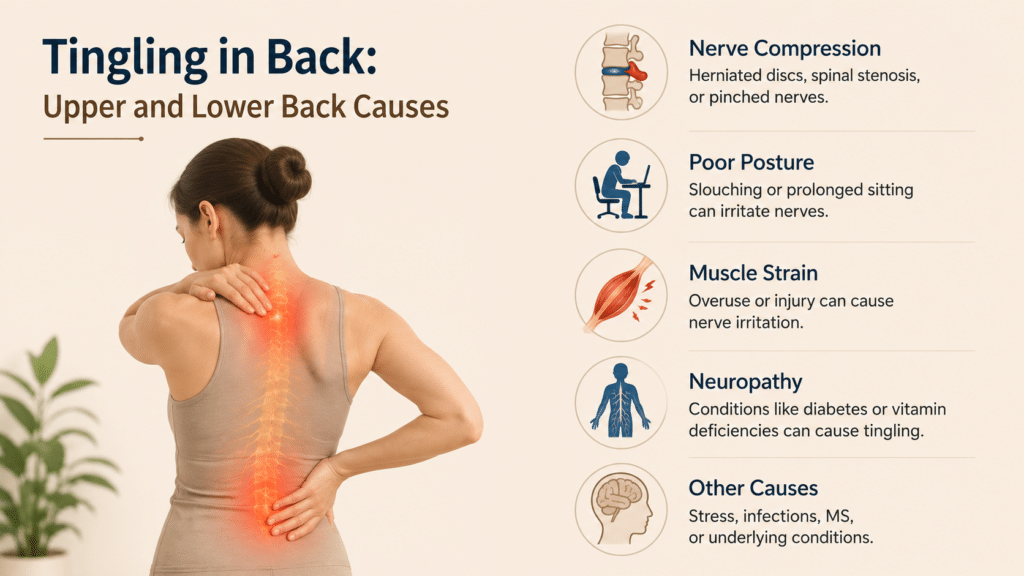
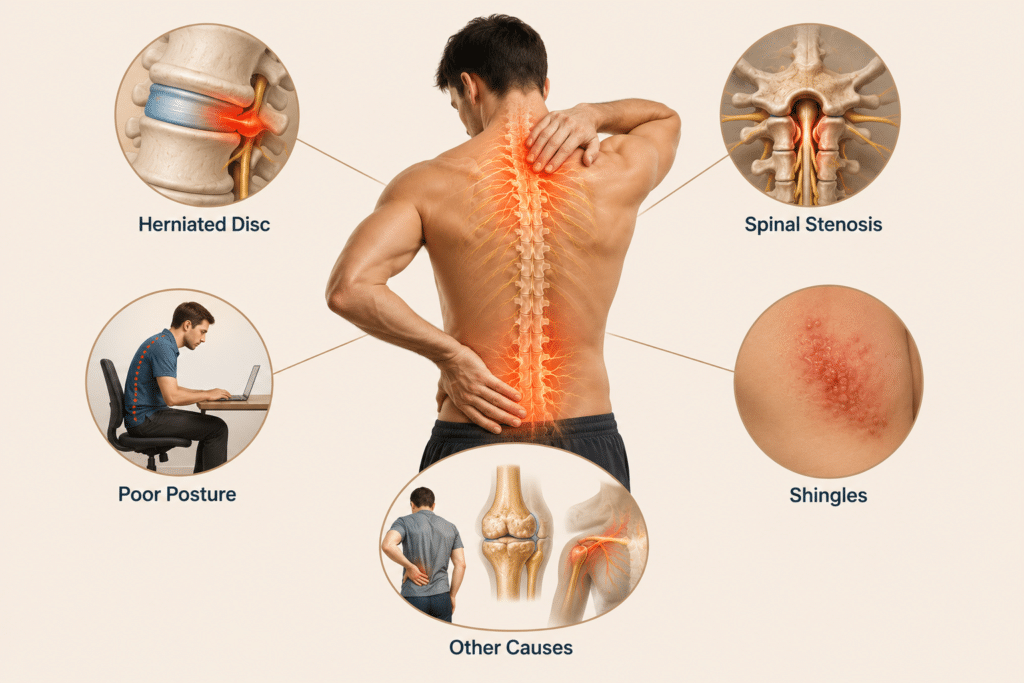
This is one of the most common causes of back tingling, especially in the lower back. Your spinal discs act as cushions between your vertebrae. When the soft inner portion of a disc pushes through its outer shell and presses on nearby nerves, you can experience tingling, numbness, pain, and weakness that radiates along the nerve pathway.
I have talked to many people who were surprised to learn that a disc problem could cause tingling all the way down their leg – a condition often called ‘sciatica’. The disc herniation does not even have to be severe to cause significant symptoms.
Spinal Stenosis
Spinal stenosis is essentially a narrowing of the spinal canal, which puts pressure on the spinal cord and nerve roots. It is most common in the lower back and tends to develop as we age. The tingling from spinal stenosis often gets worse when walking and improves when sitting down or leaning forward.
Many people with spinal stenosis describe their symptoms as a burning or tingling sensation that starts in the lower back and radiates down into the buttocks and legs. It can be quite debilitating, but treatment options are available.
Poor Posture
I cannot stress enough how much posture affects back health. In our modern world of desk jobs and screen time, slouching has become almost epidemic. When you sit hunched over a computer or phone for hours on end, you put excessive pressure on your thoracic and cervical spine.
This prolonged poor posture can compress nerves in your upper and lower back, leading to that telltale tingling sensation. The good news is that posture-related tingling often improves dramatically when you correct your sitting habits and strengthen your back muscles.
Shingles
Shingles is caused by the same virus that gives you chickenpox. After you recover from chickenpox, the virus stays dormant in your nerve tissues and can reactivate years later as shingles. One of the early signs of shingles is a tingling, burning, or painful sensation, typically on one side of the body.
When shingles affects the nerves around your torso, you might feel tingling in your back or chest before the characteristic rash appears. This can be concerning because the tingling might feel like a spinal problem at first. If you suspect shingles, seeing a doctor quickly is important because antiviral medication works best when started early.
Other Causes
Several other conditions can cause back tingling. Muscle strain from heavy lifting or sudden movements can compress nerves temporarily. Osteoarthritis can cause bone spurs that press on nerves. In rare cases, tumours or infections in the spine can cause similar symptoms.
There is also a condition called thoracic outlet syndrome that affects the space between your collarbone and first rib, causing tingling in the upper back, shoulder, and arm. This is more common in people who do repetitive arm movements.
How Nerves Map to Your Symptoms
Your nervous system works like an electrical grid. Each nerve carries specific signals to and from particular areas of your body. When a nerve is compressed or irritated, you often feel symptoms in the exact area that nerve serves — even though the actual problem is somewhere along the nerve pathway.
For example, if you have a herniated disc in your lower back pressing on the sciatic nerve, you might feel tingling not just in your back but also in your buttock, thigh, calf, and even your foot. This is called ‘referred pain’ or ‘radicular symptoms’.
The specific location of your tingling gives doctors important clues. Tingling along the back of your leg often points to sciatic nerve involvement. Tingling across your shoulder blades might indicate a thoracic spine issue. Tingling that wraps around your ribs like a band often suggests nerve root compression at a specific level.
Understanding this nerve mapping helps explain why a problem in your spine can cause symptoms in seemingly unrelated areas of your body. It also helps with diagnosis and treatment planning.
Treatment Options
The treatment for back tingling depends entirely on what is causing it. Here is what typically happens.
For minor cases related to posture or muscle tension, your doctor might recommend targeted physical therapy, posture correction, and ergonomic adjustments to your workspace. Simple changes like using a standing desk, adjusting your chair height, or taking regular movement breaks can make a huge difference.
When a herniated disc is the culprit, initial treatment usually involves rest, anti-inflammatory medications, and physical therapy. Many people improve with these conservative measures. If symptoms persist, epidural steroid injections or surgery might be considered.
For spinal stenosis, treatment often includes physical therapy, pain management, and sometimes surgical decompression to create more space for the nerves. The approach depends on how severe the stenosis is and how much it affects your daily life.
If an infection like shingles is causing your symptoms, antiviral medications and proper medical care are essential. Early treatment can shorten the outbreak and reduce the risk of long-term complications like postherpetic neuralgia.
In all cases, maintaining a healthy weight, staying active, and strengthening your core muscles can help prevent recurrence and support long-term spinal health.
When to See a Doctor
Not every episode of back tingling requires an emergency room visit, but you should seek medical attention if your tingling is severe, persistent, or accompanied by other concerning symptoms. Weakness in your arms or legs, loss of bladder or bowel control, unexplained weight loss, fever, or worsening pain at night are all red flags that warrant prompt evaluation.
If your tingling started after a fall or injury, or if it is getting progressively worse over time, do not wait to get checked out. Early diagnosis typically leads to better outcomes.

Frequently Asked Questions
Tingling alone is not typically a stroke warning sign. Stroke symptoms usually come on suddenly and include weakness, difficulty speaking, confusion, and vision changes. If you have sudden, severe tingling along with these other symptoms, seek emergency care immediately
Tingling alone is not typically a stroke warning sign. Stroke symptoms usually come on suddenly and include weakness, difficulty speaking, confusion, and vision changes. If you have sudden, severe tingling along with these other symptoms, seek emergency care immediately
Yes, sleeping in an awkward position can compress nerves and cause temporary tingling in your back or elsewhere. This usually resolves on its own within a few minutes to an hour. If you frequently wake up with tingling, consider evaluating your sleep position and pillow setup.
Gentle stretching can definitely help, especially if your tingling is related to muscle tension or poor posture. Focus on stretches that target your back, chest, and shoulder muscles. However, if a specific condition like a herniated disc is causing your symptoms, some stretches might actually make things worse, so it is smart to work with a physical therapist first.
This depends entirely on the cause. Posture-related tingling might resolve in minutes once you change position. Tingling from a herniated disc might take weeks to improve with conservative treatment. If your tingling is chronic or recurrent, managing the underlying condition is key to long-term relief.
Final Thoughts
Back tingling can be unsettling, but understanding what is happening in your body makes it less frightening. Whether it is something as simple as improving your posture or as involved as treating a herniated disc, most causes of back tingling are manageable with proper care.
My advice to anyone experiencing persistent tingling in their back is simple: pay attention to your body, track your symptoms, and do not dismiss what your body is telling you. A conversation with your doctor can either reassure you or help you get on the right treatment path.