
Have you ever felt a strange buzzing or vibrating sensation inside your body, almost like a phone vibrating under your skin, except there’s no phone there? I’ve experienced it myself, and honestly, the first time it happened, I checked my pockets three times before realising the vibration was coming from me.
A vibrating sensation in the body is more common than people think. Some people feel it in their legs, others in the chest, arms, feet, or even throughout the entire body. For some, it lasts a few seconds. For others, it keeps returning and becomes impossible to ignore.
The good news is that internal vibrations are often linked to manageable causes like anxiety, stress, caffeine, poor sleep, or temporary nerve irritation. But sometimes, they can point toward neurological or circulation-related conditions that deserve medical attention.
In this guide, I’ll walk you through what internal tremors actually are, the most common vibrating sensations in the body, causes, when the symptom becomes serious, and what genuinely helps.
What Is a Vibrating Sensation in the Body?
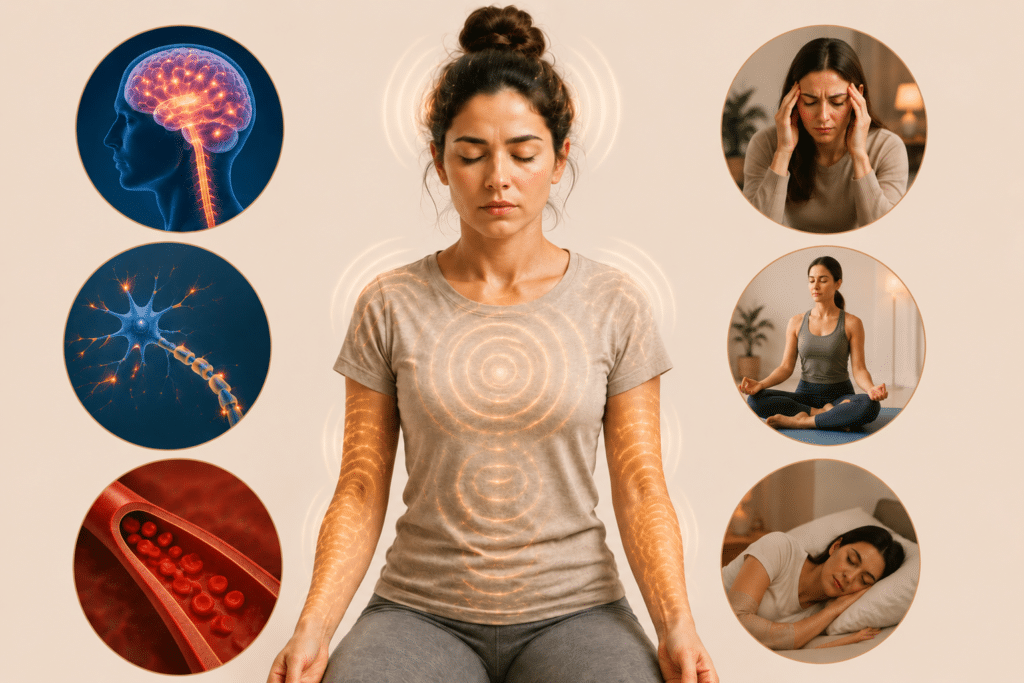
A vibrating sensation in the body is often described as the following:
- Internal buzzing
- Humming under the skin
- Invisible shaking
- Subtle trembling
- Electrical vibration feelings
Doctors sometimes call these internal tremors.
Unlike visible shaking, internal tremors are usually felt rather than seen. That’s what makes them so unsettling. You feel something happening very clearly, but nobody around you can see it.
The sensation may appear in the following:
- Legs
- Hands
- Feet
- Chest
- Arms
- Abdomen
- Entire body
Sometimes it happens during stress. Other times it shows up while resting quietly at night, which honestly makes it even creepier.
Why the Body Creates Internal Vibrations
Your nervous system works through electrical signals. Every movement, sensation, and reflex depends on nerves communicating properly with the brain and spinal cord.
When nerves become irritated, compressed, overstimulated, or chemically imbalanced, those signals can misfire. The brain interprets those misfires as buzzing, trembling, or vibrating sensations.
Think of it like static interference during a phone call. The message still travels, but the signal gets messy.
The exact cause often depends on:
- Where the sensation happens
- How long it lasts
- Whether other symptoms appear alongside it
That pattern is exactly what doctors use to narrow things down.
Common Causes of Vibrating Sensation in Body
Anxiety and Stress
This is one of the biggest causes of internal vibrations.
When anxiety activates the fight-or-flight response, adrenaline floods the body. Muscles tighten, nerves become hypersensitive, and the nervous system shifts into high alert mode.
That combination can create the following:
- Buzzing in the chest
- Vibrating legs
- Internal shaking
- Trembling before sleep
- Random humming sensations
I’ve personally noticed these symptoms during stressful work weeks combined with terrible sleep and way too much caffeine. Once my stress settled down, the vibrations faded almost completely.
The Cleveland Clinic recognises anxiety as a real cause of physical symptoms like trembling, tingling, dizziness, and internal shaking.
Essential Tremor
Essential tremor is a neurological condition that causes rhythmic shaking, especially in the hands or head.
Some people first notice subtle internal vibrations before visible shaking becomes obvious.
The tremors often worsen with:
- Stress
- Fatigue
- Anxiety
- Caffeine
According to the National Institute of Neurological Disorders and Stroke, essential tremor is one of the most common movement disorders.
Multiple Sclerosis (MS)
Multiple sclerosis happens when the immune system damages the protective covering around nerves.
This disrupts communication between the brain and body, which can trigger:
- Internal buzzing
- Vibrating legs
- Trembling sensations
- Tingling
- Numbness
MS usually comes with additional symptoms like fatigue, balance problems, vision changes, and muscle weakness.
Most people with internal vibrations do not have MS, but persistent neurological symptoms should always be evaluated properly.
Caffeine and Stimulants
This one gets overlooked constantly.
Too much caffeine overstimulates the nervous system and increases adrenaline production. That can trigger:
- Internal shaking
- Vibrating sensations
- Muscle twitching
- Palpitations
- Restlessness
I once combined strong coffee, an energy drink, and four hours of sleep during a deadline week. My nervous system basically staged a protest.
Common triggers include:
- Coffee
- Energy drinks
- Pre-workout supplements
- Nicotine
- Certain medications
Peripheral Neuropathy
Peripheral neuropathy means damage to nerves outside the brain and spinal cord.
People often describe it as:
- Buzzing
- Tingling
- Electric sensations
- Burning
- Vibrating feelings
The condition commonly affects the following:
- Feet
- Legs
- Hands
- Arms
Common causes include diabetes, vitamin deficiencies, alcohol use, chemotherapy, and autoimmune diseases.
The Mayo Clinic lists abnormal buzzing and tingling among classic neuropathy symptoms.
Parkinson’s Disease
Parkinson’s disease can sometimes create internal tremors before visible shaking develops.
People may feel:
- Vibrations in the chest
- Trembling while resting
- Internal buzzing in one limb
Parkinson’s usually includes other symptoms, like stiffness, slowed movement, and balance problems.
Sleep Deprivation
Poor sleep affects the nervous system more than most people realise.
When the brain becomes exhausted:
- Stress hormones rise
- Muscles twitch more easily
- Nerves become overactive
- Strange body sensations appear
Honestly, sleep deprivation can make the human body behave like badly coded software.
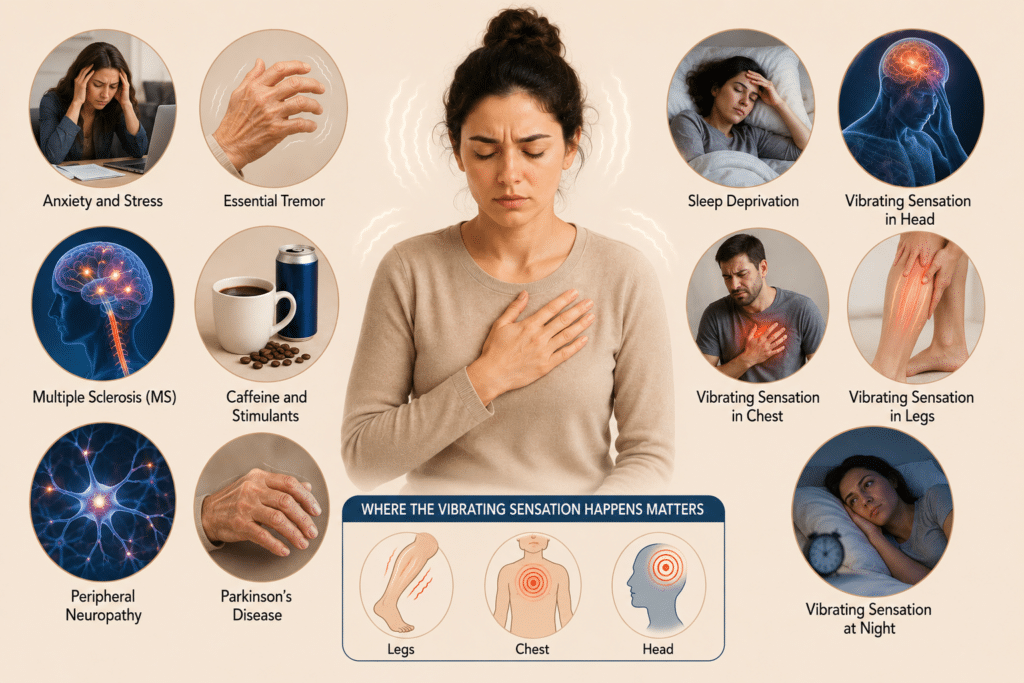
Where the Vibrating Sensation Happens Matters
Vibrating Sensation in Legs
This commonly points towards the following:
- Anxiety
- Sciatica
- Peripheral neuropathy
- Restless leg syndrome
- Circulation problems
If it worsens while sitting or lying down, nerve compression becomes more likely.
Vibrating Sensation in Chest
Chest vibrations are often linked to:
- Anxiety
- Adrenaline surges
- Palpitations
- Stress
However, chest symptoms paired with pain or breathlessness should never be ignored.
Vibrating Sensation in Head
Head vibrations or “brain zaps” may happen due to the following:
- Anxiety
- Sleep deprivation
- Medication withdrawal
- Migraine aura
- Neurological conditions
Vibrating Sensation at Night
Nighttime internal tremors are commonly linked to the following:
- Anxiety
- Restless leg syndrome
- Stress
- Caffeine
- Nervous system overstimulation
Many people notice symptoms more at night simply because the environment becomes quiet and distractions disappear.
When Internal Vibrations Become Serious
Most internal vibrations are harmless and temporary. But certain warning signs deserve urgent medical attention.
Seek medical help immediately if vibrations happen alongside the following:
- Weakness
- Facial drooping
- Slurred speech
- Severe dizziness
- Vision loss
- Confusion
- Loss of balance
- Chest pain
- Loss of bladder control
These symptoms may indicate stroke, spinal cord problems, or serious neurological conditions.
Persistent symptoms lasting weeks should also be evaluated, especially if they worsen over time.
How Doctors Diagnose Internal Tremors
When I first researched this symptom years ago, I assumed a diagnosis would be quick. It usually isn’t.
Doctors often combine the following:
- Neurological exams
- Blood tests
- MRI scans
- Nerve conduction studies
- EMG testing
- Vitamin B12 screening
- Thyroid testing
- Blood sugar checks
A good doctor looks at the pattern of symptoms rather than one sensation alone.
How to Reduce Vibrating Sensation in Body
Reduce Stress Levels
Stress management genuinely helps.
Deep breathing, mindfulness, therapy, walking, and reducing overstimulation calm the nervous system significantly.
Even 10 minutes of slow breathing before bed can reduce internal tremors.
Improve Sleep
Better sleep often reduces:
- Vibrations
- Twitching
- Anxiety symptoms
- Nervous system sensitivity
The brain repairs itself during proper sleep.
Cut Back on Caffeine
Reducing caffeine gradually can noticeably calm internal buzzing and shaking sensations.
Many people improve within days.
Stay Hydrated
Dehydration affects nerve and muscle function more than people realise.
Balanced meals, hydration, and proper electrolytes help stabilise nerve activity.
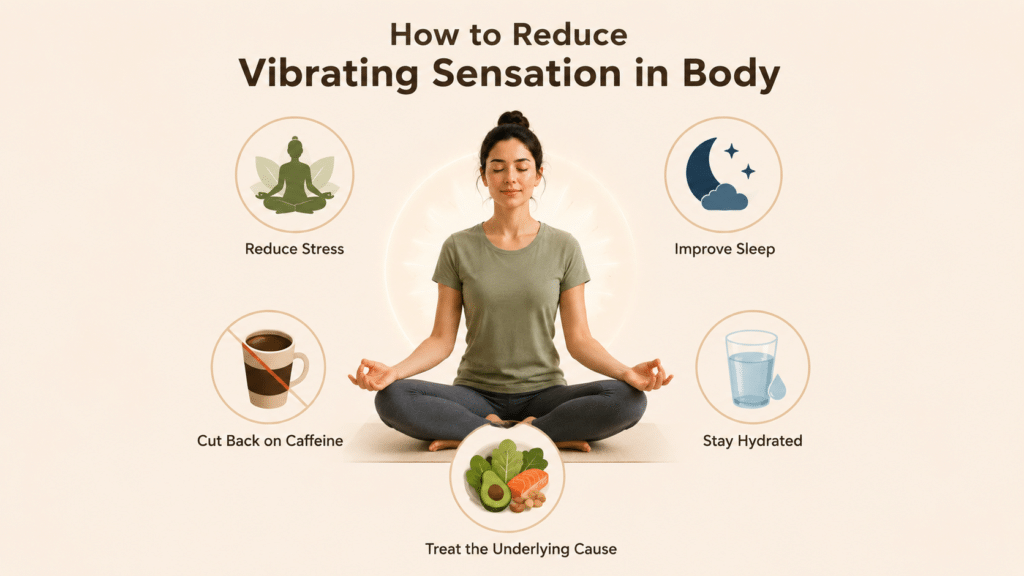
Treat the Underlying Cause
If the cause is:
- Diabetes → blood sugar control matters
- Vitamin deficiency → supplementation helps
- Anxiety → nervous system regulation helps
- MS → neurological treatment is necessary
Fixing the root problem usually improves the vibrations themselves.
Frequently Asked Questions
Yes. Anxiety is one of the most common causes of internal tremors and vibrating sensations due to adrenaline and nervous system overstimulation.
Nighttime leg vibrations are commonly linked to anxiety, restless leg syndrome, nerve irritation, or poor circulation.
Absolutely. Excess caffeine overstimulates the nervous system and can cause buzzing, shaking, palpitations, and internal vibrations.
Usually not. However, vibrations paired with weakness, speech changes, severe dizziness, or vision problems require immediate medical attention.
Yes. Low vitamin B12 and magnesium levels can affect nerve function and trigger buzzing or vibrating sensations.
Final Thoughts
A vibrating sensation in the body can feel genuinely strange, especially the first time it happens. I completely understand why people immediately assume something serious is going on.
But in reality, internal vibrations are often linked to manageable causes like stress, anxiety, caffeine, fatigue, or temporary nerve irritation.
That said, persistent or worsening symptoms deserve proper medical evaluation. Your nervous system usually gives clues before bigger problems develop.
And honestly, if your body has been running on caffeine, stress, and terrible sleep lately, it might simply be asking for a reboot.