
Have you ever felt your hands suddenly go tingly during a stressful moment, or your face buzz strangely right before an important meeting? I have, and the first time it happened, I genuinely thought something was medically wrong with me. Spoiler, it wasn’t. It was just my anxious nervous system putting on a full performance.
Anxiety has this wild ability to mess with the body in ways that feel almost too physical to be “just stress.” From tingling and numbness to dizziness and chest tightness, the symptoms can be confusing, scary, and surprisingly common. In this article, I’ll break down how anxiety causes tingling and numbness, what’s actually happening inside your body, and how to manage it. Everything I share is based on credible medical sources like the Mayo Clinic, Cleveland Clinic, the American Psychological Association (APA), and the NHS.
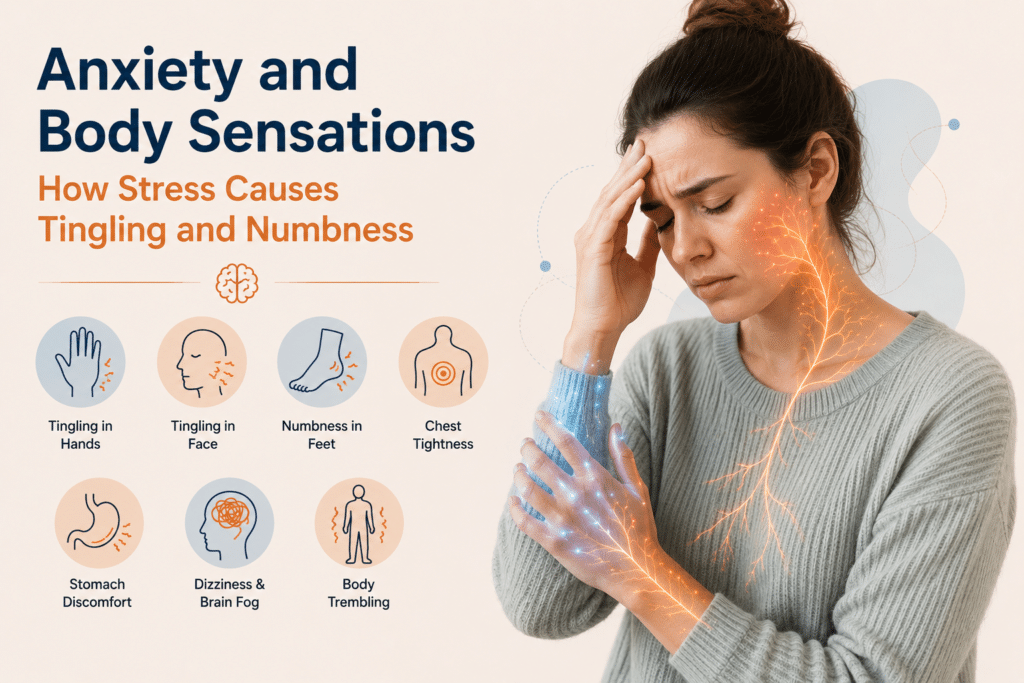
The Real Connection Between Anxiety and Body Sensations
Anxiety isn’t just a mental experience. It’s a full-body event. The mind and body share the same nervous system, so when stress hits, every organ, muscle, and nerve gets the memo. Tingling and numbness are some of the most common signals.
I’ve personally noticed that during high-anxiety days, my hands feel buzzy, my face heats up randomly, and even my feet sometimes tingle. None of this means something is wrong physically. It just means the body is reacting to stress as if it were facing a threat.
What Happens Inside the Body During Anxiety
To understand why anxiety causes tingling and numbness, you have to understand what happens internally during stress.
When the brain detects something stressful, even if it’s not life-threatening, it triggers the fight-or-flight response. This is your body’s ancient survival mechanism, and even though we no longer run from wild animals, our system still acts like we do.
Stress hormones like adrenaline and cortisol flood the bloodstream. Heart rate rises. Breathing speeds up. Blood gets redirected toward muscles. The nervous system becomes sharper, faster, and more sensitive.
This is normal in short bursts, but when anxiety becomes chronic or sudden, the body starts producing strange physical sensations.
How Fight-or-Flight Causes Tingling and Numbness
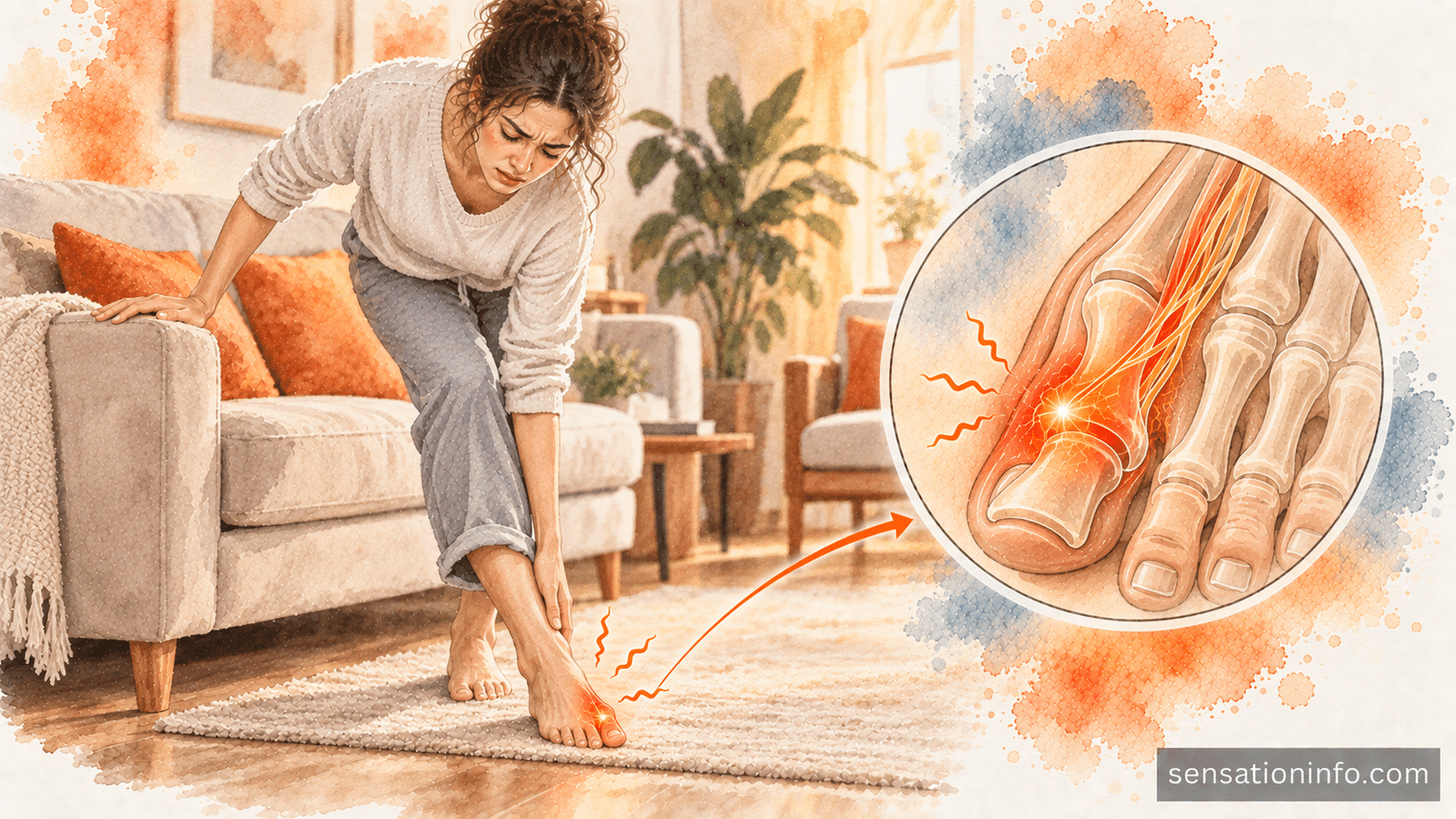
Here’s the part most people don’t know. During a stress response, your body shifts blood toward muscles you might need to use, like your arms and legs. As a result, blood flow to less critical areas, including your hands, feet, and face, temporarily reduces.
This shift can produce tingling, numbness, cold sensations, and pins-and-needles feelings. The nervous system also becomes hypersensitive, meaning it picks up signals it would normally ignore. That mild itch becomes a buzz. That tiny muscle twitch becomes a “weird sensation.”
I had a friend who genuinely thought she was having early signs of MS during her exam season. After the stress passed, all her symptoms vanished. Anxiety was the culprit the entire time.
Hyperventilation: The Secret Driver of Anxiety Sensations
Hyperventilation plays a huge role in how anxiety affects the body. When you’re anxious, your breathing becomes faster and shallower, even if you don’t realise it. This pushes out too much carbon dioxide, which changes the pH balance of your blood.
This shift triggers symptoms like:
- Tingling around the mouth
- Numbness in the fingers
- Lightheadedness
- Tightness in the chest
- A feeling of unreality
The Cleveland Clinic clearly recognises hyperventilation as a major reason behind tingling and numbness during anxiety episodes. The good news is that slow, controlled breathing reverses this within minutes.
Where Anxiety Sensations Show Up: A Body Map
This is one of the most useful sections, especially if you’ve been wondering why anxiety hits certain parts of your body more than others.
Hands
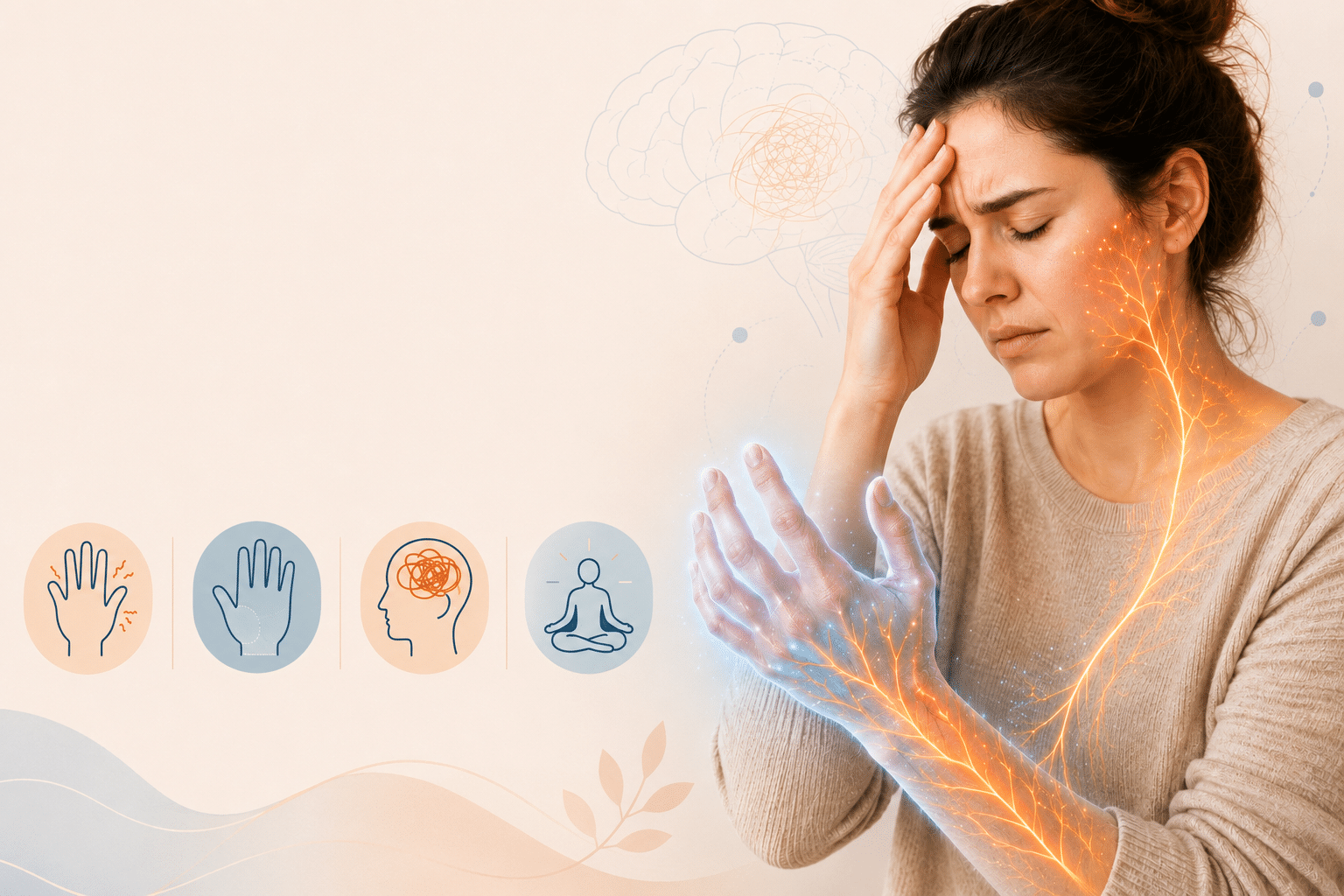
Tingling, buzzing, weakness, and a sensation that the hands “aren’t working properly.” This is one of the most common areas of anxiety-related symptoms.
Feet
Pins and needles, cold feet, weakness, or random tingling. This often appears during chronic anxiety or panic episodes.
Face
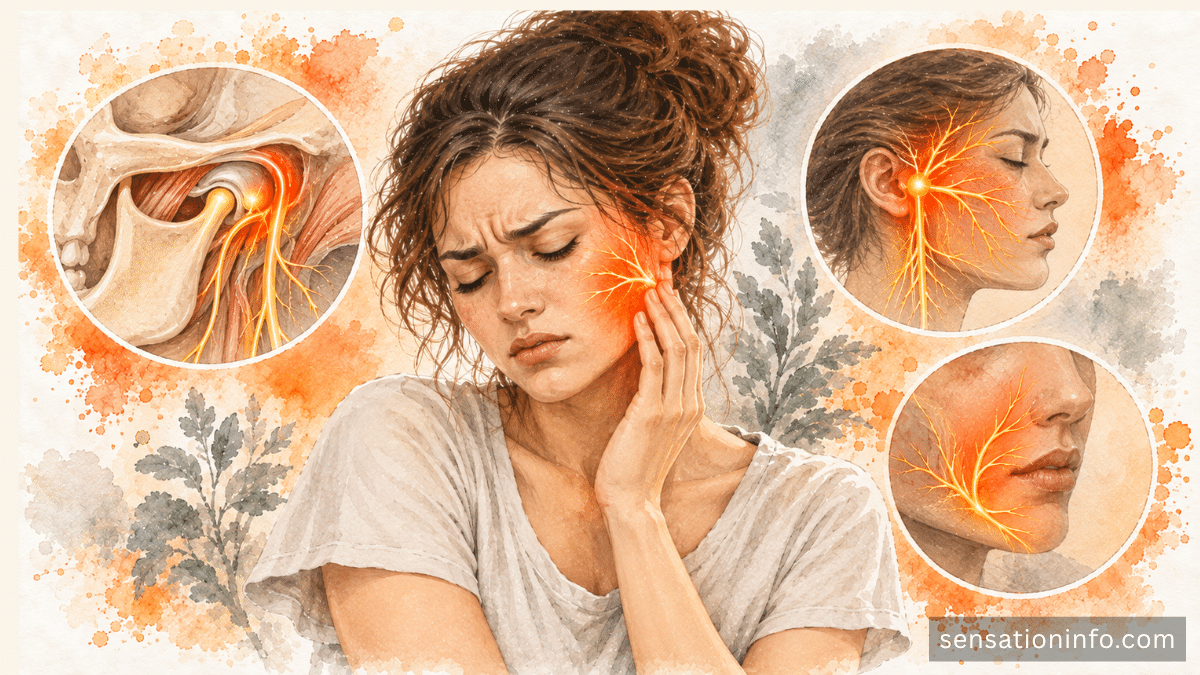
Numbness around the lips, cheeks, or scalp. The face has a dense network of nerves, which makes it highly reactive to stress.
Chest
Tightness, mild pain, fluttering sensations, or a feeling of pressure. Many people mistake this for heart issues.
Stomach
Butterflies, nausea, mild cramps, or a “knot” feeling. The gut and brain are deeply connected through the vagus nerve.
Head
Lightheadedness, dizziness, pressure, or “head fog.” This is often misinterpreted as something neurological.
Whole Body
Trembling, weakness, hot flashes, or a sense of “buzzing all over.” This usually appears during high-intensity anxiety or panic attacks.
I’ve personally experienced almost all of these at some point, and they always traced back to stress.
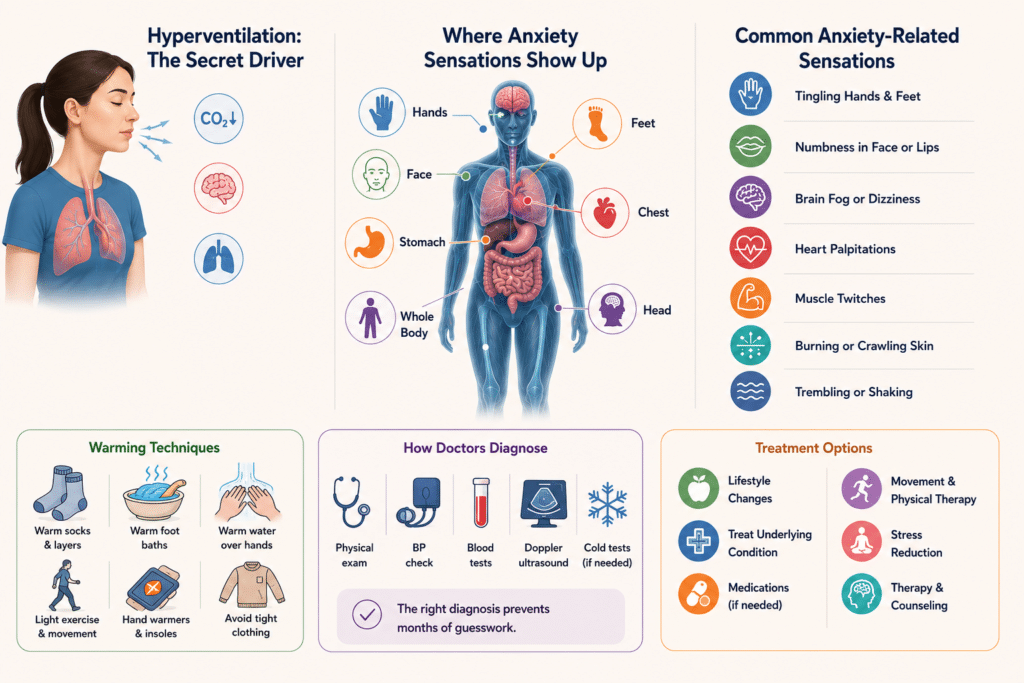
Common Anxiety-Related Sensations Explained
Let me break down some of the most common sensations and why they happen during anxiety.
Tingling Hands and Feet
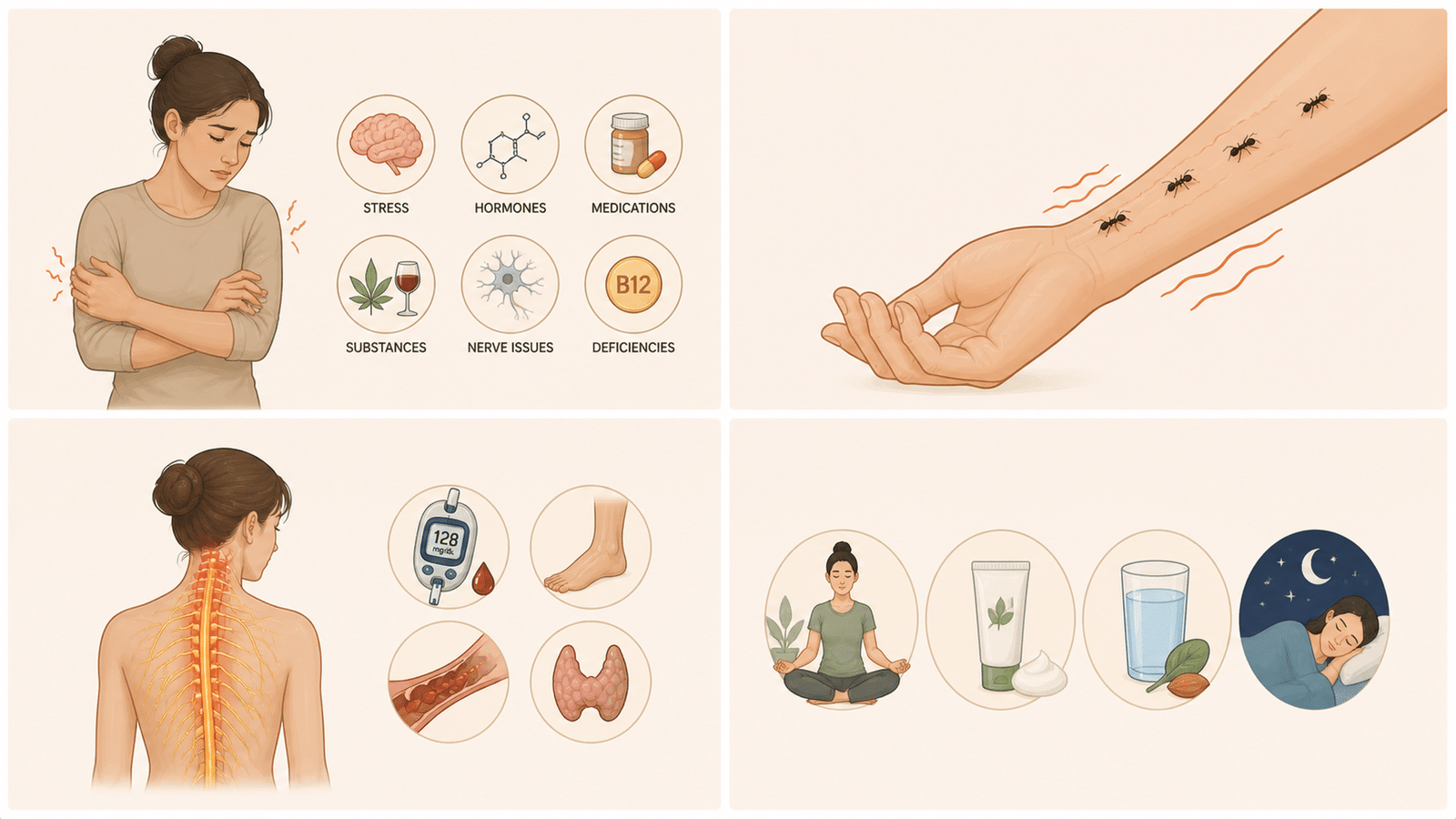
Caused by hyperventilation, reduced blood flow to extremities, and an overactive nervous system. Usually harmless during anxiety but worth investigating if persistent.
Numbness in the Face or Lips
Often caused by changes in blood circulation due to fast breathing. It feels alarming but typically resolves with controlled breathing.
Brain Fog or Dizziness
Stress affects oxygen distribution and overstimulates the nervous system. This makes thinking feel slow or foggy.
Heart Palpitations
A direct result of adrenaline. The heart races faster to prepare for action, even if the threat is imaginary.
Muscle Twitches
Stress increases nerve excitability, which causes random twitches. They’re harmless but annoying.
Burning or Crawling Skin
Anxiety can make nerves misfire, leading to formication, which is the medical term for crawling skin sensations.
Trembling or Shaking
Adrenaline causes the muscles to tense up, which sometimes leads to mild shaking.
How to Tell If It’s Anxiety or Something Else
This is a question I’ve personally asked myself many times. Here’s what usually helps separate anxiety symptoms from medical ones.
Anxiety sensations tend to:
- Come and go
- Move around the body
- Worsen during stress
- Improve with relaxation
- Be paired with racing thoughts or restlessness
Medical conditions tend to:
- Be persistent
- Be localised
- Worsen with movement or specific triggers
- Come with other symptoms like weakness, vision changes, or pain
When in doubt, always consult a doctor. Anxiety is real, but ruling out medical causes is part of healing.
Why Anxiety Sensations Feel So Convincing
Anxiety symptoms feel real because they are real. The body genuinely produces them. The mistake people make is interpreting these sensations as signs of disease when they’re actually signs of an overactive stress response.
Once I understood that my body wasn’t malfunctioning, just overreacting, I stopped panicking when symptoms popped up. That alone reduced my episodes drastically.
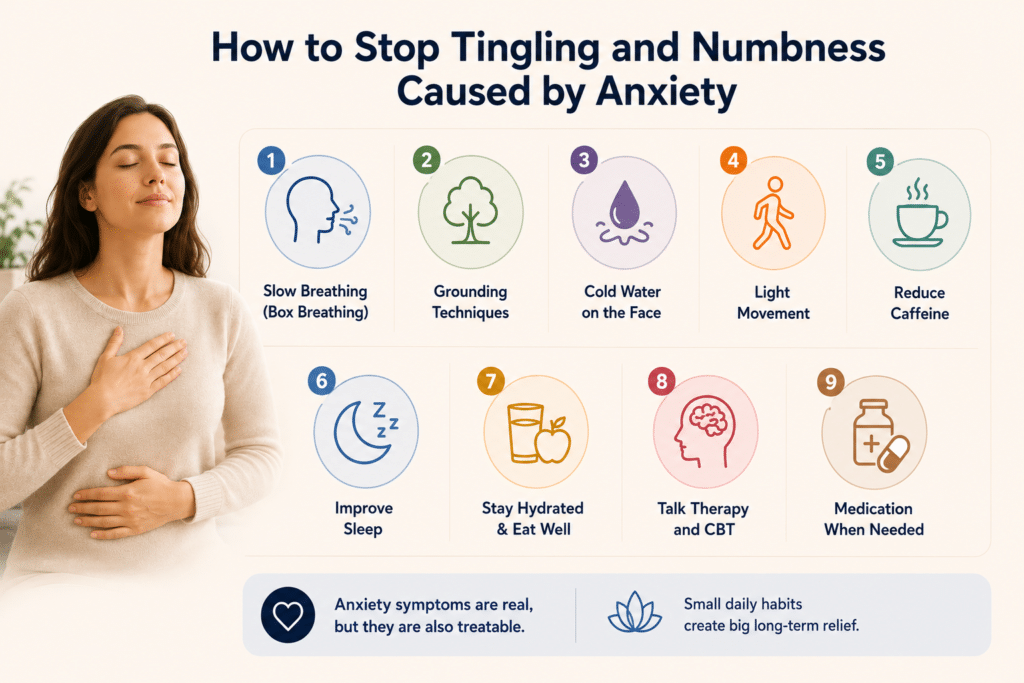
How to Stop Tingling and Numbness Caused by Anxiety
Treatment depends on the trigger, but here’s what genuinely works in real-world cases.
Slow Breathing (Box Breathing)
Slow, controlled breathing is the fastest way to reset your nervous system. Inhale for 4 seconds, hold for 4, exhale for 4, hold for 4. Repeat for a few minutes.
The American Lung Association supports this technique because it directly reduces hyperventilation symptoms.
Grounding Techniques
Grounding helps bring your mind back into your body. The 5-4-3-2-1 method works well. Name 5 things you see, 4 things you can touch, 3 things you hear, 2 things you smell, and 1 thing you taste.
I’ve personally used this during stressful moments and it always helps reset the nervous system.
Cold Water on the Face
Splashing cold water activates the vagus nerve, which calms the body quickly. It’s an old-school trick, but it works surprisingly fast.
Light Movement
Walking, gentle stretching, or yoga reduces the buildup of stress hormones. Even five minutes makes a difference.
Reduce Caffeine
Caffeine intensifies anxiety. Cutting back, especially in the afternoon, reduces episodes significantly.
Improve Sleep
Sleep deprivation increases anxiety sensitivity. A consistent sleep routine genuinely reduces tingling, dizziness, and brain fog.
Stay Hydrated and Eat Balanced Meals
Low blood sugar and dehydration mimic anxiety symptoms. Most people underestimate how much this matters.
Talk Therapy and CBT
Cognitive Behavioural Therapy is one of the most effective treatments for chronic anxiety. The APA confirms its long-term benefits, especially for people with panic disorder or generalised anxiety.
Medication When Needed
Some cases require medical support, including SSRIs, SNRIs, or short-term anxiety medications. Always under proper medical supervision.
Long-Term Coping Strategies That Actually Work
A few habits genuinely reduce the frequency and intensity of anxiety symptoms over time.
Regular exercise builds nervous system resilience. Mindfulness training helps the brain respond, not react. Journaling clears mental clutter. Reducing alcohol intake stabilises mood. Building a support system makes everything easier.
I’ve personally noticed that long-term lifestyle improvements reduce anxiety symptoms more effectively than any single technique alone.
When Anxiety Sensations Become a Red Flag
Anxiety is real, but so are medical conditions. Some situations need urgent attention regardless of stress levels.
If your symptoms include sudden weakness, slurred speech, vision changes, severe chest pain, or facial drooping, treat it as an emergency. These are not typical anxiety symptoms and need immediate medical evaluation.
Persistent numbness, especially on one side of the body, also requires proper investigation. Trust your instincts. Anxiety can mimic many things, but it shouldn’t be assumed by default.
How Doctors Diagnose Anxiety-Related Sensations
When I finally got mine evaluated, the process was thorough. Doctors usually start with a full physical exam and history. Blood tests check for thyroid issues, vitamin deficiencies, and blood sugar imbalances.
If symptoms persist, doctors may run nerve conduction studies, ECGs, or imaging tests to rule out neurological or cardiac causes. Once medical issues are ruled out, anxiety becomes the working diagnosis.
A combination of psychological evaluation and lifestyle assessment confirms it. Diagnosis isn’t a failure. It’s clarity.
Frequently Asked Questions
Yes. Hyperventilation, stress hormones, and nervous system overactivity all play roles. These are well-documented effects.
They usually last from a few minutes to a few hours. Persistent sensations beyond a day need medical evaluation.
It’s possible but less common. One-sided numbness requires medical evaluation to rule out neurological causes.
Often yes, especially with controlled breathing and stress management. Chronic anxiety usually needs proper support.
Not exactly. Anxiety is a chronic state, while panic attacks are intense, sudden episodes. Both can cause body sensations.
Final Thoughts
Anxiety and body sensations are deeply connected, even if they feel confusing in the moment. Tingling, numbness, dizziness, and other sensations are not signs that something is broken. They’re signs that your nervous system is reacting to stress more loudly than it needs to.
If your body keeps acting up during anxious moments, don’t ignore it and don’t panic either. Track the patterns, fix the basics, and talk to a qualified doctor or therapist when needed. The mind and body are constantly communicating. The kindest thing you can do is help them speak the same language again.