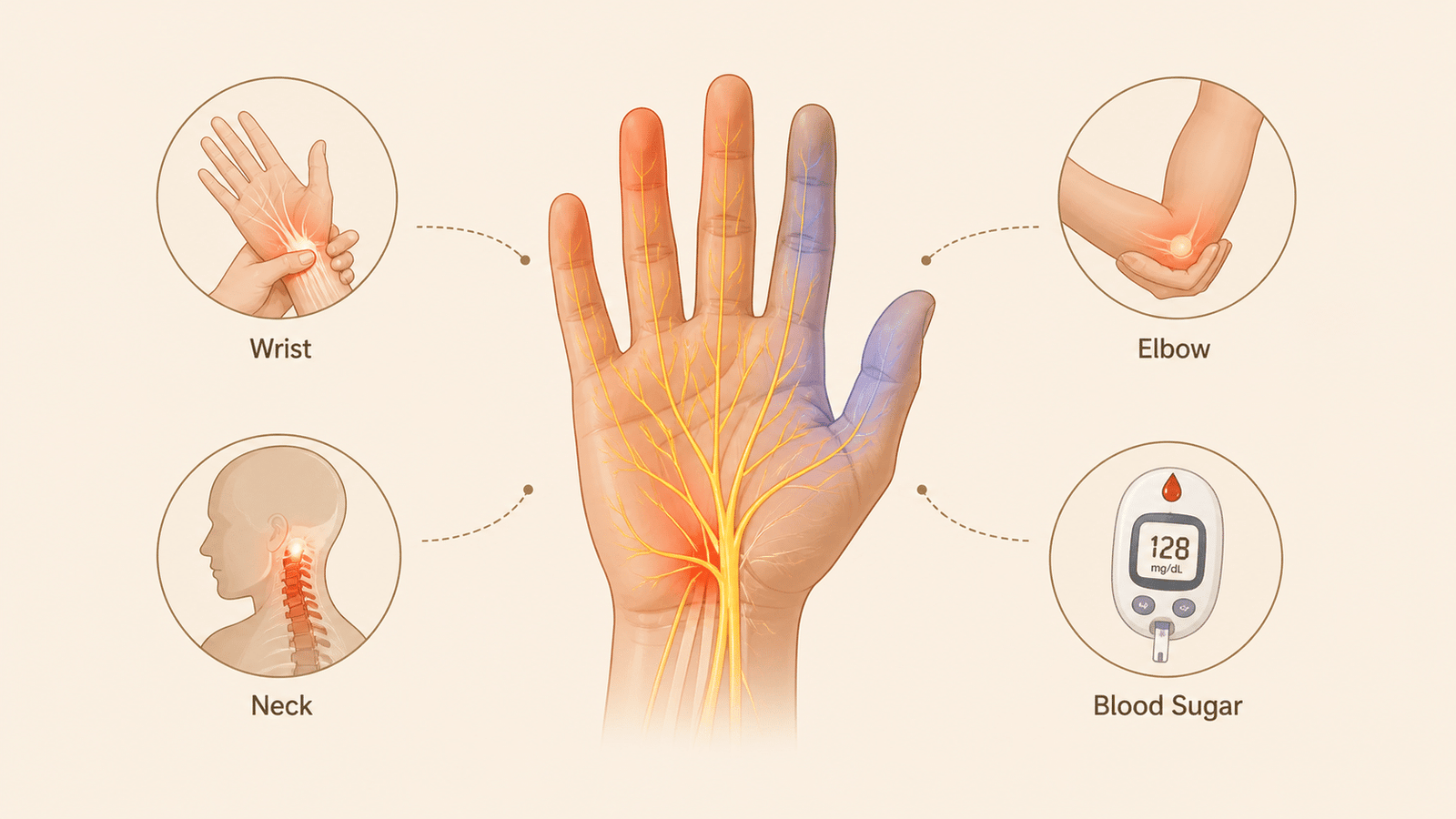

Have you ever woken up with your fingers feeling like they belong to someone else? That weird, dead, tingly sensation that makes you shake your hand like you’re trying to start an old lawnmower? Yeah, I’ve been there too. And honestly, the first time it happened to me, I genuinely thought I had slept on my arm wrong. But when it kept coming back, I realised numb fingers are rarely just a “slept funny” issue.
In this article, I’ll walk you through what I’ve learned about numbness in fingers, the real causes behind it, how doctors actually diagnose it, and what treatment options work. I’ll keep things simple, practical, and based on what medical sources like the Mayo Clinic, Cleveland Clinic, and the NHS actually say.
What Numbness in Fingers Really Means
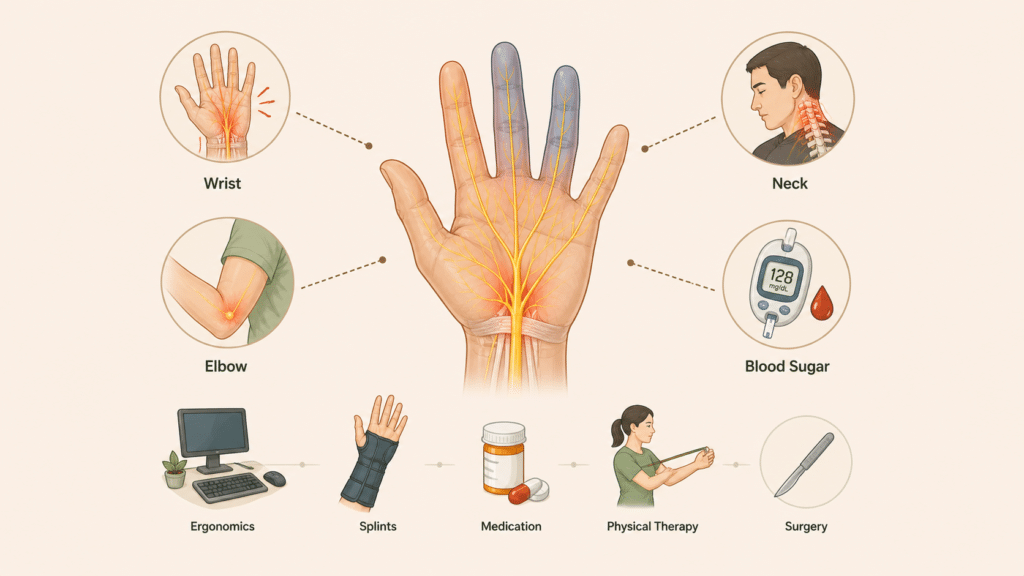
Numbness in fingers is a loss of sensation, often paired with tingling, a pins-and-needles feeling, or weakness. It happens when one of the nerves supplying your hand gets compressed, irritated, or damaged somewhere along its path, anywhere from your neck to your fingertips.
Here’s the part most people miss. Your fingers don’t have their own brain. They depend on three main nerves, the median, ulnar, and radial, to feel anything at all. So when numbness shows up, the question isn’t really, “What’s wrong with my finger?” It’s “Where along the nerve is the problem?”
Common Causes of Numb Fingers
Let me break down the most common reasons I’ve come across, both from personal experience and from reading clinical resources.
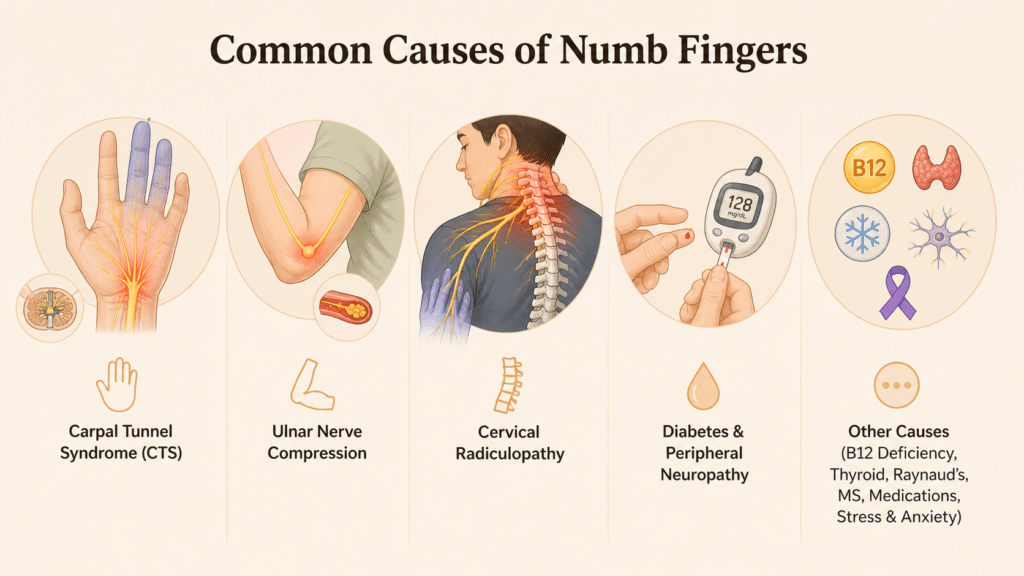
Carpal Tunnel Syndrome (CTS)
This is the big one. Carpal tunnel syndrome happens when the median nerve gets squeezed at the wrist. According to the American Academy of Orthopaedic Surgeons, it usually affects the thumb, index finger, middle finger, and half of the ring finger.
If you type all day, scroll your phone for hours, or work with your wrists bent, you’re a prime candidate. I noticed mine getting worse during deadline weeks, which honestly tracked perfectly with how much I was hammering my keyboard.
Ulnar Nerve Compression (Cubital Tunnel Syndrome)
The ulnar nerve runs along the inside of your elbow, the same nerve you hit when you bump your “funny bone”. Spoiler, it’s not funny at all. When this nerve gets pinched, you’ll feel numbness mainly in your ring finger and little finger.
Sleeping with bent elbows, leaning on your elbow at a desk, or even talking on the phone too long can trigger this. I had a friend who only realised the issue after switching to a headset.
Cervical Radiculopathy (Pinched Nerve in the Neck)
Sometimes the problem isn’t even in your hand. It’s in your neck. A herniated disc or bone spur in the cervical spine can press on a nerve root and send numbness shooting down your arm into your fingers.
If your numbness comes with neck pain, shoulder pain, or arm weakness, this is worth taking seriously. I’ve seen people chase wrist treatments for months when the real issue was sitting in their C6 or C7 vertebrae.
Diabetes and Peripheral Neuropathy
Long-term high blood sugar damages small nerves, especially in the hands and feet. The CDC notes that about half of people with diabetes develop some form of neuropathy. The numbness usually starts gradually, affects both hands, and often comes with burning or tingling.
If you have diabetes and notice persistent numbness, please don’t ignore it. Early action genuinely changes the outcome.
Other Causes Worth Knowing
Several other conditions can cause numb fingers, including vitamin B12 deficiency, hypothyroidism, Raynaud’s phenomenon, multiple sclerosis, and even certain chemotherapy drugs. Stress and anxiety can also trigger temporary tingling, though they rarely cause lasting numbness.
Finger-Specific Patterns: What Each Pattern Tells You
Here’s something I find genuinely useful. The pattern of numbness often points directly to the cause.
If your thumb, index, and middle fingers go numb, it usually means the median nerve, classic carpal tunnel territory.
If your ring and little fingers are numb, look at the ulnar nerve, often at the elbow.
If the back of your hand and thumb feel numb, the radial nerve might be involved, sometimes from a condition called “Saturday night palsy”, where the nerve gets compressed against the upper arm.
If all your fingers on both hands feel numb, especially with foot numbness too, peripheral neuropathy or a systemic issue is more likely.
If numbness travels from your neck down to your fingers, think cervical spine.
This pattern-based thinking is exactly what neurologists use during the first few minutes of an exam.
How Doctors Diagnose Finger Numbness
When I finally went to a doctor about my own symptoms, I was surprised at how methodical the process was. It’s not just guessing.
Physical Examination
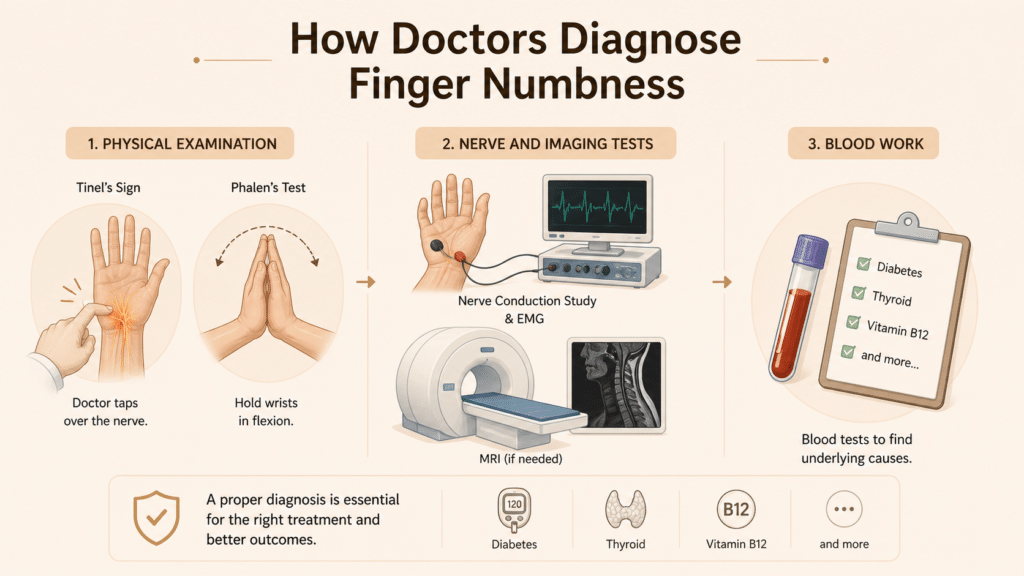
The usual workflow starts with a physical exam with specific tests like Tinel’s sign, where the doctor taps over a nerve, and Phalen’s test, where you hold your wrists in a flexed position to see if symptoms appear. These quick tests are surprisingly informative.
Nerve and Imaging Tests
For confirmation, doctors often order nerve conduction studies and electromyography (EMG). These measure how well electrical signals travel through your nerves and muscles. If a structural cause is suspected, an MRI of the neck or wrist may be needed.
Blood Work
Blood tests are also common, especially to rule out diabetes, thyroid issues, and B12 deficiency. The point is, a proper diagnosis isn’t optional. Treating the wrong cause is a great way to waste time and money.
Treatment Options That Actually Work
Treatment depends entirely on the cause, but here’s a clear breakdown of what generally helps.
Lifestyle and Ergonomic Fixes
For mild carpal tunnel or ulnar nerve issues, simple changes often do more than people expect. Adjusting desk height, using a wrist-neutral keyboard position, taking breaks every 30 minutes, and avoiding sleeping on bent elbows can make a real difference.
I switched to a split keyboard and a vertical mouse, and within a few weeks, my symptoms eased noticeably. Not magic, just biomechanics.
Splints and Braces
Wrist splints worn at night are one of the most evidence-backed treatments for carpal tunnel. They keep your wrist neutral while you sleep, which is when most people unknowingly bend it.
Medication
Doctors may recommend NSAIDs for inflammation, or in some cases, corticosteroid injections for stronger relief. For diabetic neuropathy, medications like gabapentin, pregabalin, or duloxetine are commonly prescribed.
Physical Therapy
A good physiotherapist can be a game-changer, especially for cervical radiculopathy and nerve gliding exercises. They teach you movements that help the nerve slide freely instead of getting stuck and irritated.
Surgery
If conservative treatment fails, surgical options like carpal tunnel release or cubital tunnel decompression have very high success rates. Surgery is rarely the first choice, but it’s a genuine fix when nothing else works.
Simple Exercises I Personally Found Helpful
A few exercises consistently help reduce mild numbness, especially for desk workers. Median nerve glides, where you stretch your hand and arm in a gentle wave-like motion, are great for carpal tunnel. Ulnar nerve glides help if your ring and little fingers are affected. Neck stretches and chin tucks help relieve cervical-related numbness.
A small note from experience: do these gently. Aggressive stretching can make nerve symptoms worse, not better.
Frequently Asked Questions
It can be, especially if it appears suddenly on one side along with weakness, confusion, or trouble speaking. In that case, treat it as an emergency.
Mildly, yes, because of electrolyte imbalances, but persistent numbness usually has another cause.
If numbness lasts more than a few days, keeps returning, or affects your grip, get it checked. Earlier diagnosis usually means easier treatment.
Sometimes, especially if it’s caused by posture or temporary compression. But chronic numbness rarely fixes itself.
Final Thoughts
Numb fingers may feel like a small annoyance, but they’re often your body’s way of waving a tiny red flag. From carpal tunnel to cervical issues to diabetes, the causes vary widely, and so do the treatments. The good news is that with the right diagnosis, most cases improve significantly.
If you’re dealing with persistent numbness, don’t just shake your hand and hope it goes away. Pay attention to the pattern, note when it happens, and talk to a qualified doctor. Your fingers do a lot for you. They deserve a proper checkup.