
That weird pins-and-needles feeling in your left hand can be unsettling. One minute you’re typing an email, and the next, your fingers feel like they’ve fallen asleep without permission. I’ve been there myself, and I know how quickly the mind jumps to worst-case scenarios.
In this article, I’ll walk you through the most common reasons your left hand might be tingling, when it’s actually serious, and what you can do about it. Let me break it down clearly, without the panic.
What Tingling in the Left Hand Actually Means
Tingling, medically called paresthesia, is that prickly, numb, or “buzzing” sensation you feel when something disrupts your nerves. It can happen on the surface of your skin or feel deeper inside your hand.
Sometimes it’s harmless and short-lived. Other times, it’s your body waving a small red flag that something deeper needs attention. The trick is knowing the difference, and that’s exactly what I’ll help you figure out.
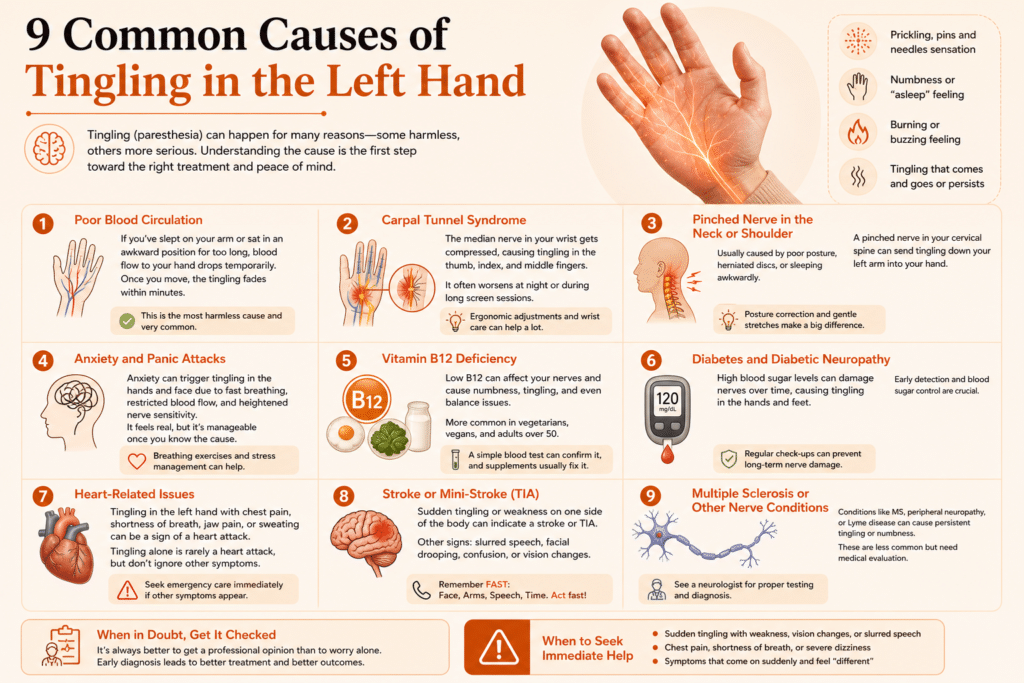
9 Common Causes of Tingling in the Left Hand
1. Poor Blood Circulation
If you’ve slept on your arm or sat in an awkward position for too long, blood flow to your hand drops temporarily. Once you move, the tingling fades within minutes. This is the most harmless cause and probably what most of us experience often.
2. Carpal Tunnel Syndrome
This is one I see talked about a lot, especially among people who type for hours. Carpal tunnel happens when the median nerve in your wrist gets compressed. According to the Mayo Clinic, it usually affects the thumb, index, and middle fingers.
If your tingling worsens at night or during long screen sessions, this could be the reason. I’ve personally noticed it flare up after long writing days, which is honestly a sign that I need better wrist posture.
3. Pinched Nerve in the Neck or Shoulder
A pinched nerve in your cervical spine can send tingling all the way down your left arm and into your hand. Think of it like a kink in a garden hose. When the nerve gets compressed, signals don’t flow properly.
This often happens due to poor posture, herniated discs, or sleeping awkwardly. If you’ve been hunched over a laptop lately, you already know what I mean.
4. Anxiety and Panic Attacks
Here’s something many people overlook. Anxiety can absolutely cause tingling, especially in the hands and face. When you’re anxious, your breathing changes, blood vessels constrict, and nerve sensations get amplified.
I’ve spoken with friends who thought they were having a heart attack, only to learn it was a panic attack. That doesn’t make the experience less real, just more manageable once you know the cause.
5. Vitamin B12 Deficiency
Low B12 can quietly mess with your nerves. People who follow strict vegetarian or vegan diets, or those over 50, are more prone to this. The Cleveland Clinic notes that B12 deficiency can cause numbness, tingling, and balance issues.
A simple blood test can confirm it, and the fix is usually straightforward through supplements or dietary changes.
6. Diabetes and Diabetic Neuropathy
If you’ve had diabetes for a while, especially if blood sugar levels haven’t been well-controlled, nerve damage becomes a real concern. Diabetic neuropathy usually starts in the feet but can also affect the hands.
The American Diabetes Association recommends regular check-ups to catch this early. Trust me, this is one cause you don’t want to ignore.
7. Heart-Related Issues
This is the one everyone fears the most, and rightly so. Tingling in the left hand combined with chest pain, shortness of breath, jaw pain, or sweating can be a sign of a heart attack.
Now, tingling alone is rarely a heart attack. But the moment it pairs with other symptoms, it’s emergency territory. I’ll cover the warning signs in detail below.
8. Stroke or Mini-Stroke (TIA)
A sudden tingling or weakness in one side of your body, including the left hand, can indicate a stroke or transient ischemic attack. Other signs include slurred speech, facial drooping, and confusion.
The faster you act, the better the outcome. The classic FAST acronym (Face, Arms, Speech, Time) is something everyone should remember.
9. Multiple Sclerosis or Other Nerve Conditions
Chronic conditions like multiple sclerosis, peripheral neuropathy, or even Lyme disease can cause persistent tingling. These are less common but worth ruling out if symptoms continue for weeks.
A neurologist can run the right tests to figure out what’s going on. Self-diagnosing through Google rabbit holes only fuels anxiety, so don’t do what I once did at 2 AM.
When Tingling in the Left Hand Becomes an Emergency
Not every tingling moment needs an ER visit. But certain combinations should never be ignored. Call emergency services immediately if you experience:
Tingling along with chest pain, pressure, or tightness. Sudden weakness on one side of your body. Slurred speech, vision loss, or confusion. Severe headache that comes out of nowhere. Trouble breathing or fainting.
These signs point to potential heart attack or stroke, and time is the most critical factor here.
Treatment Options That Actually Work
Treatment depends entirely on the cause, which is why proper diagnosis matters more than guessing.
For carpal tunnel, doctors often recommend wrist splints, ergonomic adjustments, physiotherapy, and in severe cases, surgery. For pinched nerves, physical therapy and posture correction usually do wonders.
If anxiety is the culprit, breathing exercises, therapy, and sometimes medication can help. For B12 deficiency, supplements solve the problem fairly quickly. Diabetic neuropathy requires tight blood sugar control along with prescribed nerve medications.
In serious cases like stroke or heart attack, hospital care is non-negotiable. There’s no home remedy for those, so please don’t try to wait it out.
Home Remedies That Genuinely Help
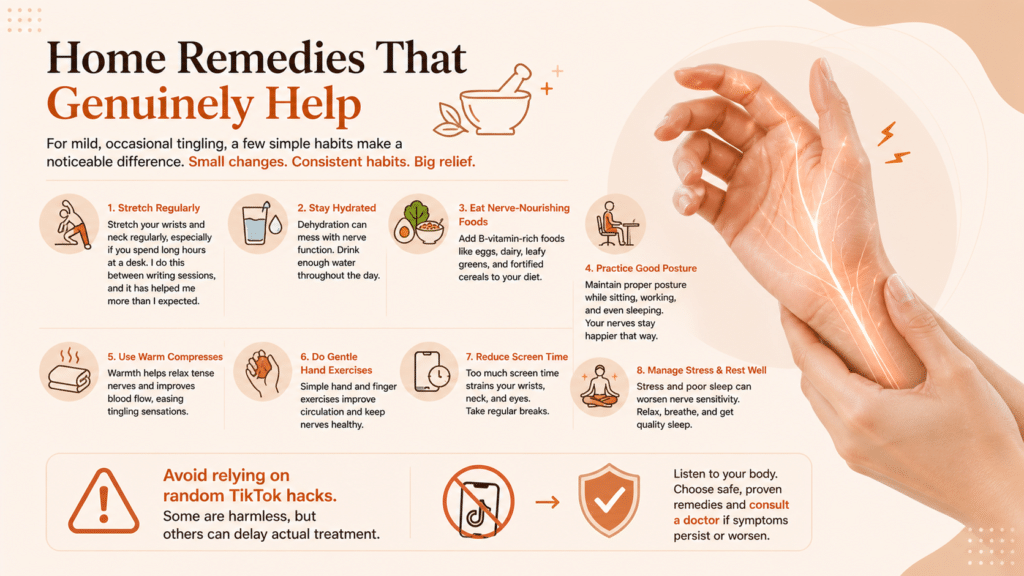
For mild, occasional tingling, a few simple habits make a noticeable difference. Stretch your wrists and neck regularly, especially if you spend long hours at a desk. I do this between writing sessions, and it has helped me more than I expected.
Stay hydrated, because dehydration can mess with nerve function. Add B-vitamin-rich foods like eggs, dairy, leafy greens, and fortified cereals to your diet. Practice good posture, both while sitting and sleeping.
Warm compresses can ease nerve tension, while gentle hand exercises improve circulation. And honestly, reduce screen time when you can. Your wrists will thank you.
Avoid relying on random TikTok hacks. Some are harmless, but others can delay actual treatment.
Frequently Asked Questions
No, not at all. Most tingling cases are harmless and related to nerves, posture, or circulation. Only when paired with chest pain, breathlessness, or jaw pain should you suspect heart issues.
Yes. Anxiety and stress can trigger one-sided tingling, especially during panic attacks. It feels alarming but usually passes once you calm your breathing.
If it lasts longer than a few minutes without an obvious reason, or if it keeps coming back, see a doctor. Persistent symptoms always deserve a proper evaluation.
Yes, mild dehydration can affect electrolyte balance and nerve signals. Drinking enough water throughout the day genuinely helps.
Start with a general physician. They’ll examine you and refer you to a neurologist if needed. Going straight to a specialist can sometimes delay basic tests.
Final Thoughts
Tingling in the left hand can mean a hundred different things, from sleeping awkwardly to something more serious. The key is paying attention to patterns, accompanying symptoms, and how long the sensation lasts.
I’ve learned that ignoring small body signals never ends well, but neither does panicking over every twitch. Listen to your body, get tested when needed, and don’t rely solely on internet searches for medical decisions.
If something feels off and persists, talk to a doctor. Your peace of mind is worth more than any guesswork.